

TL;DR:
- L-arginine, a semi-essential amino acid, enhances blood flow by increasing nitric oxide, supporting nutrient delivery and recovery in bodybuilding. Despite limited acute strength benefits, it significantly improves endurance and waste clearance when taken consistently, especially with proper timing and dosing. Combining it with L-citrulline offers optimal vasodilation effects, making it a valuable component of a comprehensive training routine.
L-arginine is a semi-essential amino acid that serves as the body’s primary precursor to nitric oxide, a molecule that widens blood vessels and drives nutrient delivery directly to working muscle tissue. The benefits of L-arginine for bodybuilding center on this vasodilation effect: more blood flow means more oxygen, more amino acids, and faster clearance of metabolic waste like lactate and ammonia. If you train hard and recover poorly, or if your pumps feel flat and your endurance fades before your muscles do, L-arginine’s role in vascular physiology is worth understanding in full. This article breaks down the mechanisms, the real evidence, and how to use it correctly.
How does L-arginine benefit muscle growth and recovery?
L-arginine drives vasodilation and blood flow by triggering nitric oxide synthesis in the endothelial cells lining your blood vessels. When nitric oxide levels rise, vessel walls relax, diameter increases, and blood moves more freely through your vascular network. For a bodybuilder mid-set, this means the muscle gets oxygen and glucose faster, and the metabolic byproducts that cause fatigue get cleared more efficiently.

The practical result is measurable. Arginine-induced vasodilation supports delivery of oxygen, amino acids, and glucose while simultaneously accelerating removal of lactate and ammonia. Lactate accumulation is a primary driver of the burning sensation that cuts sets short. Ammonia, produced during high-intensity effort, impairs neural function and contributes to central fatigue. Clearing both faster means you can sustain output longer before hitting a wall.
Beyond the acute training session, L-arginine’s vascular effects support muscle protein synthesis during recovery. Muscle repair depends on substrate delivery. If blood flow to a damaged muscle is restricted, the amino acids you consumed post-workout arrive slowly and incompletely. L-arginine keeps those delivery channels open during the repair window, which is where real hypertrophy happens.
Key physiological benefits include:
- Increased nitric oxide production, leading to wider blood vessels and stronger muscle pumps
- Faster oxygen delivery to active muscle fibers during high-intensity sets
- Accelerated waste clearance, reducing lactate and ammonia buildup that causes early fatigue
- Improved post-workout nutrient delivery, supporting repair and growth between sessions
Pro Tip: Take L-arginine 30 to 45 minutes before training to time the vasodilation peak with your working sets. This window aligns nitric oxide elevation with the period of highest muscular demand.
What does the science actually say about L-arginine’s effectiveness?
The research on L-arginine is more nuanced than most supplement marketing suggests, and understanding the distinction between strength and endurance outcomes will save you from misplaced expectations.
On the strength side, the data is clear and somewhat sobering. Acute L-arginine supplementation of 6 to 8 grams does not significantly improve maximal strength or peak torque in resistance-trained individuals, with a 95% confidence interval of -0.145 to 0.481 and a p-value of 0.292. That result means if you are chasing a bigger one-rep max, L-arginine alone will not deliver it. The effect size is statistically negligible for acute strength performance.
The endurance picture is different. Across six studies involving 444 participants, arginine improved endurance endpoints with a likely strong benefit in exercise capacity, alongside modest effects on blood pressure and vascular function. This makes physiological sense: endurance performance is more directly limited by oxygen delivery and waste clearance, both of which L-arginine influences through nitric oxide.
A critical limitation is bioavailability. First-pass metabolism significantly reduces oral L-arginine’s efficacy, meaning a large portion of what you swallow is broken down by the liver before it reaches systemic circulation. Trained athletes face an additional barrier: the “ceiling effect,” where already-elevated baseline nitric oxide levels leave less room for supplementation to make a meaningful difference.
| Research area | Finding | Practical implication |
|---|---|---|
| Maximal strength | No significant acute improvement (p = 0.292) | Do not rely on L-arginine for strength PRs |
| Endurance capacity | Strong benefit across 6 studies, n=444 | Useful for longer training sessions and cardio |
| Bioavailability | High first-pass metabolism limits systemic effect | Chronic dosing or L-citrulline may be more effective |
| Trained athletes | Ceiling effect reduces ergogenic impact | Beginners may see more benefit than advanced lifters |
“L-arginine optimizes the delivery system rather than acting as a direct anabolic agent. Think of it as upgrading the roads, not the trucks.” — L-Arginine for Recovery
How does L-arginine compare with L-citrulline for bodybuilding?
The comparison between L-arginine and L-citrulline is one of the most practically important decisions you will make when building a nitric oxide booster stack. They both raise nitric oxide, but they do it through different metabolic pathways with meaningfully different results.
L-citrulline bypasses the liver entirely. It is absorbed in the small intestine and converted to L-arginine in the kidneys, which means it enters systemic circulation at much higher concentrations than oral L-arginine ever achieves. L-citrulline and citrulline malate provide more sustained nitric oxide elevation and better gastrointestinal tolerance than L-arginine. Athletes who have experienced the digestive discomfort that comes with high-dose L-arginine often find citrulline malate a cleaner, more comfortable option.
| Feature | L-arginine | L-citrulline / citrulline malate |
|---|---|---|
| Metabolism route | First-pass liver metabolism | Kidney conversion, bypasses liver |
| Bioavailability | Moderate to low | High |
| GI tolerance | Can cause discomfort at high doses | Generally well tolerated |
| Nitric oxide duration | Shorter peak | More sustained elevation |
| Best use case | Chronic low-dose supplementation | Pre-workout, acute performance |
That said, L-arginine is not obsolete. It remains a cost-effective option for chronic supplementation at lower doses, and it carries additional roles in the body beyond nitric oxide, including involvement in creatine synthesis and growth hormone secretion pathways. Athletes focused on endurance may also find L-arginine’s vascular effects sufficient when dosed correctly over time.
- Choose L-citrulline if you want maximum pre-workout pump and better GI tolerance
- Choose L-arginine if you prefer a lower-cost chronic supplement or want broader amino acid benefits
- Combine both at moderate doses if you want to cover both the acute and sustained nitric oxide windows
What are the best practices for taking L-arginine supplements?
Getting the dosing and timing right matters more with L-arginine than with most supplements, because its bioavailability limitations mean that how you take it directly affects how much benefit you actually receive.
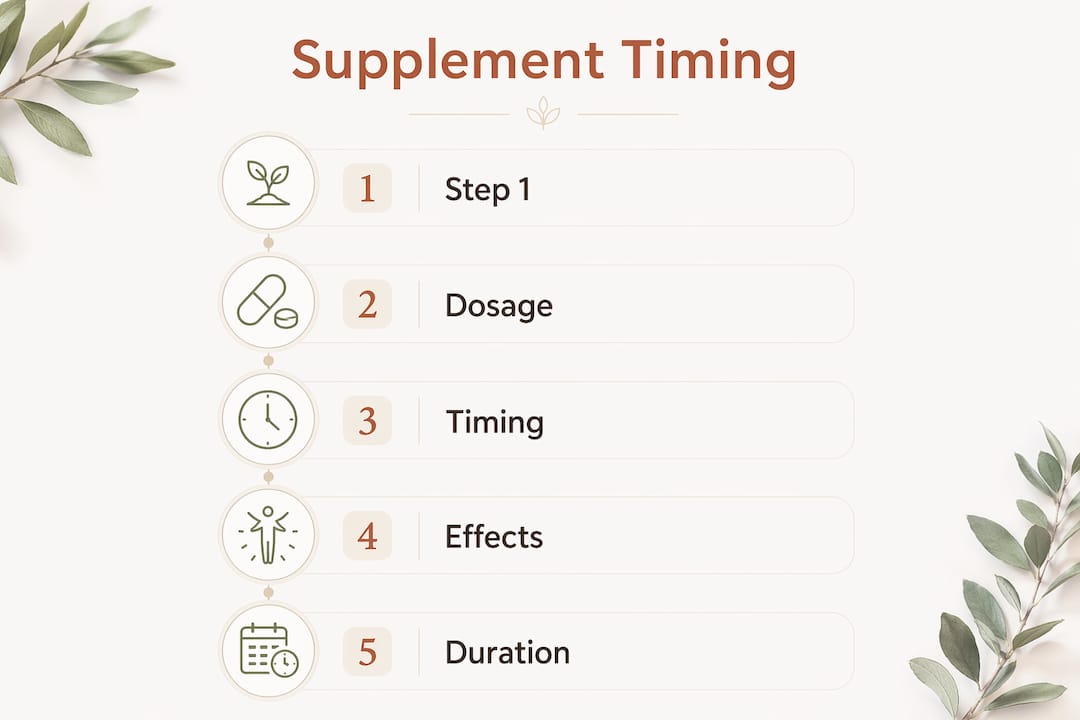
- Start with 3 to 4 grams per dose. Work up gradually over one to two weeks to assess gastrointestinal tolerance before moving to the full therapeutic range.
- Target 6 to 12 grams daily, split across 2 to 3 doses. Split dosing reduces GI discomfort and maintains vasodilation both pre- and post-workout, rather than creating a single spike that fades quickly.
- Time one dose 30 to 45 minutes before training. This aligns peak nitric oxide elevation with your highest-demand training window.
- Take a second dose post-workout or before sleep. Growth hormone secretion peaks during deep sleep, and L-arginine may support this pathway when taken in the evening.
- Choose your form based on your goals. Powder mixes fastest and suits pre-workout timing. Capsules offer convenience for consistent daily dosing. L-arginine alpha-ketoglutarate (AAKG) is a common variant marketed for enhanced absorption, though evidence for superiority over standard L-arginine is limited.
- Pair with a quality protein source. L-arginine’s vasodilation effect is most productive when there are amino acids in circulation to deliver. Taking it without adequate dietary protein reduces the practical benefit.
Pro Tip: If you experience bloating or loose stools at higher doses, drop back to 3 grams per dose and increase more slowly. Steady, lower doses over a longer training block outperform a single large dose that your gut cannot handle.
Chronic supplementation over four to eight weeks produces more consistent results than acute single-dose protocols, particularly for trained athletes where the ceiling effect limits single-session impact. Think of L-arginine as a muscle recovery strategy you build into your routine rather than a pre-workout you reach for occasionally.
Key takeaways
L-arginine benefits bodybuilding primarily by improving nitric oxide-driven blood flow, which enhances nutrient delivery, accelerates waste clearance, and supports recovery rather than directly increasing strength output.
| Point | Details |
|---|---|
| Nitric oxide is the mechanism | L-arginine raises NO levels, widening vessels and improving nutrient delivery to muscles. |
| Strength gains are not guaranteed | Research shows no significant acute strength improvement; endurance benefits are better supported. |
| Bioavailability limits single doses | First-pass metabolism reduces efficacy; chronic split dosing outperforms large acute doses. |
| L-citrulline often outperforms | Citrulline bypasses liver metabolism, delivering higher systemic NO with better GI tolerance. |
| Dosing strategy matters | 6 to 12 grams daily in split doses, timed around training, produces the most consistent results. |
L-arginine in practice: what I actually think about this supplement
I have spent years watching bodybuilders chase the next compound that will finally unlock their physique, and L-arginine sits in an interesting middle ground. It is neither the overhyped pump pill some brands sell nor the useless filler that cynics dismiss it as.
What I have found is that L-arginine works best when you stop expecting it to do something it was never designed to do. It will not add 20 pounds to your squat in a week. What it will do, when dosed consistently over a training block, is make the environment inside your muscle tissue slightly more favorable for growth and repair. That is not nothing. In a sport where marginal gains compound over months and years, a supplement that reliably improves nutrient delivery and reduces recovery time between sessions has real value.
The honest caveat is that trained athletes feel less of the effect than beginners. If your vascular system is already well-conditioned from years of hard training, the ceiling effect is real. In that case, L-citrulline or citrulline malate is a smarter choice, and I would point most intermediate to advanced lifters in that direction for pre-workout use. L-arginine still earns its place as a chronic supplement in a broader stack, particularly when combined with quality sleep, adequate protein, and a structured training program.
The athletes I have seen get the most from L-arginine treat it as one component of an integrated approach, not a shortcut. Pair it with consistent nutrition, track your recovery quality, and give it at least four weeks before drawing conclusions. That is how you get real data on whether it works for your body. You can explore where L-arginine fits among 2026’s top supplement trends to see how it stacks up against newer options entering the market.
— GAURAV
Support your training with Nutribliss
If you are ready to put the science into practice, Nutribliss has formulated its L-arginine supplement to align with the dosing principles covered in this article: clean ingredients, consistent potency, and a capsule format that fits any training schedule. Every product in the Nutribliss line is built around the same principle: supplements that earn their place through evidence, not marketing.
Explore the science behind superfoods to understand exactly what goes into each formulation and why ingredient quality determines real-world results. Whether you are stacking L-arginine with protein, creatine, or electrolytes, Nutribliss gives you the foundation to build a supplement protocol that actually reflects how your body works. Use #nutribliss to share your results and connect with a community that takes the science as seriously as the training.
FAQ
What is L-arginine and why do bodybuilders use it?
L-arginine is a semi-essential amino acid that the body uses to produce nitric oxide, a molecule that relaxes blood vessels and increases blood flow to muscles. Bodybuilders use it to improve nutrient delivery, enhance muscle pumps, and support faster recovery between sessions.
Does L-arginine directly increase muscle size or strength?
Research shows that acute L-arginine supplementation does not significantly improve maximal strength or peak torque in trained individuals. Its primary benefit is improved blood flow and recovery support, which contributes to muscle growth indirectly over time.
How much L-arginine should I take for bodybuilding?
The recommended range is 6 to 12 grams daily, split into 2 to 3 doses timed around training. Starting at 3 to 4 grams per dose and increasing gradually reduces the risk of gastrointestinal discomfort.
Should I take L-arginine or L-citrulline for better pumps?
L-citrulline is generally the better choice for acute pre-workout pumps because it bypasses liver metabolism and delivers higher systemic nitric oxide with fewer digestive side effects. L-arginine remains useful for chronic daily supplementation at lower doses.
When is the best time to take L-arginine?
Take one dose 30 to 45 minutes before training to align nitric oxide elevation with your workout. A second dose post-workout or before sleep supports recovery and may complement natural growth hormone release during sleep.