

You eat well, take quality supplements, and follow expert advice, yet you still feel like something is missing. The problem isn’t what you consume but how much your body actually absorbs. Poor nutrient absorption can sabotage even the best diet and supplement regimen, leaving you short on energy, recovery, and performance gains. This guide reveals science-backed strategies to dramatically improve how your body utilizes every nutrient you consume, helping you achieve better health outcomes and athletic performance through smarter absorption practices.
Table of Contents
- Key takeaways
- Understanding nutrient bioavailability and its impact
- Preparation: what you need to optimize nutrient absorption
- Execution: practical steps to maximize nutrient absorption daily
- Verification: monitor progress and troubleshoot absorption challenges
- Explore Nutribliss solutions for optimal nutrient absorption
- How to maximize nutrient absorption: frequently asked questions
Key Takeaways
| Point | Details |
|---|---|
| Bioavailability matters | Understanding how efficiently your body uses nutrients is essential to maximize energy, recovery, and performance. |
| Pair nutrients strategically | Vitamin C with iron enhances absorption while calcium and iron can compete for absorption when taken together. |
| Fat aids fat soluble vitamins | Fat soluble vitamins require dietary fats to be absorbed, so take them with meals that include healthy fats. |
| Separate minerals by hours | To prevent interference, separate calcium from iron and zinc by at least two hours. |
| Diversify diet for absorption | A varied diet provides a broad range of nutrients and gut supporting compounds that improve overall absorption and metabolic function. |
Understanding nutrient bioavailability and its impact
Nutrient bioavailability determines how effectively your body converts consumed nutrients into usable compounds. Think of it as the difference between having money in your bank account versus actually being able to spend it. You might consume 100mg of a vitamin, but your cells may only receive 30mg worth of benefit.
Your body processes nutrients through five critical stages. Digestion breaks down food into absorbable molecules. Absorption moves those molecules across intestinal walls into your bloodstream. Transportation carries nutrients to cells throughout your body. Metabolism converts nutrients into forms your cells can use. Excretion removes excess amounts your body cannot store. Each stage presents opportunities for nutrient loss.
Several factors control how much nutrition you actually extract from food and supplements:
- Chemical form of the nutrient affects how easily your body recognizes and processes it
- Gut health status determines your intestinal capacity to absorb molecules
- Timing of consumption influences enzymatic activity and cellular receptivity
- Presence of complementary nutrients that enhance or inhibit absorption
- Individual variations in digestive enzyme production and genetic factors
Understanding what is bioavailability helps you recognize why two people eating identical diets can experience vastly different health outcomes. The person with optimized absorption extracts more value from every meal and supplement dose. For athletes, this translates directly into better recovery, enhanced performance, and faster adaptation to training stress. For health-conscious individuals, it means more energy, stronger immunity, and improved metabolic function.
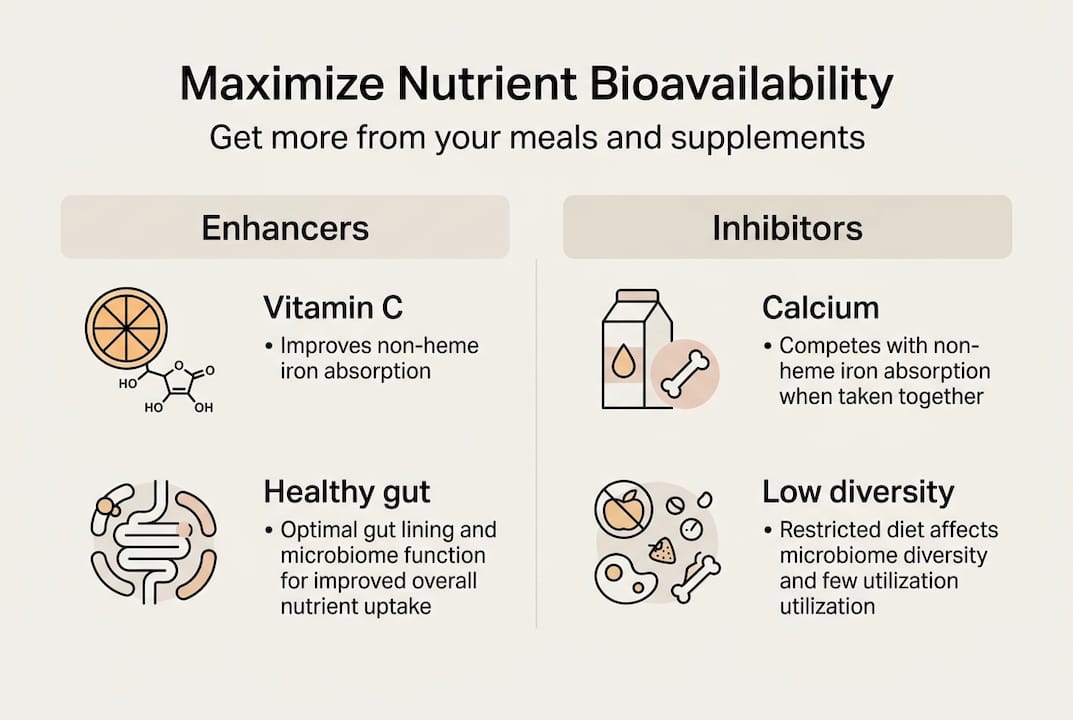
The interplay between different nutrients creates either synergy or competition. Iron and calcium compete for the same absorption pathways, reducing uptake of both when taken together. Vitamin C and iron create a partnership that dramatically boosts iron absorption. Fat-soluble vitamins require dietary fats for transport across intestinal membranes. These interactions mean that what you eat together matters as much as what you eat.
Maximizing bioavailability gives you more nutritional value from the same food and supplement budget. Instead of consuming larger doses that your body wastes, you optimize absorption to use what you already take more effectively.
Preparation: what you need to optimize nutrient absorption
Before diving into advanced absorption strategies, you need to establish the right foundation. Start with diet diversity. Your body requires dozens of different nutrients working together, and no single food provides everything. A varied diet ensures you have the raw materials needed for optimal absorption processes. Different colored vegetables provide different phytonutrients that support gut health and enzymatic function.
Master strategic nutrient pairing to multiply absorption rates. Vitamin C increases plant iron absorption by converting it into a more bioavailable form. Add bell peppers or citrus to your spinach salad, and your body absorbs significantly more iron. Fat-soluble vitamins A, D, E, and K require dietary fats for absorption. Take these with meals containing healthy oils, nuts, or avocado. Separate competing minerals like calcium from iron and zinc by at least two hours to prevent absorption interference.

Supplement form selection dramatically impacts how much nutrition reaches your cells. Methylfolate absorbs better than synthetic folic acid, especially for people with genetic variations affecting folate metabolism. Liposomal and nanoencapsulated forms increase bioavailability between 20-90% compared to standard formulations. For nutrients like CoQ10 and curcumin with naturally poor absorption, advanced delivery systems make the difference between wasting money and seeing real benefits.
Your gut health determines absorption capacity regardless of what you consume. A compromised intestinal lining cannot effectively transport nutrients into your bloodstream. Inflammation reduces enzymatic activity needed to break down food. Imbalanced gut bacteria can actually consume nutrients before your body absorbs them. Prioritize gut health supplements including probiotics, digestive enzymes, and gut-lining support compounds like L-glutamine.
Pro Tip: Split your mineral supplements into multiple smaller doses throughout the day rather than taking everything at once. Calcium, magnesium, iron, and zinc compete for the same absorption pathways. Taking 500mg of calcium twice daily results in better absorption than 1000mg once daily, and prevents interference with other minerals.
Consider supplement quality and third-party testing. Cheaper supplements often use forms with poor bioavailability or contain fillers that interfere with absorption. Look for products that specify the exact form of each nutrient, such as magnesium glycinate instead of just magnesium. Check for certifications indicating purity and potency testing.
Learn how to combine supplements safely to avoid counterproductive interactions. Some combinations enhance absorption while others create competition or even toxicity. Understanding these relationships prevents you from accidentally sabotaging your own efforts.
Execution: practical steps to maximize nutrient absorption daily
Implementing absorption strategies requires consistent daily practices that become automatic habits. Start by building your meals around nutrient synergy. When eating plant-based iron sources like beans, lentils, or dark leafy greens, always include a vitamin C source. This simple pairing can double or triple iron absorption. When taking fat-soluble vitamin supplements, consume them with a meal containing at least 10-15 grams of healthy fats.
Follow this numbered routine to optimize nutrient timing throughout your day:
- Take probiotics first thing in the morning on an empty stomach for maximum survival through stomach acid
- Consume fat-soluble vitamins (A, D, E, K) with your largest meal containing dietary fats
- Split mineral supplements between morning and evening doses to reduce competition
- Time nutrient intake around athletic performance by consuming carbs and protein within 3-4 hours post workout
- Take water-soluble vitamins (B complex, C) with meals to slow absorption and reduce GI upset
- Reserve evening hours for magnesium and other calming nutrients that support sleep
For athletes specifically, performance nutrition strategies require precision timing. Caffeine intake 60 minutes pre-workout enhances power output and endurance. Creatine absorption improves dramatically when taken with simple carbohydrates after training, with studies showing 25-60% better uptake compared to taking it alone. Collagen peptides consumed within two hours post-resistance training support connective tissue repair and strength gains.
Implement these daily absorption boosters:
- Chew food thoroughly to increase surface area for digestive enzymes
- Stay hydrated to support nutrient transport through your bloodstream
- Manage stress levels, as cortisol impairs gut function and nutrient absorption
- Get adequate sleep to support gut repair and optimal metabolic function
- Avoid excessive alcohol, which damages intestinal lining and depletes nutrients
Consider supplement stacking for synergistic effects. Combining vitamin D with vitamin K2 improves calcium metabolism and bone health. Pairing omega-3 fatty acids with curcumin enhances the anti-inflammatory effects of both. Taking B vitamins together as a complex improves their collective metabolic functions.
Pro Tip: Avoid taking high-dose antioxidant supplements immediately before or after intense training sessions. While antioxidants support overall health, excessive amounts during the post-workout window can blunt the beneficial oxidative signaling that drives mitochondrial adaptations and performance improvements. Time your antioxidant supplements at least 3-4 hours away from training.
Create a supplement schedule that accounts for interactions. Keep a simple chart showing which supplements you take at breakfast, lunch, dinner, and bedtime. This prevents you from accidentally taking competing nutrients together and ensures you maintain consistent timing for absorption optimization.
Monitor your meal composition to ensure adequate nutrient cofactors. Magnesium supports over 300 enzymatic reactions, many involved in nutrient metabolism. B vitamins act as coenzymes in countless absorption and utilization pathways. Ensuring sufficient intake of these foundational nutrients amplifies the benefits of everything else you consume.
Verification: monitor progress and troubleshoot absorption challenges
Tracking whether your absorption strategies work requires attention to both subjective feelings and objective markers. Notice improvements in energy levels throughout the day, particularly the absence of mid-afternoon crashes. Better absorption often manifests as enhanced workout recovery, with less soreness and faster return to peak performance. Improved skin, hair, and nail quality signals better nutrient delivery to peripheral tissues.
If you have access to lab testing, certain biomarkers reveal absorption effectiveness. Ferritin levels indicate iron storage and absorption over time. Vitamin D levels show whether your supplementation dose and absorption support optimal status. Magnesium RBC testing (not serum) provides more accurate assessment of cellular magnesium levels. Regular testing every 3-6 months helps you adjust strategies based on results.
Common issues that reduce absorption include:
- Taking excessive doses that overwhelm absorption capacity, leading to waste
- Poor gut health from inflammation, dysbiosis, or intestinal permeability
- Nutrient competition from improper supplement timing or combinations
- Inadequate stomach acid production, especially common with aging
- Medications that interfere with nutrient absorption or metabolism
- Chronic stress depleting nutrients faster than you can absorb them
This table shows how different factors affect nutrient absorption rates:
| Nutrient | Standard Form Absorption | Optimized Form Absorption | Key Enhancement Factor |
|---|---|---|---|
| Iron (plant) | 2-10% | 15-35% | Vitamin C pairing |
| Calcium | 25-35% | 35-45% | Vitamin D, spread doses |
| Curcumin | 1-5% | 20-95% | Liposomal or piperine |
| Magnesium | 30-50% | 50-70% | Glycinate form, split doses |
| CoQ10 | 2-3% | 60-85% | Ubiquinol or liposomal |
| Vitamin D | 55-70% | 75-90% | Taken with fats |
Individual factors like age and genetics create significant absorption variability between people. Older adults often produce less stomach acid and digestive enzymes, requiring different strategies than younger individuals. Genetic variations affect how efficiently you convert certain nutrient forms into active compounds. Understanding your unique factors through testing and self-monitoring allows for true personalization.
Interestingly, elite athletes may show reduced responses to certain supplements compared to recreational exercisers. Their bodies adapt to training stress in ways that alter nutrient metabolism and requirements. High-dose supplements often get excreted rather than stored when intake exceeds immediate needs and storage capacity.
Troubleshoot absorption problems with these approaches:
- Reduce individual supplement doses and increase frequency to stay within absorption limits
- Add digestive enzymes with meals to improve nutrient breakdown
- Heal gut lining with L-glutamine, zinc carnosine, and bone broth
- Test for and address underlying conditions like SIBO or low stomach acid
- Review medications with your healthcare provider for nutrient interactions
- Consider genetic testing to identify variations affecting nutrient metabolism
Explore personalized nutrition approaches that account for your unique biochemistry, lifestyle, and goals. What works optimally for one person may not work identically for another. Pay attention to how your body responds to different strategies and adjust accordingly.
Be patient with the optimization process. Nutrient status changes gradually over weeks and months, not days. Consistent application of absorption strategies compounds over time, producing increasingly noticeable benefits. Keep detailed notes about what you implement and when, making it easier to identify which changes produce the best results for you.
Explore Nutribliss solutions for optimal nutrient absorption
Now that you understand how to maximize nutrient absorption, consider how quality supplements can amplify your results. Nutribliss offers science-backed supplement formulations designed with bioavailability in mind. Each product uses carefully selected nutrient forms chosen for superior absorption and effectiveness.
Our electrolytes supplement provides minerals in highly absorbable forms to support hydration and performance without the sugar found in typical sports drinks. The formulation accounts for mineral interactions and includes complementary nutrients that enhance uptake.
Discover the science behind superfoods and how concentrated nutrient sources can fill gaps in even the healthiest diets. Nutribliss prioritizes ingredient quality, third-party testing, and formulations based on current research about nutrient synergy and absorption optimization.
Whether you are an athlete pushing performance boundaries or a health-conscious individual optimizing wellness, Nutribliss provides the tools to support your nutrient absorption goals with products designed for real results.
How to maximize nutrient absorption: frequently asked questions
How does gut health affect nutrient absorption?
Your gut lining contains the cells and transport mechanisms that move nutrients from digested food into your bloodstream. Inflammation, bacterial imbalance, or intestinal permeability damage these systems, preventing nutrient uptake regardless of diet quality. Supporting gut health with probiotics, digestive enzymes, and anti-inflammatory foods restores absorption capacity.
What are the best nutrient pairs to take together?
Vitamin C with plant-based iron increases absorption dramatically. Fat-soluble vitamins A, D, E, and K should be taken with dietary fats. Vitamin D pairs well with calcium and magnesium for bone health. Conversely, separate calcium from iron and zinc by at least two hours to prevent competition.
When is the ideal time to take supplements for absorption?
Take fat-soluble vitamins with your largest meal containing fats. Water-soluble vitamins work well with any meal to reduce stomach upset. Split mineral doses between morning and evening. Athletes should time protein and carbs within 3-4 hours post-workout, and consider creatine with post-training carbohydrates for enhanced absorption.
Can excessive supplementation harm absorption?
Yes, taking extremely high doses can overwhelm your absorption capacity, leading to waste and potential side effects. Some nutrients compete for the same pathways, so excessive intake of one can block absorption of others. High doses may also cause digestive upset that impairs overall nutrient uptake. Moderate, consistent dosing typically produces better results than megadoses.
How can I personalize my nutrient strategy for my unique needs?
Start by assessing your current health status, diet quality, activity level, and any symptoms suggesting deficiencies. Consider lab testing for key nutrients like vitamin D, iron, and magnesium. Pay attention to how your body responds to different supplement forms and timing. Learn to personalize your supplement plan based on your individual factors including age, genetics, medications, and health conditions. Adjust strategies based on results over time rather than following generic recommendations.