

Most American adults now say that one-size-fits-all supplements fall short of their wellness goals. For those who care about athletic performance and health, generic advice often feels outdated. Personalized nutrition offers a science-backed way to match supplements with your exact needs, helping you get the most out of every meal and workout. This guide shows how targeted strategies can help you reach your potential and support long-term wellness.
Table of Contents
- Defining Personalized Nutrition and Its Core Principles
- Types of Personalized Nutrition Approaches
- How Personalized Nutrition Plans Are Created
- Benefits of Tailored Supplementation Strategies
- Risks and Common Pitfalls to Avoid
- Expert Validation and U.S. Regulations
Key Takeaways
| Point | Details |
|---|---|
| Personalized Nutrition Definition | Personalized nutrition customizes dietary recommendations based on individual genetic profiles and metabolic needs. |
| Core Principles | It integrates various scientific disciplines to tailor nutrition strategies for disease prevention and overall wellness. |
| Key Approaches | Main methodologies include Nutrigenomics, Nutrigenetics, Nutri-epigenetics, and Nutri-metagenomics, each focusing on different aspects of nutrient interactions and metabolism. |
| Regulatory Oversight | The U.S. regulatory landscape for personalized nutrition involves multiple organizations ensuring safety and efficacy through rigorous standards and assessments. |
Defining Personalized Nutrition and Its Core Principles
Personalized nutrition represents a groundbreaking approach to health and wellness that moves beyond traditional dietary recommendations. This innovative strategy uses individual genetic profiles and unique characteristics to develop precise dietary guidelines tailored specifically to each person’s metabolic needs and genetic makeup.
At its core, personalized nutrition integrates multiple scientific disciplines including nutrigenomics, bioinformatics, and metabolic profiling to understand how an individual’s genetic variation impacts nutritional requirements. The fundamental principle is recognizing that no single dietary approach works identically for everyone. By analyzing genetic markers, metabolic responses, and individual health data, nutritionists can design targeted intervention strategies that optimize health outcomes.
The field encompasses three critical synergistic elements: scientific research, professional training, and therapeutic guidance. Personalized nutrition aims to prevent, manage, and treat chronic diseases while promoting overall wellness through highly customized nutritional recommendations. This approach goes beyond generic dietary advice by considering factors like genetic predispositions, lifestyle patterns, and individual metabolic responses.
Modern personalized nutrition strategies typically involve comprehensive assessments that may include:
- Genetic testing
- Metabolic profiling
- Comprehensive health history analysis
- Lifestyle and environmental factor evaluation
- Advanced biomarker tracking
Pro tip: Start your personalized nutrition journey by consulting a registered dietitian who specializes in nutrigenomics and can provide scientifically validated, individualized dietary recommendations for #nutribliss optimization.
Types of Personalized Nutrition Approaches
Personalized nutrition has evolved to encompass multiple sophisticated scientific approaches that provide deep insights into individual nutritional needs. These approaches explore complex interactions between nutrients, genetics, and human biology through various advanced methodological frameworks that go far beyond traditional dietary recommendations.
The primary approaches in personalized nutrition include several key methodologies:
Here’s an overview comparing key personalized nutrition approaches and their focus:
| Approach | Focus Area | Data Utilized |
|---|---|---|
| Nutrigenomics | Nutrient-gene interactions | Genetic sequencing, biomarkers |
| Nutrigenetics | Genetic impact on metabolism | DNA variants, health records |
| Nutri-epigenetics | Diet effects on gene expression | Epigenetic markers, diet logs |
| Nutri-metagenomics | Diet and gut microbiota relationship | Microbiome profiles, nutrition |
- Nutrigenomics: Examines how specific nutrients interact with an individual’s genetic profile
- Nutrigenetics: Studies how genetic variations influence metabolic responses to nutrients
- Nutri-epigenetics: Investigates how dietary components can modify gene expression
- Nutri-metagenomics: Analyzes the relationship between diet and gut microbiota composition
Personalized nutrition strategies integrate diverse data domains including health, biological, social, behavioral, and environmental information to create comprehensive and dynamic nutritional recommendations. This multifaceted approach allows for precise dietary guidance that adapts to an individual’s unique metabolic characteristics, lifestyle patterns, and genetic predispositions.
Modern personalized nutrition approaches range from static genetic profiling to advanced real-time monitoring technologies. These methods enable nutritionists and healthcare professionals to develop highly targeted interventions that can potentially prevent chronic diseases, optimize metabolic function, and support overall wellness through scientifically validated, individualized nutritional strategies.
Pro tip: Consider working with a nutrigenomics specialist who can help you understand protein supplements tailored to your genetic profile for maximum #nutribliss performance.
How Personalized Nutrition Plans Are Created
Personalized nutrition plans represent a sophisticated approach to dietary guidance that goes far beyond traditional nutritional recommendations. These plans are meticulously developed through a comprehensive analysis of an individual’s unique biological, genetic, and lifestyle characteristics, creating a truly customized nutritional strategy.
The creation process typically involves several critical steps:
- Comprehensive genetic profiling
- Advanced metabolic pathway analysis
- Detailed lifestyle and environmental assessment
- Biomarker data collection and interpretation
- Dynamic algorithmic recommendation generation
Adaptive nutrition systems integrate multiple data domains to generate continuously refined dietary recommendations, ensuring that nutritional guidance remains responsive to an individual’s changing health status. The approach combines biomedical phenotyping, behavioral metrics, and environmental food data to create a holistic and precision-driven nutritional strategy.

Multidisciplinary teams of nutritionists, geneticists, data scientists, and healthcare professionals collaborate to transform complex biological information into actionable dietary recommendations. Modern bioinformatics tools enable real-time adjustments to nutrition plans, helping individuals build their ideal supplement routine that supports optimal health and performance.
Pro tip: Work with a certified nutritionist who specializes in personalized nutrition to develop a comprehensive #nutribliss health strategy tailored specifically to your unique genetic and metabolic profile.
Benefits of Tailored Supplementation Strategies
Tailored supplementation strategies represent a revolutionary approach to optimizing individual nutritional intake, moving far beyond the traditional one-size-fits-all model of dietary supplements. By considering an individual’s unique genetic makeup, metabolic profile, and specific health requirements, personalized supplementation offers unprecedented precision in nutritional support.
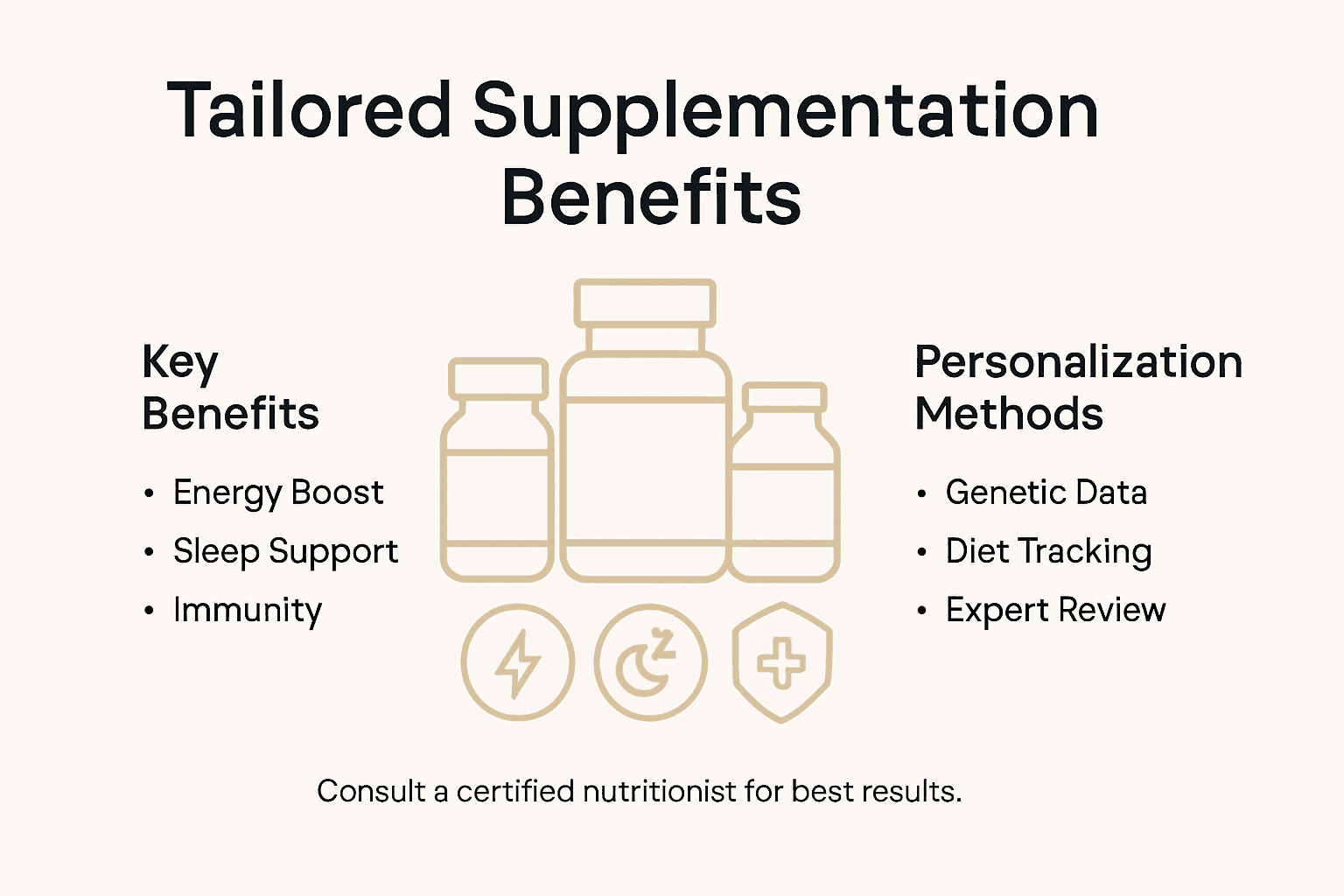
Key benefits of tailored supplementation include:
- Enhanced nutrient bioavailability
- Precise targeting of specific health concerns
- Reduced risk of nutrient interactions
- Optimization of metabolic performance
- Prevention of potential nutrient deficiencies or excesses
Personalized supplementation provides targeted delivery of nutrients and bioactive compounds that directly address individual health needs, dramatically improving overall wellness outcomes. This approach allows healthcare professionals to design supplement strategies that align perfectly with an individual’s genetic predispositions, existing nutrient levels, and specific metabolic demands.
By mastering the supplement selection process for optimal results, individuals can create a highly customized nutrition plan that supports their unique physiological requirements. The precision of tailored supplementation means more effective intervention strategies, potentially reducing the risk of chronic diseases and supporting long-term health optimization.
Pro tip: Consult with a nutritional expert to develop a personalized #nutribliss supplement strategy that matches your specific genetic and metabolic profile for maximum health benefits.
Risks and Common Pitfalls to Avoid
Personalized nutrition presents significant potential risks that consumers must carefully navigate, including potential financial, psychological, and physical challenges associated with unverified health interventions. The landscape of personalized nutrition is fraught with complexities that require critical evaluation and informed decision-making.
Key risks and potential pitfalls include:
- Unregulated products making unsubstantiated health claims
- Potential misuse of personal genetic data
- High financial costs of specialized testing
- Incomplete or biased scientific recommendations
- Potential exacerbation of existing health disparities
The challenges in personalized nutrition extend beyond individual health risks to broader systemic concerns about data privacy and equitable access. Complex data integration challenges can lead to recommendations that may not accurately represent diverse population needs, potentially creating significant barriers for underserved communities seeking personalized health solutions.
Consumers can mitigate these risks by learning how to manage supplement intake naturally, consulting qualified healthcare professionals, and maintaining a critical approach to personalized nutrition claims. Rigorous scientific validation, transparent data practices, and comprehensive understanding of individual health contexts are essential for responsible engagement with personalized nutrition strategies.
Pro tip: Always verify the credentials of nutritional experts and request comprehensive scientific documentation before implementing any #nutribliss personalized nutrition recommendations.
Expert Validation and U.S. Regulations
Expert validation of personalized nutrition technologies represents a complex and evolving landscape in the United States, where scientific advisory groups continually work to establish rigorous evidence-based standards. The current regulatory environment challenges stakeholders to balance innovation with consumer protection, creating a nuanced framework for assessing and implementing personalized nutrition solutions.
Key aspects of expert validation and regulatory oversight include:
- Scientific efficacy assessments
- Evidence-based research requirements
- Comprehensive product safety evaluations
- Ongoing clinical trial monitoring
- Interdisciplinary expert panel reviews
The U.S. regulatory approach to personalized nutrition remains fluid, with multiple government agencies participating in oversight. Supplement regulation requires careful navigation to ensure consumer safety while supporting technological advancements. Organizations like the Food and Drug Administration (FDA) and specialized scientific advisory boards play critical roles in developing guidelines that protect public health without stifling nutritional innovation.
The table below highlights major regulatory organizations overseeing personalized nutrition in the United States:
| Organization | Main Role | Regulatory Actions |
|---|---|---|
| FDA | Ensures supplement safety | Reviews claims, sets standards |
| NIH | Conducts nutrition research | Funds studies, publishes guidelines |
| USDA | Oversees dietary guidelines | Updates nutrition recommendations |
| Professional Boards | Sets credential standards | Certifies specialists, audits practices |
Research institutions and professional associations continue to develop comprehensive frameworks for evaluating personalized nutrition technologies. These efforts focus on creating standardized protocols that can assess the scientific validity, potential health benefits, and possible risks associated with emerging nutritional strategies, ensuring that consumers receive accurate and reliable guidance.
Pro tip: Always verify supplement recommendations through third-party tested supplement guides to ensure #nutribliss quality and safety standards.
Unlock Your Unique Wellness Potential with Personalized Nutrition
Understanding your individual genetic makeup and metabolic needs is key to overcoming common health challenges and achieving optimal wellness. This article highlights the power of personalized nutrition strategies tailored specifically to your body’s unique profile. If you are ready to move beyond generic diets and seek supplements designed to complement your personalized wellness journey, Nutribliss offers a carefully curated selection that supports your goals from metabolism to recovery.
Explore targeted solutions including protein powders and health boosters in our Fitness Supplements range or elevate your recovery with products from Athlete Recovery & Performance. These science-backed supplements align with the precision nutrition approach discussed in the article to fine-tune your health and performance.

Take control of your health today by visiting Nutribliss to discover supplements that fit your personalized nutrition plan. Act now to experience the benefits of tailored supplementation designed just for you and transform your wellness journey.
Frequently Asked Questions
What is personalized nutrition?
Personalized nutrition is an advanced approach to health and wellness that tailors dietary recommendations based on an individual’s unique genetic profile, metabolic responses, and lifestyle factors. It integrates various scientific disciplines to optimize health outcomes for each person.
How are personalized nutrition plans created?
Personalized nutrition plans are developed through comprehensive assessments, including genetic profiling, metabolic analysis, lifestyle evaluations, and biomarker tracking. This meticulous process helps nutritionists design tailored dietary strategies that meet individual health needs.
What are the benefits of tailored supplementation strategies?
Tailored supplementation strategies enhance nutrient bioavailability, precisely target specific health concerns, and reduce the risk of nutrient interactions. This leads to more effective dietary interventions and better overall health outcomes.
What risks should I be aware of with personalized nutrition?
Key risks include potential misuse of genetic data, unregulated products with unverified claims, and high costs of specialized testing. It’s essential to consult qualified professionals and critically assess personalized nutrition recommendations.
Recommended
- How to Build a Wellness Stack for Personalized Results
- Nutritional Supplements Guide 2025: Choose and Use Wisely
- Beginner’s Guide to Supplements: Build Your Ideal Routine – Nutribliss Inc.
- Supplement Planning Guide: Build Your Ideal Routine Step-by-Step – Nutribliss Inc.
- Lithothérapie moderne en Suisse : ses effets concrets au quotidien – Boutique Lithotherapie