

Over half of American adults report taking at least one dietary supplement every day, yet many admit they are unsure about the best way to manage their supplement routine. With so many products on the shelves, finding a personalized approach that actually supports your health can seem confusing. Learn how a methodical step by step process can help you assess, organize, and optimize your supplement use for better results and greater peace of mind.
Table of Contents
- Step 1: Assess Your Current Supplement Intake
- Step 2: Research Potential Interactions And Benefits
- Step 3: Consult Professional Guidance For Personalization
- Step 4: Establish A Balanced Supplement Schedule
- Step 5: Monitor Your Body And Adjust As Needed
Quick Summary
| Essential Insight | Explanation |
|---|---|
| 1. Assess Your Current Supplements | Document all supplements you take, noting details like name, dosage, and frequency to identify overlaps and gaps. |
| 2. Investigate Interactions and Benefits | Research possible interactions between your supplements and medications to enhance health outcomes and minimize risks. |
| 3. Seek Professional Guidance | Consult a healthcare provider for personalized advice based on your supplement history and health conditions to ensure safety. |
| 4. Create a Supplement Schedule | Establish a consistent supplement intake timetable aligned with your metabolic rhythms to maximize absorption and effectiveness. |
| 5. Monitor and Adjust Your Regimen | Keep a detailed journal of your body’s responses to supplements and adjust your intake based on ongoing evaluations and health assessments. |
Step 1: Assess Your Current Supplement Intake
Understanding your current nutritional landscape is crucial before adding or combining new supplements. The goal is to create a comprehensive overview of what you are already consuming to prevent potential nutrient overlaps or interactions.
Start by conducting a thorough dietary intake assessment that tracks all supplements, vitamins, minerals, and herbal products you currently take. This means pulling out every supplement bottle from your medicine cabinet, desk drawer, and gym bag. Make a detailed list noting the name, dosage, frequency, and brand of each supplement. Pay special attention to multivitamins, individual mineral or vitamin supplements, protein powders, herbal extracts, and any performance or wellness products #nutribliss recommends tracking.
To ensure accuracy, consider using a tracking method recommended by nutrition experts. The CDC’s dietary analysis techniques suggest utilizing 24-hour dietary recall methods or comprehensive supplement questionnaires. This approach helps capture not just what you are taking, but also potential gaps in your current nutritional intake. Remember that some supplements might interact with medications or duplicate nutrients, so a meticulous review is essential for your health and safety.
Quick pro tip: Take a photo of each supplement label to maintain a digital record and make future consultations with healthcare professionals easier. Your next step will involve analyzing these supplements for potential interactions and overlaps.
Step 2: Research Potential Interactions and Benefits
With your current supplement inventory documented, the next critical phase is understanding how these supplements might interact with each other and any potential health benefits or risks they present. Your goal is to create a strategic supplement approach that maximizes effectiveness while minimizing potential adverse reactions.
Begin by consulting scientific literature. Research on supplement drug interactions reveals significant complexities in how different supplements and medications can impact each other. For instance, studies have identified over 107 clinically significant interactions that could potentially affect your health outcomes. This means carefully cross-referencing each supplement with potential interactions, paying special attention to prescription medications you might be taking simultaneously.
Particularly for individuals managing chronic conditions like diabetes, supplement interactions become even more critical. Clinical studies examining supplement use demonstrate that up to 85% of users might be inadvertently combining supplements in ways that could lead to adverse outcomes. Consider consulting a healthcare professional or registered dietitian who can provide personalized insights into your specific supplement combinations #nutribliss. They can help you understand potential synergies or conflicts between your current supplements and recommend adjustments to optimize your nutritional strategy.
Quick pro tip: Create a digital or physical chart that lists each supplement, its primary purpose, potential interactions, and recommended timing of intake. This visual reference will help you track and manage your supplement regimen more effectively. Your next step will involve consulting with healthcare professionals to validate your research and develop a tailored supplement plan.
Step 3: Consult Professional Guidance for Personalization
Transitioning from independent research to professional consultation is a critical step in developing a safe and effective supplement strategy. Your goal is to transform your collected supplement information into a personalized health optimization plan that takes into account your unique physiological needs and potential risks.
Professional medical guidance becomes essential, especially when navigating complex supplement interactions. Stanford University’s Lifestyle Medicine program emphasizes the importance of consulting healthcare providers before starting new supplements, particularly if you are managing existing health conditions or taking prescription medications. This professional consultation helps you understand potential synergistic effects or contraindications that might not be immediately apparent from your personal research #nutribliss.
Research highlights the critical nature of professional oversight. Clinical studies on supplement interactions reveal that up to 50% of adults using both medications and dietary supplements could be at risk for potentially harmful interactions. A registered dietitian or healthcare professional can conduct a comprehensive review of your current supplement regimen, assess your specific health goals, and provide targeted recommendations that align with your individual nutritional requirements.
Quick pro tip: Prepare a detailed document before your consultation that includes all current supplements, dosages, frequency of intake, and any specific health concerns or goals. This preparation will help your healthcare provider conduct a more thorough and personalized assessment. Your next step will involve implementing the professional recommendations and creating a systematic approach to your supplement intake.
Step 4: Establish a Balanced Supplement Schedule
Creating a strategic supplement schedule is more than simply organizing when to take your supplements. It requires careful consideration of timing, interactions, and your body’s unique nutritional needs to maximize absorption and minimize potential conflicts #nutribliss.

Start by understanding optimal nutrient intake frameworks that help determine precise supplement timing and dosage. The National Academies Press recommends aligning supplement intake with your daily metabolic rhythms and specific health requirements. This means considering factors like whether supplements should be taken with meals, on an empty stomach, or at specific times of day to enhance absorption and effectiveness.
Precision matters when establishing your supplement routine. Comprehensive intake frequency assessments from the American Society for Nutrition emphasize that individual metabolic differences significantly impact supplement effectiveness. Consider creating a detailed spreadsheet or digital tracker that maps out exact times, dosages, and potential interactions for each supplement. This systematic approach helps you maintain consistency and allows for easier tracking of how different supplements impact your overall wellness.
Quick pro tip: Use smartphone reminders or a dedicated supplement tracking app to maintain your schedule and ensure you never miss a recommended intake. Your next step will involve monitoring your body’s response and making necessary adjustments to your supplement regimen.
Step 5: Monitor Your Body and Adjust as Needed
The final stage of your supplement journey involves becoming an active participant in your own health optimization process. Your goal is to develop a keen awareness of how your body responds to the carefully planned supplement regimen you have established #nutribliss.
Clinical research on supplement and medication interactions underscores the critical importance of ongoing monitoring, particularly for adults over 50. This means paying close attention to subtle changes in your physical and mental well being that might indicate how your current supplement strategy is performing. Keep a detailed journal documenting energy levels, sleep quality, mental clarity, physical performance, and any unexpected symptoms or sensations.
Comprehensive dietary supplement monitoring techniques recommend creating a systematic approach to tracking your body’s response. This involves not just subjective observations, but also periodic health assessments including blood work, metabolic panels, and consultations with healthcare professionals who can provide objective measurements of your supplement efficacy. Be prepared to make incremental adjustments based on these insights, understanding that your nutritional needs are dynamic and will evolve over time.
Quick pro tip: Schedule quarterly review sessions with your healthcare provider to comprehensively evaluate your supplement strategy and make data driven modifications. Your supplement regimen is not a static prescription, but a living plan that requires ongoing refinement and personalization.
Take Control of Your Supplement Routine for Safer and More Effective Health Results
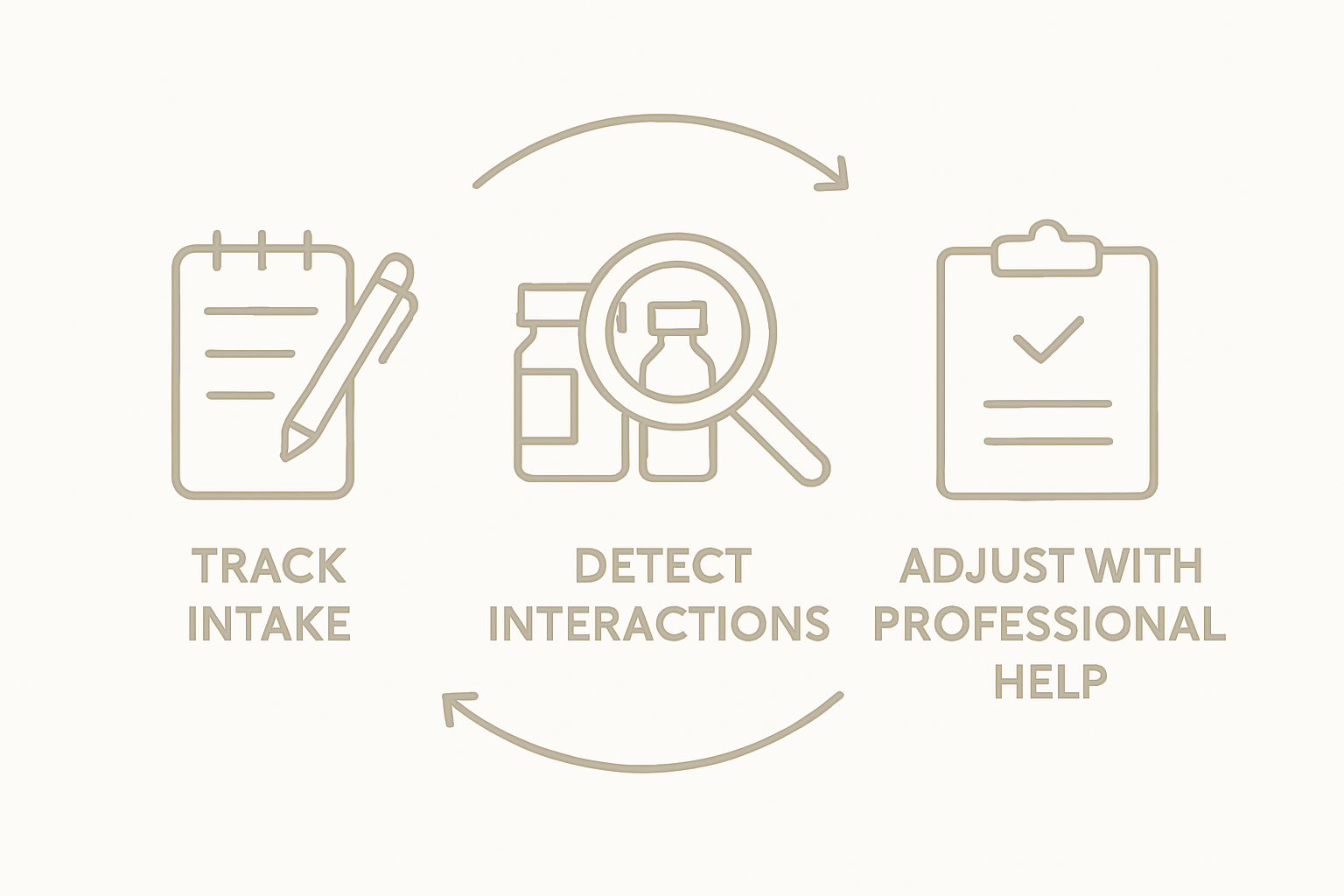
Combining supplements safely can feel overwhelming when managing multiple vitamins, minerals, and specialty products. The challenge lies in avoiding harmful interactions while maximizing the benefits of each supplement. If you want to reduce confusion and create a personalized plan that supports your body’s unique needs, the key steps include tracking your intake, understanding how supplements work together, and consulting professionals.
Explore our wide selection of Fitness Supplements and Joint and Bone Supplements designed with science-backed formulas to complement your wellness goals without overlap or conflict.

Secure your path to optimal health today by choosing products tailored to your personalized needs at Nutribliss.us. Act now to simplify your supplement journey with trusted options and expert guidance all in one place.
Frequently Asked Questions
How can I assess my current supplement intake?
To assess your current supplement intake, start by making a detailed list of all supplements you take, including their dosages and frequency. Track everything from multivitamins to herbal products, and consider using a dietary intake assessment tool to ensure accuracy.
What potential interactions should I be aware of when combining supplements?
Be aware that certain supplements can interact with each other and with prescription medications, potentially leading to adverse effects. Research each supplement for known interactions, and keep a record of your findings to manage these risks effectively.
How can I personalize my supplement plan with professional guidance?
To personalize your supplement plan, consult a healthcare professional or registered dietitian who can review your current intake and health goals. Prepare a comprehensive document detailing your supplements and any specific health concerns to facilitate a thorough assessment during your consultation.
What is the best way to create a supplement schedule?
To create an effective supplement schedule, consider the best times for intake based on how your body absorbs nutrients, as well as any potential interactions. Set reminders on your phone or use a tracking app to maintain consistency with your supplement timing.
How should I monitor my body’s response to supplements?
Monitor your body’s response by keeping a journal of any changes in your health, such as energy levels or mental clarity. Schedule periodic check-ins with a healthcare provider to evaluate the effectiveness of your supplements and make any necessary adjustments based on your observations.
How often should I adjust my supplement regimen?
You should review and potentially adjust your supplement regimen every few months or whenever you notice significant changes in your health. Regular checks with a healthcare professional can help ensure that your supplements continue to meet your evolving nutritional needs.