

If you take insulin or another glucose-lowering medication, coordinate every change with your clinician to avoid dangerous lows. What follows is a prioritized, practical plan you can start using today.
TL;DR:
- Drinking water consistently and staying well-hydrated can significantly reduce blood sugar concentrations and prevent dehydration-related spikes.
- Incorporating short walks after meals and building muscle through resistance training rapidly improves insulin sensitivity and lowers post-meal glucose levels.
- Increasing daily fiber intake to around 35 grams and choosing whole-food carbs over refined options can help flatten glucose curves and improve glycemic control.
- Losing just 5 to 10% of body weight, maintaining regular sleep patterns, and managing stress effectively can improve blood sugar levels without drastic lifestyle changes.
- Using soluble fiber supplements may support blood sugar management when dietary fiber intake is insufficient but should complement, not replace, diet, exercise, and medication.
Table of Contents
- How to manage blood sugar naturally: a daily checklist
- Diet specifics: fiber targets, carb quality, and portioning
- How does exercise lower blood sugar?
- Do weight, sleep, and stress really move blood sugar?
- Supplements and natural remedies: what actually holds up
- How to monitor blood sugar and spot red flags
- A two-week starter plan for building momentum
- Why Nutribliss leads with lifestyle first
- Support your routine with hydration and sleep essentials
- Sources
How to manage blood sugar naturally: a daily checklist
You don’t need a total lifestyle overhaul to see movement in your glucose numbers. You need a short list of habits, done consistently, in roughly this order of priority.
- Drink water throughout the day. Dehydration concentrates blood sugar, so skip sugar-sweetened drinks and keep water within reach.
- Walk 10 to 20 minutes after meals. Muscle contraction pulls glucose out of the bloodstream and blunts the post-meal spike better than walking at a random time of day.
- Build your plate around fiber. Vegetables, legumes, and whole grains slow digestion and flatten the glucose curve.
- Swap refined carbs for whole-food versions. White bread becomes whole grain; soda becomes sparkling water with fruit.
- Protect your sleep and manage stress daily. Both directly affect the hormones that raise glucose.
- Test sensibly and know your red flags. Watch for extreme thirst, blurred vision, confusion, or repeated low readings, and treat them as signals to act, not ignore.
The CDC’s guidance on managing blood sugar frames these as the foundation, not optional extras, and stresses tracking your numbers alongside your clinician.
Pro Tip: Keep a standing glass of water on your desk or counter. Refilling it becomes a visual cue to drink more, without you having to think about it.
Diet specifics: fiber targets, carb quality, and portioning
Fiber is the single biggest dietary lever most people underuse. Clinical nutrition guidelines point to roughly 35 grams of fiber a day from whole foods, vegetables, legumes, nuts, whole grains, as a target that measurably improves glycemic control and insulin sensitivity. Most American diets land closer to half that.
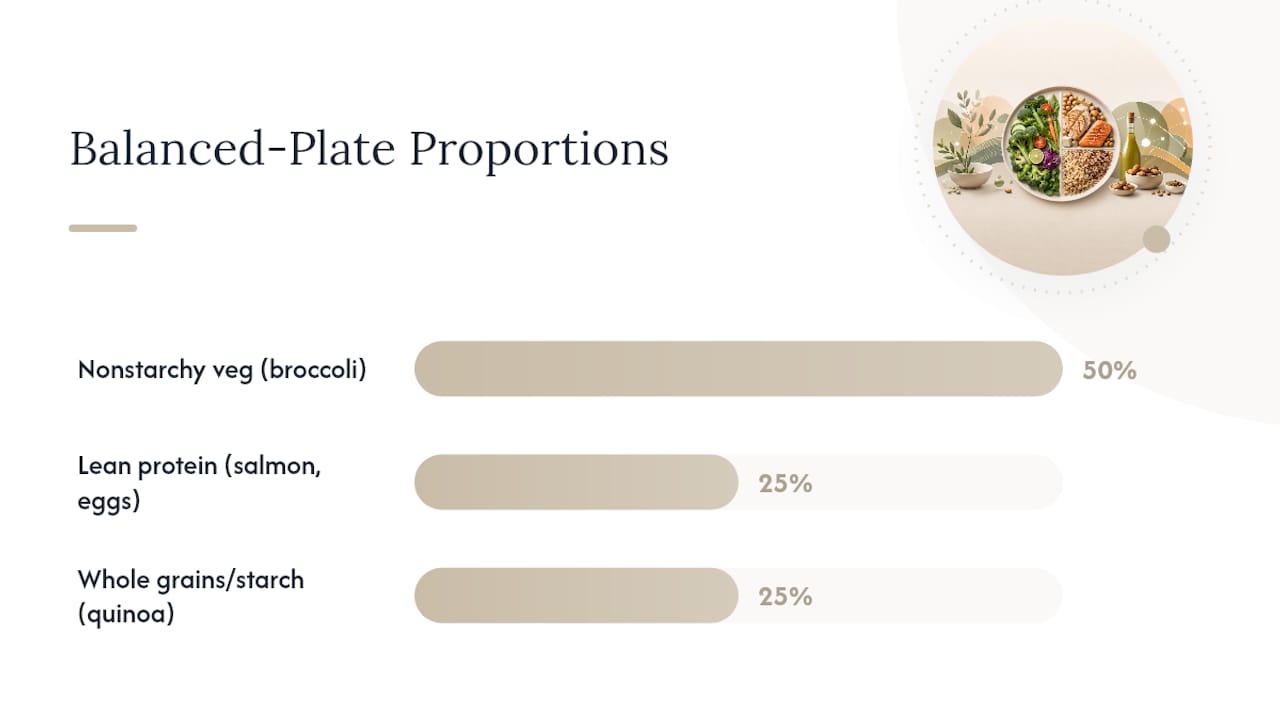
Carb quality matters as much as carb quantity. Nonstarchy vegetables, legumes, and whole fruits digest slowly and cause a gentler rise in glucose than refined grains or sugary drinks. The simplest way to structure a meal without counting a single gram: fill half your plate with nonstarchy vegetables, a quarter with lean protein, and a quarter with whole grains or a starchy vegetable like sweet potato.
If you’re on a fixed-dose medication, timing counts too. The Joslin Clinical Nutrition Guideline recommends keeping carbohydrate intake consistent from meal to meal, and avoiding long gaps or a heavy load of carbs late at night, both of which can trigger swings.
A balanced dinner might look like grilled salmon, a cup of roasted broccoli and peppers, and a half cup of quinoa. Two easy swaps to start with:
- Replace your morning bagel with two eggs and a slice of whole grain toast.
- Trade white rice for lentils or black beans at dinner.
For a deeper template, Nutribliss has a practical guide on building a meal plan that actually works for your schedule and preferences.
How does exercise lower blood sugar?
Working muscle pulls glucose out of your bloodstream to use as fuel, independent of insulin. That’s why both aerobic activity and resistance training improve insulin sensitivity, and why the effect shows up fast, often within a single session.
Aim for about 150 minutes a week of moderate aerobic activity, plus two to three strength sessions, or simply build in regular post-meal walks if a formal routine feels out of reach. Nonexercise movement, known as NEAT, counts too: taking the stairs, pacing during calls, parking farther out.
- If you take insulin or a sulfonylurea, test your glucose before and after new activity.
- Carry a fast-acting carbohydrate source in case of a low.
- Exercise’s effect on insulin action can last up to 24 hours after a session, so plan monitoring accordingly, not just during the workout itself.
Nutribliss covers more ground on building daily movement into a routine in its guide on increasing energy naturally.
Do weight, sleep, and stress really move blood sugar?
Yes, and the weight number is smaller than most people expect. Losing just 5 to 10% of body weight can meaningfully improve glucose control, no dramatic transformation required.
Sleep and stress are the quieter levers. Poor sleep and chronic stress both raise cortisol, which pushes glucose up regardless of what you eat.
- Aim for seven or more hours of sleep on a consistent schedule.
- Keep screens out of the bedroom and dim lights an hour before bed.
- Use short breathing exercises, a five-minute walk, or a microbreak at your desk to blunt stress spikes during the day.
Pro Tip: If stress tends to hit hardest mid-afternoon, set a recurring alarm for a two-minute breathing break before you reach for a snack instead.
Supplements and natural remedies: what actually holds up
Some supplements have real evidence behind them; others are mostly marketing. Soluble fiber, like psyllium, shows the most consistent benefit when added on top of a fiber-rich diet, particularly for people who can’t hit their fiber target through food alone. Vinegar and fenugreek show modest, inconsistent effects in small studies, worth knowing about, not worth building a strategy around.
- Soluble-fiber supplements can help when whole-food fiber falls short, but watch for GI side effects and adjust dosing gradually.
- Vinegar and botanical extracts like fenugreek show variable results and shouldn’t replace core habits.
- Any supplement is an adjunct to diet, exercise, and prescribed medication, never a substitute for them.
Supplements support the habits you’re already building. They don’t do the work of a meal plan, a walk after dinner, or a prescribed medication your doctor put you on for a reason.
If you add a fiber supplement or start taking one regularly, tell your clinician. Improved glucose control can sometimes mean your existing medication dose needs adjusting.
How to monitor blood sugar and spot red flags
Testing patterns matter more than any single number. A fasting reading tells you where you start the day; a check one to two hours after eating shows how your body handled that meal. Individual targets should come from your clinician, since they vary by age, medication, and health history.
- Track trends over days and weeks, not one reading in isolation.
- Test fasting, post-meal, or whenever you feel symptomatic.
- Contact your healthcare provider for very high readings, symptoms like confusion or extreme thirst, or repeated low readings.
The CDC’s guidance on managing blood sugar recommends discussing your specific goals and testing frequency directly with your care team rather than relying on generic targets.
A two-week starter plan for building momentum
Small, sequential changes stick better than a sweeping overhaul attempted all at once, according to NIDDK’s behavior-change guidance.
- Days 1 to 7: Focus on hydration, add a post-meal walk after your largest meal, and swap one refined-carb food for a whole-food version. Track one metric, either daily steps or grams of fiber.
- Days 8 to 14: Add two short strength sessions, refine your plate portions using the half-plate method, and prioritize a consistent bedtime. If you’re on medication, call your clinician before making bigger dietary shifts.
- End of week two: Review your glucose pattern, not just single readings, and bring that trend to your next appointment.
A simple log, three columns for what you ate, activity, and how you felt, gives your clinician far more useful information than a single fasting number ever could.
Why Nutribliss leads with lifestyle first
The evidence here is consistent: sustainable habit change beats restrictive quick fixes for long-term glucose control. That’s the framework Nutribliss builds its guidance around, not shortcuts, not fads. Readers looking for practical nutrition context can check our posts on using whey protein safely if you’re diabetic and on blunting breakfast spikes with protein. If you’re managing this alongside a family member navigating other life-stage habit changes, our partners at Serenity Doula cover sustainable habit building for expectant mothers, a similar principle applied to a different season of life. Follow along with #nutribliss, and always loop in your clinician before changing medication-linked routines.
— GAURAV
Support your routine with hydration and sleep essentials
Ramping up post-meal walks and strength sessions means your body loses more fluid and electrolytes than it’s used to, especially in the first two weeks of a new routine. Nutribliss’s Electrolytes Supplement is built to support hydration when activity increases, filling a gap plain water alone doesn’t always cover.

Sleep is the other piece that’s easy to neglect once you’re focused on food and movement, yet it’s directly tied to insulin sensitivity. The Sleep Formula Supplement is formulated as an adjunct for people whose sleep quality lags behind their other habit changes. Neither product replaces a prescribed diabetes treatment or medical nutrition therapy; they’re meant to support the habits you’re already building. If hydration or sleep has been your weak link, take a look at both products and see which fits your current routine.
This article is general information, not a substitute for advice from a qualified doctor. Consult a qualified healthcare professional about your own circumstances before acting on anything here.
Sources
- DOI:10.1007/s00125-023-05894-8
- CDC — Ways to manage your blood sugar
- NIH News in Health — Preventing diabetes
- Joslin Clinical Nutrition Guideline for Overweight and Obese Adults with T2D or Prediabetes
- NIDDK — Your Game Plan to Prevent Type 2 Diabetes