

TL;DR:
- Whey protein taken before meals can significantly reduce blood sugar spikes in type 2 diabetes when used correctly. It works by stimulating insulin and delaying gastric emptying, but may raise blood glucose in type 1 diabetes due to glucagon secretion. Choosing high-quality, low-carb isolate powder and monitoring individual responses optimize its benefits and safety.
Whey protein for diabetics is defined as a rapidly absorbed, dairy-derived protein supplement shown to reduce post-meal blood glucose spikes when used correctly alongside standard diabetes care. Clinical research shows that consuming 20–30g of whey protein 15–30 minutes before a carbohydrate-rich meal can reduce glucose spikes by nearly 60% in people with type 2 diabetes. That number reflects a meaningful shift in how nutrition science views protein supplements for diabetics. Whey is not a treatment or a replacement for medication. Used strategically, though, it is one of the most evidence-backed nutritional tools available for blood sugar management.
How does whey protein affect blood sugar in type 2 diabetes?
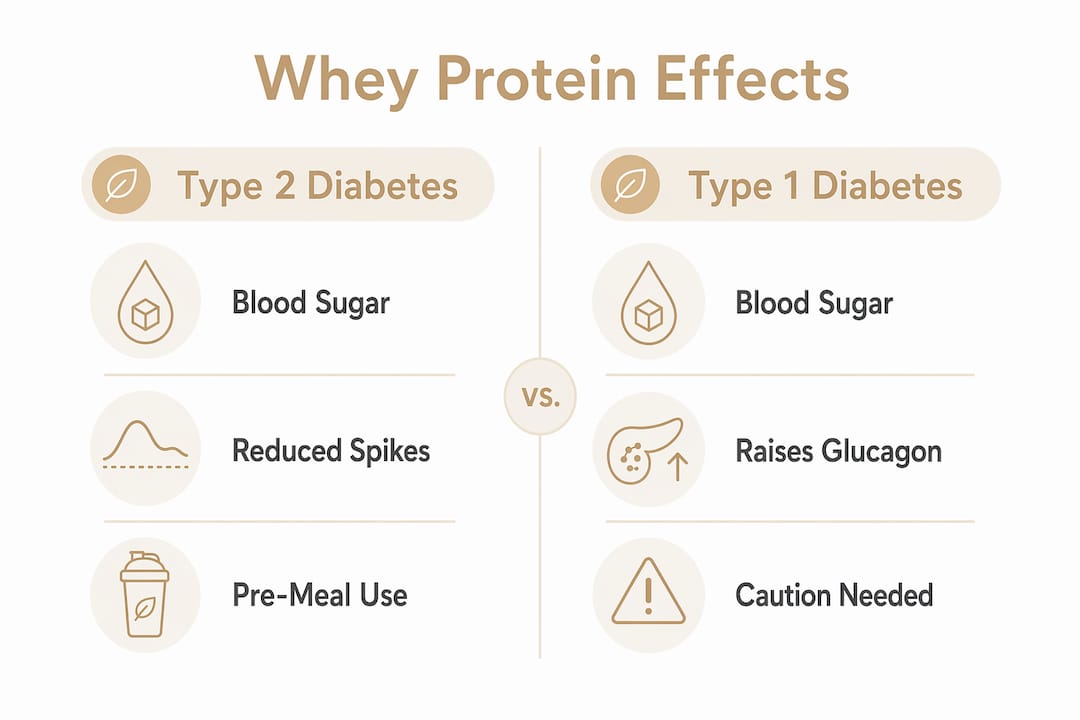
Whey protein works through two distinct physiological pathways that directly support blood glucose control. First, it stimulates insulin secretion and slows gastric emptying, which means carbohydrates from a meal enter the bloodstream more gradually. Second, it blunts the sharp post-meal glucose rise that people with type 2 diabetes struggle to manage.
The clinical evidence is specific. Consuming 20–30g of whey protein 15–30 minutes before a carbohydrate meal reduces the incremental glucose area under the curve by up to 60% over three hours. That reduction translates to fewer glucose spikes, lower insulin demand, and improved glycemic variability throughout the day.
Research also shows that replacing part of a breakfast with a diabetes-specific protein supplement cuts the post-meal glucose peak by roughly half. That finding matters because glycemic variability, not just fasting glucose, is a key driver of long-term diabetes complications.
For comparison, co-ingesting 20g of whey protein with 50g of glucose in healthy adults reduces glucose excursion by 30%. That figure confirms the mechanism is real even outside a clinical diabetes population.
Key mechanisms at a glance:
- Whey protein triggers insulin release before carbohydrates are fully digested
- Delayed gastric emptying slows glucose absorption into the bloodstream
- Reduced glycemic variability lowers the overall burden on the pancreas
- Pre-meal timing amplifies all three effects compared to post-meal consumption
Pro Tip: Take your whey protein shake 15–20 minutes before your largest carbohydrate meal of the day. That window gives the insulin-stimulating effect time to activate before glucose from food enters your bloodstream.
Does whey protein raise blood sugar in type 1 diabetes?
The answer is yes, and the reason is important. People with type 1 diabetes lack functional beta cells, so the insulin-stimulating effect of whey protein does not apply in the same way. Instead, whey protein can stimulate glucagon secretion, which signals the liver to release glucose. The result is a blood sugar rise rather than a reduction.
A study published in april 2026 in Diabetes confirmed this effect directly. Adults with type 1 diabetes who consumed whey protein showed increased blood glucose driven by glucagon activity. That finding flips the conventional assumption that protein is always glucose-neutral.
This does not mean people with type 1 diabetes cannot use whey protein. It means the approach requires more careful management:
- Monitor blood glucose before and after whey protein consumption
- Work with an endocrinologist or registered dietitian to adjust insulin dosing if needed
- Avoid assuming that “high protein, low carb” automatically means stable blood sugar in type 1 diabetes
- Track individual responses over at least two to four weeks before drawing conclusions
The core takeaway is that type 1 and type 2 diabetes are metabolically distinct. A supplement strategy that works well for one condition may require significant modification for the other. Personalized nutrition planning is not optional here. It is the only safe path.
What should you look for in a whey protein supplement for diabetes?
Whey protein isolate is the best protein for blood sugar control among all whey forms. Isolate undergoes additional filtration that removes most of the lactose and fat, leaving a product that is 90% or more protein by weight with minimal carbohydrates. Whey concentrate, by contrast, retains more lactose and carbs, which can contribute to glucose fluctuations.

The label on a protein powder can be misleading. A product marketed as “high protein” may still contain significant added sugars, maltodextrin, or other carbohydrate sources that spike blood glucose. The carbohydrate and sugar content on the nutrition facts panel matters far more than the protein percentage alone. Look for fewer than 5g of total carbohydrates per serving and zero added sugars.
Safety is a separate concern. Protein powders may contain contaminants including heavy metals, and up to two-thirds of some powders have shown contamination in independent analyses. For people with diabetes, who already face elevated cardiovascular and kidney risks, contaminant exposure is not a minor issue.
Third-party certification solves this problem directly. Look for labels that carry NSF Certified for Sport or a comparable independent verification. These certifications confirm that the product contains what the label claims and nothing that it does not.
Pro Tip: When reading a protein powder label, go straight to the “Total Carbohydrate” line and the ingredient list. If you see sugar, dextrose, maltodextrin, or corn syrup in the first five ingredients, put it back on the shelf. A clean protein powder guide can help you decode labels faster.
| Feature | What to look for | What to avoid |
|---|---|---|
| Protein form | Whey isolate (90%+ protein) | Whey concentrate with high lactose |
| Carbohydrate content | Under 5g per serving | Over 10g per serving |
| Added sugars | Zero grams | Any added sugar, dextrose, or syrup |
| Third-party testing | NSF Certified for Sport or equivalent | No certification listed |
| Ingredient list | Short, recognizable ingredients | Maltodextrin, artificial fillers |
How to use whey protein in a diabetes-friendly diet
Timing and portion size determine whether whey protein helps or hinders blood sugar control. The evidence-backed approach is straightforward:
-
Take 20–30g of whey isolate 15–30 minutes before a carbohydrate-rich meal. This pre-meal window activates the insulin-stimulating and gastric-emptying effects before glucose from food enters the bloodstream.
-
Use whey protein to replace part of a meal, not to add calories on top of it. Adding protein without adjusting total calories leads to weight gain, which worsens insulin resistance in type 2 diabetes. Swap a portion of your breakfast or lunch rather than stacking a shake on top of it.
-
Track your total daily protein intake against your body weight and activity level. A registered dietitian can calculate your specific target using a macronutrient framework that accounts for kidney function, which is a critical consideration in diabetes.
-
Pair whey protein with resistance training when possible. Muscle tissue is the body’s primary glucose disposal site. Building and maintaining muscle mass through strength training improves insulin sensitivity over time, and whey protein supports muscle protein synthesis after exercise.
-
Monitor your blood glucose response for the first two to four weeks. Individual responses to protein supplements for diabetics vary based on medication type, kidney function, gut health, and baseline insulin sensitivity. Data from your own glucose monitor is more reliable than any general guideline.
Whey protein is not a magic bullet. Protein powders are expensive and highly processed, and they work best as one component of a structured nutrition plan rather than a standalone fix. A registered dietitian with diabetes experience is the right person to help you build that plan.
Key Takeaways
Whey protein isolate, taken 20–30g before carbohydrate meals, reduces post-meal glucose spikes by up to 60% in type 2 diabetes, but requires careful monitoring and individualized dosing in type 1 diabetes.
| Point | Details |
|---|---|
| Pre-meal timing matters | Take 20–30g of whey isolate 15–30 minutes before carb-rich meals for maximum glucose control. |
| Type 1 and type 2 differ | Whey protein may raise blood glucose in type 1 diabetes via glucagon; always monitor individually. |
| Choose isolate over concentrate | Whey isolate contains 90%+ protein with minimal carbs, making it the safer choice for blood sugar. |
| Check labels for hidden sugars | Total carbohydrates and added sugars on the label matter more than the protein percentage alone. |
| Replace meals, do not add to them | Adding whey without adjusting calories causes weight gain, which worsens insulin resistance. |
Why I think most people with diabetes are using whey protein wrong
Most articles on whey protein and diabetes focus entirely on type 2 and treat the supplement as a near-universal win. That framing is incomplete, and it can lead people with type 1 diabetes into a frustrating cycle of unexplained glucose spikes.
The glucagon effect in type 1 diabetes is real and clinically documented. I have seen people follow advice designed for type 2 diabetes and then blame themselves when their blood sugar rises after a “healthy” protein shake. The problem is not their discipline. The problem is that the advice was not written for their condition.
The second mistake I see constantly is treating whey protein as an addition rather than a substitution. You cannot pour a 200-calorie protein shake on top of your existing diet and expect weight-neutral results. Diabetes management and weight management are inseparable for most people with type 2 diabetes, and extra calories undermine both goals simultaneously.
The third issue is product quality. The supplement industry is not tightly regulated, and the gap between what a label claims and what a product contains can be significant. Third-party testing is not a premium feature. It is the minimum standard you should accept. Brands that carry NSF Certified for Sport or equivalent verification have done the work to prove their products are clean.
Whey protein, used correctly, is genuinely useful. But “correctly” requires knowing your diabetes type, reading labels with skepticism, timing your intake strategically, and working with a healthcare provider who understands both nutrition and metabolic disease. The supplement is a tool. The plan around it is what actually works. Follow #nutribliss for evidence-based supplement guidance that does not cut corners on safety or transparency.
— GAURAV
Nutribliss protein options for blood sugar support
People with diabetes need protein supplements that are clean, low in carbohydrates, and independently verified. Nutribliss builds its formulations around those exact standards, with science-backed ingredient choices designed to support metabolic health without hidden sugars or unnecessary fillers.

The Nutribliss supplement collection includes protein powders and wellness products formulated for people who take their health seriously. Every product reflects the science behind the formulations, so you know exactly what you are putting into your body and why. For anyone managing blood sugar through diet and supplementation, that level of transparency is not optional. It is the starting point.
FAQ
Can diabetics take whey protein safely?
Yes, most people with type 2 diabetes can take whey protein safely when they choose a low-carb isolate, avoid added sugars, and time intake before meals. People with type 1 diabetes should monitor blood glucose closely and consult a healthcare provider first.
What is the best whey protein for blood sugar control?
Whey protein isolate is the best option because it contains 90% or more protein with minimal carbohydrates and lactose, reducing the risk of glucose spikes compared to concentrate forms.
How much whey protein should a diabetic take per day?
A typical evidence-backed dose is 20–30g taken 15–30 minutes before a carbohydrate-rich meal. Total daily intake should be set by a registered dietitian based on body weight, kidney function, and activity level.
Does whey protein raise blood sugar in type 1 diabetes?
Whey protein can raise blood glucose in people with type 1 diabetes by stimulating glucagon, which signals the liver to release glucose. This effect is distinct from what occurs in type 2 diabetes and requires individualized insulin adjustment.
What should I avoid in a protein powder if I have diabetes?
Avoid products with added sugars, maltodextrin, dextrose, or corn syrup in the ingredient list, and skip any powder without third-party certification. These ingredients and quality gaps directly undermine blood glucose control.