

TL;DR:
- Lasting habits develop through distinct stages: contemplation, preparation, action, and maintenance.
- Small, specific goals and environment design significantly improve habit formation and consistency.
- Support, accountability, and proper supplementation enhance long-term success in health routines.
Starting healthy habits sounds simple until you actually try. You set a goal, feel motivated for a few days, then life gets in the way and the routine quietly disappears. The good news is that this pattern is not a personal failure. It is a predictable stage of change that science has mapped out clearly. This article walks you through exactly how to build lasting healthy habits, from understanding why change is hard to using diet, movement, and supplements strategically. Whether you are brand new to wellness or restarting after a setback, you will find a clear, step-by-step approach here.
Table of Contents
- Understand the stages of habit change
- Set realistic goals and build your action plan
- Prioritize nutrition and movement for lasting habits
- Use supplements wisely to support healthy habits
- What most guides miss about starting healthy habits
- Start your habit journey with Nutribliss supplements
- Frequently asked questions
Key Takeaways
| Point | Details |
|---|---|
| Build habits gradually | Start with small, realistic goals for better long-term success. |
| Combine diet and movement | Pair nutrition upgrades with regular activity to maximize habit change. |
| Supplements support, not replace | Use dietary supplements strategically and seek professional advice when needed. |
| Plan and track progress | Structured planning and consistent tracking make new habits stick. |
| Embrace setbacks and support | Expect challenges, but with the right preparation and community, you can restart and sustain change. |
Understand the stages of habit change
Most people treat habit change like flipping a switch. One day you decide to be healthy, and you expect the behavior to stick immediately. That is not how it works. Research on the Transtheoretical Model overview shows that lasting change moves through distinct stages: contemplation, preparation, action, and maintenance. Skipping stages is one of the most common reasons people quit.
Here is what each stage looks like in practice:
- Contemplation: You are aware you want to change but not yet committed. You might think about eating better without doing anything differently.
- Preparation: You start planning. You research meal ideas, buy a water bottle, or look into a beginner supplement guide to understand your options.
- Action: You make the change. This is the most visible stage but also the most fragile. Momentum from week one matters enormously here.
- Maintenance: You protect the habit over time, adjusting when life disrupts your routine.
The first week is critical. Early wins build confidence and signal to your brain that the new behavior is worth repeating. Small victories like drinking one extra glass of water or taking a 10-minute walk create a feedback loop that pulls you forward.
Environment shapes behavior more than willpower does. If your kitchen counter has fruit on it, you eat more fruit. If your running shoes are by the door, you are more likely to use them. Designing your surroundings to support your goals removes friction and makes the right choice the easy choice.
Accountability is the other underrated factor. Telling someone your goal, joining a group, or even tracking in an app increases follow-through significantly. The table below shows how each stage differs and what you need to succeed in each one.
| Stage | What it looks like | What helps most |
|---|---|---|
| Contemplation | Thinking about change | Education, motivation |
| Preparation | Planning and researching | Goal-setting, setting realistic health goals |
| Action | Actively changing behavior | Environment design, accountability |
| Maintenance | Sustaining the habit | Support systems, tracking |
Common pitfalls include setting goals that are too big too fast, relying on motivation alone, and not having a recovery plan when you slip. Expect setbacks. Plan for them. That mindset shift alone puts you ahead of most people.
Set realistic goals and build your action plan
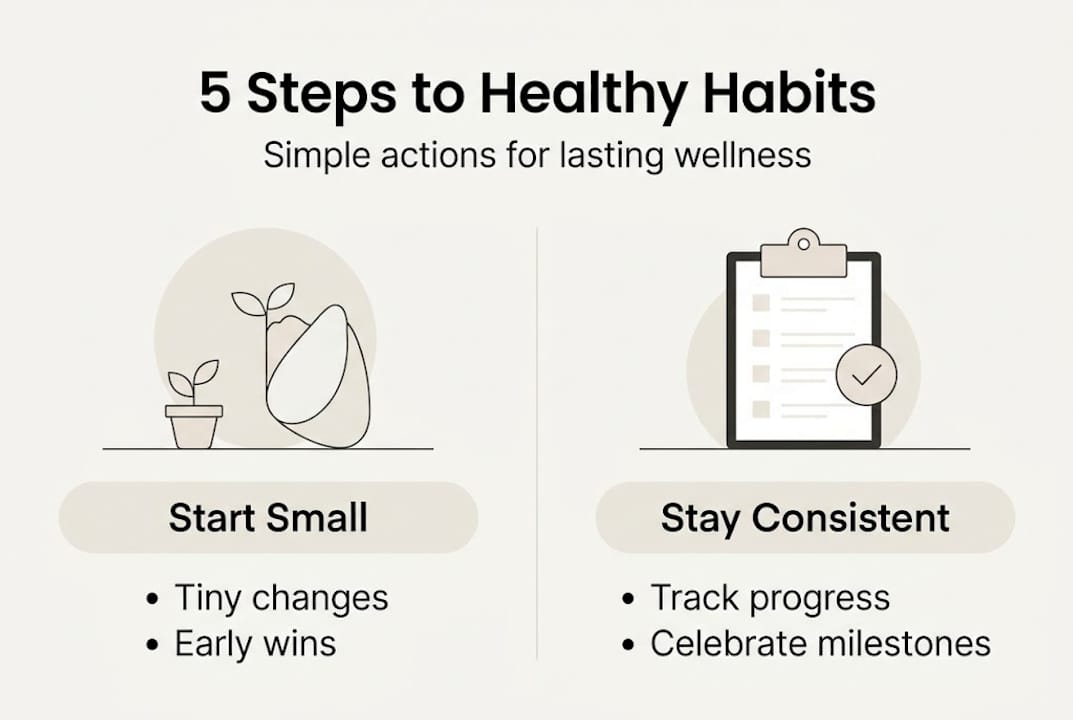
Once you understand the change process, focus on actionable goal-setting and planning. Vague goals like “eat healthier” or “exercise more” almost never work. Specific, small goals do. Start small with realistic goals like 10-minute walks or adding one serving of vegetables to lunch. These feel almost too easy, which is exactly the point.
Here is why small goals win. Your brain registers completion as a reward. Each time you finish a small goal, dopamine releases and reinforces the behavior. Stack enough of those small wins and you have a habit.
Practical examples of beginner-friendly health goals:
- Walk for 10 minutes after dinner three times a week
- Add one vegetable to one meal per day
- Drink one full glass of water before each meal
- Sleep at the same time every night for one week
- Take a daily multivitamin with breakfast
Meal and exercise planning removes decision fatigue. When you already know what you are eating on Tuesday or when you work out on Thursday, you do not have to rely on willpower in the moment. Spend 15 minutes on Sunday mapping out your week. Use a simple notebook or a free app. The tool matters less than the habit of planning.

Tracking progress keeps you honest and motivated. Celebrate milestones, even small ones. Finished your first week of walks? That is worth acknowledging. Progress tracking also helps you spot patterns, like noticing you always skip workouts on stressful Mondays, so you can adjust.
The data on habit interventions is encouraging. Combined lifestyle programs show an 81% increase in physical activity and a 63% improvement in diet quality, with participants losing 4 to 5 kilograms in just 4 to 12 weeks. Structure works.
Pro Tip: Use a supplement schedule planning tool to pair your supplement routine with meals or workouts. Linking a new habit to an existing one, called habit stacking, dramatically improves consistency.
| Goal type | Example | Success indicator |
|---|---|---|
| Nutrition | Add 1 vegetable per meal | Done 5 of 7 days |
| Activity | Walk 10 minutes daily | 3 weeks consistent |
| Sleep | Same bedtime nightly | 7-day streak |
| Supplements | Daily vitamin with breakfast | Taken 6 of 7 days |
Prioritize nutrition and movement for lasting habits
With goals set, it is time to bring your nutrition and movement habits to life. Nutrition does not have to be complicated. Focus on whole foods: fruits, vegetables, whole grains, and lean proteins. Limit processed foods and added sugars. That single shift, moving toward real food and away from packaged products, delivers more benefit than most trendy diets combined.
Practical nutrition upgrades that actually stick:
- Swap white bread for whole grain bread
- Add a handful of spinach to eggs or smoothies
- Choose water or sparkling water instead of soda
- Cook one extra meal at home per week
- Prep snacks like cut vegetables or boiled eggs in advance
Movement is equally non-negotiable. Incorporate 150 minutes of moderate activity weekly, which breaks down to about 22 minutes a day. Add strength training twice a week and look for ways to move more throughout the day, like taking stairs or walking during phone calls.
Statistic spotlight: Physical activity interventions show an 81% success rate in increasing activity levels among participants in structured programs. Structure is the difference between intention and action.
Consistency beats intensity every time. A 20-minute walk you do every day beats an intense gym session you do once a month. Start where you are, not where you think you should be. Slip-ups happen. The key is returning to your routine the next day without guilt.
Pro Tip: Check out healthy lifestyle supplement tips for ideas on how to pair targeted supplements with your nutrition and movement routine for added support.
Staying consistent gets easier when habits feel automatic. That usually takes a few weeks of deliberate repetition. Be patient with the process. The habits that last are the ones built slowly and reinforced consistently.
Use supplements wisely to support healthy habits
To further strengthen your foundation, consider how supplements fit into your habit-building toolkit. Supplements are exactly what the name says: they supplement a healthy lifestyle. They are not a shortcut, and they do not replace real food or regular movement.
That said, they fill genuine gaps. Multivitamins as insurance make sense when your diet consistently lacks key nutrients, especially vitamin D and B12 for older adults or those with limited sun exposure. Personalizing your supplement choices based on your actual diet, lifestyle, and health history is far more effective than copying someone else’s stack.
Common mistakes to avoid:
- Taking supplements without knowing what your diet already provides
- Expecting supplements to compensate for poor eating habits
- Buying based on marketing claims rather than evidence
- Skipping consultation with a healthcare provider
- Doubling up on nutrients without realizing it
“Supplements are not proven for disease prevention in people without deficiencies. Prioritize diet first, then consider targeted supplementation.” This perspective from supplement heart health myths is a useful reality check for anyone tempted to over-rely on pills.
A practical approach: use a supplement planning guide to identify which supplements align with your specific goals, whether that is energy, recovery, sleep, or immune support. Then consult your doctor before adding anything new, especially if you take medications.
For those managing supplement intake day to day, resources on managing supplement intake can help you stay organized without overdoing it. The goal is support, not substitution.
What most guides miss about starting healthy habits
Most habit guides focus on the first few weeks. They give you the steps, the meal plans, the motivation quotes. What they rarely address is what happens at week six, when the novelty is gone and life feels normal again. That is when most people quietly stop.
The truth is that relapse is not a sign of weakness. It is a predictable part of the process. What separates people who sustain healthy habits from those who do not is not willpower. It is structure, community, and the willingness to restart without shame. The people who succeed long-term treat setbacks as data, not failure.
Diet, movement, and mindset are each powerful alone. Combined, they create something much harder to break. When your nutrition supports your energy, your workouts feel better, your sleep improves, and your mood stabilizes. Each habit reinforces the others. Removing one weakens the whole system.
Accountability and planning are the hidden engines of lasting change. Whether that is a workout partner, a supplement routine built into your morning, or a weekly check-in with yourself, ongoing support structures matter more than initial motivation. Building a supplement routine for wellness into your day is one simple anchor that keeps the bigger habit system intact even when other things slip.
Start your habit journey with Nutribliss supplements
Building healthy habits is easier when you have the right support in place from day one. At Nutribliss, we design supplements that fit naturally into the routines you are building, not routines built around supplements.

If hydration is part of your plan, our electrolyte supplement keeps your body performing at its best during workouts and throughout the day. For recovery and rest, our sleep support supplement helps you wind down so your body can repair overnight. Explore our full range of recovery supplements to find what fits your goals. Visit Nutribliss to browse all products and start building your foundation today.
Frequently asked questions
What is the easiest healthy habit to start?
Small habits like 10-minute walks or adding one vegetable serving per day are consistently the easiest entry points for beginners because they require minimal time and no special equipment.
How long does it take to form a healthy habit?
Most habits begin to feel automatic within a few weeks, but long-term maintenance is more challenging and requires ongoing support to prevent relapse.
Should I use supplements if my diet is healthy?
If your diet consistently covers all key nutrients, supplements may not be necessary. However, supplements as insurance can help fill gaps, especially for vitamin D or B12. Always check with your provider first.
How much exercise is recommended for new healthy habits?
Experts recommend 150 minutes of moderate activity per week for most adults, which is about 22 minutes per day and very achievable for beginners.
What if I lose motivation or have setbacks?
Setbacks are a normal part of the process. Getting back on track quickly, without self-criticism, and leaning on support systems or structure is what keeps long-term change alive.