

TL;DR:
- Most healthy individuals produce enough digestive enzymes, making supplements generally unnecessary.
- Supplementation is essential only for medical conditions like EPI, cystic fibrosis, or pancreatitis.
- Targeted enzyme supports, such as lactase for lactose intolerance, are evidence-based; broad supplements lack proven benefit.
Digestive enzyme supplements are everywhere right now, marketed as a fix for bloating, sluggish digestion, and poor nutrient absorption. The wellness industry wants you to believe your gut is running on empty. But medical research tells a more precise story: most people produce all the enzymes they need, and supplementing without a real reason often does nothing except cost you money. This article breaks down how digestive enzymes actually work, who genuinely benefits from supplements, and how to make a smart, evidence-based decision for your gut health.
Table of Contents
- What are digestive enzymes and why do they matter?
- Who actually needs digestive enzymes?
- Digestive enzyme supplements: prescription vs. over-the-counter
- Can healthy people benefit from enzyme supplements?
- Specific use cases: Lactase, alpha-galactosidase, and other targeted enzymes
- Why most people get digestive enzymes wrong: What really matters
- Explore more strategies to support your digestion
- Frequently asked questions
Key Takeaways
| Point | Details |
|---|---|
| Enzymes have a specific role | Digestive enzymes break down food so the body can absorb nutrients effectively. |
| Most people don’t need supplements | Healthy bodies usually make enough enzymes without outside help. |
| Supplements help in real deficiencies | Medical enzyme supplements are vital for diagnosed conditions like EPI or cystic fibrosis. |
| OTC enzymes can help mild symptoms | Targeted supplements (like lactase) may aid food intolerances but aren’t needed for everyone. |
| Focus on diet and habits | A diverse, fiber-rich diet and balanced lifestyle are better for digestion than unnecessary supplements. |
What are digestive enzymes and why do they matter?
Digestive enzymes are proteins your body produces to break food down into smaller pieces your cells can actually use. Without them, nutrients from your meals would pass right through you unabsorbed. Think of them as the scissors your gut uses to cut large food molecules into absorbable building blocks.
Your body makes several types, each targeting a specific food component:
- Amylase: breaks down carbohydrates and starches into simple sugars
- Protease: cuts proteins into amino acids
- Lipase: splits dietary fats into fatty acids and glycerol
- Lactase: digests lactose, the sugar found in dairy products
- Cellulase: helps break down plant fiber
These enzymes are released at different points in your digestive system. Amylase starts working in your mouth through saliva. Lipase and protease are produced primarily by the pancreas and released into the small intestine, where most digestion and absorption happen. Your stomach adds acid and pepsin to process proteins before the small intestine takes over.
Here’s the important part: your body is extraordinarily efficient at this. Learning the gut health basics makes it clear that a well-functioning digestive system is self-regulating. As Johns Hopkins Medicine confirms, healthy people produce sufficient enzymes for normal digestion, and supplements are largely unnecessary for those without a diagnosed deficiency.
“A healthy person really doesn’t need to take digestive enzyme supplements.” Johns Hopkins Medicine
That’s a direct statement from leading gastroenterology experts. Understanding the importance of digestive health doesn’t mean piling on supplements. It means supporting the system your body already runs well.
Who actually needs digestive enzymes?
Some people genuinely cannot produce enough enzymes on their own, and for them, supplementation is not optional. It’s medically necessary.
The most common conditions that cause true enzyme deficiency include:
- Exocrine pancreatic insufficiency (EPI): The pancreas fails to produce enough enzymes, often due to chronic disease or damage.
- Cystic fibrosis: A genetic condition that blocks enzyme secretion from the pancreas.
- Chronic pancreatitis: Long-term inflammation that progressively destroys pancreatic tissue.
For these people, enzyme deficiency leads to poor nutrient absorption, persistent bloating, gas, diarrhea, and greasy stools. Over time, malnutrition becomes a serious risk.
| Condition | Key Symptoms | PERT Needed? |
|---|---|---|
| Exocrine pancreatic insufficiency | Fatty stools, weight loss, malnutrition | Yes |
| Cystic fibrosis | Poor growth, malabsorption, gas | Yes (90%+ of patients) |
| Chronic pancreatitis | Pain, diarrhea, nutrient loss | Often yes |
| Lactose intolerance | Bloating, gas, diarrhea after dairy | OTC lactase may help |
The treatment for these conditions is called PERT, which stands for pancreatic enzyme replacement therapy. Prescription PERT products contain a standardized mix of pancreatic enzymes in an acid-protected capsule. This matters because stomach acid destroys unprotected enzymes before they reach the small intestine where they’re needed.
Research shows that PERT improves fat absorption and reduces symptoms in EPI, though real-world dosing often falls below the recommended 40,000 to 50,000 lipase units per meal. That lower dosing controls symptoms but may not fully restore nutritional status. Pairing PERT with nutrient absorption with therapy strategies can help close that gap.
Pro Tip: PERT must always be enteric coated (acid protected) and dosed individually based on fat intake and symptom response. Never self-prescribe prescription enzymes.
Digestive enzyme supplements: prescription vs. over-the-counter
Not all enzyme supplements are the same product category. There’s a wide gap between what your doctor prescribes and what you find on a store shelf.
| Feature | Prescription PERT | OTC Enzyme Supplements |
|---|---|---|
| Who uses it | EPI, cystic fibrosis, pancreatitis | General public, food sensitivities |
| FDA regulated | Yes, tightly controlled | No, treated as dietary supplements |
| Standardized dosing | Yes | No |
| Enteric coated | Yes | Usually not |
| Proven effectiveness | Strong clinical evidence | Limited, mostly anecdotal |
| Risks | Low with proper dosing | Variable ingredients, unknown potency |
For most healthy adults, the relevant OTC options are narrow. As Cleveland Clinic points out, specific OTC enzymes like lactase and alpha-galactosidase can reduce bloating and gas caused by dairy or beans respectively. These are targeted fixes for known food intolerances, not general digestive boosters.
OTC products marketed as broad digestive support are a different story. Here’s what you should know:
- Pro: May reduce occasional gas or bloating from specific foods
- Pro: Widely available and generally low risk at recommended doses
- Con: Ingredients and potency vary dramatically between brands
- Con: No regulatory requirement to prove they work before selling
- Con: Most claims about boosting absorption or improving general gut health are unsupported
If you’re exploring targeted digestive support, reviewing a Blend supplement overview with transparent ingredient lists is a smarter starting point than grabbing the first product you see. A solid supplement support guide will walk you through what to look for before you buy.
Can healthy people benefit from enzyme supplements?
This is where the marketing noise gets the loudest, and the science gets the quietest.
For people without enzyme deficiency or diagnosed digestive conditions, the research is consistent: supplements are unnecessary and unproven for improving nutrient absorption. Your pancreas and small intestine already handle the workload. Adding more enzymes does not create better digestion. It’s like pouring extra oil into an engine that already has enough.

Common enzyme-rich foods like pineapple (bromelain) and papaya (papain) get a lot of attention online. No strong evidence supports the idea that eating these foods measurably improves digestion in healthy individuals. The enzymes they contain are largely broken down by your own stomach acid before they do anything useful.
Before considering any OTC enzyme product, work through these precautions:
- Get a proper diagnosis if you have chronic digestive symptoms
- Review the ingredient list for third-party testing and transparency
- Check for interactions with any medications you take
- Confirm with a healthcare provider that the product matches your actual need
- Follow supplement safety steps before starting any new regimen
Also consider reading about combining supplements safely if you already take other products.
Pro Tip: Diet diversity, adequate fiber, and hydration do more for gut health in most people than any OTC enzyme product on the market. Start there before spending money on supplements. The science of supplements backs this approach consistently.
Specific use cases: Lactase, alpha-galactosidase, and other targeted enzymes
While most people don’t benefit from general enzyme blends, a few targeted situations are genuinely supported by evidence.
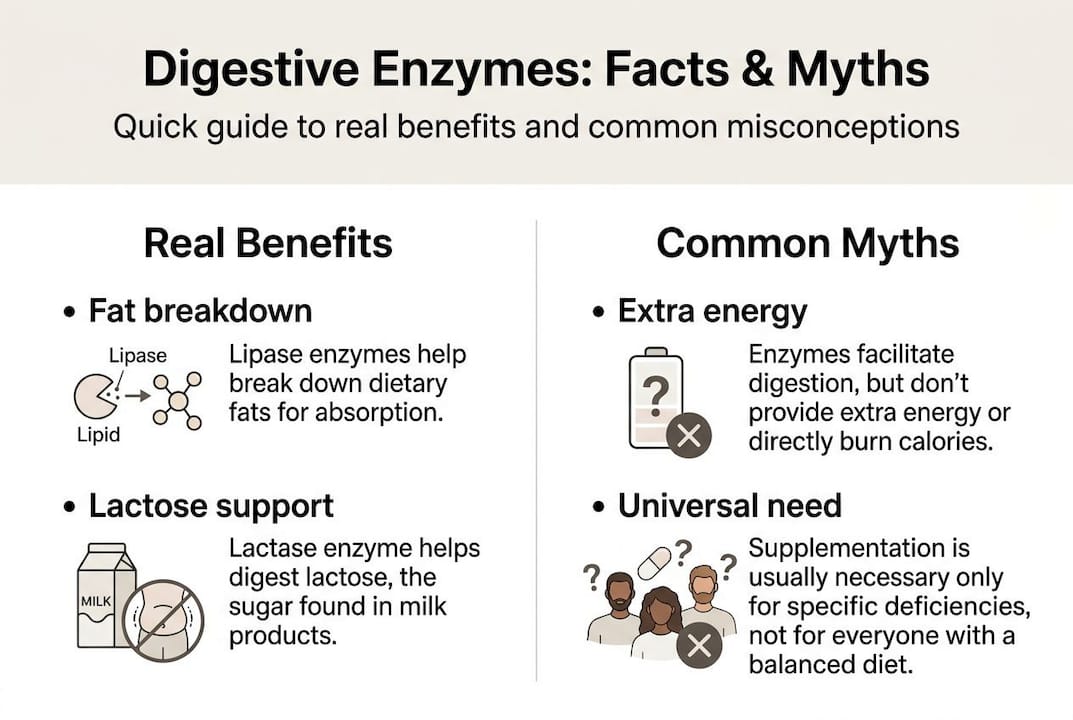
Lactase for lactose intolerance is the clearest example. People who lack sufficient lactase production experience cramping, gas, and diarrhea after eating dairy. Taking a lactase supplement with dairy meals can prevent these symptoms reliably. This is not a placebo effect. It directly replaces the missing enzyme at the right moment.
Alpha-galactosidase works differently. It helps break down complex sugars in beans, lentils, and certain vegetables that the human gut cannot fully digest on its own. Fewer of these sugars reach the colon undigested, which means less gas production. Products like Beano use this enzyme specifically, and specific enzymes for intolerances like alpha-galactosidase have a clear mechanism and real use case.
Who should consider these targeted supplements?
- People with confirmed lactose intolerance who still want to eat dairy
- Individuals who regularly eat high-fiber legume-heavy diets and experience gas
- Those following a plant-based diet where bean and lentil intake is high
- Anyone whose doctor recommends a specific enzyme for a known food sensitivity
For broader gut support beyond enzymes, checking out our probiotic guide is worth your time. Probiotics and enzymes work on different parts of the digestive process and can complement each other when used correctly.
Why most people get digestive enzymes wrong: What really matters
Here’s our honest take after looking at the evidence: the enzyme supplement market is built largely on gut anxiety, not gut biology.
The marketing works because digestive discomfort is real and common. But the leap from “I feel bloated” to “I need enzyme supplements” skips several important steps, including figuring out whether the problem is food choices, hydration, meal timing, or an actual enzyme issue.
We’ve seen people spend months on enzyme blends that do nothing while the real solution was adding more fiber, reducing ultra-processed food, or simply chewing more slowly. Gut transformation doesn’t come in a capsule for most people. It comes from consistently better daily habits.
Supplements matter enormously when they’re matched to a real diagnosis. PERT is life-changing for someone with EPI. Lactase is genuinely helpful for lactose intolerance. But the idea that healthy people are enzyme-deficient and need supplementation to absorb food properly is not supported by clinical science.
The gut health supplements guide we’ve put together prioritizes this kind of clarity. Use supplements to solve real, identified problems. Use diet and lifestyle to build the foundation everything else rests on.
Explore more strategies to support your digestion
You now know where enzyme supplements genuinely help and where they’re just noise. The next step is building a gut health strategy that actually fits your body and your goals.

At Nutribliss, we believe in using supplements that match your biology, not just your wishlist. Whether you’re managing a specific intolerance, supporting a diagnosed condition, or simply optimizing your daily nutrition, the right information makes all the difference. Browse our full range of all supplements designed with transparency and science in mind. And when you want to go deeper on the research behind what you’re taking, our science behind superfoods page gives you real context to make confident choices.
Frequently asked questions
Are digestive enzyme supplements safe to take daily?
Most healthy people do not require daily enzyme supplements, and safety depends on your specific health status and the product’s ingredient quality. Always confirm with a healthcare provider before adding them to your routine.
What are the signs of an enzyme deficiency?
Key warning signs include persistent bloating, greasy or oily stools, unexplained weight loss, and chronic diarrhea. These symptoms may point to conditions like EPI or chronic pancreatitis that require proper medical evaluation.
Is there any benefit to taking enzymes if you don’t have digestive issues?
Research consistently shows no proven benefit for nutrient absorption or digestion improvement in healthy individuals who produce sufficient enzymes on their own.
Which common foods naturally contain digestive enzymes?
Pineapple, papaya, and fermented foods like kefir contain natural enzymes, but no strong evidence supports that eating them meaningfully improves digestion in people who already produce adequate enzymes.