

More than half of american adults report using dietary supplements, yet many remain uncertain about what truly makes these products effective or safe. With an ever-expanding market and countless health claims, understanding the scientific process behind supplements is key to making smart choices. This guide clarifies how rigorous research, validated evidence, and strict legal standards shape which supplements you can trust for real results.
Table of Contents
- Defining The Role Of Science In Supplements
- Types Of Scientific Evidence Used In Supplements
- How Research Validates Supplement Claims
- Ensuring Safety And Legal Compliance
- Identifying Misconceptions And Avoiding Pitfalls
Key Takeaways
| Point | Details |
|---|---|
| Scientific Basis for Supplements | Dietary supplements must be supported by competent and reliable scientific evidence to ensure safety and efficacy for consumers. |
| Types of Evidence | Robust supplement claims rely on various scientific studies, including randomized controlled trials, systematic reviews, and observational studies. |
| Research Validation | A rigorous validation process is essential for substantiating health claims in supplements, involving hypothesis formation, clinical trials, and peer review. |
| Consumer Awareness | Consumers should approach supplement claims critically and be aware of common misconceptions to make informed choices about their health. |
Defining the Role of Science in Supplements
Science serves as the critical foundation for understanding, developing, and validating dietary supplements. At its core, scientific research provides the essential framework that transforms nutritional ingredients from mere substances into targeted wellness solutions. According to the FDA, any structure or function claims about dietary supplements must be scientifically substantiated to ensure consumer safety and product efficacy.
The scientific approach to supplements involves rigorous methodologies that validate ingredient effectiveness, safety profiles, and potential health benefits. Nutritional science examines how specific compounds interact with human biological systems, investigating mechanisms of absorption, metabolic pathways, and potential therapeutic impacts. The FTC emphasizes that supplement advertising must be backed by competent and reliable scientific evidence, highlighting the critical role of research in substantiating health-related claims.
Key scientific considerations in supplement development include:
- Precise ingredient sourcing and quality control
- Bioavailability and absorption rates
- Potential interactions with medications
- Long-term health impacts
- Clinical trial validation
For #nutribliss consumers, understanding the scientific rigor behind supplements means recognizing that not all products are created equal. Scientific research distinguishes high-quality nutritional supplements from unsubstantiated claims, providing consumers with confidence in their wellness choices. By prioritizing evidence-based formulations, supplement manufacturers can develop products that offer genuine health support grounded in robust scientific research.
Types of Scientific Evidence Used in Supplements
In the world of dietary supplements, scientific evidence is the cornerstone of credibility and effectiveness. FDA guidelines specify that competent and reliable scientific evidence is crucial for substantiating health claims, with a primary focus on well-controlled human clinical trials. This rigorous approach ensures that supplement manufacturers provide consumers with scientifically validated products that genuinely support health and wellness.
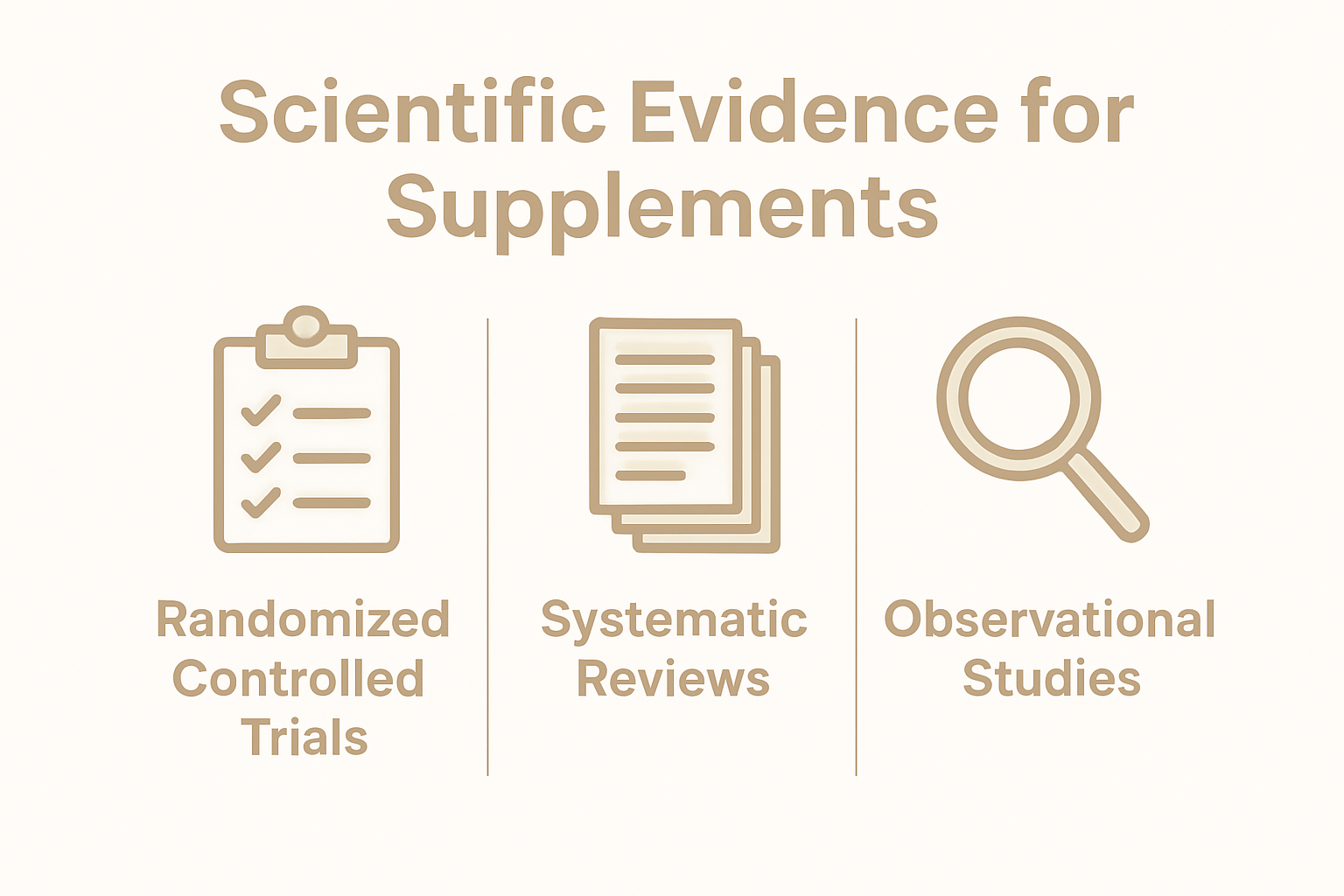
The primary types of scientific evidence used in supplement research include:
- Randomized Controlled Trials (RCTs): Considered the gold standard of scientific research, these studies compare a specific supplement against a placebo or standard treatment
- Systematic Reviews: Comprehensive analyses that synthesize results from multiple scientific studies
- Observational Studies: Research that tracks supplement effects in real-world populations
- In Vitro Studies: Laboratory-based research examining cellular-level interactions
- Animal Studies: Preliminary research that provides insights before human trials
PubMed highlights that the FDA’s review process evaluates the totality of scientific evidence, ensuring that health claims are supported by significant scientific agreement. This comprehensive approach means that not all studies carry equal weight; researchers and regulatory bodies prioritize high-quality, peer-reviewed research that demonstrates consistent and meaningful health outcomes.
For #nutribliss consumers, understanding these scientific evidence types empowers more informed supplement choices.
While individual studies offer valuable insights, the most robust scientific claims emerge from multiple high-quality research sources that consistently demonstrate a supplement’s potential benefits and safety profile. By demanding scientific substantiation, consumers can distinguish between marketing claims and genuinely evidence-based nutritional support.
How Research Validates Supplement Claims
Research validation is the critical process that transforms supplement claims from marketing rhetoric into scientifically credible health solutions. FDA guidance emphasizes that substantiating dietary supplement claims requires a comprehensive evaluation of scientific evidence, ensuring that health assertions are both truthful and substantiated by rigorous scientific investigation.
The validation process involves several key steps:
- Hypothesis Formation: Researchers develop specific, measurable health claims
- Study Design: Carefully structured research protocols are created
- Clinical Trials: Human studies test supplement effectiveness
- Statistical Analysis: Rigorous evaluation of results for statistical significance
- Peer Review: Independent experts critically examine research findings
- Regulatory Review: Government agencies assess overall scientific merit
According to the FTC, supplement claims must be supported by competent and reliable scientific evidence, typically involving well-controlled human clinical studies. This means that manufacturers cannot simply make health claims without substantial scientific backing. The research must demonstrate a clear, measurable impact on human health, with studies that can be replicated and verified by independent researchers.
For #nutribliss consumers, understanding research validation provides crucial insight into supplement quality. Not all studies are created equal; the most trustworthy claims emerge from multiple high-quality research sources that consistently demonstrate a supplement’s potential benefits and safety profile. By demanding scientific substantiation, consumers can make informed decisions, distinguishing between genuine nutritional support and unsubstantiated marketing claims. Supplement regulation guide offers additional insights into how scientific research protects consumer health and ensures supplement integrity.
Ensuring Safety and Legal Compliance
Legal compliance is the foundational framework that protects consumers and maintains integrity in the dietary supplement industry. FDA regulations mandate that dietary supplements must not be misbranded or adulterated, requiring manufacturers to implement stringent safety protocols and transparent labeling practices that prioritize consumer health and informed decision-making.
Key components of safety and legal compliance include:
- Product Ingredient Verification: Comprehensive testing of supplement ingredients
- Manufacturing Standards: Adherence to Good Manufacturing Practices (GMP)
- Labeling Accuracy: Clear, truthful product descriptions
- Adverse Event Reporting: Systematic tracking of potential health risks
- Quality Control Measures: Consistent product testing and documentation
- Ingredient Sourcing Transparency: Documenting ingredient origins and purity
According to the FTC, dietary supplement advertising must be fundamentally truthful and not misleading, with all claims substantiated by rigorous scientific evidence. This means manufacturers cannot make unsupported health assertions or use deceptive marketing techniques. The legal framework ensures that consumers receive accurate information about supplement composition, potential benefits, and associated risks.

For #nutribliss consumers, understanding these compliance mechanisms provides critical insight into supplement safety. By supporting brands that prioritize legal and scientific standards, consumers can make informed choices that protect their health. Supplement regulation guide offers deeper exploration of the regulatory landscape that safeguards dietary supplement quality and consumer wellness.
Identifying Misconceptions and Avoiding Pitfalls
Navigating the complex world of dietary supplements requires a critical and informed approach. FDA educational resources emphasize the importance of evaluating supplement claims with scientific skepticism, helping consumers distinguish between legitimate nutritional support and potentially misleading marketing strategies.
Common misconceptions in dietary supplements include:
- Instant Results: Believing supplements provide immediate health transformations
- Magic Bullet Syndrome: Expecting a single supplement to solve complex health issues
- Natural Equals Safe: Assuming all natural ingredients are automatically harmless
- One-Size-Fits-All: Believing supplements work identically for every individual
- Unrealistic Performance Claims: Trusting exaggerated marketing promises
- Supplement Superiority: Thinking supplements can replace balanced nutrition
According to the FTC, consumers must be vigilant about unsubstantiated claims in supplement advertising. Manufacturers are prohibited from making misleading statements that lack scientific evidence. This means carefully examining product claims, checking for credible research backing, and understanding that legitimate supplements provide targeted nutritional support rather than miraculous health solutions.
For #nutribliss consumers, critical thinking is your best defense. Always consult healthcare professionals, review scientific research, and approach supplement marketing with healthy skepticism. Supplement regulation guide provides additional insights into navigating the complex landscape of dietary supplement claims and understanding what truly constitutes evidence-based nutritional support.
Experience Science-Backed Wellness with Nutribliss
Understanding the pivotal role of science in supplements helps you avoid misleading claims and choose products that truly support your health goals. If you want supplements validated by rigorous research and crafted with quality, Nutribliss offers a trusted range designed with scientific evidence in mind. From supporting athletic performance to enhancing overall wellness, our carefully selected Fitness Supplements and comprehensive Nutribliss Supplements collection bring you targeted, effective nutritional support.

Don’t settle for guesswork when it comes to your health. Explore https://nutribliss.us today and discover supplements grounded in verified research and legal safety standards. Take control of your wellness journey now with products you can trust backed by science.
Frequently Asked Questions
What role does science play in the development of dietary supplements?
Science is essential for understanding, developing, and validating dietary supplements. It ensures that health claims are supported by rigorous research, thereby enhancing consumer safety and product efficacy.
What types of scientific evidence are used to substantiate supplement claims?
The primary types of scientific evidence include Randomized Controlled Trials (RCTs), systematic reviews, observational studies, in vitro studies, and animal studies. These methods help establish the effectiveness and safety of supplements.
How do manufacturers validate the claims made about dietary supplements?
Manufacturers validate supplement claims through a structured process that includes hypothesis formation, study design, clinical trials, statistical analysis, peer review, and regulatory review, ensuring that claims are backed by competent and reliable scientific evidence.
What should consumers look for to ensure the safety and compliance of dietary supplements?
Consumers should ensure that supplements have verified ingredients, adhere to Good Manufacturing Practices (GMP), provide accurate labeling, and follow adverse event reporting protocols to guarantee safety and legal compliance.
Recommended
- Master the Supplement Selection Process for Optimal Results – Nutribliss Inc.
- Supplement Regulation Explained: Ensuring Safe Choices – Nutribliss Inc.
- Why Take Dietary Supplements: Complete Expert Guide – Nutribliss Inc.
- How to Manage Supplement Intake Naturally for Best Results – Nutribliss Inc.
- Peptide Safety Explained: Complete Guide for Patients
- Peer Reviewed Peptide Therapies: Complete Guide