

TL;DR:
- Whey protein side effects include digestive issues, allergic reactions, and contamination risks. Proper product choice, dosing, and healthcare consultation can minimize these adverse effects. Selecting third-party certified powders and monitoring individual health responses ensures safer supplementation.
Whey protein powder side effects are defined as the range of adverse health responses some people experience when consuming whey-based supplements, including digestive discomfort, allergic reactions, and exposure to contaminants. Whey protein is the liquid byproduct of cheese production, and its concentrated or isolated form is one of the most widely used sports nutrition supplements in the United States. While the benefits of whey protein are well documented, including muscle growth, faster recovery, and improved body composition, the risks deserve equal attention. Operation Supplement Safety, Harvard Health, and the Clean Label Project have all published findings that highlight real concerns for certain populations.
What are the most common whey protein powder side effects?
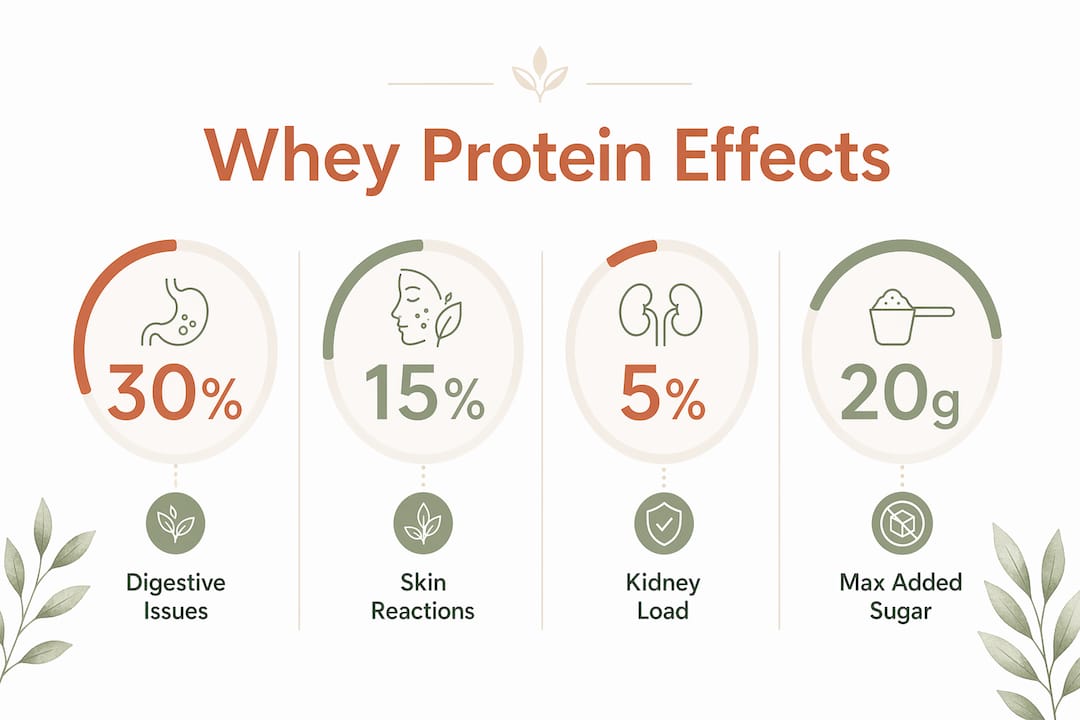
Digestive problems are the most frequently reported side effects of whey protein powder. Bloating, gas, cramping, and diarrhea affect a significant portion of people who use whey, particularly those with lactose intolerance or a sensitivity to milk proteins. Whey concentrate contains more lactose than whey isolate, which makes it the more likely trigger for gastrointestinal symptoms.

The mechanism is straightforward. Lactose passes undigested into the large intestine, where gut bacteria ferment it and produce gas as a byproduct. People with a full milk protein allergy face a more serious risk, since their immune system reacts to the protein itself, not just the lactose. That reaction can range from hives and stomach pain to more severe responses.
Common digestive symptoms include:
- Bloating and gas: Caused by undigested lactose fermenting in the gut
- Diarrhea: Particularly common at higher serving sizes or in lactose-intolerant individuals
- Stomach cramping: Often linked to rapid protein digestion and gut motility changes
- Nausea: Reported when whey is consumed on an empty stomach or in large amounts
Pro Tip: Pairing whey protein with digestive enzymes, specifically those containing lactase and protease, reduces bloating by breaking down lactose and protein chains more efficiently before they reach the large intestine.
Switching from whey concentrate to whey isolate also reduces lactose content substantially, which is often enough to eliminate symptoms in mildly intolerant individuals.
How can whey protein powder impact kidney and liver health?
High-dose whey protein supplementation places an increased metabolic load on the kidneys and liver. The kidneys filter nitrogen waste produced during protein metabolism, and consistently high protein intake forces them to work harder. For healthy adults, this extra load is generally manageable. For people with pre-existing kidney disease, the risk is clinically significant.
Operation Supplement Safety lists pre-existing kidney disease as a direct contraindication for regular whey protein use. That means people with reduced kidney function should not use whey supplements without medical clearance. The liver also processes amino acids and detoxifies metabolic byproducts, so long-term high-dose supplementation can strain liver function in vulnerable populations.
Key risk factors that increase kidney and liver concern include:
- Diagnosed kidney disease or reduced GFR (glomerular filtration rate)
- Liver conditions such as non-alcoholic fatty liver disease
- Consistently exceeding recommended protein intake from all sources combined
- Using multiple protein supplements simultaneously without tracking total intake
Pro Tip: Before starting any whey protein regimen, ask your doctor for a basic metabolic panel. It checks kidney and liver markers and takes less than 10 minutes. That single step removes most of the guesswork about whether supplementation is safe for you specifically.
The risk is not universal. Healthy adults who stay within reasonable intake ranges and consult healthcare professionals before supplementing face a much lower risk of organ strain.
What other side effects and risks come with protein powder use?
Beyond digestion and organ health, protein powder side effects extend into skin reactions, contamination exposure, and metabolic consequences from added ingredients. These risks are less discussed but equally real.
Acne and skin reactions
Whey protein stimulates insulin-like growth factor 1 (IGF-1), a hormone that increases sebum production in the skin. Elevated sebum clogs pores and creates conditions for acne. Research links whey supplementation to acne in individuals who are already prone to breakouts. This effect is more pronounced with whey concentrate than with plant-based alternatives, though it varies by individual.
Contaminants in protein powders
The Clean Label Project tested protein powders and found heavy metals, pesticides, and BPA in many products at levels that exceed safe consumption thresholds. BPA is a chemical found in some packaging that disrupts hormone function. Heavy metals like lead and cadmium accumulate in the body over time and cause long-term organ damage. Harvard Health has flagged the unregulated nature of the supplement industry as a core reason these contaminants reach consumers without warning.
Added sugars and calorie load
Some protein powders contain up to 23 grams of added sugar per scoop. The American Heart Association recommends no more than 24 grams of added sugar per day for women and 36 grams per day for men. A single serving of a heavily sweetened protein powder can consume nearly an entire day’s sugar budget. That level of added sugar contributes to blood sugar spikes, increased calorie intake, and potential weight gain over time, which directly contradicts why most people use protein supplements in the first place.
Third-party certification seals from organizations like NSF International or Informed Sport indicate that a product has been independently tested for contaminants and label accuracy. Choosing certified products is the single most effective way to avoid contamination risks.
How do you choose and use whey protein powder safely?
Safe use of whey protein starts with product selection and continues with disciplined dosing. The supplement industry in the United States is not pre-approved by the FDA before products reach shelves, which means quality control falls largely on the manufacturer and third-party testers.
Follow these steps to reduce your risk:
- Check for third-party certification. Look for NSF Certified for Sport, Informed Sport, or USP Verified seals on the label. These confirm independent testing for contaminants and ingredient accuracy.
- Read the nutrition label for added sugars. Any product with more than 5–6 grams of added sugar per serving warrants a closer look. Flavored powders are the most common offenders.
- Start with a lower dose. Begin with half a serving to assess your digestive response before committing to a full scoop daily.
- Follow evidence-based dosing. Research supports 48 grams of whey protein isolate taken three times per week over eight weeks as an effective protocol for lean body mass gains. More is not always better.
- Diversify your protein sources. Whey should supplement dietary protein, not replace it. Eggs, chicken, legumes, and dairy provide amino acids alongside micronutrients that powders lack.
- Monitor your body’s response. Track any skin changes, digestive symptoms, or energy shifts during the first four weeks. Adjust serving size or product type based on what you observe.
- Consult a healthcare provider if you have any existing health conditions. This applies especially to kidney disease, liver conditions, or a history of food allergies.
Pro Tip: Whey isolate is a better starting point than concentrate for most people. It contains less lactose, fewer fats, and a higher protein percentage per gram, which means fewer variables that could trigger a reaction.
Choosing a quality protein supplement from a transparent brand with clear sourcing and testing documentation removes most of the risk associated with contamination and mislabeling.
Key Takeaways
Whey protein powder side effects are real and manageable, but they require informed product selection, appropriate dosing, and awareness of individual health conditions.
| Point | Details |
|---|---|
| Digestive symptoms are most common | Bloating, gas, and diarrhea are most frequent in lactose-intolerant individuals; whey isolate reduces this risk. |
| Kidney and liver risk is condition-specific | People with pre-existing kidney or liver disease should get medical clearance before using whey protein. |
| Contamination is a documented concern | The Clean Label Project found heavy metals and BPA in many powders; choose third-party certified products. |
| Added sugar can undermine your goals | Some powders contain up to 23 grams of added sugar per scoop, which can cause weight gain and blood sugar spikes. |
| Evidence-based dosing matters | 48 grams of whey isolate three times per week is a research-supported protocol for body composition improvements. |
What I’ve learned from years of watching people use whey protein
Most people who experience side effects from whey protein are not using a bad product. They are using the wrong product for their body, or they are using the right product in the wrong amount. That distinction matters because it changes the solution entirely.
The digestive complaints I hear most often come from people who jumped straight to a full serving of whey concentrate without testing their tolerance first. Switching to whey isolate and adding a digestive enzyme with lactase resolved the issue for the majority of them within two weeks. No dramatic intervention required.
The contamination issue is where I think the industry has genuinely failed consumers. Harvard Health’s reporting on heavy metals and BPA in protein powders is not fringe science. It reflects a real gap in regulatory oversight. My recommendation is simple: if a product does not carry an NSF or Informed Sport seal, treat it as unverified. The cost difference between certified and uncertified products is small. The risk difference is not.
Whey protein is genuinely useful for muscle recovery, satiety, and hitting protein targets when whole food intake falls short. The role of protein supplementation in a well-structured diet is legitimate and backed by solid research. The mistake is treating any supplement as inherently safe just because it is widely sold. Quality, dose, and individual health status determine whether whey protein helps or harms.
— GAURAV
Nutribliss supplements backed by science
Choosing a protein supplement should not feel like a gamble. Nutribliss builds its products on published science and transparent sourcing, so you know exactly what you are putting in your body.

The Nutribliss science page details the research and formulation principles behind every product in the lineup. For those interested in how superfoods and protein fit together in a complete nutrition plan, the Superfoods Collection breaks down the evidence clearly. Every Nutribliss supplement is designed with quality control as a baseline, not an afterthought. Follow #nutribliss to stay current on new product releases and science-backed guidance.
FAQ
What are the most common side effects of whey protein powder?
The most common side effects are bloating, gas, cramping, and diarrhea, particularly in people with lactose intolerance. Switching to whey isolate and using digestive enzymes reduces these symptoms significantly.
Is whey protein safe for your kidneys?
Whey protein is safe for healthy adults at recommended doses, but people with pre-existing kidney disease should consult a doctor before use. High protein intake increases the metabolic load on kidneys, which is problematic for those with reduced kidney function.
Can whey protein powder cause acne?
Whey protein can increase acne in individuals who are already prone to breakouts by stimulating IGF-1, a hormone that raises sebum production. The effect varies by individual and is more common with whey concentrate than isolate.
How much whey protein is safe to take per day?
Research supports 48 grams of whey isolate taken three times per week as an effective and safe protocol for muscle and body composition improvements. Exceeding this without medical guidance increases the risk of digestive and organ-related side effects.
How do I know if my protein powder is safe from contaminants?
Look for third-party certification seals from NSF International, Informed Sport, or USP Verified on the label. The Clean Label Project found heavy metals and BPA in many uncertified powders, making independent testing the most reliable safety indicator.