

TL;DR:
- Whey protein powder aids weight loss by suppressing appetite, increasing calorie expenditure, and preserving muscle mass. Proper timing and type selection optimize its fat-burning benefits within a calorie deficit. Using whey as a meal replacement and pairing it with strength training prevents muscle loss and enhances long-term results.
Whey protein powder for weight loss is defined as a dairy-derived supplement that reduces body fat by increasing satiety, preserving lean muscle, and raising daily energy expenditure within a calorie deficit. Clinical research shows that adding whey protein to a weight loss plan produces an additional 1.2–2.6 lbs of fat loss over 12 weeks compared to lower protein intake. Nutrition guidelines recommend a daily intake of 1.2–1.6 grams of protein per kilogram of body weight to preserve muscle during calorie restriction. Whey protein makes hitting that target practical without excessive meal prep or food volume, which directly supports long-term diet adherence. The result is a supplement with real, measurable fat loss benefits when used correctly.
How does whey protein powder help with weight loss?
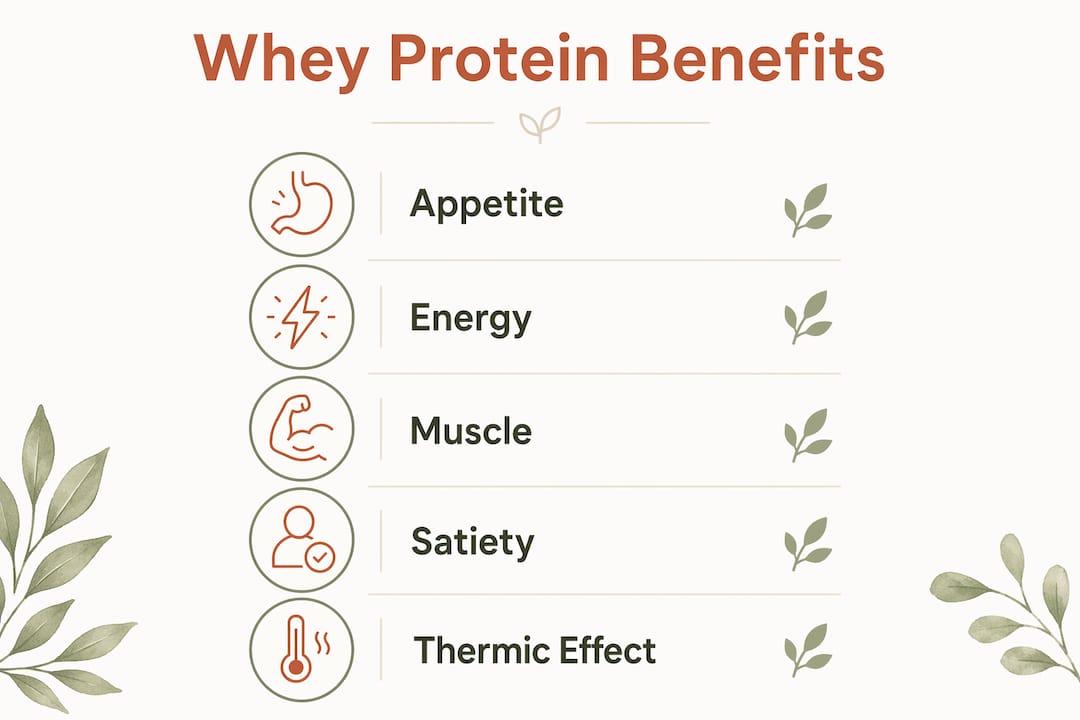
Whey protein drives fat loss through three distinct mechanisms: appetite suppression, increased calorie burning, and muscle preservation. Each one contributes independently, and together they create a meaningful calorie deficit without requiring extreme dietary restriction.
Satiety and calorie reduction
Whey protein raises levels of satiety hormones like GLP-1 and PYY while suppressing ghrelin, the hunger hormone. The practical result is that you eat less at subsequent meals without feeling deprived. This effect is strongest when whey is consumed before eating, not after.
The thermic effect of protein
Protein increases 24-hour energy expenditure by roughly 80–100 calories through the thermic effect of feeding. That means your body burns more calories simply digesting protein than it does digesting carbohydrates or fat. Over weeks and months, that modest daily surplus adds up to real fat loss.
Muscle preservation during a calorie deficit
Losing weight without protecting muscle leads to a slower metabolism over time. Whey supplementation combined with resistance training best preserves lean muscle mass, particularly in older adults and post-bariatric surgery patients. Muscle preservation keeps your resting metabolic rate from dropping, which is the main reason most diets fail long term.
Key mechanisms at a glance:
- Satiety hormones: Whey raises GLP-1 and PYY, reducing hunger between meals.
- Thermic effect: Digesting protein burns 80–100 more calories per day than digesting fat or carbs.
- Muscle retention: Pairing whey with resistance training prevents the metabolic slowdown that follows muscle loss.
- Metabolic adaptation: High protein intake reduces metabolic adaptation during caloric restriction, helping maintain resting metabolic rate.
Pro Tip: Aim for 25–30g of whey protein per serving. Smaller amounts do not trigger the same satiety response, so portion size matters as much as timing.
What types of whey protein are best for weight loss?
Not all whey protein powders are equal for fat loss. The three main types differ in protein concentration, calorie load, lactose content, and price. Choosing the right one depends on your calorie budget, digestive tolerance, and goals.
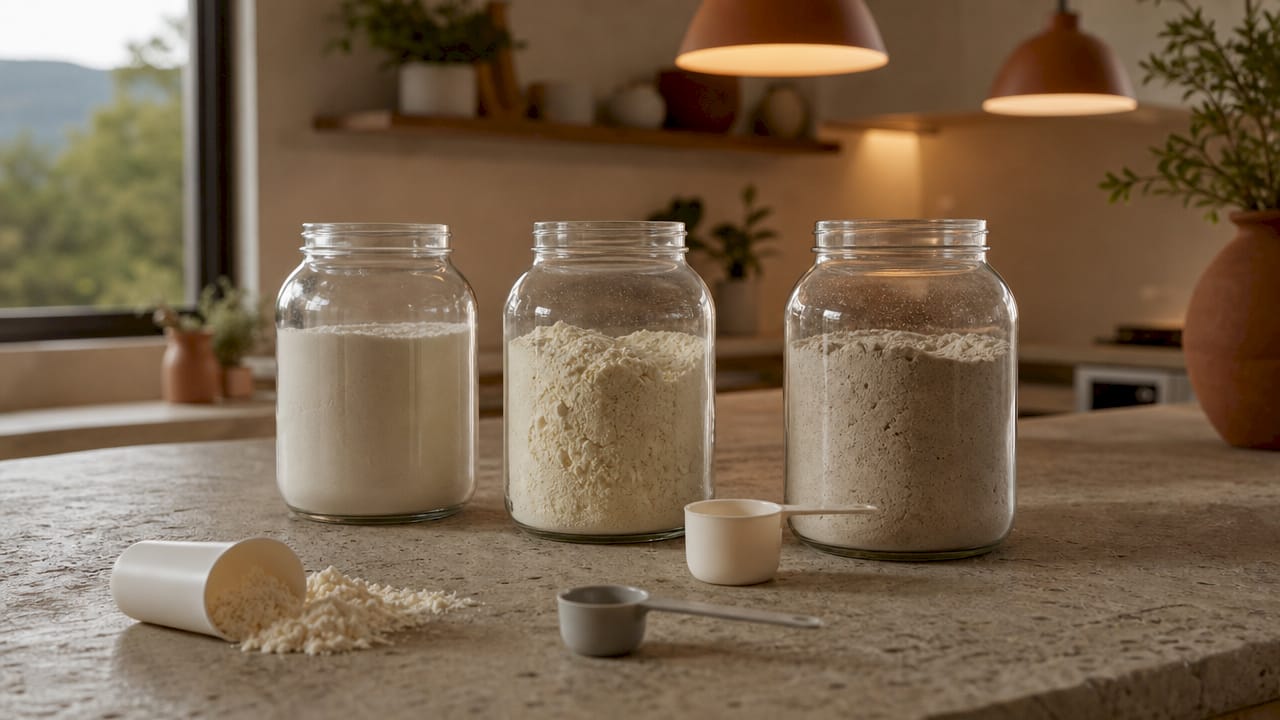
Whey isolate delivers roughly 90% protein by weight, with minimal lactose and very low fat and carbohydrate content. That high protein-to-calorie ratio makes it the preferred choice for anyone in a calorie deficit. Whey concentrate is more affordable but contains slightly more carbohydrates and fat per serving. For most people on a weight loss plan, the cleaner macros of isolate justify the small price difference.
Casein protein digests slowly and provides longer-lasting satiety, making it a solid choice for between-meal fullness or a nighttime option. Plant-based proteins serve those with dairy restrictions but typically deliver less leucine per gram, which reduces their muscle-preserving effect compared to whey.
| Protein type | Protein per serving | Calories | Best for |
|---|---|---|---|
| Whey isolate | ~25–27g | Low (110–130) | Calorie-restricted fat loss |
| Whey concentrate | ~22–24g | Moderate (130–160) | Budget-conscious users |
| Casein | ~24–26g | Moderate (120–150) | Between-meal satiety |
| Plant protein | ~20–22g | Moderate (120–150) | Dairy-free diets |
Quality matters regardless of type. Recommended powders contain 20–30g protein per serving, fewer than 200 calories, minimal added sugars, and third-party safety testing. The American Heart Association sets daily added sugar limits at 24–36 grams total. A protein powder that uses 10–15 grams of added sugar per scoop eats into that budget fast.
Pro Tip: Check the label for a third-party certification seal such as NSF Certified for Sport or Informed Sport. These certifications confirm the product contains what it claims and nothing it should not.
When and how should you use whey protein for best results?
Timing and portion size determine whether whey protein supports fat loss or simply adds calories to your day. The research is specific, and following it makes a measurable difference.
The pre-meal strategy
Consuming whey protein 30–60 minutes before your largest meal reduces caloric intake at that meal by 150–250 calories. Pre-meal timing outperforms post-meal and between-meal consumption for appetite suppression. This single habit can create a calorie deficit without changing anything else about your diet.
Practical usage steps
- Choose your timing. Drink a 25–30g whey shake 30–60 minutes before lunch or dinner, whichever is your largest meal of the day.
- Set your daily dose. Most people need 1–2 scoops (25–50g) per day depending on total protein needs from food. Use a food tracking app like MyFitnessPal to calculate your gap between dietary protein and your 1.2–1.6 g/kg target.
- Use it as a meal replacement, not an add-on. Protein shakes add hundreds of calories when treated as a snack on top of regular meals. Replace a meal or a high-calorie snack instead.
- Pair with resistance training. Whey protein preserves muscle most effectively when combined with two to three strength sessions per week. Without training, some of that protein goes to energy rather than muscle retention.
- Adjust for GLP-1 medications. People using GLP-1 agonist medications face elevated muscle loss risk during pharmacologically-induced weight loss. Timing whey intake 60–90 minutes post-injection minimizes nausea while still supporting muscle retention. This is a critical nuance that most generic protein guides miss entirely.
Pro Tip: Keep your shakes simple. Adding nut butter, whole milk, honey, and banana to a shake can push it past 600 calories. Use water or unsweetened almond milk and let the protein do the work.
How to choose a whey protein powder for your weight loss plan
Selecting the right product is where most people go wrong. A label that says “weight loss formula” means nothing without checking the actual nutrition facts.
Start with the protein-to-calorie ratio. A quality weight-loss-friendly powder delivers at least 20g of protein per 100 calories. Anything below that ratio suggests too much filler, fat, or sugar in the formula.
- Read the ingredient list. Fewer ingredients generally means a cleaner product. Artificial sweeteners in small amounts are acceptable, but watch for maltodextrin, corn syrup solids, or hydrogenated oils near the top of the list.
- Check added sugars. Keep added sugars under 5g per serving. Some flavored powders contain 10–15g per scoop, which undermines the calorie deficit you are trying to create.
- Prioritize third-party testing. NSF Certified for Sport and Informed Sport are the two most recognized certifications. They verify label accuracy and screen for banned substances.
- Match the type to your needs. Whey isolate suits most people in a calorie deficit. If lactose causes digestive issues, isolate is the right call since it contains far less lactose than concentrate.
- Avoid proprietary blends. These hide individual ingredient amounts behind a single total weight. You cannot tell how much of each ingredient you are actually getting.
Protein powders make it practical to hit daily protein targets without eating large volumes of food. That practicality is a real advantage on a calorie-restricted diet. The types of protein powder available today range from basic concentrates to highly refined isolates, so matching the product to your specific calorie and macro targets is straightforward once you know what to look for.
Key Takeaways
Whey protein powder supports fat loss by suppressing appetite, burning extra calories through the thermic effect, and preserving lean muscle that keeps your metabolism running during a calorie deficit.
| Point | Details |
|---|---|
| Clinical fat loss benefit | Whey supplementation produces 1.2–2.6 lbs more fat loss over 12 weeks than lower protein intake. |
| Thermic effect | Protein digestion burns 80–100 extra calories per day, creating a modest but real daily deficit. |
| Best timing | Drink 25–30g of whey 30–60 minutes before your largest meal to cut 150–250 calories from that meal. |
| Isolate vs. concentrate | Whey isolate offers a higher protein-to-calorie ratio and less lactose, making it the better choice for fat loss. |
| Avoid hidden calories | Use shakes as meal replacements, not additions, and keep added ingredients minimal to protect your calorie deficit. |
Why I think most people use whey protein the wrong way
After years of working with people on weight loss plans, the pattern I see most often is this: someone adds a protein shake to their existing diet, gains no ground on fat loss, and concludes that protein powder does not work. The problem is not the protein. The problem is the addition.
Whey protein is not a fat burner. Its power comes from muscle preservation and the thermic effect of feeding, both of which only matter inside a calorie deficit. If you add 250 calories of protein shake on top of your current intake, you have not created a deficit. You have filled it.
The second mistake I see constantly is ignoring muscle. People on aggressive calorie cuts, especially those using GLP-1 medications, lose muscle at a rate that permanently lowers their resting metabolic rate. They hit their goal weight and then regain everything because their metabolism is slower than before they started. Whey protein combined with resistance training is the most practical tool available to prevent that outcome.
My honest recommendation: treat whey protein as a structured part of your diet, not a supplement you add on top of it. Use it to replace a meal or a high-calorie snack. Time it before your biggest meal. Lift weights at least twice a week. And check with your doctor or a registered dietitian before making significant changes, especially if you are on any weight loss medication. That combination works. The shake alone does not.
— GAURAV
Nutribliss whey protein for your weight loss goals
Nutribliss formulates its protein supplements with fat loss in mind. Every product in the Nutribliss supplements collection is built around clean ingredients, accurate labeling, and nutritional profiles that fit a calorie-controlled diet.

The Nutribliss Whey Isolate delivers a high protein-to-calorie ratio with minimal lactose, making it a practical daily option for anyone working toward fat loss. Nutribliss backs its formulations with the science behind superfoods, so you know exactly what you are putting in your body and why it works. Follow #nutribliss for product updates, usage tips, and research-backed guidance on getting the most from your supplement routine.
FAQ
What is the best whey protein for weight loss?
Whey isolate is the best option for weight loss because it delivers roughly 90% protein by weight with minimal fat, carbs, and lactose. Look for products with 20–30g protein per serving, fewer than 200 calories, and a third-party testing certification.
How much whey protein should I take daily for fat loss?
Most people benefit from 1–2 scoops (25–50g) per day, timed to close the gap between dietary protein and the recommended 1.2–1.6g per kilogram of body weight. Total daily intake from food and supplements combined matters more than any single serving.
Is whey protein powder good for weight loss in women?
Yes. The fat loss mechanisms, including satiety, thermic effect, and muscle preservation, work the same way regardless of sex. Women on calorie-restricted diets benefit especially from the muscle-preserving effect, which prevents the metabolic slowdown that often follows aggressive cutting.
Can I use whey protein while on GLP-1 weight loss medications?
Whey protein is particularly important for people on GLP-1 agonists because these medications accelerate muscle loss alongside fat loss. Timing your shake 60–90 minutes after injection reduces nausea while still delivering the muscle-preserving benefit.
Does whey protein powder cause weight gain?
Whey protein causes weight gain only when it adds calories above your daily maintenance level. Used as a meal replacement within a calorie deficit, it supports fat loss rather than weight gain.