

TL;DR:
- Whey protein isolate offers approximately 90% protein per weight and minimal lactose, making it ideal for sensitive individuals.
- Both isolate and concentrate enable muscle growth equally if total daily protein intake is maintained, regardless of processing differences.
Whey protein isolate is defined as a more processed form of whey that delivers approximately 90% protein by weight compared to roughly 80% in standard whey concentrate. The difference whey et isolate comes down to three things: protein purity, lactose content, and how far each product is filtered during manufacturing. Prof. Javier Gonzalez, a nutrition researcher whose work is cited by The Independent, confirms that isolate undergoes additional filtration stages that strip out most of the fat, carbohydrates, and lactose present in concentrate. For anyone managing lactose sensitivity, tracking macros tightly, or simply wanting more protein per calorie, that distinction matters from the first scoop.
What is the difference between whey and isolate?
Both whey concentrate and whey isolate start from the same source: the liquid whey that separates from milk curds during cheese production. That liquid is a mix of protein, lactose, fat, water, and minerals. What happens next is where the two products diverge.

Whey concentrate is produced by passing liquid whey through a filtration membrane, typically microfiltration or ultrafiltration, to remove water and concentrate the protein. The result retains a meaningful amount of lactose, fat, and carbohydrates alongside the protein. This is why whey concentrate has more carbohydrates, fats, and sugar compared to isolate, which undergoes further processing to remove these components.
Whey isolate takes the process further. After the initial filtration, the concentrate undergoes additional passes, often ion exchange or cross-flow microfiltration, that push protein purity higher while reducing lactose and fat to near-zero levels. The trade-off is cost: more processing equipment, more time, and a higher price per kilogram at retail.
Pro Tip: When reading a supplement label, check the protein percentage per 100g rather than just grams per scoop. A product with 90g of protein per 100g is isolate-grade purity; anything below 80g is closer to a standard concentrate.
Nutritional differences: whey isolate vs. concentrate compared
The numbers tell the clearest story. Using Myprotein data as a representative industry benchmark, a 30g serving comparison shows concentrate delivering roughly 22g of protein at 114 calories, while isolate provides about 25g of protein at just 108 calories. Isolate achieves more protein at fewer calories because fat and carbohydrates have been filtered out. That is a meaningful difference if you are eating in a calorie deficit or trying to hit a daily protein target without overshooting your macros.
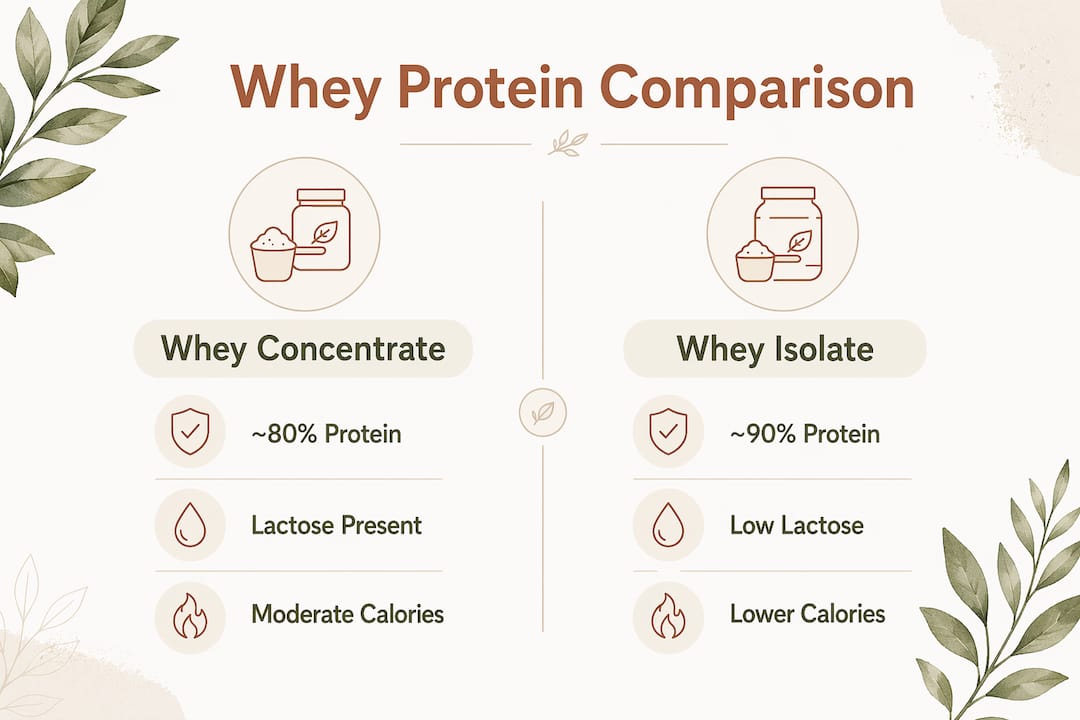
| Nutrient | Whey Concentrate (30g serving) | Whey Isolate (30g serving) |
|---|---|---|
| Protein | ~22g | ~25g |
| Calories | ~114 kcal | ~108 kcal |
| Fat | Present | Near zero |
| Carbohydrates | Higher | Lower |
| Lactose | Moderate | Minimal |
| Protein purity | ~80% | ~90% |
Lactose content is the other critical variable. Isolate’s extended filtration removes most lactose, making it far better tolerated by people with lactose sensitivity. Concentrate retains enough lactose to cause bloating, gas, or discomfort in sensitive individuals, particularly at larger serving sizes. That said, whey isolate still contains milk proteins, so anyone with a true milk protein allergy, not just lactose intolerance, must avoid both forms entirely.
One nuance worth understanding: protein density relative to calories is a more accurate evaluation tool than absolute grams per scoop. A concentrate scoop may look similar on a label but deliver fewer grams of protein per calorie because fat and carbs are taking up space in the serving weight. Comparing protein percentage per 100g removes that distortion.
Does the type of whey actually affect muscle growth?
The short answer is no, not meaningfully. Prof. Javier Gonzalez states there is “essentially no functional difference” in muscle gain outcomes between isolate and concentrate when total daily protein intake is equal. The muscle-building signal comes from leucine and the other essential amino acids present in both forms, not from the absence of lactose or fat.
Where the difference does show up is in digestion speed and post-workout timing. Isolate digests faster and clears the gut more quickly, which is why nutritionists often describe it as the “sports car” option for post-workout use. Concentrate, by contrast, digests more slowly and provides greater satiety, along with bioactive compounds like immunoglobulins and lactoferrin that are partially lost during isolate’s extra filtration. Think of concentrate as the option that does more than just deliver protein.
Here is what the research actually supports for fitness outcomes:
- Total daily protein intake is the primary driver of muscle protein synthesis, not the protein source type.
- Absorption speed favors isolate post-workout, but the practical advantage over a 24-hour period is minimal if overall intake is consistent.
- Digestive comfort is a real performance variable. Bloating from concentrate can reduce training quality and appetite for whole foods.
- Bioactive compounds in concentrate, including lactoferrin and beta-lactoglobulin, may support immune function, which matters during high training volumes.
Pro Tip: If you train twice a day or have a short recovery window between sessions, isolate’s faster digestion rate makes it the more practical post-workout choice. For a morning shake or a meal replacement context, concentrate’s slower release and satiety benefit are worth the extra lactose.
For a deeper look at how isolate specifically supports recovery, the whey isolate recovery benefits article at Nutribliss breaks down the clinical perspective in detail.
How to choose between whey isolate and concentrate
The right choice depends on four factors: lactose tolerance, calorie targets, budget, and how you use protein in your diet. None of these factors points universally to one product.
Choose whey isolate if:
- You experience bloating, gas, or digestive discomfort after dairy or standard whey products. Isolate is better tolerated due to reduced lactose from filtration.
- You follow a low-carb or ketogenic diet and need to minimize carbohydrate intake from supplements.
- You are in a calorie deficit and want maximum protein per calorie without extra fat or sugar.
- You want a post-workout shake that clears your gut quickly before your next meal.
Choose whey concentrate if:
- You have no lactose sensitivity and want a cost-effective protein source. Isolate costs more due to additional processing and higher purity levels.
- You want a shake that keeps you fuller longer, particularly as a meal replacement or between-meal snack.
- You value the immune-supporting bioactive compounds that are retained in less-processed forms.
- You are buying in bulk and need to stretch your supplement budget across several months.
One critical distinction that marketing often blurs: a milk protein allergy and lactose intolerance are not the same condition. Marketing claims like “lactose-free” do not mean milk-protein-free. Isolate removes lactose but retains casein and whey proteins, which are the allergens responsible for true milk allergies. If you have a diagnosed milk protein allergy, neither concentrate nor isolate is safe. A plant-based protein is the appropriate alternative.
For those who are unsure about their lactose tolerance, the most practical approach is experimental. Start with a smaller dose of concentrate, around 15g, and observe your digestive response over several days before committing to a full-size purchase. If discomfort appears, switch to isolate and repeat the test. Most people with mild lactose sensitivity tolerate isolate without issue at standard serving sizes.
For a side-by-side look at top-rated options across both categories, the best protein powders comparison at Nutribliss covers economic and nutritional trade-offs in detail.
Key takeaways
Whey isolate delivers more protein per calorie and less lactose than concentrate, but total daily protein intake determines muscle-building results regardless of which form you choose.
| Point | Details |
|---|---|
| Protein purity difference | Isolate contains ~90% protein versus ~80% in concentrate per 100g. |
| Lactose and fat content | Isolate has minimal lactose and near-zero fat, making it better for sensitive individuals. |
| Muscle growth outcomes | No meaningful difference in gains if total daily protein intake is equal. |
| Cost trade-off | Concentrate costs less per kilogram due to fewer processing steps. |
| Allergy vs. intolerance | Milk protein allergy requires avoiding both forms; lactose intolerance only concerns lactose. |
Why I think most people are asking the wrong question
After years of reviewing supplement research and watching people agonize over isolate versus concentrate, the honest truth is that the choice rarely changes outcomes. The gap between 80% and 90% protein purity matters far less than whether you are actually hitting your daily protein target consistently.
What I have found is that people who switch to isolate because of digestive discomfort almost always report better adherence to their supplement routine. That is the real win. Not the extra 3g of protein per scoop, but the fact that they stop dreading the post-workout shake. Comfort drives consistency, and consistency drives results.
The budget argument for concentrate is also underrated. If the price difference between isolate and concentrate means you can afford two extra months of supplementation per year, concentrate wins on a long-term basis. Protein timing and purity are secondary to simply having enough protein available every day.
My practical recommendation: test your lactose tolerance first, set a realistic monthly supplement budget, and then pick the product that fits both. If you want a reliable starting point, #nutribliss offers both forms with transparent labeling so you know exactly what you are getting per scoop. The science matters, but the shake you actually drink every day matters more.
— GAURAV
Find the right whey protein at Nutribliss

Nutribliss carries a curated range of protein supplements built for people who take their nutrition seriously. The Nutribliss Whey Isolate delivers 90%-grade protein purity with minimal lactose, making it a strong fit for anyone managing digestive sensitivity or tracking macros tightly. Every product in the Nutribliss lineup is formulated with transparent labeling and science-backed ingredient ratios. Browse the full supplement collection to compare protein options, read ingredient breakdowns, and find the product that matches your fitness goals and dietary needs.
FAQ
What is whey protein isolate?
Whey protein isolate is a highly filtered form of whey protein that contains approximately 90% protein by weight, with minimal lactose, fat, and carbohydrates removed during processing.
Is whey isolate better than concentrate for muscle building?
Not necessarily. Prof. Javier Gonzalez confirms there is essentially no functional difference in muscle gain when total daily protein intake is equal between the two forms.
Who should use whey isolate instead of concentrate?
Whey isolate is the better choice for individuals with lactose sensitivity, those following low-carb diets, or anyone who wants more protein per calorie with less digestive discomfort.
Does whey isolate work for people with milk allergies?
No. Whey isolate reduces lactose but still contains milk proteins. Anyone with a diagnosed milk protein allergy must avoid both whey isolate and concentrate to prevent allergic reactions.
Is whey isolate worth the higher price?
It depends on your goals. If you are lactose sensitive or need maximum protein density per calorie, the premium is justified. If you have no digestive issues and are budget-conscious, concentrate delivers comparable muscle-building results at a lower cost per serving.