

TL;DR:
- Whey protein powder is a fast-absorbing, complete protein that supports muscle growth and weight gain when combined with a calorie surplus. It is most effective post-workout and when paired with a structured diet but does not cause weight gain alone. Choosing the right type depends on digestion needs and budget, with whey concentrate being suitable for most bulking goals.
Whey protein powder is a fast-absorbing, complete protein derived from milk that delivers all nine essential amino acids your body needs to build muscle. Athletes and bodybuilders rely on it because it digests faster than casein or soy, making it the go-to choice for post-workout recovery and muscle growth. For anyone trying to gain weight, specifically lean muscle mass, whey protein powder for weight gain is one of the most research-backed tools available. This guide covers how it works, which type fits your goals, and how to use it without making costly mistakes.
How does whey protein powder support weight gain?
Whey protein drives muscle growth through a process called muscle protein synthesis (MPS). When you train with weights, your muscle fibers break down. Whey’s high concentration of branched-chain amino acids (BCAAs), especially leucine, triggers MPS and accelerates repair. Post-workout whey protein promotes more effective muscle repair and synthesis than other protein sources like casein or soy, according to Verywell Fit.

Protein alone does not cause weight gain. To gain weight, you need a caloric surplus plus protein of approximately 0.7–1g per pound of body weight daily. That means a 180-pound athlete needs 126–180g of protein per day. Whey makes hitting that target easier without forcing you to eat six chicken breasts.
Muscle mass naturally declines 3–8% per decade in aging men, with faster loss after age 60. Consistent protein intake combined with resistance training is the most effective way to counter that decline and build mass at any age.
Key mechanisms behind whey protein weight gain benefits:
- Leucine content: Leucine is the primary trigger for MPS. Whey contains more leucine per gram than most whole food proteins.
- Fast absorption: Whey reaches your bloodstream within 30–60 minutes, making it ideal for the post-workout window.
- Complete amino acid profile: All nine essential amino acids are present, which your body cannot produce on its own.
- Appetite support: Protein is the most satiating macronutrient per calorie, helping you eat more total food without feeling stuffed.
Pro Tip: If eating enough whole food protein feels like a chore, whey helps you overcome protein fatigue without forcing you to eat more chicken or beef every meal.
Whey concentrate vs. isolate vs. hydrolysate: which is best for bulking?
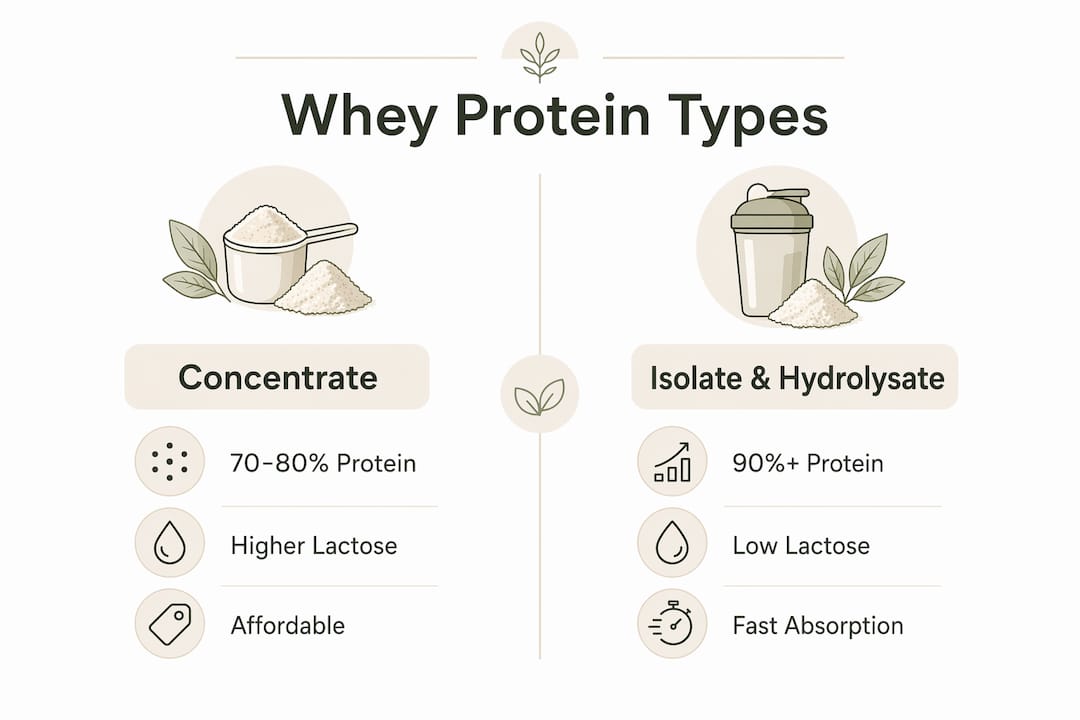
Not all whey is the same. The three main types differ in protein content, lactose levels, absorption speed, and price. Choosing the right one depends on your budget, digestion, and how fast you want results.
| Type | Protein per serving | Lactose | Absorption | Best for |
|---|---|---|---|---|
| Whey concentrate | 70–80% | Moderate | Moderate | Budget bulking |
| Whey isolate | 90%+ | Very low | Fast | Lean muscle gain |
| Whey hydrolysate | 90%+ | Very low | Fastest | Rapid recovery |
Whey concentrate contains 70–80% protein, isolate hits 90% or more, and hydrolysate is pre-digested for the fastest absorption. Hydrolysate costs significantly more than concentrate, which matters when you are buying in bulk. For most people focused on weight gain, concentrate delivers strong results at a lower price point.
Whey isolate suits athletes who are lactose-sensitive or want a cleaner macro profile. The whey vs. isolate comparison comes down to digestion tolerance and budget more than raw muscle-building efficacy. Both types build muscle effectively when paired with a calorie surplus.
Hydrolyzed whey allows faster post-workout absorption, which benefits athletes who train twice a day or need rapid recovery between sessions. For a single daily training session, the speed advantage over isolate is minimal.
Pro Tip: Look for products that are NSF Certified for Sport. That certification confirms the product is free from banned substances and contamination, which matters for competitive athletes.
How to use whey protein powder in a weight gain nutrition plan
Timing and pairing matter as much as the protein itself. Whey works best when it fits into a structured eating plan that already delivers a calorie surplus.
The four best times to take whey protein:
- Post-workout (within 30–60 minutes): This is the highest-priority window. Your muscles are primed for nutrient uptake. A 25–40g serving of whey here directly supports muscle protein synthesis and recovery.
- Morning: After an overnight fast, your body is in a mild catabolic state. A whey shake at breakfast stops muscle breakdown and starts the day with a protein foundation.
- Between meals: If you struggle to eat enough calories, a mid-morning or mid-afternoon shake adds 300–500 calories without requiring a full meal.
- Pre-bed (as a blend): Mixing whey with casein before sleep provides both fast and slow-release amino acids through the night.
How to build high-calorie protein shakes for muscle gain:
- Add 1–2 tablespoons of peanut butter or almond butter for healthy fats and extra calories.
- Blend with whole milk instead of water to add 150 calories and 8g of protein per cup.
- Mix in rolled oats for complex carbohydrates that fuel training and recovery.
- Add a banana for natural sugars, potassium, and roughly 100 extra calories.
- Use frozen fruit like berries or mango for micronutrients without added sugar.
Tracking your total daily calories is non-negotiable for weight gain. Whey protein is a tool, not a replacement for a structured diet. Apps like MyFitnessPal or Cronometer make macro tracking straightforward and take the guesswork out of hitting your surplus.
Watch the label on high-calorie protein powders. Some protein powders contain over 1,200 calories per serving due to added sugars and fillers. That can lead to fat gain rather than lean muscle gain if you are not accounting for those calories in your total daily intake.
What are the biggest misconceptions about whey protein and weight gain?
The supplement industry creates unrealistic expectations. Whey protein is effective, but it does not work in isolation.
Misconception 1: Protein powder alone causes weight gain. Whey protein is ideal for muscle recovery, but it does not replace the need for a caloric surplus. If you are not eating more calories than you burn, no amount of protein powder will add mass to your frame.
Misconception 2: More protein equals more muscle. Exceeding 1.0–1.6g of protein per pound of body weight yields diminishing returns. Calories from carbohydrates and fats better support weight gain beyond that threshold. Piling on extra protein shakes while neglecting carbs and fats is a common and costly mistake.
Misconception 3: Whey protein is only for bodybuilders. Whey protein benefits anyone who struggles to meet daily protein targets, including older adults losing muscle mass, athletes in demanding training blocks, and people recovering from illness or injury.
Misconception 4: All protein powders are the same. Protein quality, amino acid profile, third-party testing, and added ingredients vary widely. A product with 20g of protein and 40g of added sugar is not the same as a clean isolate with 25g of protein and minimal additives.
Misconception 5: Whey replaces whole food protein. Whole foods like eggs, Greek yogurt, lean beef, and cottage cheese deliver micronutrients, fiber, and satiety that powder cannot replicate. Whey works best as a supplement to a whole food diet, not a substitute for it.
Key Takeaways
Whey protein powder supports weight gain only when combined with a consistent calorie surplus, resistance training, and a balanced whole food diet.
| Point | Details |
|---|---|
| Calorie surplus is required | Whey protein alone does not cause weight gain without eating more calories than you burn. |
| Protein target: 0.7–1g per pound | Aim for this daily range based on body weight to support muscle growth effectively. |
| Choose the right whey type | Concentrate suits budget bulking; isolate fits lactose-sensitive athletes; hydrolysate speeds recovery. |
| Time your intake strategically | Post-workout is the highest-priority window for whey protein to drive muscle repair. |
| Check labels for added sugars | Some high-calorie powders exceed 1,200 calories per serving, which can lead to unwanted fat gain. |
What I have learned from years of watching athletes use whey protein
Most athletes I have seen struggle with weight gain are not failing because of the wrong protein powder. They are failing because they are not eating enough total calories. Whey protein is one of the most well-researched supplements available, but it gets misused constantly. People treat it like a magic fix and skip the harder work of building a real eating plan.
The athletes who gain the most lean mass are the ones who treat whey as a convenience tool, not a foundation. They eat whole food meals first, then use a shake to close the gap when life gets busy or appetite drops. That approach is far more effective than relying on three shakes a day and wondering why the scale is not moving.
One thing I rarely see discussed is the mental side of protein fatigue. When you are eating 3,500 or 4,000 calories a day, food gets boring fast. Whey protein shakes with varied ingredients, oats, nut butter, frozen fruit, keep the diet sustainable. Sustainability beats perfection every time.
My honest recommendation is to start with a quality whey concentrate, track your calories for two weeks, and adjust from there. Do not buy the most expensive hydrolysate on the market before you have confirmed your calorie surplus is consistent. Get the basics right first. The powder matters far less than the plan behind it.
— GAURAV
Nutribliss supplements for muscle gain and healthy weight
Athletes serious about gaining weight need more than a single supplement. Nutribliss builds its product line around science-backed ingredients designed to support active people at every stage of training.

The full Nutribliss supplement range includes protein powders, vitamins, minerals, and specialty formulas built for performance and recovery. Every product reflects the same commitment to quality and transparency that competitive athletes require. If you want to understand the research behind the formulas, the science behind Nutribliss superfoods page breaks down the evidence clearly. Use #nutribliss to share your progress and connect with a community of athletes working toward the same goals.
FAQ
What is the best time to take whey protein for weight gain?
Post-workout is the most effective window, ideally within 30–60 minutes after resistance training. Morning consumption also helps stop overnight muscle breakdown and sets a strong protein foundation for the day.
How much whey protein should I take daily to gain weight?
Aim for 0.7–1g of protein per pound of body weight daily from all sources combined. Whey protein shakes help fill the gap when whole food intake falls short of that target.
Does whey protein cause fat gain?
Whey protein itself does not cause fat gain. Fat gain happens when total calorie intake exceeds what your body burns. Some high-calorie protein powders contain added sugars that push calories well above what you intend, so reading labels carefully matters.
Is whey concentrate or isolate better for bulking?
Whey concentrate is the better choice for most people focused on bulking because it costs less and still delivers 70–80% protein per serving. Isolate is worth the extra cost if you are lactose-sensitive or want a leaner macro profile.
Can whey protein replace meals for weight gain?
Whey protein should supplement meals, not replace them. Whole foods provide micronutrients, fiber, and satiety that protein powder cannot match. Use shakes to add calories and protein on top of a solid whole food eating plan.