

TL;DR:
- Magnesium, dietary fats, and zinc are essential supplements that improve vitamin D absorption and activation. Taking vitamin D with fatty meals significantly increases blood levels, while magnesium supports the enzymes needed to produce active vitamin D. Proper timing, meal composition, and maintaining nutrient balance boost the effectiveness of vitamin D supplementation.
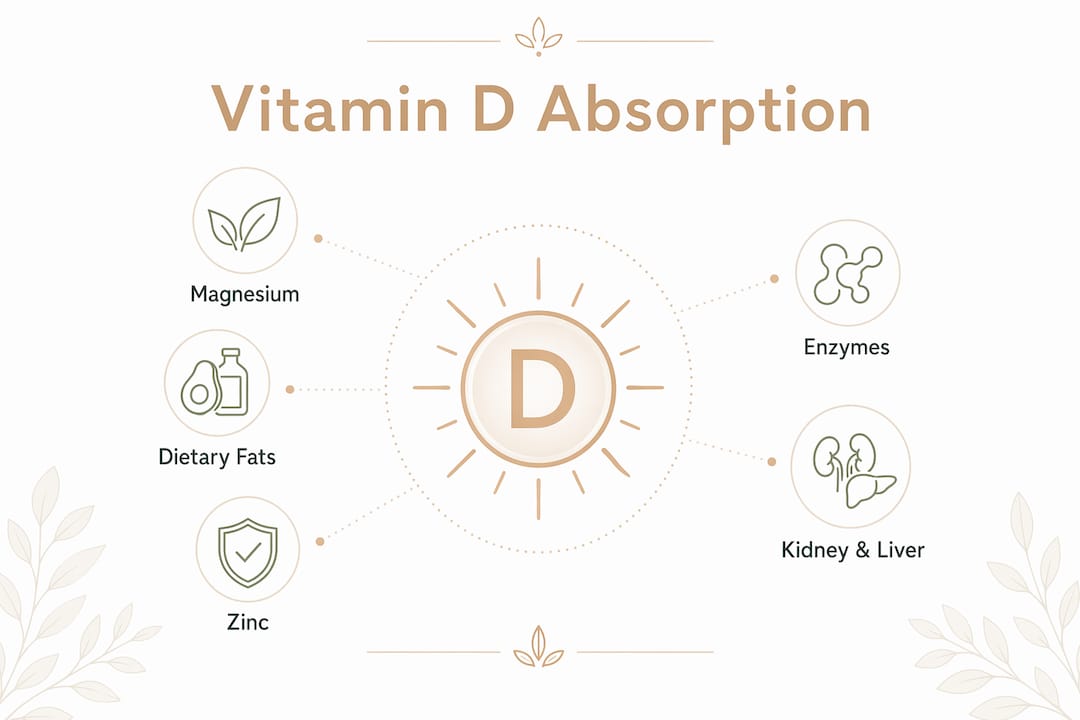
Magnesium, healthy dietary fats, and zinc are the three supplements that most directly help your body absorb and use vitamin D. Vitamin D is a fat-soluble nutrient, meaning it requires fat for intestinal absorption and specific cofactor nutrients to convert into its biologically active form, calcitriol. Without adequate magnesium, the liver and kidney enzymes that activate vitamin D cannot function properly. Understanding what supplement helps absorb vitamin D, and how to combine these nutrients strategically, is the difference between a supplement that works and one that sits in your bloodstream doing very little.
What supplement helps absorb vitamin D most effectively?
Magnesium is the single most important supplement for vitamin D absorption and metabolism. It acts as a critical cofactor in the enzymatic reactions that convert vitamin D into calcitriol, the active form your cells actually use. Without sufficient magnesium, vitamin D stays in its inactive state regardless of how much you take.

Healthy dietary fats come in a close second. Because vitamin D is fat-soluble, it dissolves in fat and gets carried through the intestinal wall into your bloodstream. Taking vitamin D without fat in your meal significantly reduces how much your body absorbs.
Zinc rounds out the core trio. It supports the enzymatic conversion of vitamin D to calcitriol, and supplemental zinc has been shown to improve vitamin D status compared to placebo in clinical research. Each of these three nutrients plays a distinct role, and combining them with a smart supplement routine produces results that no single nutrient can achieve alone.
How does magnesium enhance vitamin D metabolism?
Magnesium is essential for adequate liver and kidney function to activate vitamin D. Both organs rely on magnesium-dependent enzymes to convert vitamin D into calcitriol, the bioactive form your body uses for calcium regulation, immune function, and bone health. When magnesium levels are low, this conversion slows or stalls entirely.
Studies show that magnesium supplementation improves vitamin D serum levels in people who are deficient. This matters because a large portion of adults in the United States do not meet daily magnesium requirements through diet alone. Correcting a magnesium shortfall can unlock the vitamin D you are already taking.
Not all magnesium supplements absorb equally well. The forms with the best gut absorption include:
- Magnesium glycinate: Gentle on the stomach, high bioavailability, well-suited for daily use
- Magnesium citrate: Widely available, absorbs well, and supports digestive regularity
- Magnesium malate: Good absorption with an added benefit for energy metabolism
- Magnesium threonate: Crosses the blood-brain barrier, useful for cognitive support alongside vitamin D
Pro Tip: Magnesium and vitamin D do not need to be taken at the exact same time to be effective. What matters is maintaining sufficient magnesium levels overall, so you can take magnesium in the evening and vitamin D with breakfast without losing any benefit.
Why dietary fats are critical for vitamin D absorption
Vitamin D is a fat-soluble vitamin, which means it dissolves in fat rather than water. Taking it on an empty stomach or with a low-fat meal sharply reduces how much reaches your bloodstream. The intestinal cells that absorb vitamin D package it into fat-carrying molecules called chylomicrons, and those molecules need dietary fat to form properly.
Research shows that taking vitamin D with the largest meal of the day, which typically contains the most fat, results in about a 50% increase in serum 25(OH)D levels. That is not a marginal difference. It means the timing and composition of your meal can double the effectiveness of the same dose.
The best fat sources to pair with your vitamin D supplement include:
- Fatty fish (salmon, mackerel): Rich in omega-3 fatty acids and naturally contain vitamin D, making them a dual-purpose food
- Avocados: High in monounsaturated fats that support fat-soluble vitamin absorption
- Olive oil: A practical addition to any meal, especially salads or cooked vegetables
- Nuts and seeds: Almonds, walnuts, and sunflower seeds provide healthy fats and trace minerals
- Eggs: The yolk contains both fat and a small amount of natural vitamin D
Monounsaturated fats and omega-3 fatty acids appear to support absorption particularly well. Both fat types are found in whole foods rather than processed oils, which is another reason to build your vitamin D routine around a real meal rather than a supplement taken with water.
What role do zinc and other nutrients play in vitamin D metabolism?
Zinc is essential for the enzymatic conversion of vitamin D to calcitriol. Without adequate zinc, the final activation step in vitamin D metabolism is compromised, even if magnesium and fat intake are sufficient. Zinc also supports immune function and bone density, two areas where vitamin D is most active, so the two nutrients reinforce each other’s effects.
Foods rich in zinc that support this process include shellfish (especially oysters), pumpkin seeds, hemp seeds, cashews, and legumes. If your diet is low in these foods, a zinc supplement in the range of 8–15 mg per day covers the gap for most adults.
Vitamin K2 is another nutrient worth pairing with vitamin D, though it works differently. Vitamin K2 and vitamin D work together to manage calcium metabolism: vitamin D increases calcium absorption from food, and K2 directs that calcium into bones rather than soft tissue. K2 does not improve vitamin D absorption directly, but it prevents the downstream problems that can arise from high vitamin D intake without adequate K2.
A few substances actively impair vitamin D absorption and are worth avoiding at the same time as your supplement:
- High-fiber foods: Beans and high-fiber cereals can speed intestinal transit and bind fat-soluble vitamins, reducing uptake
- Calcium supplements in large doses: Taken simultaneously, they may compete for absorption pathways
- Excessive alcohol: Disrupts fat absorption broadly, which reduces vitamin D uptake
For a deeper look at how these nutrient interactions fit into a full supplement plan, the vitamin D supplementation guide from Nutribliss covers dosing, timing, and common deficiency patterns in detail.
How to time and combine supplements for maximum vitamin D absorption
Timing your supplements correctly is as important as choosing the right ones. The practical rules are straightforward once you understand the biochemistry behind them.
- Take vitamin D with your fattiest meal of the day. Breakfast with eggs and avocado or lunch with salmon and olive oil are both strong choices. The fat content of the meal drives absorption, not the time of day.
- Take magnesium at any time that fits your routine. Evening is popular because magnesium glycinate supports relaxation and sleep. Morning works equally well. Consistency matters more than timing relative to vitamin D.
- Add zinc to a meal, not on an empty stomach. Zinc on an empty stomach causes nausea in many people. A small amount of food eliminates this problem.
- Pair vitamin D with vitamin K2 if you are taking higher doses. The K2 and D3 combination becomes especially relevant at doses above 2,000 IU per day, where calcium management matters more.
- Avoid taking vitamin D with high-fiber meals or large calcium supplements. Both can reduce how much vitamin D your gut absorbs.
- Test your serum 25(OH)D levels every three to six months. Blood testing is the only reliable way to know whether your current routine is working. Adjust dose and timing based on actual results, not assumptions.
Pro Tip: Consistent daily habits matter far more than perfect timing on any single day. Taking vitamin D with a fatty meal every day at roughly the same time builds the steady serum levels that produce real health benefits over weeks and months.
Key takeaways
Magnesium, dietary fat, and zinc are the three nutrients that most directly determine how well your body absorbs and activates vitamin D, and combining them with smart timing produces results no single supplement can match.
| Point | Details |
|---|---|
| Magnesium is the top cofactor | It activates vitamin D in the liver and kidneys; deficiency blocks the entire conversion process. |
| Fat doubles absorption | Taking vitamin D with a fatty meal increases serum levels by about 50% compared to a low-fat meal. |
| Zinc completes activation | Zinc supports the final enzymatic step that converts vitamin D to calcitriol, its active form. |
| K2 prevents calcium problems | Vitamin K2 directs calcium to bones rather than soft tissue when vitamin D intake is high. |
| Avoid fiber at the same time | High-fiber foods taken with vitamin D can bind the vitamin and reduce gut absorption significantly. |
What I have learned about vitamin D absorption that most people miss
The most overlooked factor in vitamin D supplementation is not the dose. It is magnesium status. I have seen people take 5,000 IU of vitamin D daily for months with serum levels that barely move, and the culprit is almost always low magnesium. The body simply cannot activate vitamin D without it, and most standard blood panels do not test intracellular magnesium, so the deficiency goes undetected.
The second thing people underestimate is meal composition. Taking a vitamin D capsule with black coffee and nothing else is a common habit that wastes a significant portion of every dose. The 50% absorption difference between a fatty meal and a fat-free one is large enough to matter clinically, not just statistically.
My practical advice: get a baseline 25(OH)D blood test before you change anything. Then add magnesium glycinate, pair your vitamin D with a real meal containing fat, and retest in 90 days. The results will tell you more than any supplement label ever could. Monitoring your actual levels removes the guesswork and lets you adjust with precision. A guide to daily vitamins can help you build the full picture around vitamin D, but magnesium and fat are where most people leave results on the table.
— GAURAV
Nutribliss supplements that support vitamin D absorption

Nutribliss carries the key supplements that work alongside vitamin D to improve how your body absorbs and uses it. The Nutribliss supplement collection includes magnesium formulations, zinc, and the Vitamin K2 + D3 capsules that pair two of the most synergistic nutrients in one product. Every formula is built around bioavailability, so you get nutrients your body can actually use rather than pass through. If you want to understand the science behind the formulations, the Nutribliss science page breaks down how each product is developed. Use #nutribliss to share your results and connect with others building smarter supplement routines.
FAQ
What is the best supplement to take with vitamin D?
Magnesium is the most important supplement to take alongside vitamin D. It acts as a cofactor in the liver and kidney enzymes that convert vitamin D into calcitriol, its active form.
Does taking vitamin D with food really make a difference?
Taking vitamin D with a fatty meal increases serum 25(OH)D levels by about 50% compared to taking it without fat. The fat content of the meal is what drives this improvement, not the meal size.
Can I take magnesium and vitamin D at different times of day?
Magnesium and vitamin D do not need to be taken simultaneously to be effective. What matters is maintaining sufficient magnesium levels overall, so separate timing works just as well as taking them together.
What is vitamin D and why supplement with it?
Vitamin D is a fat-soluble nutrient that regulates calcium absorption, immune function, and bone density. Many adults do not get enough from sunlight or food alone, making supplementation a practical way to maintain adequate levels.
Does vitamin K2 help with vitamin D absorption?
Vitamin K2 does not improve vitamin D absorption directly. It works alongside vitamin D to direct calcium into bones rather than soft tissue, which becomes especially relevant at higher vitamin D doses.