

Most American adults do not get enough Vitamin D from diet or sunlight, yet this nutrient is vital for immune health and muscle performance. Bold research shows nearly every cell in your body has Vitamin D receptors, proving its importance goes far beyond bone support. For those focused on staying active and resilient, understanding how Vitamin D works can be the missing piece to better wellness and lasting athletic progress.
Table of Contents
- Vitamin D Explained: Key Functions in the Body
- Sources of Vitamin D and Supplement Options
- How Vitamin D Supports Immune Health
- Impact on Muscle Function and Athletic Performance
- Risks of Deficiency and Safe Supplementation
Key Takeaways
| Point | Details |
|---|---|
| Vitamin D’s Importance | Vitamin D is critical for various bodily functions including bone health, immune response, and muscle function. |
| Sources of Vitamin D | Sunlight, diet, and supplements are primary sources; many individuals may require additional supplementation due to dietary or environmental limitations. |
| Risks of Deficiency | Vitamin D deficiency can lead to increased risks of bone fragility, muscle weakness, and chronic illnesses; certain populations require more monitoring. |
| Consultation Recommended | Regular assessment of Vitamin D levels and professional guidance on supplementation are advised based on individual health factors. |
Vitamin D Explained: Key Functions in the Body
Vitamin D is a critical nutrient that plays an essential role in multiple bodily systems. Far more than just a bone health supplement, Vitamin D functions as a hormonal powerhouse that influences numerous physiological processes. Research from the National Institutes of Health indicates that Vitamin D receptors are present in nearly every tissue and cell type, demonstrating its widespread importance for human health.
At its core, Vitamin D facilitates critical metabolic functions. It enables calcium absorption, which supports bone density, muscle strength, and skeletal integrity. Beyond mineral metabolism, this vitamin actively modulates immune responses, helps regulate cell growth, and reduces systemic inflammation. According to Mayo Clinic research, Vitamin D also supports nervous system function and helps protect against chronic disease development.
The body generates Vitamin D through two primary mechanisms: sunlight exposure and dietary intake. When ultraviolet rays contact skin, a complex biochemical process converts cholesterol into active Vitamin D. Simultaneously, consuming foods like fatty fish, egg yolks, and fortified dairy products can supplement natural production. However, many individuals experience deficiency due to limited sun exposure, dietary restrictions, or geographical location.
Here’s a helpful summary of Vitamin D generation methods and their key considerations:
| Method of Generation | Main Advantage | Key Limitation | Best Suited For |
|---|---|---|---|
| Sunlight Exposure | Natural synthesis, zero cost | Weather and skin tone dependent | Most healthy adults |
| Dietary Intake | No sun required | Hard to reach high levels with food alone | People with diets rich in fish, eggs, dairy |
| Supplements | Precise dosage control | Risk of overdose if unsupervised | Those with limited sun or dietary restrictions |
Pro Tip for #nutribliss Readers: Optimize your Vitamin D levels by getting 10-15 minutes of midday sunlight exposure 2-3 times weekly, and consider consulting a healthcare professional about targeted supplementation strategies for your specific health profile.
Sources of Vitamin D and Supplement Options
Vitamin D acquisition requires a multifaceted approach, combining dietary sources, sunlight exposure, and strategic supplementation. According to Ohio State University health research, most Americans struggle to obtain sufficient Vitamin D through diet alone, making alternative sources crucial for maintaining optimal health.
Natural dietary sources of Vitamin D include nutrient-dense foods that can help boost intake. These include:
- Fatty fish like salmon, mackerel, and tuna
- Egg yolks
- Fortified dairy products
- Fortified cereals
- Beef liver
- Cod liver oil
When natural sources prove inadequate, oral supplements become an essential strategy for addressing Vitamin D deficiency. Supplement options range from traditional capsules to liquid drops, with dosages typically measured in international units (IUs). The recommended daily intake varies based on age, health status, and individual metabolic needs. Understanding your body’s specific supplementation requirements can help you develop a personalized approach to maintaining optimal Vitamin D levels.
Pro Tip for #nutribliss Readers: Consult with a healthcare professional to determine your specific Vitamin D requirements, as individual needs can vary significantly based on factors like skin tone, geographic location, and overall health status.
How Vitamin D Supports Immune Health
Vitamin D plays a critical role in maintaining and regulating immune system functionality, acting as a powerful modulator of both innate and adaptive immune responses. Research from Providence Health indicates that this essential nutrient directly interacts with white blood cells, helping to optimize the body’s defensive mechanisms against potential infections and inflammatory conditions.

The immune-supporting properties of Vitamin D extend far beyond simple protection. By influencing immune cell behavior, this vitamin helps orchestrate a sophisticated defense strategy. White blood cells become more efficient at identifying and neutralizing potential threats, while the overall inflammatory response becomes more balanced and controlled. This nuanced interaction suggests that Vitamin D is not just a supplement, but a critical component of the body’s immunological infrastructure.
Long-term studies have provided compelling evidence of Vitamin D’s broader immune benefits. A landmark Harvard University study revealed that consistent Vitamin D supplementation could potentially reduce autoimmune disease rates by 22% in older adults. This groundbreaking research underscores the vitamin’s potential to modulate immune activity, reduce systemic inflammation, and provide protective mechanisms against complex immune-related conditions.
Pro Tip for #nutribliss Readers: Optimize your immune support by maintaining consistent Vitamin D levels through a combination of safe sun exposure, dietary sources, and targeted supplementation, always consulting with healthcare professionals to determine your individual needs.
Impact on Muscle Function and Athletic Performance
Vitamin D serves as a critical factor in muscle physiology, playing a profound role in athletic performance and muscular health. Mechanistic studies from leading physiological research demonstrate that this essential nutrient actively supports muscle regeneration, mitochondrial function, and overall muscular performance through complex biochemical pathways.
At the cellular level, Vitamin D influences muscle strength and recovery through multiple mechanisms. It helps upregulate muscle repair processes, mitigates oxidative stress, and supports the intricate protein networks responsible for muscle contraction and growth. Athletes experiencing optimal Vitamin D levels typically exhibit enhanced muscle recruitment, faster recovery times, and improved overall muscular resilience.
Research from Harvard Health reveals significant connections between Vitamin D status and muscle performance across different age groups. Chronic deficiency can substantially increase risks of muscle weakness, reduced athletic capacity, and slower recovery rates. This underscores the vitamin’s importance not just for professional athletes, but for individuals maintaining general fitness and mobility.
Pro Tip for #nutribliss Readers: Monitor your Vitamin D levels through regular blood tests and consider targeted supplementation strategies that support muscle function, especially during intensive training periods or reduced sunlight exposure.
Risks of Deficiency and Safe Supplementation
Vitamin D deficiency represents a significant health challenge with wide-ranging consequences for physiological function. According to Mayo Clinic research, vulnerable populations including older adults, individuals with darker skin tones, and those with limited sun exposure face heightened risks of bone fragility, muscle weakness, and increased chronic illness susceptibility.
Identifying and addressing potential Vitamin D deficiency requires strategic understanding of individual risk factors. Key indicators include persistent fatigue, frequent infections, bone pain, mood fluctuations, and impaired wound healing. Certain groups demand more careful monitoring, such as people with digestive disorders, obesity, kidney disease, or those taking medications that interfere with Vitamin D metabolism.
Updated U.S. health guidelines recommend specific daily intake protocols: 600 international units (IUs) for adults up to age 70, and 800 IUs for those over 70. Importantly, most adults do not require routine blood testing, and supplementation should remain within established safe intake limits unless under direct medical supervision to prevent potential overdosing.
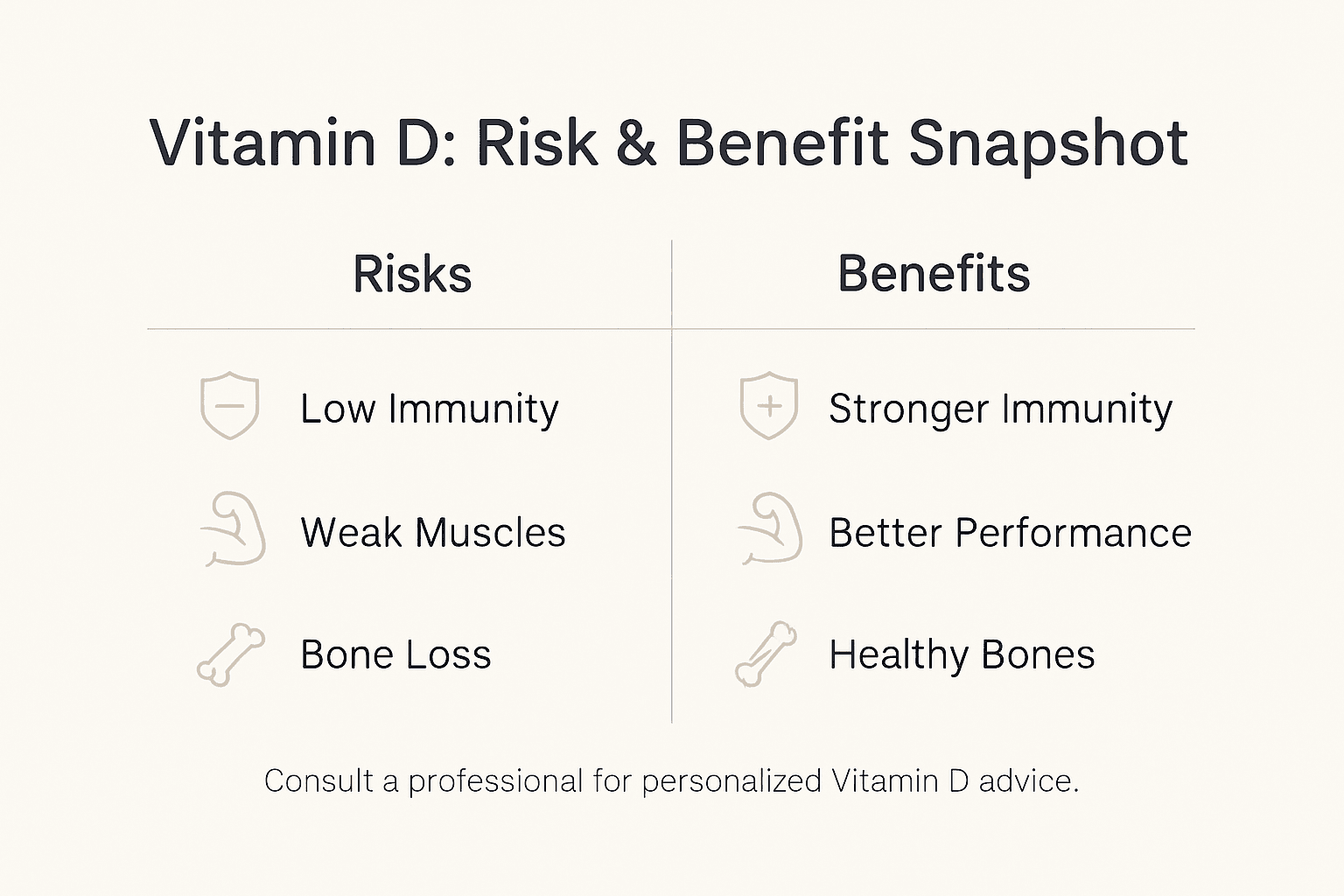
Compare health risks of Vitamin D deficiency and benefits of supplementation:
| Health Factor | Deficiency Risk | Supplementation Benefit |
|---|---|---|
| Bone Health | Increased fracture risk | Stronger bones, better density |
| Immune Function | Higher infection rates | Balanced immune responses |
| Muscle Strength | Fatigue, weakness | Improved energy and recovery |
| Disease Risk | Greater illness susceptibility | Lower chronic disease rates |
Pro Tip for #nutribliss Readers: Consult with a healthcare professional to assess your individual Vitamin D needs, considering factors like age, skin tone, geographic location, and existing health conditions before initiating any supplementation strategy.
Strengthen Your Immunity and Boost Performance with Targeted Vitamin D Support
The article highlights the critical role Vitamin D plays in enhancing immune health and muscle function. If you struggle with maintaining strong immunity or notice reduced athletic performance and muscle strength, low Vitamin D levels may be a hidden factor. Deficiency can lead to fatigue, frequent infections, and slower recovery times—challenges that impact your daily wellness and fitness goals. Optimizing your Vitamin D intake through proven supplementation can help you reclaim energy and resilience.

Discover a variety of Vitamin D supplements and comprehensive wellness products tailored to support your immune system and athletic performance only at Nutribliss.us. Act now to secure your health with science-backed options curated for personalized nutrition. Visit our site today to explore detailed product descriptions, trusted customer reviews, and smooth online shopping to enhance your vitality immediately.
Frequently Asked Questions
What role does Vitamin D play in immune function?
Vitamin D acts as a powerful modulator of both innate and adaptive immune responses, improving the efficiency of white blood cells and helping to balance the inflammatory response.
How does Vitamin D influence athletic performance?
Vitamin D supports muscle physiology by enhancing muscle regeneration, improving mitochondrial function, and mitigating oxidative stress, which all contribute to better athletic performance and muscle recovery.
What are the risks of Vitamin D deficiency for immunity and muscle function?
Vitamin D deficiency can lead to higher risks of infections, increased muscle weakness, fatigue, and diminished athletic capacity, making it crucial for overall health and performance.
How can I maintain optimal Vitamin D levels for better immunity and performance?
To maintain optimal Vitamin D levels, combine safe sun exposure, consume Vitamin D-rich foods, and consider supplements, while consulting a healthcare professional for personalized guidance.