

Finding your best self takes more than chasing the latest workout trend or grabbing whatever supplement influencers hype. For driven American millennials ready to begin a wellness journey, defining your personal vision is what makes your efforts truly meaningful. Wellness is a dynamic, ongoing process focused on progress, not perfection, shaped by choices that resonate across physical, emotional, social, and spiritual dimensions. This guide helps you create a strategy rooted in your values and science-backed solutions for authentic, lasting results.
Table of Contents
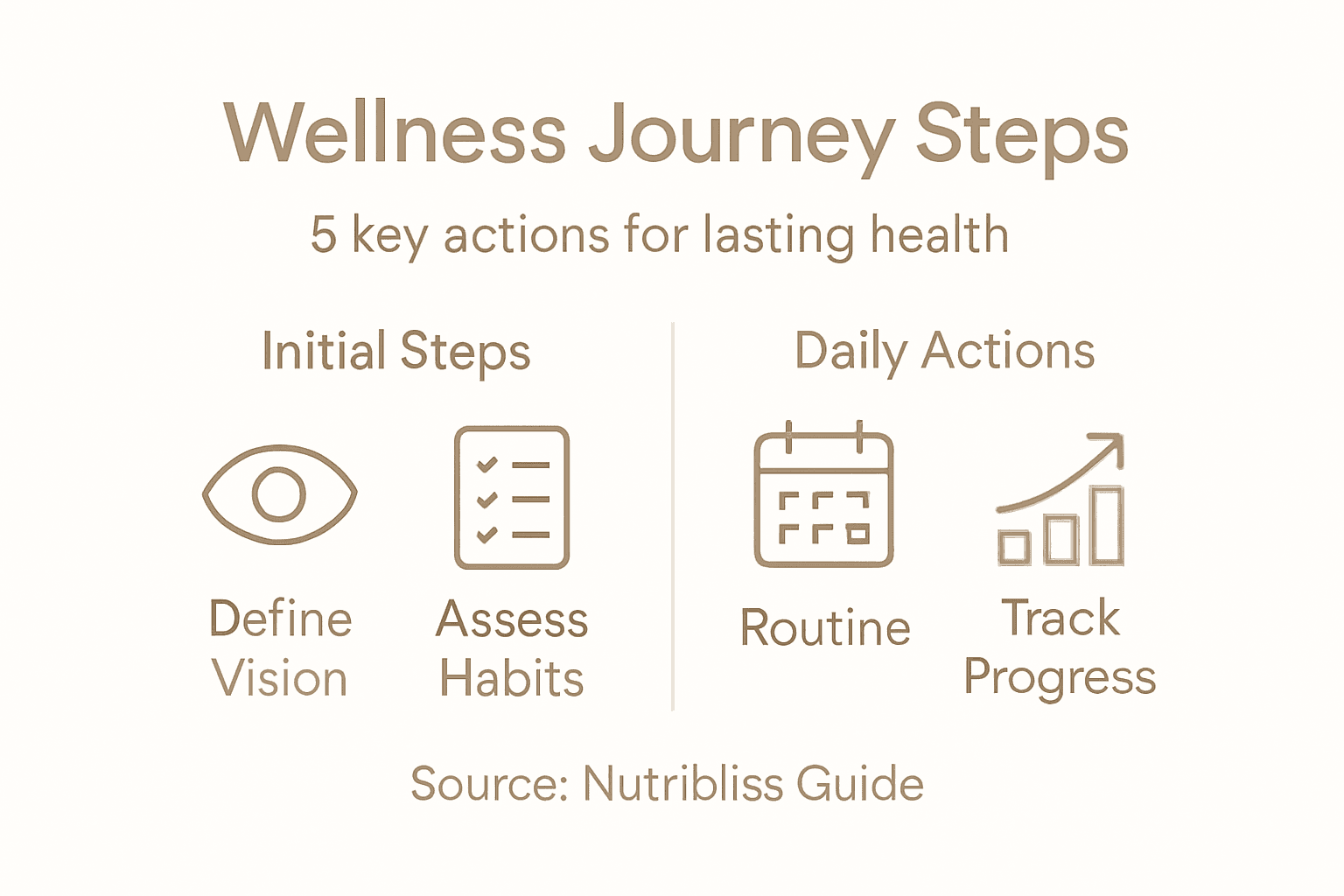
- Step 1: Define Your Personal Wellness Vision
- Step 2: Assess Your Current Health and Habits
- Step 3: Select Science-Backed Supplements Strategically
- Step 4: Establish A Daily Routine For Lasting Results
- Step 5: Track Progress And Adjust As Needed
Quick Summary
| Key Takeaway | Explanation |
|---|---|
| 1. Define Your Wellness Vision | Create a personal vision by identifying what wellness means to you based on your values and interests. |
| 2. Assess Current Health Habits | Honestly evaluate your daily habits and health to identify strengths and areas for improvement. |
| 3. Choose Supplements Wisely | Select science-backed supplements that address specific health needs, avoiding trendy or unverified options. |
| 4. Establish a Daily Routine | Build consistent daily habits that support your wellness goals and remove decision-making friction. |
| 5. Track Progress Regularly | Monitor your wellness journey through regular assessments, allowing you to make informed adjustments. |
Step 1: Define your personal wellness vision
Your wellness vision is the foundation of everything that follows. It’s a clear picture of your best self, drawn from your values, interests, and what truly matters to you. This isn’t about copying someone else’s fitness goals or adopting trendy health advice—it’s about getting crystal clear on what wellness means to you specifically.
Start by asking yourself honest questions. What does your ideal wellness look like? Not what you think it should look like, but what actually excites you. Do you want to feel strong and capable in your body? Build better mental clarity? Improve your relationships? Wellness encompasses emotional, physical, social, and spiritual dimensions, so your vision might touch multiple areas. Write down what kind of person you want to be in health and fitness. What strengths do you already have that you want to build on?
Reflect on the elements that matter most to your sense of well-being. Is it crushing your athletic goals? Having energy to play with your kids? Feeling confident at the beach? Sleeping better at night? Your vision should give you confidence and energy when you think about it, and it should feel authentic to who you actually are, not who you think you should be.
Once you’ve identified what wellness means to you, you can start thinking about setting specific, measurable wellness goals that bridge the gap between where you are now and where you want to be. Your vision becomes the north star that guides every decision you make about your health moving forward.
Pro tip: Write your wellness vision down in one paragraph and read it when motivation dips—a clear vision is the difference between random fitness attempts and a journey with real direction and purpose.
Step 2: Assess your current health and habits
Before you can move forward, you need an honest snapshot of where you are right now. This isn’t about judgment or comparing yourself to others—it’s about gathering real data on your current habits and health status so you can identify what’s working and what needs to change.

Start by evaluating the daily practices that form your foundation. Think about your sleep quality, hydration habits, stress management, eating patterns, and physical activity levels. Assessing wellness across multiple dimensions including emotional, physical, and social health gives you a complete picture rather than just focusing on one area. Rate yourself honestly in each area, not where you wish you were, but where you actually are today.
Look at the small daily actions that either support or sabotage your health. Are you drinking enough water? Moving your body consistently? Getting adequate sleep? Managing stress effectively? These foundational health habits matter because they build the base for everything else. One person might struggle with sleep while another battles stress eating. Your assessment reveals your unique challenges.
Write down specific observations about your current habits. Don’t be vague. Instead of “I don’t exercise,” note “I sit at a desk eight hours daily with no structured movement.” Instead of “I eat poorly,” observe “I skip breakfast and grab fast food for lunch three times weekly.” These specifics help you understand exactly what needs to shift.
This assessment also identifies your strengths. Maybe you’re already crushing sleep hygiene but need to work on nutrition. Perhaps you’re active but struggle with consistency. Recognizing what you’re doing well creates momentum and confidence as you build your plan.
Here is a summary of wellness dimensions and signs you may need improvement in each:
| Wellness Dimension | Positive Signs | Warning Signs |
|---|---|---|
| Physical | Consistent energy, restful sleep | Frequent fatigue, poor recovery |
| Emotional | Stable moods, resilience | Irritability, persistent stress |
| Social | Supportive relationships | Isolation, frequent conflict |
| Spiritual | Sense of purpose, mindfulness | Apathy, lack of direction |
Pro tip: Track your habits for one full week before making changes—this baseline data prevents you from guessing about what actually needs attention and makes progress measurable down the road.
Step 3: Select science-backed supplements strategically
Not all supplements are created equal, and not every supplement belongs in your routine. Strategic selection means choosing products with real evidence behind them, understanding what they actually do, and ensuring they fill genuine gaps in your health plan rather than just following trends.
Start by identifying what your body actually needs. Do you have a nutrient deficiency? Are you missing key vitamins from your diet? Maybe you’re training hard and need recovery support, or you’re struggling with sleep quality. Evidence-based supplement information helps you understand which ingredients have real research backing versus those that sound good but lack scientific support. Don’t grab a supplement because a fitness influencer recommended it or because the label uses impressive marketing language.
Understand that supplements aren’t regulated the same way medications are, which means quality varies significantly. Third-party certification matters because it verifies safety and efficacy. Look for products tested by independent organizations that confirm what’s actually in the bottle matches the label. This protects you from contaminated products or misleading claims. It’s the difference between guessing and knowing what you’re putting in your body.
Consult with a healthcare provider before adding supplements, especially if you’re taking medications. Some supplements interact with prescriptions in ways that reduce effectiveness or cause side effects. Your doctor can identify specific deficiencies and recommend targeted solutions tailored to your needs and goals. This turns supplement shopping from random guessing into strategic health building.
To help you refine your supplement choices, consider these comparison factors:
| Selection Criteria | Why It Matters | Example Question to Ask |
|---|---|---|
| Scientific Evidence | Ensures real benefits | Does research support it? |
| Regulatory Oversight | Protects from unsafe products | Is it third-party tested? |
| Personal Health Needs | Addresses individual gaps | Do I have a deficiency? |
| Doctor Consultation | Checks for interactions | Will this affect medication? |
When you’re ready to build your routine at #nutribliss, focus on supplements that address your assessment findings. If your habits show poor sleep, look for sleep support products. If athletic performance is your goal, recovery-focused supplements make sense. Match the supplement to your specific vision and current reality.
Pro tip: Start with one or two foundational supplements rather than buying a cabinet full, then assess how you feel over four weeks before adding more—this approach lets you identify what actually works for your body instead of overwhelming your system.
Step 4: Establish a daily routine for lasting results
Wellness isn’t something you accomplish once and forget about. It’s built through consistent daily actions that compound over time. When you establish a structured routine, you remove the friction of deciding what to do each day and create the conditions for real, lasting change.
Start your morning with intention. Before scrolling your phone or checking emails, drink a glass of water and do some light stretching to wake up your body and improve circulation. This simple beginning signals to yourself that wellness matters today. Follow it with breakfast that actually nourishes you rather than just filling you up. These opening hours set the tone for everything that follows.
Build movement and hydration throughout your day, not just at designated gym times. Take short breaks to stand, stretch, and refill your water bottle. A structured wellness routine including movement breaks and regular hydration supports both physical and mental well-being. These aren’t earth-shattering actions, but consistency transforms them into foundational health practices.
Schedule your meals rather than leaving them to chance. When you know when you’re eating, you’re less likely to grab fast food or skip meals entirely. Plan downtime too, even if it’s just 15 minutes in the evening. Your nervous system needs recovery, and building it into your routine makes self-care intentional rather than an afterthought.
Integrate your supplements into your routine at the same time each day. If you take vitamins with breakfast or a recovery supplement post-workout, this consistency helps you actually remember them and track what’s working. Your routine becomes the container that holds your wellness decisions.
Pro tip: Start with just three non-negotiable habits (like morning water, movement breaks, and evening downtime), nail those for two weeks, then add your next habit—trying to overhaul everything at once guarantees failure.
Step 5: Track progress and adjust as needed
You can’t manage what you don’t measure. Tracking your wellness progress reveals what’s working, what needs tweaking, and where you’re actually making real gains. Without tracking, you’re flying blind and relying on feeling, which changes day to day based on mood and sleep quality.
Start by assessing yourself across multiple wellness dimensions regularly. Wellness dimensions including emotional, physical, social, and occupational health give you a fuller picture than just weight or workout frequency. Rate yourself honestly on how you’re doing in each area every two weeks. Are you sleeping better? Do you have more energy during workouts? Is your mood more stable? These subjective measures matter as much as objective numbers.
Track specific metrics that align with your goals. If athletic performance is your vision, note workout performance, recovery time, and how you feel during training. If better sleep is the target, log sleep hours and quality. If mental clarity matters to you, track focus and stress levels. Your tracking should match your personal wellness vision, not some generic health checklist.
Note what changes you make too, especially with supplements. When you add a recovery product or sleep support supplement, document how you feel in the days following. After four weeks, you’ll see patterns emerge. Maybe that specific supplement made a noticeable difference, or maybe you need to adjust the dosage or timing. Regular self-assessment and reflection help you make necessary adjustments to maintain momentum and enhance your results.
Be willing to shift your approach based on what the data shows. If something isn’t working after giving it a fair trial, change it. If something is working beautifully, double down on it. Your wellness journey isn’t static, and your routine shouldn’t be either.
Pro tip: Use a simple spreadsheet or app to log three to five key metrics weekly, then review monthly patterns instead of daily fluctuations—this eliminates noise and shows you real trends.
Take Charge of Your Wellness Journey with Nutribliss
Starting a wellness journey naturally can feel overwhelming when you face challenges like inconsistent habits, unclear goals, or uncertainty about which supplements truly support your health. This article highlights the importance of building a clear personal wellness vision, assessing your current habits honestly, and choosing supplements backed by science to bridge the gaps in your nutrition and well-being. If you want to transform your health with confidence, aligning your daily routine with trusted products is essential.

Explore the full range of Nutribliss Supplements designed to support your unique wellness needs. Whether you are improving sleep, boosting recovery, or enhancing your immune system with our Immune Support Supplements, you can find quality products that match your vision. Don’t wait to build lasting health — start now by visiting nutribliss.us and discover supplements that help turn your wellness goals into reality.
Frequently Asked Questions
What is a wellness vision and how do I create one?
A wellness vision is a personalized picture of your best self based on your values and interests. Start by asking yourself what truly matters to you in terms of health and wellness, and write down your ideal scenario in one paragraph to guide your journey.
How can I assess my current health and habits effectively?
To assess your current health, evaluate daily practices like sleep, hydration, and nutrition. Track these habits for one week to gather honest data on what needs improvement and to identify your strengths, enabling you to create a tailored action plan.
What factors should I consider when selecting supplements?
When choosing supplements, consider scientific evidence regarding their effectiveness, third-party certifications for safety, and your personal health needs. Focus on one or two foundational supplements related to your specific health goals, and evaluate how they affect you over four weeks.
How do I establish a daily routine that supports lasting wellness?
To create a lasting wellness routine, start your day with intentional practices like hydration and movement. Incorporate small, consistent habits into your day, such as short activity breaks and meal planning, to create a supportive environment for your health journey.
How can I track my progress on my wellness journey?
Track your wellness progress by regularly assessing yourself across multiple dimensions, such as physical, emotional, and social health. Log specific metrics aligned with your goals, and review your data every month to identify trends and adjust your strategies accordingly.
What should I do if my wellness plan isn’t working?
If your wellness plan isn’t yielding results, be willing to make adjustments based on your tracked data. Identify what’s not working after giving it enough time, and consider changing your approach to better meet your goals.
Recommended
- 7 Essential Daily Wellness Tips for a Healthier Lifestyle – Nutribliss Inc.
- How to Set Wellness Goals for Better Health Results
- How to Build a Wellness Stack for Personalized Results
- How to Shop for Wellness Online and Make Smart Choices
- Cruise health and wellness tips for travelers
- Improve Hair Health Naturally: Step-by-Step Guide for Results | MyHair