

Over half of american adults report using dietary supplements, yet many still struggle to build a schedule that actually fits their goals. With so many options and conflicting advice, understanding your unique needs can make all the difference. This step by step approach will help you assess your health, select quality products, and create a supplement routine that truly supports your lifestyle.
Table of Contents
- Step 1: Assess Your Health And Supplement Needs
- Step 2: Select Quality Supplements For Your Goals
- Step 3: Organize Dosage And Timing For Maximum Benefit
- Step 4: Integrate Supplements Into Your Daily Routine
- Step 5: Track Progress And Adjust Your Schedule
Quick Summary
| Key Point | Explanation |
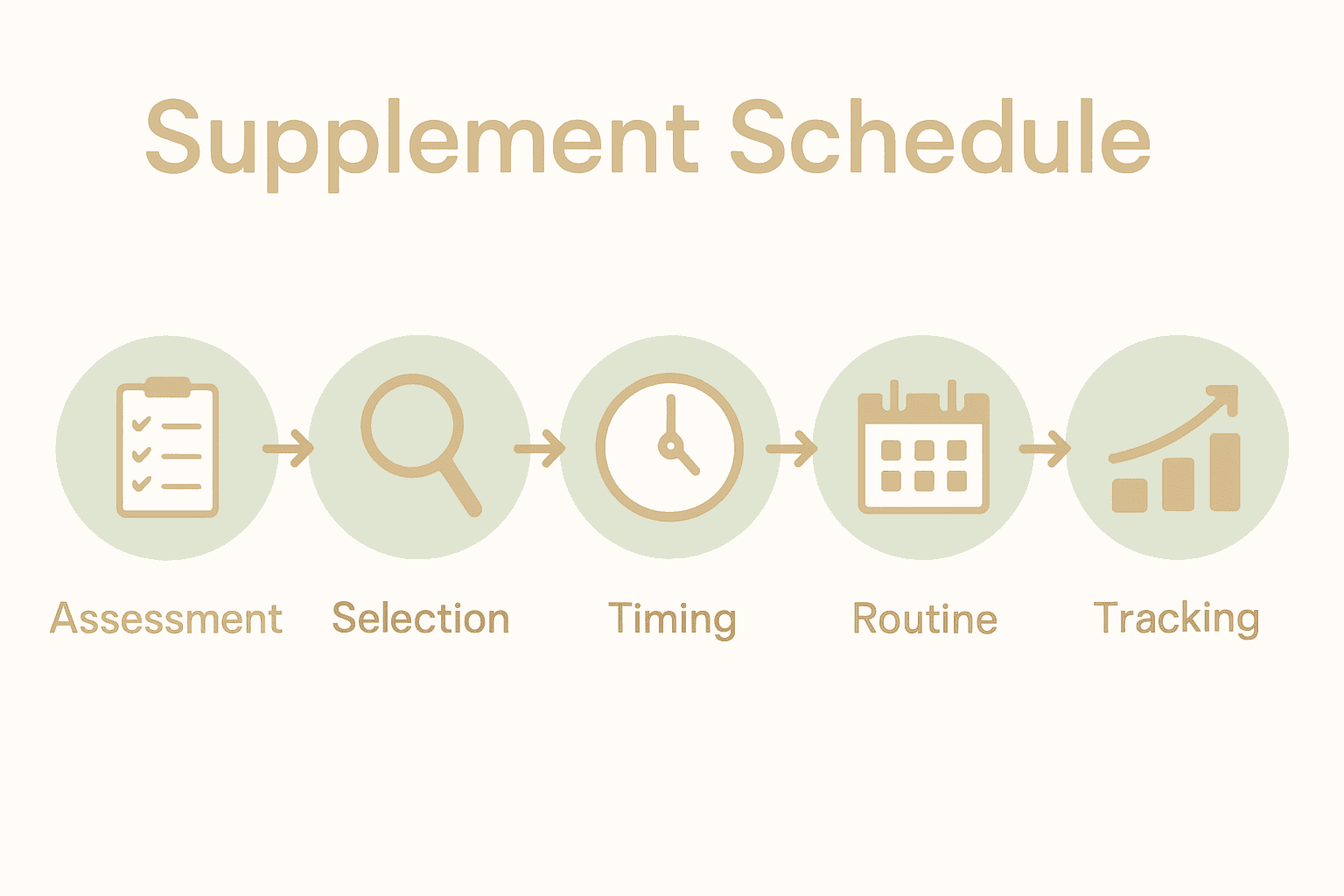 |---------------------------|-------------------------------| | 1. Assess Your Health Profile | Understand your unique health and supplement needs by evaluating diet, lifestyle, and medical conditions. | | 2. Choose Quality Supplements | Select supplements based on personal health goals and ensure they meet quality standards like third-party testing. | | 3. Organize Dosage and Timing | Plan supplement intake strategically for optimal absorption and minimal interactions with other medications. | | 4. Integrate Supplements into Routine | Make taking supplements part of your daily habits by anchoring them to regular activities. | | 5. Track Progress and Adjust | Monitor your supplement regimen’s effectiveness through journaling and observation, adapting as needed based on health changes. |
Step 1: Assess Your Health and Supplement Needs
Creating an effective supplement schedule begins with a comprehensive understanding of your unique health profile and nutritional requirements. According to a study published in the Journal of the American College of Nutrition, evaluating individual dietary habits and specific health objectives is crucial for determining appropriate nutritional interventions.
To assess your health and supplement needs effectively, start by conducting a thorough personal health inventory. This involves examining several key areas: your current diet, lifestyle factors, existing medical conditions, fitness goals, and any potential nutrient deficiencies. Consider scheduling a consultation with a healthcare professional who can perform comprehensive blood work to identify specific nutritional gaps. #nutribliss recommends tracking your daily nutrition intake, energy levels, sleep quality, and overall well being as baseline indicators.
Specific areas to evaluate include your age, gender, activity level, stress management, and any chronic health conditions. For instance, athletes might require different supplementation compared to sedentary individuals, while someone with a restricted diet may need more targeted nutritional support. Pay attention to symptoms like persistent fatigue, frequent illness, or unexplained mood changes, as these could signal underlying nutritional deficiencies that warrant professional medical guidance. Explore our comprehensive supplement planning guide to help you navigate this assessment process more effectively.
Step 2: Select Quality Supplements for Your Goals
Choosing the right supplements requires strategic decision making that aligns with your specific health objectives. According to research in the Journal of Marketing & Supply Chain Management, selecting dietary supplement brands demands careful evaluation of personal health goals and product quality.
To select quality supplements effectively, focus on several key criteria. Look for products with third party testing certifications, clear ingredient lists, and transparent manufacturing practices. Pay close attention to dosage recommendations, potential interactions with existing medications, and scientific research supporting each supplement’s efficacy. #nutribliss recommends prioritizing supplements that address your specific nutritional gaps identified during your initial health assessment.
When comparing supplement options, consider factors like bioavailability, source of ingredients, and manufacturing standards. Some individuals might benefit from professional guidance to navigate complex supplement selections. Learn more about supplement selection strategies with our comprehensive guide that breaks down the critical elements of making informed nutritional choices. Be prepared to adjust your supplement regimen as your health goals and body’s needs evolve over time.
Step 3: Organize Dosage and Timing for Maximum Benefit
Creating an effective supplement schedule requires strategic planning and precise timing to maximize nutritional absorption and minimize potential interactions. According to research from the SUPP.AI system, advanced artificial intelligence technologies now offer evidence-based insights into optimizing supplement regimens by identifying potential drug interactions and recommending ideal dosage protocols.
To organize your supplement dosage effectively, consider several critical factors. Start by grouping supplements that can be taken together and those that require separate consumption windows. Fat soluble vitamins like A, D, E, and K are best absorbed with meals containing healthy fats, while water soluble vitamins work well on an empty stomach. #nutribliss recommends creating a color coded tracking system or digital supplement calendar to monitor your precise intake schedule. Pay special attention to potential interactions between different supplements and any prescription medications you might be taking.
Timing matters significantly in supplement effectiveness. Some supplements like magnesium are best taken before bedtime to support relaxation, while others like B vitamins work best in the morning to boost energy levels. Check out our comprehensive supplement schedule guide to help you fine tune your personalized nutrition strategy. Remember that your body’s nutritional needs will change over time, so remain flexible and willing to adjust your approach as you track your progress and health goals.
Step 4: Integrate Supplements Into Your Daily Routine
Successfully incorporating supplements into your everyday life requires thoughtful planning and consistent execution. According to a systematic review in Nutrients, strategic oral nutritional supplementation can significantly improve health outcomes when integrated systematically into daily routines.
To make supplement consumption a seamless part of your lifestyle, anchor your intake to existing daily habits. Consider placing your supplements near items you use consistently like your coffee maker, breakfast table, or morning medication area. #nutribliss recommends using a dedicated pill organizer with daily compartments to eliminate guesswork and create a visual reminder. Smartphone apps and digital reminders can also help track your supplement schedule, ensuring you maintain consistent intake without feeling overwhelmed.
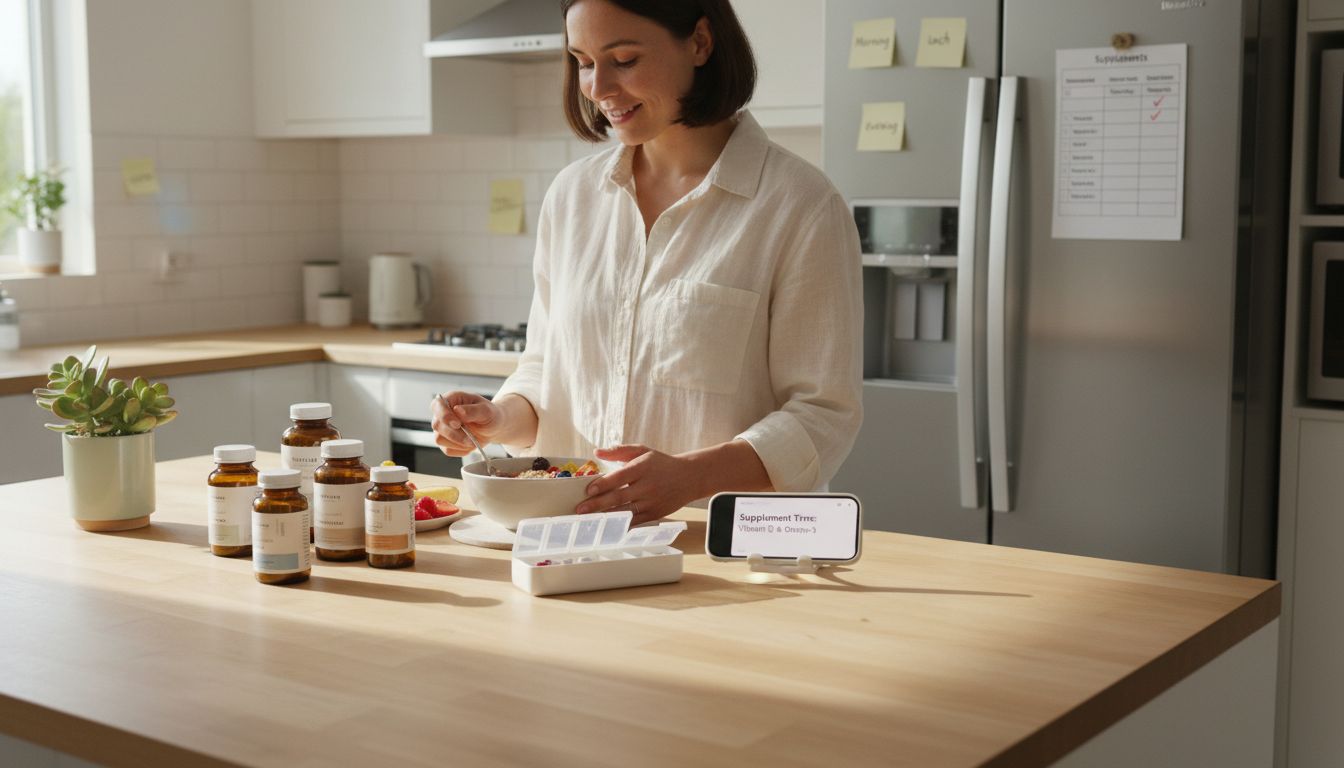
Pay attention to your body’s responses as you integrate supplements. Some individuals find morning consumption works best, while others prefer taking supplements with specific meals to optimize absorption. Explore our guide to daily vitamins for more personalized strategies that can help you fine tune your approach. Remember that supplement integration is a personal journey best approached with patience and attentiveness to your unique physiological needs.
Step 5: Track Progress and Adjust Your Schedule
Tracking your supplement regimen is critical to understanding its effectiveness and making informed adjustments. According to a comprehensive review from ArXiv, accessible and noninvasive methods for assessing micronutrient status are essential for monitoring nutritional progress and optimizing supplement strategies.
#nutribliss recommends implementing a comprehensive tracking system that goes beyond simple supplement intake. Create a detailed journal documenting your daily supplement consumption, energy levels, sleep quality, mood, and any physical changes. Consider using digital health apps or spreadsheets to log your observations systematically. Some key metrics to track include physical performance, mental clarity, immune system response, and overall well being. Blood tests every few months can provide objective data about nutrient levels and help you understand how your current supplement routine impacts your health.
Remember that supplement effectiveness is deeply personal and can change with age, lifestyle, and health conditions. Explore our guide to managing supplement intake naturally for additional insights into maintaining a responsive and adaptive nutritional strategy. Stay flexible and prepared to modify your approach based on your body’s evolving needs, keeping communication with healthcare professionals open and consistent.
Take Control of Your Health with a Personalized Supplement Schedule
Struggling to pinpoint the right supplements and organize a routine that fits your unique lifestyle can be overwhelming. This article highlights the challenges many face when trying to create a supplement schedule that delivers maximum benefits by addressing nutrient gaps, timing, and proper dosage. Achieving optimal results requires a thoughtful approach backed by quality products and clear guidance.
Explore our wide range of trusted options in Supplements for Health & Wellness designed to support your individual goals.

Take the first step to simplify your nutritional journey today. Visit Nutribliss.us and discover how carefully selected, science-backed supplements combined with tailored scheduling can transform your wellness routine. Don’t wait to unlock your potential. Shop now and build a sustainable supplement plan that keeps pace with your health and lifestyle demands.
Frequently Asked Questions
How do I assess my health and supplement needs?
Start by conducting a detailed inventory of your current diet, lifestyle, and health conditions. Consider keeping a journal to track your daily nutrition intake and energy levels for at least two weeks to identify specific nutritional gaps.
What criteria should I use to select quality supplements?
Look for supplements that include third-party testing certifications, transparent ingredient lists, and clear dosage recommendations. Prioritize ingredients that directly address the nutritional gaps identified during your health assessment.
How can I organize my supplement dosage and timing for better results?
Group your supplements based on whether they can be taken together or need separate consumption windows. Create a color-coded system or digital calendar to track your intake schedule and maximize nutrient absorption based on timing.
What are effective ways to integrate supplements into my daily routine?
Anchor your supplement intake to existing habits, such as placing them near your morning coffee maker or using a dedicated pill organizer. Aim to find a consistent time each day that works best for your schedule and helps you remember to take them regularly.
How do I track the effectiveness of my supplement schedule?
Implement a tracking system that documents your daily supplement consumption, energy levels, and any physical changes. Review your observations regularly to identify trends and adjust your regimen based on your body’s evolving needs, ideally once every few months.
What should I do if I notice changes in my health after starting supplements?
If you experience significant changes in your health, consult a healthcare professional for guidance. Adjust your supplement regimen as needed based on their recommendations and your tracking observations.
Recommended
- How to Create Supplement Schedule for Optimal Wellness – Nutribliss Inc.
- Beginner’s Guide to Supplements: Build Your Ideal Routine – Nutribliss Inc.
- Guide to Daily Vitamins: Achieve Optimal Health Results – Nutribliss Inc.
- Supplement Planning Guide: Build Your Ideal Routine Step-by-Step – Nutribliss Inc.