

Every fitness journey reaches that crossroads where new routines stall and progress slows, prompting a closer look at what is truly working. Defining your next breakthrough starts with an honest assessment of your current habits and the lifestyle choices shaping your well-being. Addressing major factors like nutrition, activity, and supplement use gives you the blueprint to set actionable goals that reflect your real needs—transforming guesswork into measurable gains you can sustain.
Table of Contents
- Step 1: Assess Your Current Health And Lifestyle
- Step 2: Identify Specific Wellness Priorities
- Step 3: Define Measurable Wellness Goals
- Step 4: Select The Right Supplements To Support Your Goals
- Step 5: Track Your Progress And Adjust As Needed
Quick Summary
| Key Insight | Explanation |
|---|---|
| 1. Assess Your Current Health | Evaluate your lifestyle habits like diet, exercise, and sleep to understand your health baseline. Focus on concrete data rather than assumptions. |
| 2. Identify Wellness Priorities | Focus on 2-3 key health areas that need attention. Priorities should align with your current lifestyle, preventing overwhelm and burnout. |
| 3. Set S.M.A.R.T. Goals | Transform priorities into specific, measurable goals with clear deadlines to track your progress effectively. This ensures accountability and clarity. |
| 4. Choose Targeted Supplements | Select supplements based on identified nutritional gaps that directly support your wellness goals instead of following trends or advertisements. |
| 5. Track Progress Regularly | Consistently measure your progress towards goals and adjust as needed. Regular reviews help maintain focus and enhance accountability. |
Step 1: Assess your current health and lifestyle
Before you can set meaningful wellness goals, you need a clear picture of where you stand right now. This is not about judgment or criticism. It’s about gathering honest data on your current health behaviors and physical condition so you can identify what’s actually working and what needs to change. When you skip this assessment step, you end up setting goals that don’t align with your reality, which means they fail almost immediately.
Start by examining the major lifestyle factors that directly shape your health outcomes. Tobacco use, alcohol consumption, diet, and physical activity critically impact your susceptibility to chronic diseases like cancer, diabetes, obesity, and cardiovascular disease. Take an honest inventory of each one. How many days per week do you move your body intentionally? What does your typical diet look like across five days? Are you drinking alcohol regularly, and if so, how much? How many hours of quality sleep are you actually getting? Don’t just guess at these numbers. Write them down for a few days to get real data. This becomes your baseline.
Here’s how common health behaviors affect long-term wellness:
| Health Factor | Potential Impact | Example Risk if Neglected |
|---|---|---|
| Physical activity | Boosts heart health, improves mood | Increased risk of heart disease |
| Nutrition quality | Supports metabolism, strengthens immunity | Higher chance of obesity |
| Alcohol moderation | Reduces disease risk, supports sleep | Liver problems or sleep issues |
| Tobacco avoidance | Lowers cancer risk, supports lung function | Elevated cancer risk |
| Sleep quantity | Enhances energy and focus | Low immunity, poor mood |
Next, consider your current health metrics and daily habits. Schedule a check-up with your doctor and get your blood pressure, cholesterol levels, and blood sugar measured if you haven’t recently. Weigh yourself and note your weight. Take your resting heart rate one morning before getting out of bed. These numbers matter because they reveal what’s happening inside your body right now. Beyond the clinical measures, pay attention to how you feel. Do you have consistent energy throughout the day or do you crash mid-afternoon? How’s your mood and stress level? Can you climb stairs without getting winded? Are you experiencing any ongoing joint pain or muscle weakness? Your subjective experience is just as valuable as medical measurements.
You should also evaluate your current supplement usage and nutritional habits. If you’re already taking vitamins or other supplements, document what you’re taking, how much, and how often. Think about the gaps in your nutrition. Are you getting enough protein for your activity level? Many people skip this analysis and then wonder why they’re not seeing results from their workouts. Understanding your nutritional baseline helps you identify where #nutribliss products might fill specific gaps in your regimen. Consider reading about how daily vitamins support optimal health to understand where supplementation fits into your bigger picture.
Once you have this information gathered, write down your observations in one place. Create a simple document with your activity level, diet patterns, current weight, energy levels, stress factors, and existing supplement routine. Don’t overcomplicate this. The goal is clarity, not perfection. This assessment becomes your reference point for measuring progress and for setting realistic goals in the next step.
Pro tip: Take a photo of yourself and record a short video of how you feel doing basic movements like touching your toes or doing a few push-ups, then revisit these in 30 days to see tangible progress that numbers alone won’t capture.
Step 2: Identify specific wellness priorities
Now that you have a clear picture of your current health status, it’s time to figure out what actually matters most to you right now. This step is about choosing where to focus your energy rather than trying to fix everything at once. When you attempt to overhaul your entire life, you burn out within weeks. Instead, you identify the 2-3 areas that will have the biggest impact on how you feel and perform.

Wellness is not just about physical fitness or weight loss. Wellness encompasses multiple dimensions including emotional, intellectual, social, spiritual, environmental, occupational, and financial well-being. Think about your life right now and honestly assess which of these areas feels neglected or is causing you stress. Maybe your physical health is decent, but your sleep quality has tanked and it’s affecting your mood and work performance. Or perhaps you’re consistent with exercise but your nutrition is chaotic and you’re not seeing the muscle gains you want. Your priorities might also reveal that you need better stress management or more meaningful social connection. The key is recognizing which areas need focus to maintain efficiency and well-being in your daily life.
To narrow down your priorities, ask yourself these questions. What health outcome would have the biggest positive impact on your daily life right now? Is it more energy to keep up with work and family? Better sleep so you’re not running on fumes? Improved strength for a specific activity you enjoy? Clearer mental focus? Reduced anxiety or better mood stability? Write down your top 3 answers. Next, consider what’s actually holding you back from your goals. Is it inconsistent exercise, poor nutrition, stress management, quality sleep, or something else? Often your biggest barrier becomes your biggest priority. Then think about what’s realistic for your current lifestyle. If you work 60 hour weeks, setting a priority around daily meal prep might be setting yourself up to fail. Choose priorities that fit your life, not the other way around.
Once you have identified your wellness priorities, research what types of support might help. Some people find that building a personalized wellness stack with targeted supplements accelerates their progress in specific areas. Others focus on habit stacking or finding accountability partners. The beauty of having identified your specific priorities is that you can now seek out strategies and tools that directly address them rather than following generic advice that may not apply to your situation.
Remember that priorities can shift over time. What matters most to you in January might be different by June, and that’s completely fine. The goal right now is to get laser focused on what will move the needle for you in the next 90 days. Once you make progress in one area, you can shift your focus to another. This sequential approach builds momentum and prevents the overwhelm that comes from trying to do everything at once.
Pro tip: Rate each of your identified priorities on a scale of 1 to 10 based on impact and feasibility, then focus exclusively on the two highest scoring items for the next 30 days before adding more goals.
Step 3: Define measurable wellness goals
Vague goals produce vague results. If your goal is simply to “get healthier” or “eat better,” you have no way to know when you’ve actually succeeded. This step is about transforming your wellness priorities into concrete, trackable goals that give you something specific to aim for. When your goals are measurable, you can track progress, stay motivated, and know exactly what success looks like.
The best wellness goals follow the S.M.A.R.T. framework to ensure they actually work. S.M.A.R.T. goals are Specific, Measurable, Achievable, Relevant, and Time-bound, which means you define clear actions, track progress, and adjust based on your lifestyle needs. Let’s break this down practically. Say your priority is better sleep because you’re exhausted and it’s affecting your work performance. A vague goal would be “sleep more.” A S.M.A.R.T. goal would be “Get 7-8 hours of sleep on 5 out of 7 nights per week for the next 12 weeks by establishing a consistent 10 PM bedtime and removing screens 30 minutes before bed.” Notice the difference. You now know exactly what you’re doing, how you’ll measure it, and when you’ll evaluate whether it’s working.
For each of your wellness priorities, create 1-2 S.M.A.R.T. goals. If your priority is nutrition and muscle growth, your goal might be “Consume 120 grams of protein daily for 8 weeks to support muscle development during my current strength training phase.” If your priority is stress reduction, it could be “Complete a 10-minute meditation or breathing exercise 4 times per week for 6 weeks to reduce anxiety and improve focus.” If your priority is energy levels, try “Walk for 30 minutes on 3 non-consecutive days per week for 10 weeks to increase cardiovascular fitness and sustained energy throughout the day.” Each goal tells you what you’re doing, how often, for how long, and why it matters.
Next, think about how you’ll actually measure these goals beyond just willpower and memory. Progress tracking transforms goals from abstract concepts into tangible data you can review. For sleep, you might use your phone’s sleep tracking app or keep a simple log. For protein intake, you could take photos of your meals or use a nutrition tracking app. For exercise, mark completed workouts on a calendar or log them in a fitness app. For stress reduction, note your perceived stress level on a scale of 1-10 before and after your meditation practice. The measurement tool matters less than the consistency of tracking. You want evidence that you’re actually progressing toward your goal.
During this process, consider where supplementation plays a role in your goals. Wellness is an ongoing, dynamic process involving choices across multiple dimensions of well-being, and for many people that includes targeted nutritional support. If your goal involves muscle growth, you might need additional protein or creatine. If your goal centers on sleep quality, certain micronutrients or specialized formulas might help. If your goal is sustained energy without caffeine crashes, electrolyte support might be relevant. Your measurable goals help you identify exactly which #nutribliss products could meaningfully contribute to your success.
Finally, write your goals down in a place you’ll see them regularly. Post them on your bathroom mirror, save them in your phone, or keep them in a journal you open daily. Goals you don’t see become goals you forget. Review your goals weekly to check progress and troubleshoot any obstacles. If you’re falling short, adjust your approach rather than abandoning the goal. Maybe your bedtime needs to shift by 15 minutes, or you need to prepare meals differently. This flexibility within structure is what makes S.M.A.R.T. goals actually work in real life.
Pro tip: Set your 12-week goal deadline on a calendar right now and work backward to create weekly milestones, then check progress every Sunday evening to stay accountable and adjust tactics before you get derailed.
Step 4: Select the right supplements to support your goals
Now that you have defined your measurable wellness goals, it’s time to determine whether supplementation can meaningfully accelerate your progress. The right supplements fill specific nutritional gaps and directly support your goals, but the wrong ones waste money and clutter your routine. This step is about making intentional choices based on your goals and your current diet, not based on trends or marketing hype.
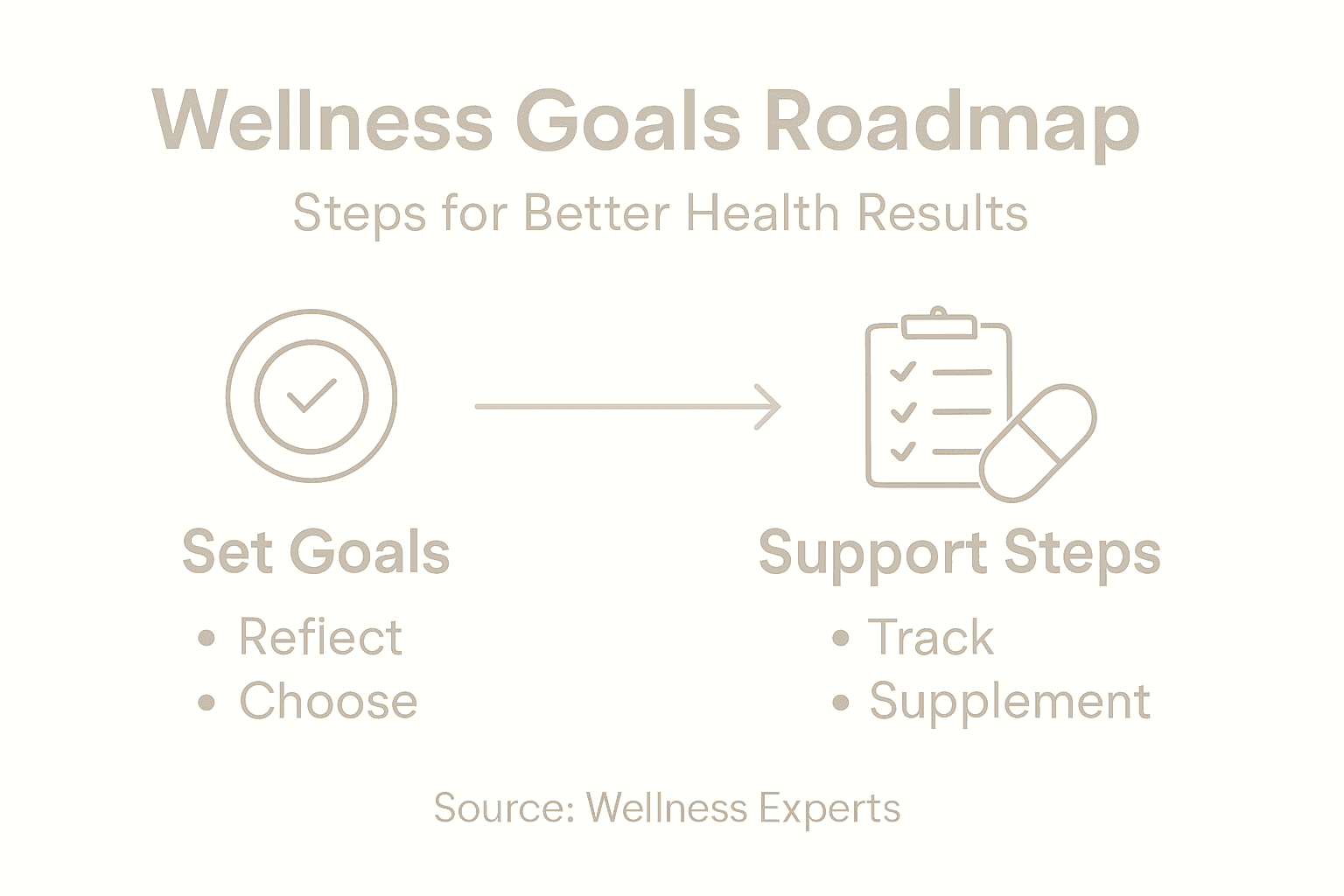
Understand what supplements actually are and what they can do. Dietary supplements include vitamins, minerals, herbs, and other ingredients intended to complement a healthy diet, which means they work alongside your nutrition and lifestyle habits, not instead of them. Supplements amplify progress when you already have the fundamentals in place. If your goal is better sleep and you’re still drinking coffee at 3 PM, no sleep supplement will fix that. If your goal is muscle growth and you’re not eating enough calories or protein, adding creatine won’t save you. The supplement comes after you’ve optimized your behavior. That said, when you have the basics right, targeted supplementation can make a meaningful difference. Research shows that certain supplements genuinely support specific outcomes when chosen thoughtfully and used consistently.
To select the right supplements for your goals, start by identifying your actual nutritional gaps. Look at your baseline assessment from Step 1. What nutrients are you likely missing from your current diet? If you rarely eat fatty fish, you might benefit from omega-3 support. If you work indoors most of the year, vitamin D supplementation makes sense. If you’re vegetarian or vegan, vitamin B12 and iron deserve attention. If your protein intake is consistently low despite your muscle-building goal, a quality protein powder becomes a practical tool rather than an optional extra. Essential supplements like vitamin D, omega-3 fatty acids, magnesium, probiotics, and vitamin B12 support bone health, immune function, mental health, and metabolism, especially for those with limited diet variety or specific health conditions. However, you don’t need all of these. Focus on the ones that directly address your nutritional gaps and support your specific goals.
Here’s a comparison of common supplements and their targeted benefits:
| Supplement Type | Primary Benefit | Ideal User Scenario |
|---|---|---|
| Vitamin D | Supports bone health | Limited sun exposure |
| Omega-3 | Improves heart health | Rarely eats fish |
| Protein powder | Aids muscle growth | Strength training focus |
| Probiotics | Promotes gut health | Digestive discomfort |
| Magnesium | Enhances sleep quality | Trouble falling asleep |
Next, research the specific supplement you’re considering. Look for products that have third-party testing and clear labeling of ingredients and amounts. Check for scientific evidence supporting the supplement’s effectiveness for your particular goal. Not all supplements are created equal, and quality matters significantly. This is where understanding the supplement selection process helps you identify products with proven efficacy and safety standards. Start with one or two supplements maximum, especially if you’re new to supplementation. Adding multiple products at once makes it impossible to know which ones are actually helping. Give each supplement at least 30 to 60 days before deciding if it’s working. Your body needs time to adapt and show results.
Consider the practical aspects of supplementation as well. Does the supplement fit your lifestyle? If you hate swallowing pills, a powder you mix into your post-workout drink might work better than capsules. What’s the cost versus your budget? Some supplements are worth the investment if they directly support your goals. Others might be nice to have but not essential right now. Start with the 80/20 approach: the supplements that address 80 percent of your needs with 20 percent of the cost and complexity. As you progress and get deeper into your wellness journey, you can expand and refine your routine. The #nutribliss product selection includes everything from protein powders and electrolytes to vitamins and specialty capsules, so you can find options that fit your specific goals and preferences.
Finally, track how each supplement affects you. Note your energy levels, sleep quality, workout performance, mood, or whatever metric your goals require. After 60 days, decide if the supplement is delivering value. If you notice improvements, keep it. If you don’t, discontinue it and try something else. This systematic approach prevents supplement waste and ensures you’re only using products that genuinely move the needle for you.
Pro tip: Start with a simple two-supplement stack aligned to your top goal, measure results carefully for 60 days, then only add a third supplement if the first two are delivering noticeable benefits.
Step 5: Track your progress and adjust as needed
Setting goals is exciting. Actually achieving them requires something less glamorous but infinitely more important: consistent tracking and the willingness to adjust when something isn’t working. This step transforms your wellness goals from wishful thinking into tangible progress you can measure and celebrate. Without tracking, you lose accountability and motivation. Without adjustment, you stay stuck doing things that don’t work.
Tracking progress towards wellness goals involves regularly measuring outcomes, reflecting on achievements, and making adjustments to goals or strategies as needed. This iterative process helps maintain motivation and accountability while allowing flexibility based on life changes and the effectiveness of your actions. Start by deciding what you’ll actually measure. If your goal is better sleep, track hours slept and sleep quality on a scale of 1 to 10. If your goal is muscle growth, weigh yourself weekly and track your workout performance. If your goal is stress reduction, rate your stress level morning and evening. If your goal is improved energy, log your energy at different times of day. The specific metric matters less than consistency. Pick something you can measure objectively and check it regularly.
Set a specific review schedule and stick to it. Weekly reviews catch problems early. Spend 10 minutes every Sunday evening looking at your data from the past week. Did you hit your sleep target 5 out of 7 nights? Did you complete your workouts as planned? Did you take your supplements consistently? Did your energy levels improve? What obstacles came up? Did certain days or situations derail your progress? Weekly reviews keep you aware and help you make small adjustments before the week gets completely off track. Monthly reviews provide a bigger picture perspective. After 4 weeks, look at the overall trend. Are you progressing toward your goal or staying stuck? Is the goal realistic for your current situation? Do you need to adjust your strategy? Monthly reviews inform whether your approach is working or whether you need a different tactic entirely.
Beyond simple metric tracking, using tools like the Wellness Wheel and self-assessment allows you to evaluate well-being across multiple dimensions to identify areas for improvement and revise goals. This broader assessment helps you see how changes in one area ripple across your entire life. Maybe you improved your sleep quality as planned, but you notice your stress increased and your social connections suffered. Or perhaps you achieved your protein intake target but you’re spending too much money on supplements and feeling financial stress. These connections matter. Your wellness goals exist within the context of your whole life. Tracking only the narrow metric misses these important patterns.
When you notice that something isn’t working, change it. This isn’t failure. It’s learning. If you set a goal to exercise 5 days per week but you’re only hitting 2-3 days, the goal wasn’t realistic for your life right now. Adjust it to 3 days per week and see if you can consistently hit that target. If you’re taking a supplement and seeing no difference after 60 days, switch to something else. If your sleep is still terrible despite hitting your target hours, maybe the issue is sleep quality, not quantity. Adjust your strategy. Use your tracking data to inform your decisions. Hard data beats assumptions every single time. Someone once told me they weren’t seeing results from their #nutribliss supplements, but when I asked them to show me their tracking, they realized they’d only been taking them 3 days per week instead of daily. The supplement wasn’t the problem. Consistency was. Their adjustment was immediate and results followed.
At the 90-day mark, conduct a comprehensive review. Compare where you started to where you are now. Did you hit your S.M.A.R.T. goal? If yes, celebrate that win and identify your next priority. If no, analyze why. Was the goal too ambitious? Was your strategy ineffective? Did life circumstances change? Use this analysis to set your next set of goals. Never stop the process of assessing, tracking, and adjusting. Wellness isn’t a destination you reach and then ignore. It’s an ongoing practice of paying attention to your health and making choices that support it.
Pro tip: Use a simple spreadsheet or habit-tracking app to record your metrics every day, then spend 10 minutes every Sunday reviewing the data and noting one adjustment you’ll make in the coming week.
Take Control of Your Wellness Journey with Targeted Support
Setting clear wellness goals can feel overwhelming when faced with inconsistent energy, poor sleep, or nutrition gaps. This article highlights the importance of measurable goals and intentional supplementation tailored to your unique needs. If you want to overcome barriers like inconsistent exercise or stress management challenges the right supplements can provide the extra support that accelerates your progress.

Explore our wide selection of Nutribliss Supplements crafted to support your specific goals whether it’s muscle growth, better sleep, or immune health. Don’t wait to build your personalized wellness stack. Visit Nutribliss.us today and start choosing supplements that fit your lifestyle and deliver real results. Your best health is within reach when you combine focused goals with science-backed nutrition.
Ready to elevate your health journey? Discover targeted options now in our Fitness Supplements and Immune Support Supplements collections.
Frequently Asked Questions
How can I assess my current health and lifestyle effectively?
To assess your current health and lifestyle, take a few days to track key factors such as physical activity, diet, sleep, and stress levels. Write down how often you exercise, what you eat, and how well you sleep to create a clear baseline before setting wellness goals.
What are S.M.A.R.T. goals, and how do I apply them to my wellness journey?
S.M.A.R.T. goals are Specific, Measurable, Achievable, Relevant, and Time-bound objectives that provide clarity and structure to your wellness efforts. Formulate your goals by defining exact actions, such as “Walk for 30 minutes three times a week for the next eight weeks to improve endurance.”
How do I identify which wellness areas to prioritize?
Identify your wellness priorities by reflecting on which areas in your life feel neglected or stressful. Select 2-3 key focus areas, such as improving sleep quality or nutrition, that will have the most significant impact on your overall well-being in the short term.
What steps should I take to track my progress toward wellness goals?
To track your progress, decide on specific metrics to measure your goals, such as rating your sleep quality or logging your workouts. Review your data weekly to see if you’re on track, and adjust your strategies as needed to ensure consistent progress toward your goals.
When should I consider adding supplements to support my wellness goals?
Consider adding supplements after you’ve established a solid foundation of healthy habits and identified specific nutritional gaps. Focus on one or two supplements that align directly with your goals, such as protein for muscle growth, and assess their impact over 30-60 days before adding more.
How can I adjust my goals if I find I’m not making progress?
If you’re not making progress, review your goals and assess whether they are realistic based on your current lifestyle. Adjust the goals to be more attainable, or change your strategies and techniques, ensuring they align better with your capabilities and limitations.
Recommended
- How to Build a Wellness Stack for Personalized Results
- 7 Essential Daily Wellness Tips for a Healthier Lifestyle – Nutribliss Inc.
- How to Shop for Wellness Online and Make Smart Choices
- Beginner’s Guide to Supplements: Build Your Ideal Routine – Nutribliss Inc.
- Improve Hair Health Naturally: Step-by-Step Guide for Results | MyHair