

Yes, plant protein powders deliver real, measurable benefits when they provide enough total protein and enough leucine per serving. Research backs three main payoffs: muscle repair and growth on par with whey when dosed correctly, better satiety and weight control thanks to fiber, and favorable shifts in cholesterol and gut bacteria. The catch is product quality. A poorly formulated powder with a thin amino acid profile or a big dose of gums and sugar alcohols will underdeliver and upset your stomach.
TL;DR:
- Ensuring the plant protein powder contains sufficient total protein and leucine is crucial for muscle synthesis and recovery.
- The effectiveness depends heavily on formulation, with blends of pea, rice, or soy providing performance comparable to whey.
- Fiber content in plant powders supports satiety, gut health, and cholesterol management, but many isolates lose these benefits due to processing.
- Proper dosing varies: 1.6 to 2.2 grams of protein per kilogram of body weight daily, with a focus on total intake over precise timing.
- Third-party tested products with transparent labeling on amino acid content and minimal fillers offer the best quality and safety.
Table of Contents
- What Are the Main Health Benefits of Plant Protein Powder?
- Can Plant Protein Really Build Muscle Like Whey?
- Does Plant Protein Improve Cholesterol and Blood Sugar?
- How Does Plant Protein Support Gut Health?
- How Much Plant Protein Should You Take and When?
- What Should You Look for in a Quality Plant Protein Powder?
- What Side Effects Should You Watch For?
- Who Writes This and Why It Matters
- Is Plant Protein Worth Switching To?
- Which Nutribliss Plant Protein Option Fits Your Goal?
- Sources
What Are the Main Health Benefits of Plant Protein Powder?
The evidence on plant protein powder benefits splits into five clear categories, and each one carries a different strength of proof behind it.
Muscle protein synthesis and recovery. A well-designed pea, rice, or soy blend can trigger the same muscle-building response as whey, provided it hits the right leucine dose. This is the strongest and most direct evidence in the category, backed by controlled trials measuring actual synthesis rates in the muscle.
Satiety and weight management. Plant proteins tend to come bundled with fiber that whey simply doesn’t have. Fiber slows gastric emptying and blunts blood sugar spikes, which helps explain why plant-protein users often report feeling fuller longer.
Cardiometabolic health. Swapping animal protein for plant protein correlates with improved LDL cholesterol and lower type 2 diabetes risk in population studies, and some controlled trials show similar shifts over a period of weeks.
Gut and microbiome support. The fiber and resistant starch that ride along in concentrate-form plant powders feed short-chain fatty acid production in the colon, a process tied to gut lining health and lower inflammation markers.
Nutritional and dietary pattern advantages. Beyond protein content, many plant powders bring iron, magnesium, and polyphenols to the table, filling gaps that a whey-only diet can leave open.
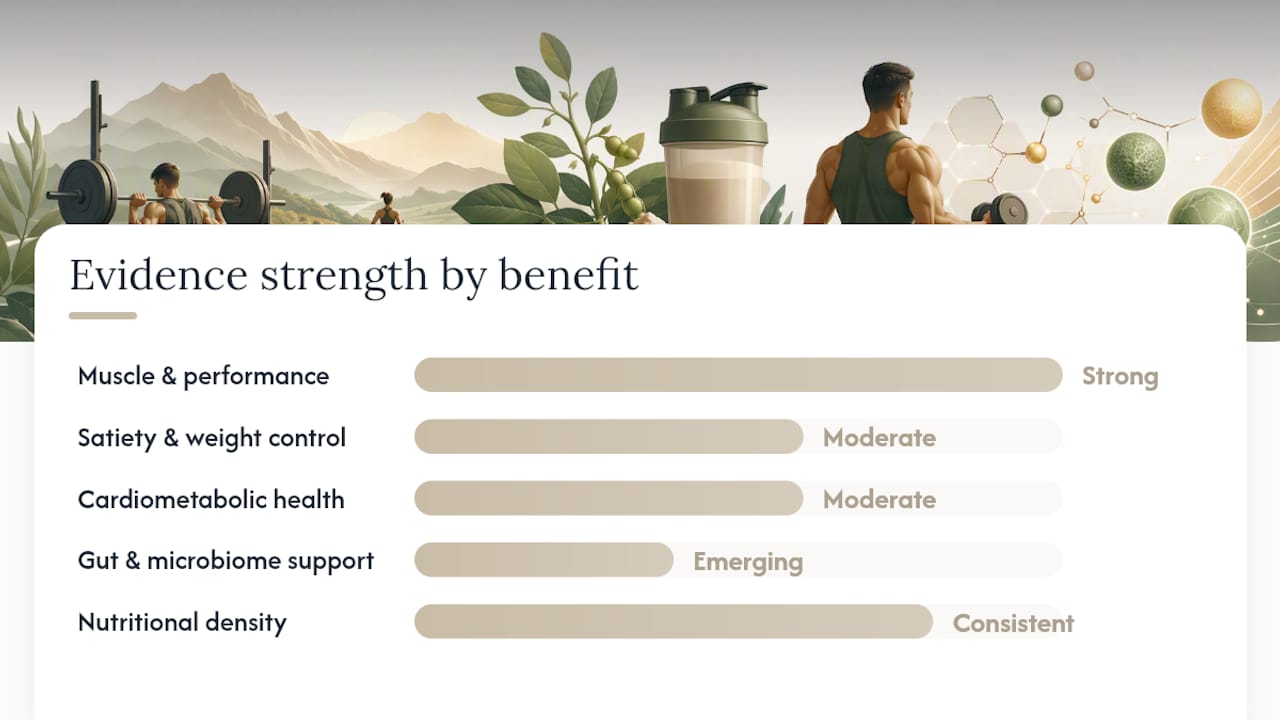
Here’s how the evidence strength breaks down across these areas:
- Muscle and performance: Strong, direct evidence from controlled MyoPS trials when dose and leucine are matched.
- Satiety and weight control: Moderate evidence, driven mostly by fiber content rather than the protein itself.
- Cardiometabolic health: Moderate evidence from observational studies, with some supporting intervention trials.
- Gut health: Emerging but promising evidence tied to fiber and fermentation byproducts.
- Nutrient density: Consistent, well-established evidence that varies by ingredient source.
None of this means every plant protein tub on a shelf delivers these benefits automatically. The research behind plant-based protein supplements makes clear that formulation, processing, and dose determine whether you actually get the payoff or just a chalky drink.
Can Plant Protein Really Build Muscle Like Whey?
Muscle growth depends on a biological switch called muscle protein synthesis (MyoPS), and that switch gets flipped by an amino acid called leucine activating a cellular pathway known as mTOR. Whey has always had the edge here because it’s naturally leucine-rich. Soy and rice, by comparison, need a bigger serving to hit the same trigger point.
That gap closes when you get the formulation right. A landmark trial found that a plant protein blend of pea, brown rice, and canola stimulated post-exercise muscle protein synthesis at rates equivalent to whey in resistance-trained adults, over a four-hour post-workout window.
Pro Tip: The magic number to look for on a plant protein label is leucine content, not just total grams of protein. If the label doesn’t list amino acids, check the brand’s website. If they can’t tell you, that’s a red flag.
The dose that made this work is worth repeating exactly:
- A sufficient amount of total protein per serving
- An adequate amount of leucine, the threshold most research ties to a full MyoPS response
- A blend rather than a single plant source, since combining pea and rice covers each other’s limiting amino acids
- Soy protein isolate as the one common exception. It’s a naturally complete plant protein on its own, so it doesn’t strictly need a blending partner.
For daily totals, most strength-focused adults do well aiming for 1.6 to 2.2 grams of protein per kilogram of body weight, spread across meals. A protein powder is a tool for hitting that number conveniently, not a replacement for whole-food protein sources like lentils, tofu, or beans. Timing matters less than most people assume. Total daily intake and resistance training consistency drive results far more than whether your shake lands in the “anabolic window” everyone talks about. Pairing a plant protein blend with a basic strength program, and creatine if you use it, tends to matter more than micromanaging when you drink your shake. If you want a broader primer on how protein powders fit into a training plan, this fitness guide covers the fundamentals.
Does Plant Protein Improve Cholesterol and Blood Sugar?
Swapping animal protein for plant protein shows up repeatedly in population data as a predictor of better lipid profiles, and a handful of controlled trials back up the association with actual mechanism-level explanations.
The link isn’t just about protein source. Three factors seem to be doing the work together:
- Fiber content, which binds bile acids and helps lower circulating LDL cholesterol over time.
- Lower saturated fat load, since most plant protein powders carry a fraction of the saturated fat found in whole-food animal protein.
- Bioactive compounds like isoflavones in soy, which some research ties to modest improvements in lipoprotein markers.
Higher plant protein intake correlates with reduced risk of type 2 diabetes and improved LDL and apoB markers in observational research, though it’s worth being honest about the limits here. Most of that data comes from population studies tracking dietary patterns, not tightly controlled trials isolating protein powder alone. The direction of the evidence is consistent, but the size of the effect from powder specifically, versus whole-food plant protein, is still being worked out.
On the glycemic side, pea and soy protein beverages tend to produce a gentler post-meal blood sugar rise compared to fast-digesting whey isolate, largely because of slower gastric emptying. That slower digestion is also part of why plant protein shakes tend to keep hunger at bay longer, which matters if weight management is your goal alongside muscle gain. None of this makes plant protein a cholesterol medication substitute. It’s a dietary lever, not a treatment.
How Does Plant Protein Support Gut Health?
Fiber is the ingredient doing most of the work here, and it’s the one thing whey protein simply can’t offer. When fiber from pea, rice, or soy protein reaches your colon, bacteria ferment it into short-chain fatty acids like butyrate, which feed the cells lining your gut and appear to support a healthier microbial balance over time.
Not all plant powders deliver equal fiber, though. Concentrates retain more of the plant’s original fiber and micronutrients because they go through less intensive processing. Isolates strip most of that fiber away to concentrate the protein itself, landing at 90% protein or higher by weight, according to research on plant protein processing. That tradeoff matters for tolerance: less fiber generally means gentler digestion for sensitive stomachs, but you lose some of the microbiome benefit.
If you’re transitioning to plant protein for the first time, a few adjustments make the process far smoother:
- Start with a half-serving for the first few days rather than jumping straight to a full scoop.
- Drink extra water, since fiber needs fluid to move through your system comfortably.
- Check the ingredient list for sugar alcohols (sorbitol, erythritol) and thickening gums, which cause more bloating complaints than the protein itself.
Pro Tip: If you get gas or bloating switching to plant protein, the protein is rarely the culprit. It’s almost always an additive or a serving size that’s too aggressive too fast. Digestive discomfort is frequently driven by additives or antinutritional factors rather than the protein itself, and easing in usually solves it within a week or two.
How Much Plant Protein Should You Take and When?
Dosing plant protein correctly is where most people either get real results or waste their money on a powder that’s technically “healthy” but functionally useless for their goals.
- For muscle-building after a workout, aim for a moderate serving of plant protein to meet leucine thresholds, targeting around 2.5 grams of leucine. Plant sources generally need a slightly bigger serving than whey to hit the same leucine mark, so don’t assume gram-for-gram equivalence.
- For daily totals, calculate 1.6 to 2.2 grams of protein per kilogram of body weight if you’re training for strength or hypertrophy. A 75 kilogram lifter lands somewhere between 120 and 165 grams a day, split across three or four meals plus a shake if needed.
- For general health without a strength focus, the standard 0.8 to 1.2 grams per kilogram range still applies, and a single daily serving of plant protein can help close gaps left by a lower meat or dairy intake.
- For timing, prioritize hitting your daily total over obsessing about the exact minute you drink your shake. A post-workout serving is convenient, but a shake at breakfast counts just as much toward your daily muscle-building math.
- For older adults, research on plant protein quality suggests slightly higher per-meal doses may be needed to overcome the blunted anabolic response that comes with age, making a measured 30 to 40 gram serving a sensible target rather than a smaller “maintenance” scoop.
What Should You Look for in a Quality Plant Protein Powder?
Reading a plant protein label well is the single biggest factor separating a powder that actually works from one that just sounds healthy on the package.
Isolate versus concentrate is your first decision. Isolates go through additional processing to strip out fiber and carbohydrates, landing near 90% protein by weight with fewer digestive triggers, which makes them a smart pick post-workout or if you’re sensitive to fiber. Concentrates keep more of the plant’s natural fiber and micronutrients intact, which suits people using the powder as a meal-replacement or fiber-boosting tool rather than a pure post-workout hit.
Third-party testing matters more than marketing claims. Look for certifications like NSF Certified for Sport or Informed Sport on the label. These programs test finished products for banned substances and label accuracy, which matters if you compete in a tested sport, and it’s a reasonable quality signal even if you don’t. A brand willing to pay for independent testing is a brand willing to be checked.
Beyond certification, run through this quick checklist before you buy:
- Protein per serving should be clearly stated, not buried in a proprietary blend that hides actual amounts.
- Amino acid or leucine content should be listed or available on request. If a company can’t answer this, that tells you something.
- Sugar and sweeteners should be minimal. A protein powder with more sugar than a candy bar defeats its own purpose.
- Gums and fillers like xanthan or guar gum in large amounts are common triggers for bloating.
- Heavy metal testing statements are worth seeking out, since some plant crops absorb more environmental contaminants than others depending on soil.
Pro Tip: Registered dietitians consistently point out that protein powder is a convenience tool meant to fill dietary gaps, not a replacement for whole foods. Check the best protein shakes guidance before assuming a fancy label equals a quality product. For a deeper walkthrough of what to look for, this plant-based protein buying guide breaks down formulation differences between brands, and this isolate protein explainer covers when isolates make sense over concentrates.
What Side Effects Should You Watch For?
Most complaints about plant protein powder trace back to something other than the protein itself, and knowing the difference helps you troubleshoot instead of giving up on the category entirely.
- Bloating and gas usually come from fiber content, antinutritional compounds, or added gums rather than the amino acids. Reducing your serving size for a week typically resolves it.
- Allergy cross-reactivity is a real consideration for people with soy or legume allergies, since pea protein can trigger reactions in some people sensitive to other legumes. Read labels carefully if you have a known legume allergy.
- Nutrient monitoring for vegans matters beyond the protein powder itself. If you’re relying heavily on plant protein because you’ve cut animal products, keep an eye on vitamin B12 and iron status, since neither is reliably supplied by most protein powders.
- Kidney disease or unusual symptoms warrant a conversation with a doctor before adding any high-protein supplement, plant or animal, since protein intake recommendations shift for people managing kidney conditions.
None of these risks are unique to plant protein. They’re the same categories of caution that apply to any concentrated supplement, just with a slightly different list of usual suspects.
Who Writes This and Why It Matters
This article on plant protein powder benefits reflects Nutribliss’s approach to supplement content: cite the actual research, name the actual doses, and skip the vague wellness claims that dominate most protein marketing. [author_bio]
Nutribliss builds out plant-based product guidance across protein powder types and general protein powder benefits so readers can compare formats before buying anything. The brand’s product pages list ingredient sourcing and third-party testing status directly, following the same transparency standard referenced throughout this piece, because a supplement company that hides its label details isn’t one worth trusting with your training goals.
Is Plant Protein Worth Switching To?
The honest answer is that plant protein earned its place in serious training programs, but not because it’s inherently superior to whey. It earned it because the formulation science caught up. A blended pea, rice, and canola powder hitting 30 grams of protein and 2.5 grams of leucine performs the same job whey does, and it comes with fiber and polyphenols whey never offered in the first place.
My honest preference leans toward evidence-backed blends or soy isolate for anyone training seriously, and a cleaner single-source isolate for anyone mainly trying to minimize additives and keep their stomach happy. Check the label before you check the marketing copy. If you’re exploring the space, look at products under #nutribliss and read the ingredient panel the same way you’d read a nutrition study, skeptically and closely.
The bottom line: plant protein powder benefits are real, but they live in the formulation details, not the marketing on the front of the bag.
— GAURAV
Which Nutribliss Plant Protein Option Fits Your Goal?
If you’re training hard and want the fastest, cleanest post-workout hit, an isolate-style plant formula is built for that job, digesting quickly with less fiber to slow things down. If your goal is closer to a meal replacement or an easy way to add fiber and micronutrients to your day, a concentrate-style option does more of that work for you.

Nutribliss lists full ingredient panels and dosing information directly on each product page, so you’re not guessing at leucine content or squinting at a proprietary blend label. That transparency is the whole point. You should be able to check exactly what you’re taking before it arrives at your door. Browse the electrolytes supplement and other formulations on the Nutribliss site to see how the brand documents sourcing and testing across its full lineup, and reach out to customer support directly if a label detail isn’t clear. Pick the format that matches your training goal, read the panel, and order the one that actually fits what you’re trying to do.
This article is general information, not a substitute for advice from a qualified doctor. Consult a qualified healthcare professional about your own circumstances before acting on anything here.
Sources
- Dietary Plant-Based Protein Supplements: Sources, Processing, Nutritional Value, and Health Benefits - PMC
- Pea protein powder: benefits, risks, and uses - Healthline