

TL;DR:
- Isolate protein powder is a highly purified supplement containing at least 90% protein, produced by removing fats, lactose, and carbs through advanced filtration. It offers faster absorption, less lactose, and a leaner macro profile, making it ideal for lactose-sensitive individuals, calorie-conscious diets, and athletes seeking quick post-workout amino acid delivery. While more expensive, isolate’s purity and digestive benefits justify the cost for specific needs, but overall, a well-dosed concentrate can suffice for most people’s protein goals.
Isolate protein powder is defined as a highly purified protein supplement containing 90% or more protein by weight, produced by removing most fats, lactose, and carbohydrates through advanced filtration. Whey protein isolate (WPI) is the most widely recognized form, derived from bovine whey and processed using ultrafiltration or ion-exchange chromatography to reach ≥90% protein purity. This makes it one of the cleanest protein sources available for athletes, lactose-sensitive individuals, and anyone tracking macros closely. If you have been comparing labels at the supplement store and wondering why one product costs twice as much as another, the answer almost always comes down to this purification process.
What is isolate protein powder and how is it made?
Isolate protein powder starts its life as a byproduct of cheese or yogurt manufacturing. The liquid whey that separates during dairy production is a dilute mixture of protein, fat, lactose, and water. Turning that liquid into a shelf-stable powder with 90% protein content requires several precise processing steps.
- Initial concentration. Raw whey passes through membrane filters that remove the bulk of water, fat, and lactose. This produces whey protein concentrate, which typically contains 70 to 80% protein.
- Secondary purification. To reach isolate-grade purity, manufacturers apply cross-flow microfiltration or ion-exchange chromatography. These methods selectively strip out remaining lactose and fat while keeping the protein structure intact.
- Diafiltration. Water is added and removed repeatedly to flush out residual lactose and minerals, pushing protein concentration above 90%.
- Spray drying. The purified liquid protein is atomized into a hot-air chamber, instantly evaporating moisture and producing a fine, stable powder.
Each additional step adds cost, which is why isolate protein powder consistently prices higher than concentrate. The multi-step filtration process also explains why isolate contains less than 1% lactose per 100 grams, a figure that matters enormously for people with lactose sensitivity.
Pro Tip: If you see “cross-flow microfiltration” on a protein label, it generally signals a gentler process that preserves more of the naturally occurring bioactive peptides compared to ion exchange.
Plant-based isolates follow a similar logic. Soy protein isolate, pea protein isolate, and rice protein isolate all undergo extraction and purification steps to concentrate protein above 90%, removing fiber, starch, and fats from the source ingredient.
What nutritional benefits does isolate protein offer?
The nutritional case for whey isolate is straightforward: more protein per calorie, less of everything else. A typical 30-gram serving of whey protein isolate delivers roughly 25 to 27 grams of protein, compared to 20 to 22 grams from an equivalent serving of concentrate. That gap compounds quickly if you are consuming two servings per day.

| Nutrient | Whey protein isolate | Whey protein concentrate |
|---|---|---|
| Protein per 100g | ≥90g | ~70–80g |
| Lactose per 100g | <1g | 4–8g |
| Fat per 100g | <1g | 4–7g |
| Calories per 30g serving | ~110–120 kcal | ~130–150 kcal |
| Cost per serving | Higher | Lower |
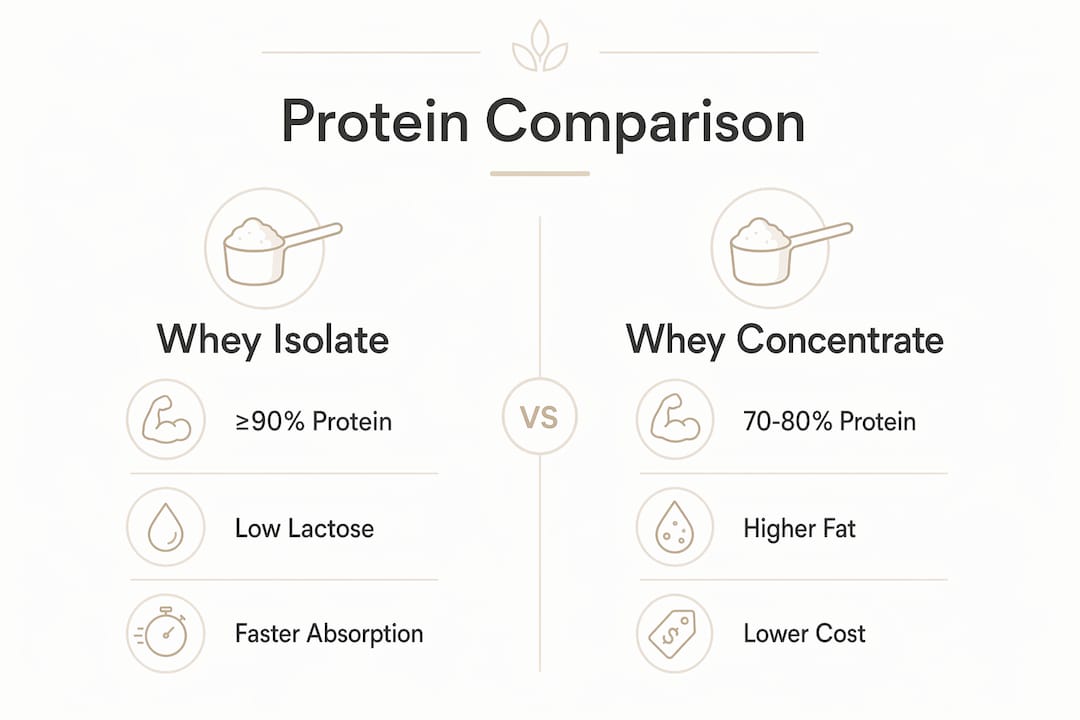
Isolate’s lower lactose content makes it the practical choice for the estimated 65% of adults who have some degree of lactose malabsorption. Bloating, gas, and cramping after a protein shake are almost always traced back to lactose, not the protein itself. Switching to isolate typically resolves those symptoms without requiring a switch to plant-based options.
The absorption advantage is real but nuanced. Isolate protein is easier to digest because low fat and lactose content means less digestive work before amino acids enter the bloodstream. This supports faster muscle protein synthesis after training, which matters most in the 30 to 60 minutes post-workout. Isolate is also rich in leucine, the branched-chain amino acid that acts as the primary trigger for muscle building.
Pro Tip: Muscle protein synthesis requires reaching a leucine threshold of approximately 2.5 grams per meal. A 25-gram serving of quality whey isolate typically delivers 2.5 to 3 grams of leucine, hitting that threshold reliably.
One honest caveat: the extra processing that creates isolate also removes some minerals and immunoglobulins naturally present in concentrate. For most people this is irrelevant, but it is worth knowing that “purer” does not always mean “more complete.”
Isolate vs. concentrate: which protein type is right for you?
The difference between whey protein and isolate is primarily one of degree, not kind. Both come from the same source and deliver a complete amino acid profile. The decision between them comes down to your specific goals, budget, and digestive tolerance.
Choose whey protein isolate if you:
- Have lactose sensitivity or intolerance and experience GI discomfort with standard protein powders
- Follow a low-carb or calorie-restricted diet and need to minimize non-protein macros
- Train at high intensity and want the fastest possible amino acid delivery post-workout
- Are an older adult, since research supports 25 to 40 grams per meal to overcome the anabolic resistance that increases with age
Choose whey protein concentrate if you:
- Tolerate dairy well and have no digestive issues with standard protein powders
- Are on a tighter budget and prioritize cost per gram of protein
- Want a slightly richer flavor profile, since the residual fat in concentrate improves mouthfeel
- Are a recreational exerciser with moderate protein needs rather than a competitive athlete
Beyond whey, soy protein isolate is the strongest plant-based alternative because it is the only plant protein with a complete essential amino acid profile comparable to whey. Pea protein isolate and rice protein isolate are commonly blended together to compensate for their individual amino acid gaps. For people avoiding all animal products, a pea-rice blend at a 70:30 ratio delivers a leucine content close to whey isolate.
The bottom line on cost: isolate typically runs 20 to 40% more per serving than concentrate. For someone using one serving per day, that difference is manageable. For someone consuming two to three servings daily, it adds up to a meaningful monthly expense worth evaluating against your actual dietary needs.
How to use isolate protein powder effectively
Getting results from isolate protein powder depends less on the brand you choose and more on how consistently and correctly you use it. Here is a practical framework.
- Set your daily protein target first. General guidance for active adults is 1.6 to 2.2 grams of protein per kilogram of body weight per day. Isolate supplements the protein you get from whole foods; it does not replace it.
- Dose correctly per serving. A 20 to 40 gram serving covers most needs. Older adults benefit from the higher end of that range to counteract age-related anabolic resistance.
- Time it around training. Post-workout is the highest-leverage window. Consuming isolate within 60 minutes of finishing a session delivers amino acids when muscle tissue is most receptive.
- Read the label before you buy. Check protein per serving (aim for 20 to 25 grams), added sugars (under 3 to 5 grams), and third-party certifications like NSF or Labdoor. Certifications confirm that what is on the label is actually in the product.
- Use it in food, not just shakes. Isolate mixes cleanly into oatmeal, Greek yogurt, pancake batter, and smoothies without the gritty texture that concentrate sometimes leaves. Its neutral flavor profile makes it more versatile in cooking.
Pro Tip: Before committing to a large tub, check Nutribliss’s supplement label guide to understand exactly what each line on a protein powder label means. Most people overlook the “other ingredients” section, which is where added fillers and artificial sweeteners hide.
Athletes competing in tested sports should prioritize products with NSF Certified for Sport or Informed Sport certification. These programs test for banned substances that standard food-grade manufacturing does not screen for. The guide to third-party tested supplements from Nutribliss covers exactly what those certifications mean and why they matter.
Key takeaways
Isolate protein powder delivers 90% or more protein by weight, making it the highest-purity option for lactose-sensitive individuals, calorie-conscious dieters, and athletes who need fast amino acid delivery after training.
| Point | Details |
|---|---|
| Purity standard | Isolate contains ≥90% protein by weight, compared to 70–80% in concentrate. |
| Lactose advantage | Less than 1g lactose per 100g makes isolate suitable for lactose-sensitive users. |
| Leucine threshold | Dose to deliver ~2.5g leucine per serving to trigger muscle protein synthesis reliably. |
| Label reading matters | Check protein per serving, added sugars under 5g, and NSF or Labdoor certification. |
| Cost vs. need | Isolate’s higher price is justified for specific goals; concentrate works fine for general use. |
Why I think most people overthink the isolate vs. concentrate debate
After years of working with supplement formulations and reading the research on protein quality, my honest view is that the isolate-versus-concentrate debate consumes far more mental energy than it deserves for most people. The difference in outcomes between a well-dosed concentrate and a well-dosed isolate is marginal for anyone who is not a competitive athlete or managing a genuine lactose intolerance.
What actually moves the needle is total daily protein intake and consistency. I have seen people spend twice as much on premium isolate and then under-dose it because the serving size felt “too much.” That is a worse outcome than using a mid-range concentrate at the right dose every day.
Where isolate genuinely earns its price premium is in two specific situations: lactose sensitivity and calorie-restricted cutting phases. If dairy protein causes you GI distress, isolate is not a luxury. It is the practical solution. And if you are in a caloric deficit and every gram of carbohydrate and fat counts, the leaner macro profile of isolate gives you more protein per calorie without negotiation.
My advice: stop brand-chasing and start label-reading. A product with transparent ingredient sourcing, a credible third-party certification, and a leucine content you can verify is worth more than a premium brand with a flashy label and no certification. Nutribliss (#nutribliss) builds its formulations around exactly that principle: ingredient transparency and science-backed dosing over marketing noise. That is the standard worth holding every protein powder to.
— GAURAV
Explore Nutribliss protein supplements

Nutribliss formulates its protein supplements around the same science covered in this article: verified purity, transparent labeling, and dosing built around real research. If you are ready to move from reading about isolate protein to actually using a product you can trust, the Nutribliss Superfoods Collection is the right starting point. Every product in the lineup is backed by the sourcing and testing standards detailed on the Nutribliss science page. You can also browse the full range of protein powders and supplements to find the option that fits your goals, budget, and dietary needs without guesswork.
FAQ
What is whey protein isolate made of?
Whey protein isolate is made from bovine whey, the liquid byproduct of cheese production, purified through ultrafiltration and ion-exchange chromatography to remove fat, lactose, and carbohydrates until protein content reaches 90% or more.
What is better: whey protein isolate or concentrate?
Isolate is better for lactose-sensitive individuals and calorie-restricted diets because it contains less than 1 gram of lactose per 100 grams and a leaner macro profile. Concentrate is a practical, lower-cost option for people who tolerate dairy well and have moderate protein needs.
How much isolate protein powder should I take per day?
Most active adults benefit from 20 to 40 grams per serving, with older adults targeting the higher end of that range to support muscle protein synthesis. Total daily protein from all sources should reach 1.6 to 2.2 grams per kilogram of body weight.
Can isolate protein powder help with muscle building?
Yes. Whey isolate is rich in leucine and essential amino acids that trigger muscle protein synthesis. Reaching approximately 2.5 grams of leucine per serving, which a standard 25-gram dose of quality isolate provides, is the key driver of that anabolic response.
Is isolate protein powder safe for people with lactose intolerance?
Whey protein isolate is generally well tolerated by lactose-sensitive individuals because it contains less than 1 gram of lactose per 100 grams. People with severe dairy allergies should consult a healthcare provider and consider plant-based isolates like soy or pea protein instead.