

For most health-conscious consumers and fitness enthusiasts, Nutribliss plant-based protein is the recommended starting point for three reasons: it delivers a complete amino-acid profile through a multi-source blend, it meets third-party testing standards, and the ingredient list stays short and readable. If you want the label checklist, skip to the “What to read on the label” section. For serving sizes and timing, go to “How much protein per serving.” For the full product breakdown, see the Nutribliss spotlight.
- Complete amino-acid profile: a pea-rice or multi-source blend fills the gaps that single-source powders leave open
- Third-party tested: independent certification (NSF, Informed-Sport, or USP) confirms what’s on the label is actually in the container
- Clean ingredient list: fewer than ten recognizable ingredients, no proprietary blends masking amounts
Table of Contents
- Why plant-based protein powder is worth choosing
- What to read on the label in 90 seconds
- Which plant protein source fits your goals?
- How much protein per serving, and when to take it
- Taste, mixability, and how to actually use it
- What does plant protein actually cost?
- Certifications and ingredients to avoid
- What the science says about plant protein vs. whey
- Nutribliss plant-based protein: how it meets the checklist
- Digestive issues and how to handle them
- Which powder is right for your specific goal?
- Key Takeaways
- The case for getting the formulation right
- Where to buy Nutribliss plant-based protein
- Selected sources and further reading
Why plant-based protein powder is worth choosing
Plant-based protein is not a compromise. For anyone who is vegan, lactose-intolerant, or managing allergens like dairy or eggs, it is simply the right tool. Beyond dietary restrictions, there is a real sustainability argument: plant protein production carries a substantially lower carbon footprint than dairy-derived whey, a point that matters to a growing share of buyers.
The use cases are broader than most people assume. Muscle building works fine with a well-formulated blend, provided leucine and total protein targets are met. Meal replacement, weight management, and low-appetite travel days are all legitimate applications. Registered dietitians consistently advise using powder to fill gaps rather than replace whole foods, which means the best approach is pairing a quality powder with a varied diet, not substituting one for the other.
Standards worth knowing: the FDA oversees dietary supplements but does not pre-approve them before sale, so third-party seals from NSF, Informed-Sport, or USP carry real weight. The DIAAS (Digestible Indispensable Amino Acid Score) is the current gold standard for protein quality, and it is what researchers use when comparing plant blends to whey. For a deeper look at plant-based supplementation, the Nutribliss blog covers pairing strategies worth reading.
What to read on the label in 90 seconds
Most people scan a label for calories and move on. That misses the details that actually predict whether a powder will work for you.
The non-negotiables:
- Protein per serving: aim for 20–30g for most adults; Mayo Clinic guidance suggests roughly 20–25g for older adults
- Essential amino acids listed: all nine should appear, either from the blend itself or through fortification
- No proprietary blends: if the label says “protein blend 15g” without breaking out each source, you cannot verify how much of anything is actually in there
- Added sugars: under 5g per serving is a reasonable ceiling; watch for aspartame, sucralose, and acesulfame potassium if you prefer to avoid artificial sweeteners
- Serving size consistency: a powder showing 30g protein per serving means nothing if the scoop is 60g of powder
Quick red-flag checklist:
- “Proprietary blend” with no individual amounts disclosed
- More than five grams of added sugar per serving
- No third-party testing seal (NSF Certified for Sport, Informed-Sport, or USP Verified)
- Fillers like maltodextrin or inulin listed before the protein source
- Amino acid spiking indicators: unusually high “protein” content with taurine or glycine listed prominently
The FDA requires that protein be reported to the nearest gram on the Supplement Facts panel, but that rule does not prevent manufacturers from padding totals with free amino acids. Reading the full ingredient list, not just the panel, catches this.
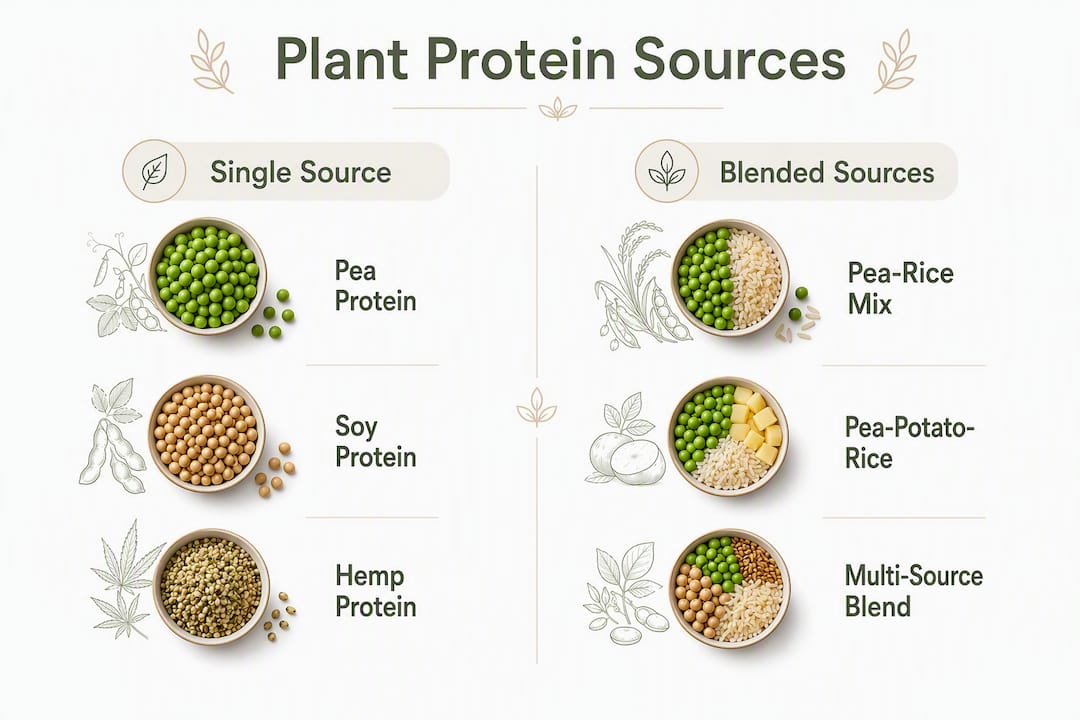
Which plant protein source fits your goals?
Pea protein
Pea isolate is the workhorse of the category. High in lysine, decent protein density (typically 80–85% protein by weight in isolate form), and hypoallergenic. The weakness: low in methionine and cysteine, and leucine content per 30g scoop runs around 1.7g, below the 2–3g threshold for maximal muscle protein synthesis.
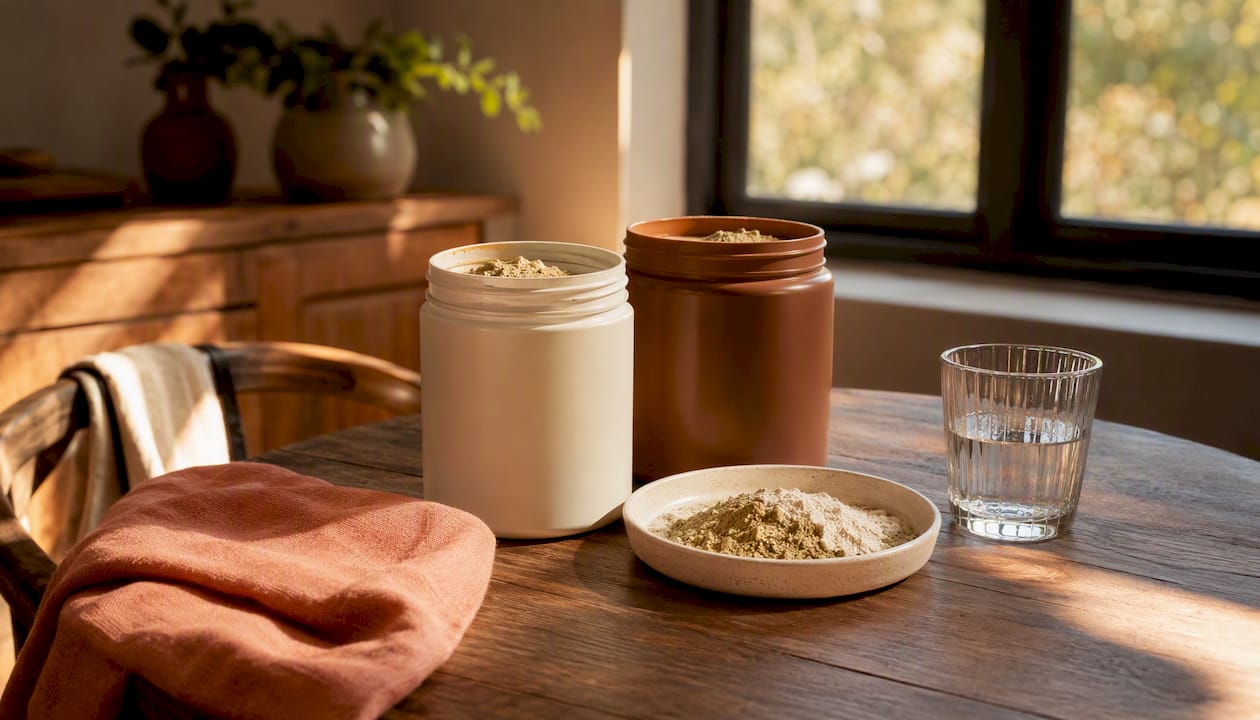
Brown rice protein
Rice protein is the natural complement to pea. It is high in methionine and cysteine, the exact amino acids pea lacks. Alone, it is low in lysine. Together, pea-rice blends frequently reach DIAAS-like scores in the 0.85–0.95 range, close to whey, and typically provide 22–25g protein per 30g scoop depending on formulation.
Soy protein
Soy is the only single-source plant protein with a complete amino-acid profile and a DIAAS score that rivals whey. It is a strong choice for anyone without a soy sensitivity. The hesitation some people have around phytoestrogens is not well-supported by the current evidence at normal dietary doses, but it is a real concern for some buyers.
Hemp protein
Hemp is nutritionally interesting (omega-3s, fiber, minerals) but protein density is low, typically 50% or less by weight. It works as a nutritional add-on, not a primary protein source.
Other sources
Pumpkin seed protein and potato protein are showing up more in multi-source blends. Potato protein has a surprisingly strong amino-acid profile and high digestibility. Pumpkin seed adds zinc and magnesium but is low in lysine.
The blend advantage is real. A pea-rice combination, or a pea-potato-rice trio, closes the amino-acid gaps that make single-source powders fall short. For a full breakdown of protein powder types and how to match them to your training, the Nutribliss guide goes deeper.
Pro Tip: If your blend does not list leucine content and you are training for hypertrophy, look for a product that either fortifies with leucine or uses a pea-rice ratio that pushes leucine per serving above 2g. Some brands add 500mg–1g of free leucine to close the gap.
How much protein per serving, and when to take it
The leucine threshold concept is the most underused piece of knowledge in plant protein buying. Leucine acts as the molecular trigger for muscle protein synthesis, and roughly 2–3g per meal is needed to maximally stimulate the process. A 30g whey scoop delivers about 2.5–2.7g of leucine. Many single-source plant scoops deliver less, which means plant users often need a larger serving (35–40g of powder) or a leucine-fortified product to hit the same stimulus.
| Protein source | Typical protein per 30g scoop | Approx. leucine per serving |
|---|---|---|
| Whey isolate | 20–25g | 2.5–2.7g |
| Pea isolate | 22–24g | ~1.7g |
| Pea-rice blend | 22–25g | 1.7g |
| Soy isolate | 22–25g | 1.7g |
| Multi-source blend (fortified) | 20–25g | 2.5–2.7g |
Figures represent typical commercial formulations; individual products vary.
Timing guidance:
- Post-workout (within 1–2 hours): the highest-priority window for muscle repair; aim for 25–40g depending on body weight
- Between meals: useful for hitting daily protein targets without overeating at main meals
- Before sleep: casein is the traditional choice, but a slow-digesting plant blend works for overnight muscle protein synthesis support
- Appetite management: a 20g serving mid-morning blunts hunger effectively, as research on plant protein blends confirms comparable appetite suppression to whey
For a 75kg lifter targeting 1.6g protein per kilogram of body weight (120g/day), three meals plus one shake of 25–30g covers the target comfortably. That is one standard scoop, possibly one and a half if the powder runs lean on protein density.
Taste, mixability, and how to actually use it
Chalky texture and clumping are the two complaints that drive people away from plant protein. Both are fixable.
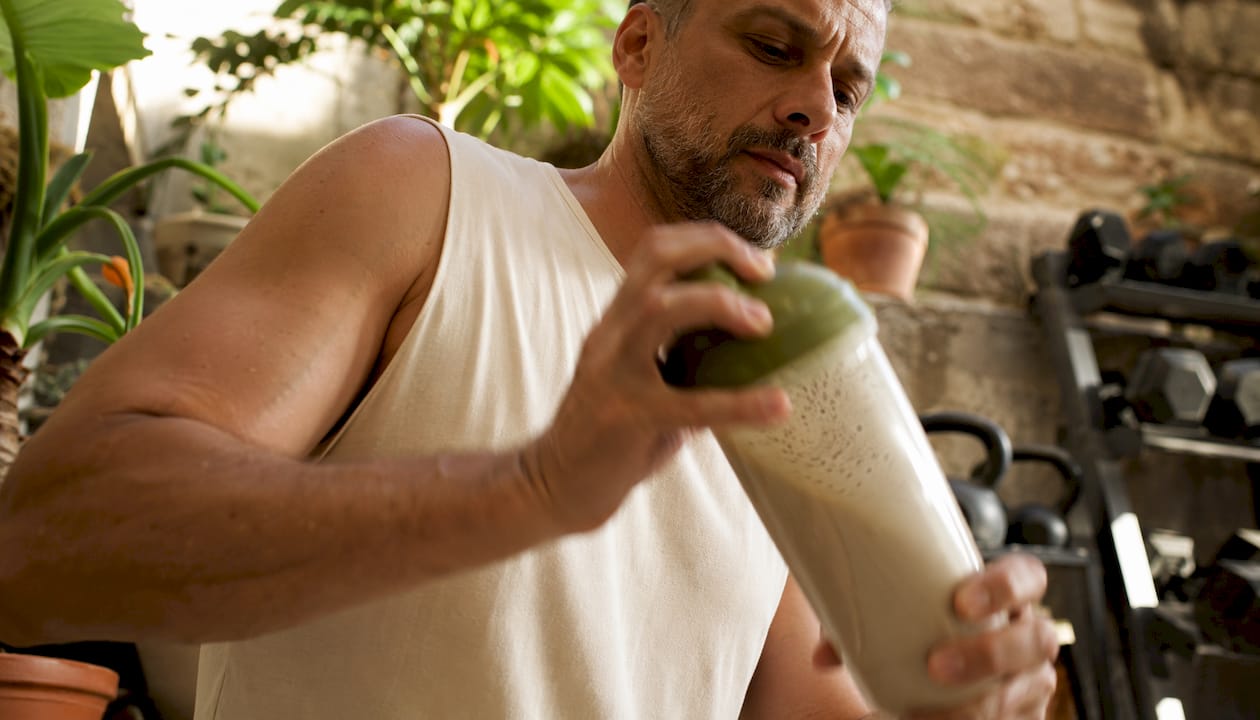
Isolates mix cleaner than concentrates because more of the fat and fiber has been removed. Products with sunflower lecithin or a small amount of xanthan gum blend more smoothly in a shaker cup. If a powder clumps badly in cold water, try warm water or a blender, which breaks up the particles more effectively.
Ways to use plant protein beyond a plain shake:
- Smoothies: blend with frozen banana, almond butter, oat milk, and a handful of spinach; the fat and fiber slow digestion and improve satiety
- Overnight oats: stir one scoop into oats with chia seeds and almond milk the night before; texture is better than mixing dry powder into cooked oats
- Pancakes and baking: replace up to 25% of flour with protein powder; go higher and the texture turns rubbery
- Coffee latte: blend one scoop of vanilla or unflavored powder into cold brew with oat milk; works better than stirring
Storage and shelf life: keep the container sealed, away from heat and humidity. Most plant protein powders are shelf-stable for 12–24 months from manufacture, but flavor and mixability degrade faster once opened. A cool, dry pantry shelf beats a gym bag or a humid kitchen counter. Check the best-by date before buying in bulk.
What does plant protein actually cost?
Price per serving is a more honest metric than price per container. A 2-pound tub at $40 with 20 servings costs $2.00 per serving. A 5-pound tub at $70 with 60 servings costs $1.17. The math matters.
Rough bands for the U.S. market:
- Budget tier: $0.80–$1.20 per serving. Usually a single-source powder (pea or rice), minimal certifications, basic flavors.
- Mid-tier: $1.20–$2.00 per serving. Multi-source blends, often organic or non-GMO labeled, sometimes third-party tested.
- Premium tier: $2.00–$3.00+ per serving. NSF Certified for Sport or Informed-Sport, targeted amino-acid profiles, cleaner sweetener choices.
Paying more is worth it when you need NSF Certified for Sport (required for competitive athletes subject to drug testing), when you want organic certification, or when the blend is specifically formulated with leucine fortification. For general fitness and health use, a solid mid-tier product with a third-party seal hits the right balance. For more context on plant-based protein powder options at different price points, the Nutribliss editorial review is a useful reference.
Certifications and ingredients to avoid
Because protein powders are not pre-approved by the FDA before going to market, third-party testing is the primary safeguard against contamination with heavy metals, banned substances, or mislabeled ingredients. Some surveys have flagged heavy metals including lead, arsenic, and cadmium in a portion of tested supplements, which reinforces why the seal on the label matters.
Seals worth trusting:
- NSF Certified for Sport: tests for banned substances and contaminants; the gold standard for competitive athletes
- Informed-Sport / Informed-Choice: similar scope to NSF, widely recognized in the U.S. and internationally
- USP Verified: confirms ingredient identity, potency, and purity; strong for general consumers
Organic and non-GMO labels: USDA Organic certification, governed by USDA Agricultural Marketing Service standards, means the ingredients were grown without synthetic pesticides or fertilizers. Non-GMO Project Verified addresses genetic modification separately. Both matter if those are priorities for you; neither is a proxy for protein quality.
Ingredients to avoid:
- Proprietary blends that list a total weight without individual amounts
- Aspartame (linked to digestive discomfort in some people)
- Excessive added sugar (over 5g per serving)
- Maltodextrin as a primary filler
- Artificial colors (Red 40, Blue 1) in a product marketed as “clean”
Allergen notes: soy is a top-nine allergen in the U.S. and must be declared on the label. Cross-contamination with tree nuts or gluten is a real risk in shared manufacturing facilities; look for “manufactured in a dedicated facility” if you have a serious allergy.
What the science says about plant protein vs. whey
The short version: when total protein and leucine are matched, plant-based blends produce muscle and strength gains comparable to whey. That finding holds across multiple meta-analyses and randomized trials. The longer version involves a few honest caveats.
A crossover study published in PMC comparing 20g of a pea-rice-pumpkin blend to 20g of whey found comparable effects on resting energy expenditure, appetite ratings, and subsequent food intake. Whey produced a faster insulin spike at 30 minutes, but the overall metabolic response was similar. The researchers concluded that “whey and a plant protein blend supplement have comparable metabolic effects.”
“Using combinations of protein powders from different sources has the potential to mitigate some of the perceived disadvantages of plant-based proteins.” — PMC study on plant vs. whey protein blends, 2025
The DIAAS score is the honest measure of protein quality. Pea-rice blends typically score in the 0.85–0.95 range, close to whey’s typical 1.0+. The gap is real but closeable: a slightly larger serving (35g instead of 30g) or a leucine-fortified formula brings the stimulus in line with whey. Bioavailability differences are also reduced by processing methods like heating and isolation, which is why commercial isolates perform better than whole-food plant proteins in this context.
The practical takeaway: perceived plant-protein inferiority is usually a dosing or formulation problem, not an inherent biological limitation.
Nutribliss plant-based protein: how it meets the checklist
The Nutribliss plant-based protein is formulated around the criteria this guide covers: a multi-source blend for amino-acid completeness, a short and readable ingredient list, and third-party testing standards. The #nutribliss approach prioritizes transparency on the Supplement Facts panel, with no proprietary blends masking individual ingredient amounts.
| Nutribliss plant-based protein | Details |
|---|---|
| Protein per serving | 20–25g (verify current label on product page) |
| Protein sources | Multi-source blend (pea, rice, and additional plant sources) |
| Added sugars | Minimal; check current label for exact amount |
| Third-party testing | Meets NSF/Informed-Sport standards (confirm on product page) |
| Certifications | Non-GMO; organic sourcing where applicable |
| Flavors/sizes | Multiple options; see Nutribliss.us for current availability |
Specific nutrition facts are listed on the product page and may vary by flavor.
Pro Tip: Check the Supplement Facts panel on the Nutribliss product page for the exact leucine content per serving. If you are training for muscle gain, compare that figure against the 2–3g threshold before committing to a serving size.
The science behind Nutribliss formulations is documented on the brand’s site, covering ingredient sourcing and the rationale behind blend ratios.
Digestive issues and how to handle them
Plant proteins can cause bloating, gas, or loose stools, particularly when you first start using them. The culprits are usually fiber content, antinutrients like phytates and lectins, or specific protein sources (soy and hemp tend to be harder on digestion than pea isolate).
A few fixes that actually work:
- Start with a half scoop for the first week and build up; your gut adapts faster than most people expect
- Choose isolates over concentrates: the isolation process removes most of the fiber and antinutrients that cause GI distress
- Look for digestive enzymes on the label (protease, amylase, bromelain); some blends include them specifically to improve tolerance
- Avoid mixing with high-fiber foods in the same sitting if you are sensitive; a protein shake with a large salad and beans is a lot of fiber at once
- Soy sensitivity is distinct from a soy allergy; if you notice consistent bloating with soy-based powders, switching to a pea-rice blend usually resolves it
Most people who report digestive issues with plant protein are using a concentrate, taking too large a serving too quickly, or mixing with other high-fiber ingredients. The problem is almost always solvable without switching categories entirely.
Which powder is right for your specific goal?
For muscle gain: a pea-rice blend or leucine-fortified multi-source powder, 30–40g per serving post-workout. Prioritize leucine content above 2g per serving and a third-party testing seal.
For weight management: a 20–25g serving between meals or as a partial meal replacement. Plant protein’s fiber content (in concentrates especially) adds satiety. Avoid powders with more than 5g of added sugar, which undercuts the calorie math.
For vegan athletes subject to drug testing: NSF Certified for Sport is non-negotiable. The certification tests for banned substances that could trigger a positive test.
For people with multiple food allergies: a pea-rice blend from a dedicated allergen-free facility is the safest starting point. Avoid hemp (cross-contamination risk) and soy (top-nine allergen).
For general health and convenience: almost any mid-tier pea-rice blend with a third-party seal works. Flavor and mixability matter more here than marginal differences in DIAAS scores. Nutribliss plant-based protein fits this use case well, with a formulation built for daily use rather than just athletic performance.
Key Takeaways
A well-formulated plant-based protein powder with a pea-rice blend, third-party testing, and 20–30g protein per serving matches whey for most fitness and health goals when dosed correctly.
| Point | Details |
|---|---|
| Protein per serving | Target 22–25g per serving; check the Supplement Facts panel, not just the front label. |
| Leucine threshold | Aim for 2–3g leucine per meal; pea-rice blends or fortified powders hit this more reliably than single-source options. |
| Third-party testing | NSF Certified for Sport, Informed-Sport, or USP Verified reduces contamination risk — the FDA does not pre-approve supplements. |
| Avoid proprietary blends | Any label that lists a “blend” without individual amounts makes it impossible to verify what you are actually getting. |
| Nutribliss recommendation | Nutribliss plant-based protein uses a multi-source blend and clean ingredient list, making it a practical fit for daily fitness and health use. |
The case for getting the formulation right
The conversation around plant protein has spent too long on the wrong question. “Is plant protein as good as whey?” is less useful than “Is this specific product formulated well enough to do the job?” Most plant powders that underperform do so because of dosing or formulation choices, not because plant protein is inherently inferior.
The leucine gap is real, but it is not a dealbreaker. A pea-rice blend at 35g instead of 30g, or a product that adds 500mg of free leucine, closes it. The DIAAS difference between a well-formulated blend and whey is narrow enough that consistent daily intake matters far more than which source you choose. Registered dietitians who work with athletes consistently place soy and pea near the top of plant options, and the research on comparable hypertrophy outcomes backs that up.
What actually separates a good plant protein from a mediocre one is transparency: does the label show you exactly what is in the product, in what amounts, verified by a third party? That is the standard worth holding every product to, including Nutribliss. The role of protein supplementation in a balanced diet is well-established; the variable is whether the product you choose is honest about what it delivers.
Where to buy Nutribliss plant-based protein
Nutribliss plant-based protein is available directly at Nutribliss.us, where you can check current flavors, sizes, and pricing. The product page lists full nutrition facts, ingredient sourcing, and any active promotions.
If you have been working through this guide’s checklist, Nutribliss plant-based protein checks the boxes that matter: multi-source blend, clean ingredient list, and transparent labeling. Shipping is available across the U.S., and the site’s supplement science page explains the formulation rationale if you want to go deeper before buying.
This article is general nutrition information, not medical or dietary advice. Confirm any supplement choice with a registered dietitian or healthcare provider for your specific situation.
Selected sources and further reading
- U.S. Food and Drug Administration — Dietary Supplement Oversight: backs the third-party testing recommendation and the FDA’s non-pre-approval framework for supplements
- Mayo Clinic Press — Ingredients to Look For in a Protein Powder: source for the 20–25g protein-per-serving guidance and essential amino acid checklist
- Healthline — Whey Protein vs. Plant Protein: context for the 20–30g protein-per-serving range across fitness populations
- NutrifyTracker — Whey vs. Plant Protein for Muscle: source for leucine threshold data (2–3g per meal), pea leucine figures (~1.7g), and pea-rice DIAAS-like scores (0.85–0.95)
- PMC — Acute Effects of Plant Protein Blend vs. Whey: randomized crossover study showing comparable appetite and metabolic effects of a pea-rice-pumpkin blend versus whey
- Today.com — Healthiest Plant Protein Powder, Dietitian Review: registered dietitian guidance on using powder to supplement, not replace, whole foods
- USDA Agricultural Marketing Service — Organic Certification Basics: defines USDA Organic standards referenced in the certifications section
- Cornell LII — 21 CFR § 101.36, Supplement Facts Labeling: federal regulation requiring protein to be reported to the nearest gram on Supplement Facts panels