

Every athlete knows that hitting a plateau can be frustrating, especially when your body feels strong one week and sluggish the next. Minerals may not provide direct energy like carbohydrates or proteins, but they are the backbone of muscle function, oxygen transport, and hydration balance that drive peak performance. For health-conscious athletes and fitness enthusiasts in the United States, understanding the role of these essential micronutrients can make a critical difference in training results and long-term recovery.
Table of Contents
- What Minerals Are And Why Athletes Need Them
- Types Of Essential Minerals For Athletes
- How Minerals Affect Energy, Muscle, And Recovery
- Recognizing And Managing Mineral Deficiencies
- Smart Supplementation And Dietary Sources For Athletes
Key Takeaways
| Point | Details |
|---|---|
| Importance of Minerals | Minerals are essential for athletic performance, supporting muscle function, oxygen transport, electrolyte balance, and energy metabolism. |
| Key Minerals for Athletes | Calcium, Magnesium, Iron, Zinc, and Potassium are crucial for maintaining optimal physical performance and recovery. |
| Deficiency Management | Athletes should recognize signs of mineral deficiencies and conduct regular assessments to avoid compromising performance. |
| Dietary Sources | Emphasizing whole foods rich in essential minerals is more effective than relying solely on supplements for optimal nutrition. |
What Minerals Are And Why Athletes Need Them
Minerals are critical micronutrients that play an essential role in athletic performance and overall physiological functioning. Unlike macronutrients like proteins or carbohydrates, minerals do not provide direct energy but are fundamental in supporting numerous metabolic processes that enable peak physical performance.
Athletes require a sophisticated balance of major minerals and trace minerals to optimize their body’s complex systems. Minerals support crucial physiological functions that directly impact athletic capabilities:
- Muscle Function: Enable proper muscle contractions and nerve signaling
- Oxygen Transport: Support hemoglobin production and cellular respiration
- Electrolyte Balance: Maintain hydration and prevent cramping
- Bone Health: Provide structural integrity and prevent stress fractures
- Energy Metabolism: Activate enzymes responsible for converting nutrients into usable energy
Key minerals essential for athletes include:
- Calcium: Critical for bone strength and muscle function
- Magnesium: Supports muscle recovery and energy production
- Iron: Crucial for oxygen transportation in blood
- Zinc: Important for immune function and protein synthesis
- Potassium: Helps regulate muscle and nerve cell functioning
Mineral deficiencies can significantly impair athletic performance, making consistent nutritional intake paramount for athletes.
Unlike common misconceptions, athletes do not automatically require dramatically higher mineral intake. Instead, they need a balanced, strategic approach to nutrition that ensures optimal micronutrient absorption and utilization.
Pro tip: Consult a sports nutritionist to develop a personalized mineral intake strategy tailored to your specific athletic goals and biochemical needs.
Types Of Essential Minerals For Athletes
Athletes require a complex array of minerals to maintain optimal physical performance, which can be categorized into two primary groups: major minerals and trace minerals. Essential minerals play crucial physiological roles in supporting athletic function, metabolism, and overall health.
Major minerals required in larger quantities include:
- Calcium: Critical for bone strength and muscle contraction
- Magnesium: Supports energy production and muscle recovery
- Potassium: Regulates nerve and muscle cell functioning
- Sodium: Maintains fluid balance and supports nerve transmission
- Phosphorus: Essential for cellular energy production
Trace minerals, needed in smaller quantities but equally important, encompass:
- Iron: Enables oxygen transportation in blood
- Zinc: Supports immune function and protein synthesis
- Selenium: Provides antioxidant protection
- Chromium: Helps regulate blood sugar and metabolism
- Copper: Assists in iron absorption and connective tissue formation
Mineral balance is not about quantity, but precise nutritional optimization for peak athletic performance.
Understanding the intricate roles of these minerals helps athletes develop targeted nutritional strategies that enhance physical capabilities and support long-term health.
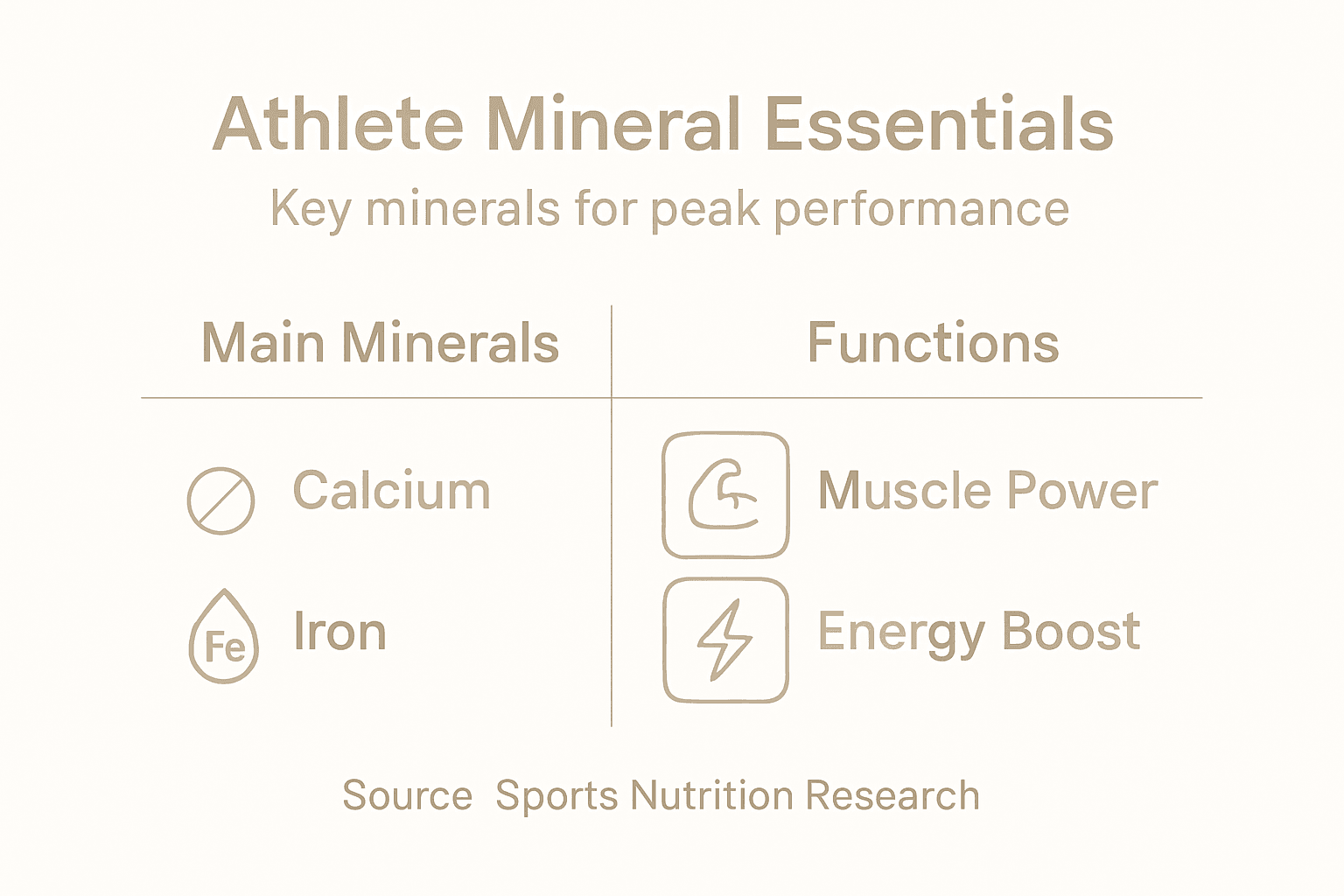
Here’s a consolidated overview of major and trace minerals athletes need and their main system impact:
| Mineral Type | Example Minerals | Primary Physiological System Supported | Importance for Athletes |
|---|---|---|---|
| Major Minerals | Calcium, Magnesium | Musculoskeletal, Neuromuscular | Bone strength, muscle recovery |
| Trace Minerals | Iron, Zinc, Selenium | Immune, Metabolic, Oxygen transport | Endurance, immune protection |
Pro tip: Work with a sports nutritionist to conduct comprehensive mineral profile testing and develop a personalized supplementation plan tailored to your specific athletic demands.
How Minerals Affect Energy, Muscle, And Recovery
Minerals play a fundamental role in athletic performance, serving as critical cofactors in complex metabolic processes that drive energy production, muscle function, and recovery. Iron’s crucial role in athletic performance demonstrates how specific minerals can dramatically impact an athlete’s physiological capabilities.
Energy Production and Muscle Function Mechanisms:
- Magnesium: Activates ATP for direct energy metabolism
- Potassium: Enables nerve signal transmission for muscle contractions
- Calcium: Facilitates muscle fiber engagement and relaxation
- Zinc: Supports protein synthesis and muscle repair
- Iron: Enables oxygen transportation through hemoglobin
Recovery and Mineral Interactions:
- Electrolyte Replenishment: Restores mineral balance after intense exercise
- Muscle Protein Synthesis: Supports tissue repair and growth
- Inflammation Reduction: Helps minimize post-exercise muscle stress
- Metabolic Regulation: Assists in converting nutrients to usable energy
- Hormonal Balance: Supports muscle-building hormone production
Optimal mineral intake is not just supplementation, but strategic nutritional integration that supports comprehensive athletic performance.
Athletes must understand that mineral effectiveness depends on balanced consumption, individual metabolic needs, and precise timing of intake during training and recovery cycles.

Pro tip: Conduct periodic mineral profile testing to identify specific deficiencies and develop a targeted supplementation strategy that aligns with your unique physiological requirements.
Recognizing And Managing Mineral Deficiencies
Mineral deficiencies can significantly compromise an athlete’s performance, potentially derailing training goals and overall health. Mineral deficiencies impact athletic performance/10%3A_Nutrition_and_Physical_Activity/10.04%3A_Nutrient_Needs_for_Athletes) through various physiological mechanisms that interrupt essential metabolic processes.
Common Signs of Mineral Deficiencies:
- Fatigue: Persistent exhaustion beyond normal training stress
- Muscle Weakness: Reduced strength and recovery capacity
- Frequent Injuries: Increased susceptibility to muscle and bone injuries
- Impaired Immune Function: Prolonged recovery and higher infection risk
- Reduced Endurance: Decreased performance and metabolic efficiency
Strategic Management Approaches:
- Comprehensive Blood Testing: Identify specific mineral deficiencies
- Dietary Assessment: Evaluate current nutritional intake
- Professional Consultation: Work with sports nutritionists
- Targeted Supplementation: Address specific mineral gaps
- Regular Monitoring: Track mineral levels and performance metrics
Effective mineral management is a proactive process, not a reactive intervention.
Athletes must recognize that mineral deficiencies are complex, requiring individualized strategies that consider training intensity, metabolic rate, and personal physiological characteristics.
Pro tip: Conduct quarterly comprehensive mineral profile assessments to maintain optimal nutritional balance and prevent potential performance-limiting deficiencies.
Smart Supplementation And Dietary Sources For Athletes
Navigating mineral nutrition requires a strategic approach that prioritizes whole foods over unnecessary supplementation. Athletes should carefully consider supplement needs through targeted, professional assessment rather than blanket consumption.
Ideal Dietary Sources for Essential Minerals:
Compare mineral-rich food groups and how they benefit athletic nutrition:
| Food Group | Notable Minerals | Athletic Nutrition Benefit |
|---|---|---|
| Dairy Products | Calcium, Phosphorus | Bone density, muscle function |
| Leafy Greens | Magnesium, Iron | Recovery support, oxygen delivery |
| Seafood | Zinc, Selenium | Immune function, antioxidant |
- Calcium: Dairy products, leafy greens, fortified plant milks
- Iron: Lean meats, spinach, legumes, fortified cereals
- Magnesium: Nuts, seeds, whole grains, dark chocolate
- Zinc: Oysters, beef, pumpkin seeds, lentils
- Potassium: Bananas, sweet potatoes, yogurt, salmon
Smart Supplementation Guidelines:
- Professional Blood Testing: Identify specific mineral deficiencies
- Targeted Supplementation: Address only confirmed nutritional gaps
- Dosage Precision: Follow recommended daily allowances
- Quality Selection: Choose pharmaceutical-grade supplements
- Periodic Reassessment: Regularly review nutritional status
Effective mineral intake is about strategic optimization, not excessive consumption.
Athletes must understand that supplements are not a replacement for a balanced, nutrient-rich diet but a potential complementary strategy for addressing specific physiological requirements.
Pro tip: Consult a sports nutritionist to develop a personalized mineral intake strategy that aligns with your unique metabolic profile and athletic goals.
Enhance Your Athletic Performance with Targeted Mineral Support
Minerals are essential for boosting muscle function, energy metabolism, and recovery—key aspects highlighted in the article “Role of Minerals in Nutrition—Boosting Athletic Performance.” If you face challenges such as fatigue, muscle cramps, or slow recovery, you are not alone. Maintaining a precise mineral balance like calcium, magnesium, and iron can unlock higher endurance and faster healing. At Nutribliss, we understand these critical needs and offer a comprehensive selection of minerals and electrolyte supplements designed to support your unique athletic demands.

Explore our range of science-backed supplements crafted for optimized absorption and effectiveness. Now is the perfect time to take control of your mineral balance and boost your performance with confidence. Visit Nutribliss to browse trusted products and start customizing your nutrition plan today. Don’t wait until deficiencies hold you back — power your progress with precise mineral support.
Frequently Asked Questions
What role do minerals play in athletic performance?
Minerals are essential micronutrients that support metabolic processes critical for athletic performance, including muscle function, oxygen transport, electrolyte balance, bone health, and energy metabolism.
How do I know if I have a mineral deficiency affecting my athletic performance?
Common signs of mineral deficiencies include fatigue, muscle weakness, frequent injuries, impaired immune function, and reduced endurance. Comprehensive blood testing can help identify specific deficiencies.
Can athletes get all the necessary minerals from their diet?
Yes, athletes can obtain the essential minerals they need from a balanced diet rich in whole foods, such as dairy, leafy greens, lean meats, and nuts. However, targeted supplementation may be required for individuals with confirmed deficiencies.
What are the best dietary sources of key minerals for athletes?
Key dietary sources include dairy products for calcium, leafy greens for magnesium, lean meats for iron, shellfish for zinc, and fruits like bananas for potassium. A strategic approach prioritizing whole foods is recommended for optimal mineral intake.
Recommended
- Micronutrition Explained: Boosting Athletic Performance
- Why Magnesium for Athletes: Complete Performance Guide – Nutribliss Inc.
- Electrolyte Balance: Impact on Athletic Performance
- Role of Zinc in Performance: Complete Guide – Nutribliss Inc.
- Hair Nutrition Food: Boosting Growth and Vitality | MyHair