

TL;DR:
- Consistent resistance training, distributed protein intake, and proper recovery are key for maintaining muscle mass. Lack of adherence to these fundamentals, even with supplementation, leads to gradual muscle loss, especially during caloric deficits or illness. Long-term success requires ongoing monitoring, micronutrient support, and disciplined habits over time.
You train consistently, eat what feels like enough, and still notice your strength plateaus or your physique quietly shifts over time. That gap between effort and results frustrates more athletes than almost any other challenge in fitness. Muscle tissue is metabolically expensive, and your body will sacrifice it without hesitation the moment training, nutrition, or recovery falls short. The good news is that muscle protein synthesis is a system you can directly influence with the right habits. This guide walks you through the exact blueprint, grounded in current science, for keeping muscle mass intact regardless of your training phase.
Table of Contents
- Understand what drives muscle loss
- Essential prerequisites: Your muscle maintenance toolkit
- Step-by-step protocol: Training, nutrition, and supplementation
- Optimizing long-term success: Diet, recovery, and troubleshooting
- Why most muscle maintenance plans miss the mark
- Next steps: Turn knowledge into results with Nutribliss
- Frequently asked questions
Key Takeaways
| Point | Details |
|---|---|
| Prioritize resistance training | Working all major muscle groups twice a week is the bare minimum to maintain muscle. |
| Distribute protein intake | Spread protein across 3-5 meals daily to optimize muscle repair and maintenance. |
| Whole-protein over BCAAs | Supplement with complete protein sources rather than just amino acids unless your diet falls short. |
| Don’t ignore micronutrients | Magnesium, hydration, and dietary variety all help support healthy muscle tissue. |
| Supplements add to, not replace, habits | Creatine and protein powders boost results only if training and nutrition are on point. |
Understand what drives muscle loss
With the challenge set, we have to understand what threatens muscle mass in the first place.
Muscle loss is not a single problem. Sarcopenia is the gradual, age-related decline in muscle mass and strength that begins as early as your 30s and accelerates significantly after 60. But athletes of any age can experience accelerated muscle breakdown from poor diet choices, extended detraining periods, or chronic under-recovery. These two pathways have different timelines but share the same outcome: less functional muscle tissue.
The most common triggers of muscle mass decline include:
- Insufficient protein intake over days or weeks
- Extended breaks from resistance training (even 2 to 3 weeks can produce noticeable changes)
- Caloric deficits without protein adjustment, such as aggressive cutting phases
- Chronic sleep deprivation and elevated cortisol levels
- Illness or injury combined with forced inactivity
One fact surprises a lot of people: short training breaks of even 10 to 14 days can initiate measurable declines in protein synthesis rates, particularly in trained athletes whose muscles are primed to respond quickly. That does not mean skipping a weekend destroys your gains, but it does mean consistency is your most powerful tool.
“Resistance training is the single most effective method to preserve and build muscle mass. The ACSM notes that moving from no resistance training to any consistent resistance training is the biggest step most people can take.” ACSM’s updated guidelines based on analysis of 137 systematic reviews reinforce this point clearly.
Understanding these mechanisms means you can catch muscle loss early and respond with precision rather than panic.
Essential prerequisites: Your muscle maintenance toolkit
Recognizing the risks, it is key to assemble your basics before making changes.
Think of muscle maintenance as a system with several interdependent parts. Pull one piece out and the others work less efficiently. Here is what the foundation actually looks like.
Resistance training frequency is non-negotiable. Training each major muscle group at least twice per week is the threshold the evidence supports for maintenance. You do not need six days a week in the gym. What you need is consistency, appropriate volume, and progressive challenge over time. The ACSM’s updated resistance training guidance is clear: the jump from zero training to any regular resistance training produces the largest single improvement in muscle retention.
Daily protein targets matter more than most athletes realize. A simple reference range:
| Goal | Protein intake (per kg body weight) |
|---|---|
| Maintenance (adequate calories) | 1.6 to 2.0 g/kg |
| Muscle growth | 1.8 to 2.2 g/kg |
| Cutting or caloric deficit | 2.0 to 2.6 g/kg |
| Older adults (40+) | 1.8 to 2.4 g/kg |
Distributing protein across the day matters just as much as hitting the total. Four meals of 30 to 40 grams each produces a better anabolic environment than one large protein bolus at dinner. This is where a full protein supplementation guide becomes genuinely useful for planning your daily intake.
Beyond protein, your overall diet quality directly affects muscle health. Vitamins and minerals for muscle health include magnesium for muscle contraction and recovery, vitamin D for protein synthesis signaling, calcium for neuromuscular function, and omega-3 fatty acids for reducing exercise-induced inflammation. These are not afterthoughts. They are part of why an athlete eating a varied, whole-food diet out-performs one chasing protein numbers alone while ignoring micronutrients.

Also worth noting: whole-protein supplementation outperforms isolated amino acid products like standalone BCAAs when total protein is already adequate. A complete protein source like whey or casein delivers all essential amino acids in proportions that muscle tissue can actually use, making it a more reliable foundation than amino acid fragments alone.
Other toolkit essentials:
- Hydration: Even mild dehydration impairs muscle protein synthesis and recovery.
- Sleep: 7 to 9 hours of quality sleep is when growth hormone peaks and muscle repairs itself.
- Stress management: Chronically elevated cortisol is catabolic (it breaks down muscle tissue). Managing stress is a real performance tool.
Pro Tip: If you are traveling or facing schedule disruptions, keep a whey protein supplement on hand. It removes the biggest barrier to hitting daily protein during unpredictable days.
Step-by-step protocol: Training, nutrition, and supplementation
With the essentials at hand, here is exactly how to put it all into action.
-
Set your training schedule first. Map out at least two full-body or upper/lower split sessions per week. If life allows three or four, even better. But two consistent sessions beat four sporadic ones every time.
-
Calculate your protein target. Multiply your body weight in kilograms by 1.8 to 2.2 grams. For a 80 kg (176 lb) athlete, that is roughly 144 to 176 grams of protein per day. During a caloric deficit, protein recommendations increase to 2.0 to 2.6 g/kg to compensate for the body’s tendency to use amino acids for energy when calories are low.
-
Divide that target across 4 meals. A 160-gram daily target becomes four meals of 40 grams each. Practical sources: 170g (6 oz) chicken breast provides about 42g. One scoop of whey protein averages 24 to 27g. Greek yogurt adds 15 to 20g per cup.
-
Time your protein around training. Consume 25 to 40 grams of fast-digesting protein like whey within 1 to 2 hours after training. Before bed, 30 to 40 grams of casein protein provides a slow trickle of amino acids during the overnight fasting period.
-
Add creatine if you want extra leverage. Here is the context you need: creatine’s effects on muscle mass and function are additive to resistance training, not a replacement for it. Standard dosing is 3 to 5 grams per day. No loading phase is required. Creatine works best for athletes who are consistently training and fueling well. Explore creatine benefits to decide if it fits your stack.
Supplement comparison: which options actually move the needle?
| Supplement | Primary benefit | Evidence strength | Best use case |
|---|---|---|---|
| Whey protein | Fast muscle protein synthesis | Very strong | Post-workout, hitting daily protein |
| Casein protein | Overnight muscle repair | Strong | Pre-sleep |
| Creatine monohydrate | Strength and lean mass gains | Very strong | Long-term resistance training |
| BCAAs (standalone) | Limited if protein is adequate | Moderate/mixed | Only useful in fasted training |
| Magnesium | Recovery, sleep quality | Moderate | General diet gap filler |
- Avoid the most common pitfall. Skipping post-workout nutrition or going more than 5 to 6 hours without protein during active training phases puts you behind on muscle repair. This is where most athletes quietly lose ground without realizing it.
Pro Tip: Check out the best muscle growth supplements breakdown if you want a curated shortlist that separates high-evidence options from marketing noise.
Optimizing long-term success: Diet, recovery, and troubleshooting
Effective initial steps are only the beginning. Here is how to keep muscle maintenance sustainable in the long term.
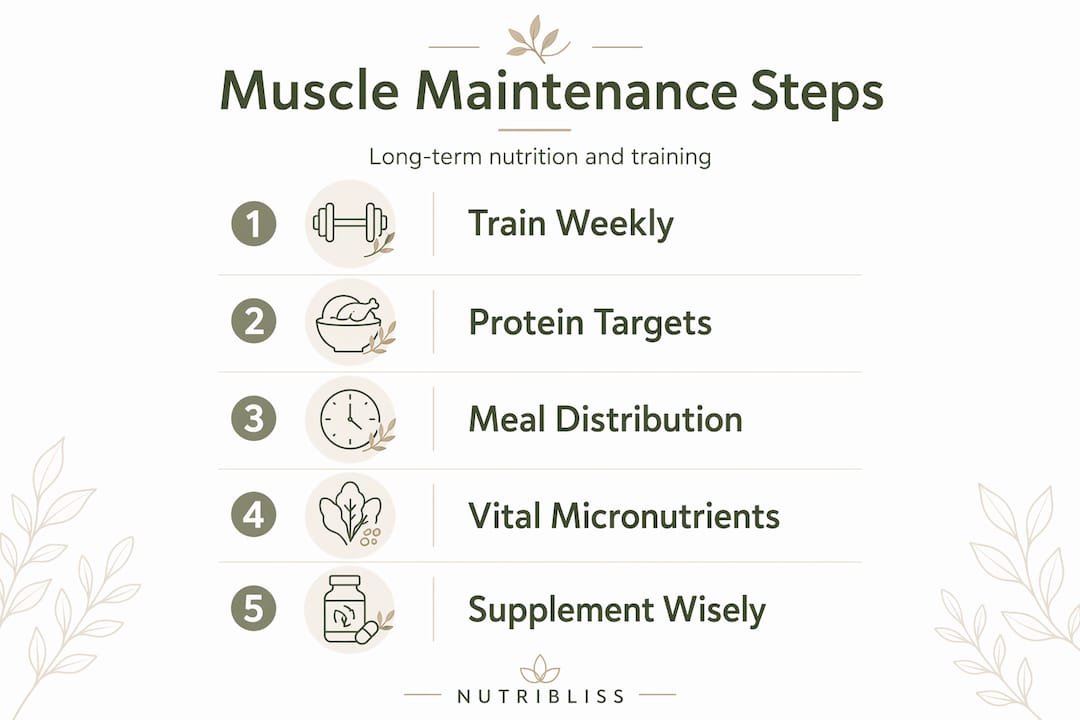
Muscle maintenance is not a 12-week program. It is an ongoing practice that needs monitoring and periodic recalibration. Here are the key checkpoints:
Warning signs that muscle loss may be occurring:
- Strength declining across multiple exercises over 3 to 4 weeks without explanation
- Bodyweight dropping faster than 0.7 to 1.0 kg per week during a cut
- Persistent fatigue that does not resolve with a rest day
- Reduced recovery speed between sessions
When these signals appear, audit your protein intake and training consistency before assuming something more complex is at play. Most athletes find a protein gap or a sleep deficit is the culprit.
Micronutrient spot-checks to run regularly:
- Vitamin D levels, especially in winter or for indoor athletes
- Magnesium, which is depleted by heavy sweating and stress
- Iron for female athletes, who are at higher risk of deficiency affecting energy and recovery
Diet quality and micronutrients become even more critical as you age. After 40, muscle tissue responds less aggressively to protein intake, meaning both the quality of your protein sources and the supporting micronutrient environment matter more than they did in your 20s. This is also when essential supplement ingredients like vitamin D3 and magnesium glycinate start earning a consistent spot in your routine rather than being optional extras.
Smart hydration is often the simplest overlooked fix. Aim for at least 35 mL of water per kilogram of body weight daily, and adjust upward during hard training or hot weather. Dehydration reduces strength output and slows muscle protein synthesis at the cellular level.
Adapting your habits as goals shift:
If you move from a maintenance phase into a fat-loss phase, raise your protein intake first before dropping calories. If you are returning from injury or illness, resume training at reduced intensity and prioritize protein intake to accelerate the rebuilding process. Rigid plans fail in real life. Smart adaptations succeed.
Why most muscle maintenance plans miss the mark
Here is the uncomfortable reality: most athletes doing “everything right” are still leaving results on the table because they focus on headline habits while overlooking the unsexy details.
The supplement industry has convinced a large portion of the fitness community that complicated stacks and expensive proprietary blends are what separate average from excellent. They are not. What actually separates athletes who maintain muscle through hard cuts, travel, illness, and life stress from those who do not is boring habit consistency: protein distributed across the day, training done twice a week minimum, and recovery treated as seriously as training.
One of the most consistently undervalued levers is protein distribution, not just total intake. Getting 180 grams of protein in two large meals is metabolically inferior to spreading that same amount across four or five meals. Each dose of 30 to 40 grams triggers a full muscle protein synthesis response. You cannot supercharge that response with more protein in one sitting, but you can repeat it multiple times a day.
Another widely ignored factor is magnesium. Most athletes focus entirely on protein and creatine while running a chronic magnesium deficit that quietly impairs sleep quality, muscle contraction efficiency, and recovery speed. It does not show up dramatically in the mirror, but it erodes performance over months.
On the supplement side, we will be direct: if you already hit your total protein target, adding isolated amino acids like BCAAs offers minimal additional muscle-preserving benefit. Whole protein sources that cover all essential amino acids are the more reliable lever. This matters because athletes who spend money on BCAA products while under-eating total protein are solving the wrong problem. Understanding why protein powders work at a mechanistic level helps you make smarter purchasing decisions.
The real-world lesson here is this: build the foundation first, meaning consistent resistance training, adequate distributed protein, and quality sleep. Add supplements as targeted tools on top of that foundation. Reverse the order, and supplements become expensive placebos.
Next steps: Turn knowledge into results with Nutribliss
With the full real-world perspective in mind, here is how Nutribliss can support your efforts.
Knowing the strategy is one thing. Having the right products in your corner is another. At Nutribliss, every recommendation ties back to the same framework covered in this guide: train consistently, fuel precisely, and recover intentionally.

Whether you are targeting daily protein goals, bridging micronutrient gaps, or replacing electrolytes lost during hard training, our muscle recovery supplements lineup is built around the essentials that science actually supports. If you are newer to supplementation and want to understand how each ingredient earns its place, start with the science behind superfoods to see exactly what goes into every product. And for athletes managing hydration alongside muscle maintenance, our Nutribliss electrolytes supplement helps you stay on top of one of the most overlooked pillars of recovery. Build your personalized routine today.
Frequently asked questions
How much protein should I eat daily to maintain muscle mass?
Aim for 1.6 to 2.2 grams of protein per kilogram of body weight daily, with higher intakes during calorie restriction or intense training phases. Protein requirements increase when energy availability drops, making adjustments during cuts especially important.
Is resistance training mandatory for preserving muscle?
Yes. Training all major muscle groups at least twice weekly is the core foundation for muscle maintenance. ACSM’s updated guidance confirms this is the single most impactful change anyone can make for long-term muscle retention.
Do BCAA supplements help maintain muscle if I already eat enough protein?
For most athletes, BCAA supplements add minimal muscle-preserving benefit once total protein intake is already adequate. Whole-protein sources that deliver all essential amino acids are a more reliable and cost-effective option.
Does creatine work without resistance training?
Creatine primarily amplifies results when paired with consistent resistance training rather than substituting for it. Its effects on muscle mass are additive to exercise, not independent of it.
Besides protein, what else supports muscle health?
Magnesium, vitamin D, adequate hydration, and overall diet quality all play documented roles in muscle maintenance and performance. Diet quality and micronutrients become especially critical as you age and muscle tissue grows less responsive to protein alone.