

TL;DR:
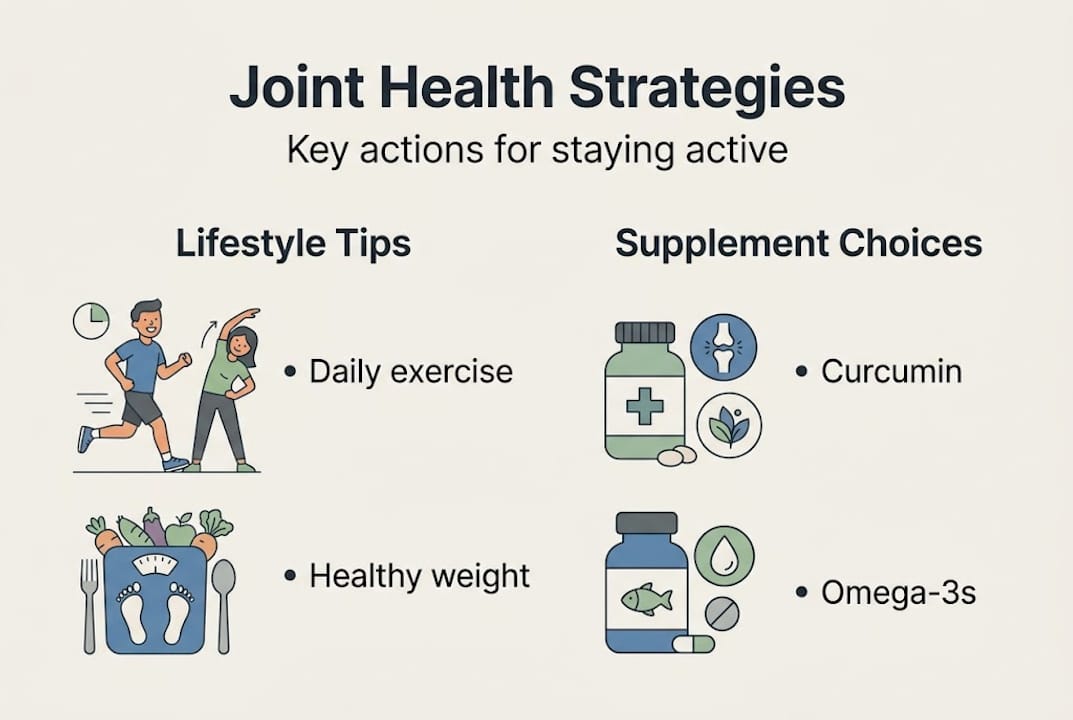
- Maintaining joint health relies on consistent movement, proper nutrition, and weight management.
- Scientific evidence supports the use of curcumin, Boswellia, and omega-3s as effective supplements.
- Long-term joint support requires daily lifestyle habits alongside targeted supplementation.
Maintaining flexible, pain-free joints is the foundation of an active lifestyle, yet most adults underestimate how quickly joint health can decline without a smart plan. Between overhyped supplement marketing and conflicting fitness advice, it’s easy to waste time and money on strategies that barely move the needle. The good news is that science has a clear answer: a combination of targeted supplements, consistent movement, and smart nutrition produces real, measurable results. This guide breaks down exactly what works, what doesn’t, and how to build a joint health routine that holds up long-term.
Table of Contents
- Understanding joint health: What you need to know
- Choosing the right joint health supplements
- Complementary strategies: Exercise, diet, and daily practices
- Quality, safety, and tracking your joint health progress
- A smarter path: Why joint support goes beyond supplements
- Support your joint journey with science-backed nutrition
- Frequently asked questions
Key Takeaways
| Point | Details |
|---|---|
| Evidence-backed supplements | Curcumin, Boswellia, glucosamine, chondroitin, and omega-3s can support joints when chosen smartly. |
| Lifestyle matters most | Exercise, weight management, and anti-inflammatory diets matter more than any pill for joint health. |
| Results take time | Expect 4 to 12 weeks for effects and monitor your progress closely. |
| Priority on quality | Choose third-party tested supplements with clear labeling for optimal safety. |
Understanding joint health: What you need to know
Your joints are engineering marvels. Each one is a meeting point of bones, cartilage, synovial fluid, ligaments, and tendons working in precise coordination. Cartilage acts as the shock absorber, and synovial fluid keeps everything lubricated. When either breaks down, you feel it fast.
Joint deterioration happens for several reasons. Age naturally reduces cartilage thickness and synovial fluid production. High-impact activity without proper recovery accelerates wear. Chronic low-grade inflammation, often driven by poor diet or excess body weight, quietly erodes joint tissue over years. Genetics also play a role, but lifestyle factors are where you actually have leverage.
The most common joint conditions active adults face include:
- Osteoarthritis (OA): Cartilage breakdown, most common in knees, hips, and hands. Affects over 32 million U.S. adults.
- Rheumatoid arthritis (RA): An autoimmune condition causing joint inflammation and pain, distinct from OA.
- Sports injuries: Ligament tears, tendinitis, and repetitive stress injuries that accelerate degeneration if not managed.
- General joint stiffness: Often an early sign of inflammation or cartilage thinning, especially in the morning.
| Factor | Impact on joint health | Modifiable? |
|---|---|---|
| Age | Reduces cartilage and fluid | No |
| Body weight | Increases joint load | Yes |
| Physical activity | Strengthens support muscles | Yes |
| Diet (inflammatory) | Accelerates tissue breakdown | Yes |
| Genetics | Predisposes to OA/RA | No |
| Sleep quality | Affects tissue repair | Yes |
The foundational interventions matter most. Exercise reduces joint pain and improves both flexibility and strength, making it the single most reliable tool for joint health. Weight management reduces mechanical load on knees and hips significantly. An anti-inflammatory diet limits the chronic inflammation that quietly damages cartilage over time.
Understanding the supplement impact on joint pain is also important before spending money on products. Supplements work best as additions to a solid lifestyle foundation, not as replacements for it.
Choosing the right joint health supplements
Not all joint supplements are created equal. The research landscape is uneven, with some ingredients backed by strong clinical evidence and others relying mostly on marketing. Here’s what the science actually supports.
The top researched joint health supplements:
- Curcumin: The active compound in turmeric. Enhanced forms (with piperine or phospholipid complexes) at 1000 to 1500mg daily show consistent anti-inflammatory effects.
- Boswellia: An herbal resin extract. Doses of 100 to 250mg of the active AKBA compound reduce cartilage-degrading enzymes.
- Glucosamine sulfate: 1500mg daily is the studied dose, most useful for moderate to severe knee OA.
- Chondroitin: 1200mg daily, often combined with glucosamine. Supports cartilage hydration and structure.
- Omega-3 fatty acids: 2 to 5g of EPA/DHA daily reduces systemic inflammation, especially relevant for RA.
A network meta-analysis found that curcumin and Boswellia outperform other supplements for knee pain specifically, while omega-3s show the strongest benefit for rheumatoid arthritis symptoms. Glucosamine and chondroitin have a more complicated story. Cochrane review evidence shows mixed results overall, with more benefit appearing in people with moderate to severe knee OA rather than mild cases.
| Supplement | Best for | Daily dose | Evidence strength |
|---|---|---|---|
| Curcumin | Knee OA, general inflammation | 1000-1500mg | Strong |
| Boswellia | Knee pain, cartilage protection | 100-250mg AKBA | Strong |
| Glucosamine | Moderate-severe knee OA | 1500mg sulfate | Moderate |
| Chondroitin | Cartilage structure, OA | 1200mg | Moderate |
| Omega-3 (EPA/DHA) | RA, systemic inflammation | 2-5g | Strong |
For a deeper look at how these compounds work together, the glucosamine and chondroitin details on Nutribliss explain the mechanisms and realistic expectations clearly.
Label quality matters just as much as ingredients. Look for USP or NSF International certification, which confirms the product contains what it claims and is free of harmful contaminants. Third-party verified products from a trusted joint support supplement collection reduce the risk of wasting money on underdosed or contaminated formulas.
For a broader picture of what the research says about each ingredient category, the arthritis supplement overview from the Arthritis Foundation is one of the most reliable resources available.
Pro Tip: If you’re new to joint supplements, start with curcumin or omega-3s before adding glucosamine. They have broader anti-inflammatory benefits and are well-tolerated by most people.
Complementary strategies: Exercise, diet, and daily practices
Supplements help most when paired with the right lifestyle choices. Here are the most effective daily practices.

Movement is non-negotiable. Exercise is foundational for joint health because it strengthens the muscles that support and stabilize your joints, reducing direct stress on cartilage. The key is choosing the right types of exercise.
Best exercise types for joint health:
- Stretching and mobility work: Reduces stiffness, improves range of motion. Even 10 minutes daily makes a measurable difference.
- Resistance training: Builds the muscle support around knees, hips, and shoulders. Focus on controlled, low-load movements.
- Low-impact cardio: Swimming, cycling, and walking maintain cardiovascular fitness without hammering joints.
- Yoga and Pilates: Combine flexibility, strength, and body awareness in a joint-friendly format.
Diet plays a bigger role than most people realize. A Mediterranean-style or anti-inflammatory eating pattern, rich in fatty fish, olive oil, colorful vegetables, and legumes, directly reduces the inflammatory markers that damage joint tissue. Limiting processed sugar and refined carbohydrates is equally important because these foods spike inflammatory cytokines (proteins that trigger inflammation).
Body weight is one of the most powerful levers you have. Every extra pound of body weight adds roughly four pounds of pressure to your knees. Losing even 10 pounds meaningfully reduces joint load and pain.
Lifestyle changes outperform supplements alone when it comes to long-term joint function, which is why movement and nutrition should always come first.
Daily habits that reduce joint stress:
- Warm up before any physical activity, even a short walk
- Wear supportive footwear, especially during exercise
- Maintain good posture while sitting and standing
- Take movement breaks every 45 to 60 minutes if you work at a desk
- Prioritize 7 to 9 hours of sleep for tissue repair
Pro Tip: Pair your joint supplement routine with a short daily mobility session. Even five minutes of hip circles, knee flexions, and shoulder rolls in the morning can reduce stiffness faster than supplements alone.
If you’re active and want to understand how structural proteins fit into your routine, the role of collagen for active bodies is worth reading before adding another product to your stack.
Quality, safety, and tracking your joint health progress
Even safe products require smart choices and self-monitoring. Here’s how to ensure your approach works and stays safe.
Supplement quality is not guaranteed by price or brand recognition alone. The supplement industry is less regulated than pharmaceuticals, which means products can contain incorrect doses, undisclosed ingredients, or contaminants. The safest approach is to choose products with independent verification.
What to look for on joint supplement labels:
- USP Verified or NSF Certified mark
- Clear listing of active ingredient forms and doses
- No proprietary blends that hide individual doses
- Manufactured in a cGMP (Current Good Manufacturing Practice) facility
- Transparent third-party testing documentation
For a structured approach to evaluating products, the trusted supplement guide covers what each certification actually means and why it matters.
“Allow 4 to 12 weeks of consistent use before evaluating whether a joint supplement is working. Most active compounds need time to accumulate and exert measurable effects.”
This 4 to 12 week timeframe is critical to understand. Many people abandon a supplement after two weeks because they don’t feel an immediate difference. Joint tissue changes slowly, and anti-inflammatory effects build over time.
Drug interactions are a real concern. Omega-3s can thin the blood, which matters if you take anticoagulants. Curcumin affects certain liver enzymes. Always review your full medication list with a healthcare provider before starting a new supplement. The supplement safety checklist provides a practical framework for doing this systematically.
Track your progress with simple, consistent metrics: morning stiffness duration, pain level on a 1 to 10 scale during activity, and range of motion in the affected joint. These give you real data to evaluate whether your approach is working. For a deeper framework on product evaluation, the guide on evaluating supplement quality walks through the key criteria step by step.
A smarter path: Why joint support goes beyond supplements
Here’s something the supplement industry won’t tell you: the biggest gains in joint health almost never come from a bottle. They come from the boring, consistent work of moving your body every day and eating in a way that reduces inflammation.
We’ve seen this pattern repeatedly. Someone stacks five joint supplements, skips their daily walk because their knees hurt, and wonders why nothing improves. The supplements can’t compensate for a sedentary lifestyle. They’re amplifiers, not foundations.
The most effective joint health strategy is one you can actually maintain. That means choosing exercises you enjoy, building anti-inflammatory foods into meals you already like, and adding supplements that fill genuine nutritional gaps. Understanding how to approach combining supplements wisely helps you avoid both under-supplementing and the trap of over-relying on products.
Long-term joint health is a daily practice, not a purchase. The people who maintain mobility well into their 60s and 70s are not the ones who found the perfect supplement. They’re the ones who made movement and mindful eating non-negotiable, every single day.
Support your joint journey with science-backed nutrition
If your lifestyle foundation is solid and you’re ready to add targeted supplementation, the quality of what you take matters enormously. Underdosed or poorly formulated products are a common reason people feel like supplements don’t work.

At Nutribliss, every product in our lineup is formulated around clinical evidence and verified through third-party testing. Whether you’re looking for curcumin blends, omega-3s, collagen, or a full joint support stack, you can browse all Nutribliss supplements with confidence. We also share the science behind superfoods used in our formulas and publish our scientific evidence standards so you always know what you’re putting in your body.
Frequently asked questions
How long does it take for joint supplements to work?
Most people notice results in 4 to 12 weeks of consistent daily use. Rushing to conclusions before that window closes is the most common mistake.
Which supplement is best for knee pain?
Curcumin and Boswellia have the strongest clinical evidence for knee pain reduction, while glucosamine and chondroitin offer more benefit for those with moderate to severe osteoarthritis.
Can you combine joint supplements with medications safely?
Often yes, but interactions are possible, especially with blood thinners and certain liver-processed drugs. Always review interactions with your healthcare provider before combining supplements with prescriptions.
Do you need supplements if you exercise and eat well?
Exercise outperforms supplements as a standalone intervention, but supplements can fill nutritional gaps and provide additional anti-inflammatory support when your lifestyle is already solid.
What is the safest way to choose a joint health supplement?
Look for USP or NSF verified products and work through a supplement safety checklist to screen for interactions, dose accuracy, and manufacturing standards before purchasing.