

Collagen makes up nearly 30 percent of total protein in the human body and drives the strength behind your skin and joints. Many American millennials focused on fitness and wellness realize that collagen loss can lead to dull skin and persistent soreness after workouts. Knowing how collagen impacts everything from tissue repair to athletic recovery, you can spot the real science behind supplements and choose solutions that match your active lifestyle.
Table of Contents
- Collagen Protein: What It Does in Your Body
- Popular Types of Collagen Supplements Explained
- Science-Backed Benefits for Skin and Joint Health
- How Collagen Supplements Work: Absorption and Efficacy
- Risks, Side Effects, and Choosing Safe Products
- Alternatives to Collagen and Misconceptions
Key Takeaways
| Point | Details |
|---|---|
| Role of Collagen | Collagen is crucial for structural support in tissues like skin, cartilage, and bones, and it plays an essential role in cellular signaling and repair. |
| Supplement Types | Choosing the right collagen supplement, such as hydrolyzed collagen, can enhance absorption and target specific health needs, like joint health and skin elasticity. |
| Health Benefits | Scientific research supports collagen’s benefits for skin rejuvenation and joint health, with noticeable improvements expected within 8-12 weeks of consistent use. |
| Safety Considerations | When selecting collagen supplements, prioritize third-party testing for safety and efficacy, and consult healthcare professionals when necessary. |
Collagen Protein: What It Does in Your Body
Collagen serves as the foundational structural protein that quite literally holds your body together. As detailed in groundbreaking research, this critical protein represents the most abundant protein in human connective tissues, playing an essential role in maintaining tissue architecture and mechanical strength.
At the cellular level, collagen acts like a robust scaffolding system throughout your body. It provides structural support for skin, cartilage, tendons, bones, and ligaments. This protein isn’t just passive structural material - it actively participates in cellular signaling, tissue repair processes, and helps maintain the integrity of your extracellular matrix. For athletes and active individuals, collagen becomes even more critical, supporting joint mobility, muscle recovery, and overall musculoskeletal health.
The organization and density of collagen fibers directly influence how your body ages, recovers from exercise, and repairs itself after physical stress. Younger bodies produce collagen more efficiently, but production naturally declines with age. This reduction can lead to decreased skin elasticity, slower joint recovery, and reduced muscle resilience. By understanding collagen’s multifaceted role, #nutribliss enthusiasts can make more informed decisions about supplementation and body maintenance.
Pro tip: Consider consuming collagen supplements alongside vitamin C, which helps your body synthesize and absorb collagen more effectively.
Popular Types of Collagen Supplements Explained
Collagen supplements come in several distinct forms, each designed to target specific health needs for active individuals. Research comparing supplement types reveals critical differences in how native and hydrolyzed collagen interact with the human body. Native collagen works through immune-mediated pathways to reduce inflammation, while hydrolyzed collagen contains specialized peptides that support cartilage repair and joint health.
The primary sources of collagen supplements include bovine, porcine, and marine origins, each offering unique protein structures and potential benefits. Bovine collagen typically provides types I and III collagen, which are excellent for skin, bone, and muscle support. Marine collagen, derived from fish, is known for its superior absorption and contains type I collagen that’s particularly beneficial for skin elasticity and wound healing. Porcine collagen offers a blend of types I and III, making it versatile for overall connective tissue support.
When selecting a collagen supplement, active individuals should consider their specific health goals. Athletes might prioritize joint and bone supplements that support muscle recovery and reduce inflammation. Hydrolyzed collagen peptides are often recommended for faster absorption and more targeted delivery, breaking down into smaller molecules that the body can more easily utilize. The molecular weight and processing method significantly impact how effectively the supplement can be absorbed and used by your body.
Here is a comparison of major collagen supplement types and their primary benefits:
| Source Type | Key Collagen Type(s) | Main Benefit | Absorption Efficiency |
|---|---|---|---|
| Bovine | Types I & III | Bone, skin, muscle | Moderate |
| Marine | Type I | Skin elasticity, wound healing | High |
| Porcine | Types I & III | Connective tissue support | Moderate |
Pro tip: Choose a collagen supplement that matches your specific fitness and recovery needs, and consider consulting with a healthcare professional to determine the most appropriate type and dosage for your individual health goals.
Science-Backed Benefits for Skin and Joint Health
Clinical research demonstrates compelling evidence supporting collagen’s remarkable benefits for both skin health and joint function. Skin rejuvenation emerges as a primary advantage, with studies showing significant improvements in elasticity, hydration, and wrinkle reduction. Active individuals can expect noticeable changes in skin appearance and texture within 8-12 weeks of consistent supplementation.

Joint health represents another critical area where collagen supplements shine. Athletes and fitness enthusiasts experience reduced joint pain, improved mobility, and enhanced recovery potential. The scientific community has documented measurable improvements in osteoarthritis symptoms and overall joint function. Interestingly, these benefits are most pronounced when collagen supplementation is combined with regular physical activity and proper nutrition.
The mechanisms behind collagen’s effectiveness are rooted in its ability to support connective tissue regeneration. By providing essential peptides and amino acids, collagen supplements help rebuild cartilage, support ligament strength, and promote cellular repair processes. Research indicates that the role of supplements in aging becomes increasingly important as natural collagen production declines with age, making supplementation a strategic approach for maintaining physical performance and skin quality.
Pro tip: Maximize your collagen supplement’s effectiveness by consuming it with vitamin C and maintaining a consistent exercise routine to enhance absorption and support tissue repair.
How Collagen Supplements Work: Absorption and Efficacy
Scientific research reveals the complex mechanisms behind how collagen supplements are processed in the human body. Hydrolyzed collagen undergoes a critical transformation, breaking down into smaller peptides and amino acids that can be readily absorbed through intestinal transporters. This process is crucial because it allows the body to efficiently utilize collagen from various sources, including marine, bovine, and porcine origins.
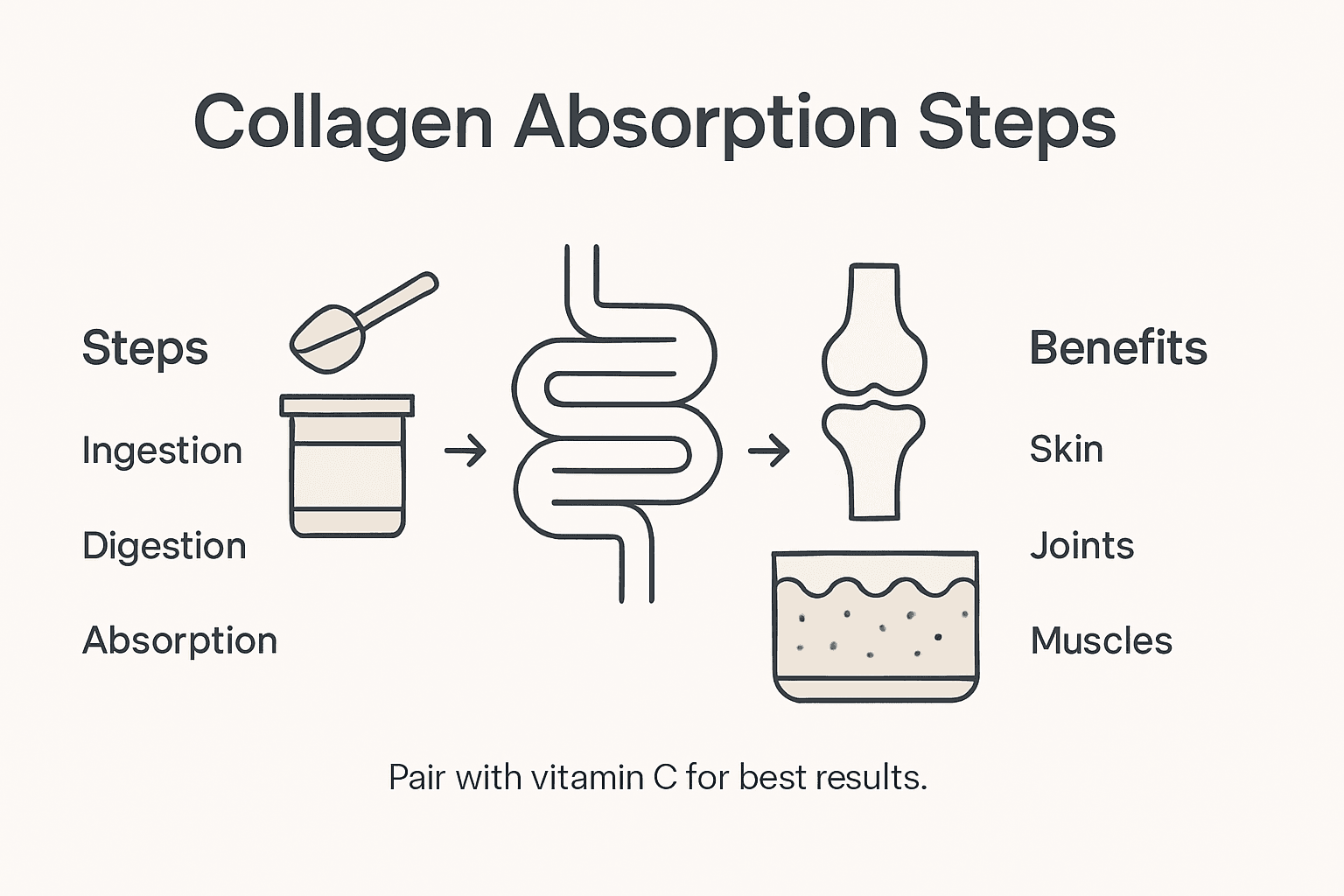
The key to effective collagen supplementation lies in its molecular structure and preparation. Unhydrolyzed collagen molecules are typically too large for direct absorption, making hydrolyzed peptides the most bioavailable form. When ingested, these peptides are broken down into bioactive compounds like proline-hydroxyproline, which can be detected in plasma and contribute to tissue repair, skin health, and joint function. The advantages of capsule supplements can further enhance this absorption process, providing a convenient and precise delivery method.
Vitamin C plays a critical role in collagen absorption and effectiveness. This essential nutrient helps the body synthesize and integrate collagen peptides, making it a crucial companion to any collagen supplementation strategy. Factors such as molecular weight, processing method, and individual metabolism can significantly impact how effectively these supplements are absorbed and utilized by the body. Active individuals should pay close attention to the quality and preparation of their collagen supplements to maximize potential benefits.
Pro tip: Choose hydrolyzed collagen supplements and pair them with vitamin C to optimize absorption and maximize the body’s ability to use these beneficial proteins.
Risks, Side Effects, and Choosing Safe Products
Scientific research highlights critical considerations when selecting collagen supplements for active lifestyles. Supplement safety requires careful evaluation, as not all products are created equal. While collagen peptides are generally considered safe, potential risks include contamination, improper sourcing, and individual allergic responses that can impact overall health.
Active individuals should prioritize third-party tested supplements with transparent sourcing and manufacturing practices. The ultimate guide to third-party tested supplements emphasizes the importance of verifying product quality through independent laboratory testing. Key concerns include potential heavy metal contamination, potential disease transmission from low-quality sources, and the risk of excessive dosing that could lead to unexpected side effects.
Common side effects of collagen supplementation are typically mild but can include digestive discomfort, feelings of fullness, or allergic reactions in sensitive individuals. People with specific food allergies should carefully review supplement ingredients, particularly those derived from marine, bovine, or porcine sources. Individuals with pre-existing medical conditions or those taking medications should consult healthcare professionals before starting any new supplement regimen to ensure safe and effective use.
Pro tip: Always research supplement brands thoroughly, check for third-party testing certifications, and start with lower doses to assess your body’s individual response.
Alternatives to Collagen and Misconceptions
Research examining oral supplementation myths reveals that many popular claims about collagen supplements are often exaggerated. Alternative supplements like protein powders, vitamin C, and hyaluronic acid can offer complementary benefits, but they do not directly replace collagen’s unique structural role in the body.
While alternatives exist, they each serve different physiological purposes. Whey protein supplements provide essential amino acids and can support muscle recovery, but they do not specifically target connective tissue regeneration like collagen. Clinical trials demonstrate that vitamin C plays a crucial role in collagen biosynthesis, making it an important companion supplement rather than a complete replacement. Hyaluronic acid can support skin hydration, but research indicates it does not significantly enhance dermal density or reduce wrinkles compared to collagen with vitamin C.
This table summarizes notable alternatives to collagen and their most important functions:
| Supplement | Major Function | How It Differs From Collagen |
|---|---|---|
| Whey Protein | Muscle recovery and growth | Does not support connective tissues |
| Vitamin C | Collagen synthesis enhancement | Cannot directly replace collagen protein |
| Hyaluronic Acid | Skin hydration | No effect on dermal density |
Common misconceptions about collagen supplements include unrealistic expectations of dramatic, immediate results. Active individuals should understand that supplement effectiveness varies based on individual factors like age, diet, overall health, and consistent usage. Marketing often overpromises transformative effects, but scientific evidence suggests more modest, incremental improvements in skin elasticity, joint function, and tissue repair. Nutrition experts recommend a holistic approach that combines targeted supplementation with a balanced diet, regular exercise, and proper hydration.
Pro tip: Combine collagen supplements with a nutrient-rich diet and vitamin C to maximize potential benefits, and maintain realistic expectations about supplementation outcomes.
Support Your Active Lifestyle with Targeted Collagen Solutions
Maintaining joint flexibility and skin vitality can become challenging as collagen production slows down with age or intense activity levels. This article highlights how collagen supplements support tissue repair, enhance mobility, and improve skin elasticity through bioavailable peptides and essential amino acids. If you are committed to an active lifestyle but struggle with recovery or slow skin regeneration, it is time to explore science-backed supplements designed specifically for your needs.

Discover premium options tailored for joint and skin health in our Joint and Bone Supplements and Skin Health Supplements collections at Nutribliss. Don’t wait for discomfort or visible signs of aging to hold you back. Take control now by visiting Nutribliss.us and find high-quality collagen supplements that help restore your body’s natural strength and resilience. Start revitalizing your performance and appearance today.
Frequently Asked Questions
What are the main benefits of taking collagen supplements for active individuals?
Collagen supplements can significantly improve skin health, joint mobility, and muscle recovery, making them beneficial for athletes and active individuals. They help reduce joint pain and enhance overall musculoskeletal health.
How do I choose the right type of collagen supplement?
When selecting a collagen supplement, consider your specific health goals. Bovine collagen supports skin, bone, and muscle, while marine collagen is known for superior absorption and benefits for skin elasticity. Hydrolyzed collagen peptides are highly recommended for faster absorption.
How should I take collagen supplements for maximum effectiveness?
To maximize collagen absorption, take hydrolyzed collagen supplements alongside vitamin C, as it aids in collagen synthesis. Regular exercise and consistent intake also enhance the benefits of collagen supplementation.
Are there any risks or side effects associated with collagen supplements?
Collagen supplements are generally safe, but potential risks include allergic reactions or digestive discomfort in some individuals. It’s advised to consult with a healthcare professional, especially if you have existing medical conditions or allergies.
Recommended
- Skin Health Supplements – Nutribliss Inc.
- Role of Supplements in Aging: Essential Guide – Nutribliss Inc.
- 7 Essential Supplements for Athletes to Boost Performance – Nutribliss Inc.
- 7 Essential Supplements to Enhance Performance Naturally – Nutribliss Inc.
- Integrate Healthspan Program | Longevity & Preventive Care Ottawa