

Most American adults experience occasional fatigue despite pursuing active lifestyles and balanced diets. With eight essential B vitamins forming the backbone of peak energy metabolism, understanding their unique roles is key for anyone aiming to maximize athletic performance and maintain sharp focus. This guide reveals how the vitamin B complex drives cellular health, supports recovery, and helps active adults stay energized longer through informed supplementation.
Table of Contents
- Vitamin B Complex: Core Functions Explained
- Main Types of B Vitamins and Their Roles
- How B Complex Enhances Energy and Performance
- Signs of Deficiency and Supplementation Guidelines
- Potential Risks, Side Effects, and Common Mistakes
Key Takeaways
| Point | Details |
|---|---|
| Vitamin B Complex is Essential for Health | The B complex, consisting of eight vital nutrients, plays a crucial role in energy production, brain function, and overall cellular health. |
| Individual Functions of B Vitamins | Each B vitamin has a unique role, from energy conversion to supporting the nervous system and aiding in DNA production. |
| Importance for Active Adults | Adequate intake of B vitamins is vital for athletes and active individuals to enhance energy metabolism and support recovery. |
| Risks of Deficiency and Supplementation | Deficiencies can lead to significant health issues; consulting healthcare professionals for supplementation is recommended to avoid potential risks. |
Vitamin B Complex: Core Functions Explained
The vitamin B complex is a powerhouse group of eight essential, water-soluble nutrients that play critical roles in maintaining optimal health for active adults. These interconnected vitamins work synergistically to support fundamental metabolic processes, helping your body convert food into energy, maintain brain function, and sustain cellular health.
Each B vitamin serves unique yet complementary functions within the body. Thiamine (B1), Riboflavin (B2), Niacin (B3), Pantothenic Acid (B5), Pyridoxine (B6), Biotin (B7), Folate (B9), and Cobalamin (B12) collectively act as enzymatic cofactors that regulate numerous biochemical reactions. These vitamins function primarily as cofactors and coenzymes supporting various enzymatic processes crucial for cell metabolism, impacting everything from energy production to neurological function.
For active individuals, the B complex plays an especially vital role in supporting high-performance metabolic demands. These vitamins help convert dietary nutrients into usable energy, support red blood cell formation, and maintain nervous system health. They’re particularly important for athletes and fitness enthusiasts who require efficient energy metabolism and robust cellular recovery mechanisms. Because B vitamins are water-soluble, your body does not store them long-term, making daily replenishment through diet or supplementation crucial for sustained #nutribliss wellness.

Pro tip: Consume B-complex rich foods like lean meats, eggs, legumes, and whole grains to naturally support your vitamin B intake and maintain optimal metabolic function.
Main Types of B Vitamins and Their Roles
Vitamin B complex encompasses eight distinct water-soluble vitamins that work together to support critical metabolic functions in the human body. Each B vitamin has a specialized role, making them essential for maintaining optimal health and performance for active adults.
The eight B vitamins include Thiamine (B1), Riboflavin (B2), Niacin (B3), Pantothenic Acid (B5), Pyridoxine (B6), Biotin (B7), Folate (B9), and Cobalamin (B12). These vitamins are essential for converting food into glucose, supporting the nervous system, liver, skin, hair, and eyes, with each playing a unique role in maintaining bodily functions.
To break down their specific contributions, consider how these vitamins support different physiological processes. Thiamine helps convert nutrients into energy, Riboflavin supports cellular function and metabolism, Niacin aids in DNA repair and hormone synthesis, Pantothenic Acid helps create blood cells, Pyridoxine supports brain development and immune function, Biotin promotes healthy hair and skin, Folate assists in cell growth and DNA production, and Cobalamin is crucial for nerve tissue health and red blood cell formation. Their collective impact makes the B complex a powerhouse of nutritional support for #nutribliss wellness.
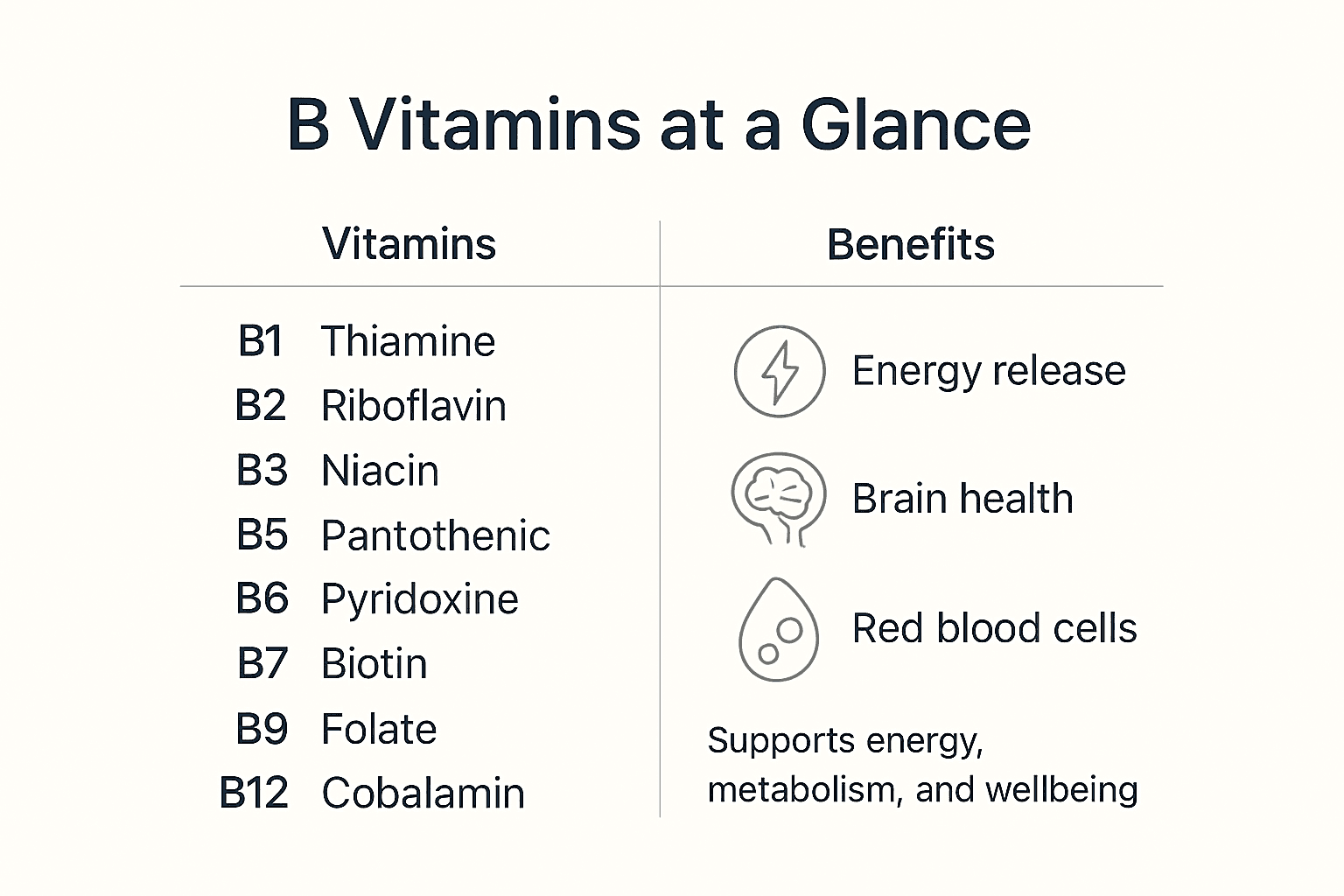
Here’s a quick reference on the main B vitamins and their primary actions:
| B Vitamin | Key Function | Primary Impact on Health |
|---|---|---|
| Thiamine (B1) | Converts food to energy | Supports nerve and heart health |
| Riboflavin (B2) | Aids cell metabolism | Promotes skin and eye health |
| Niacin (B3) | Facilitates DNA repair | Helps hormone synthesis |
| Pantothenic Acid (B5) | Produces blood cells | Supports metabolic reactions |
| Pyridoxine (B6) | Brain development | Strengthens immune response |
| Biotin (B7) | Fat and carb metabolism | Maintains hair and skin health |
| Folate (B9) | DNA and cell production | Supports fetal development |
| Cobalamin (B12) | Nerve tissue health | Prevents anemia |
Pro tip: Consider consulting a healthcare professional to determine your specific B vitamin needs, as individual requirements can vary based on age, diet, and activity level.
How B Complex Enhances Energy and Performance
B vitamins play a crucial role in energy metabolism and physical performance by supporting critical biochemical processes that convert nutrients into usable cellular energy. These essential nutrients act as fundamental catalysts in transforming the food we consume into the sustained energy required for optimal athletic and everyday functioning.
B vitamins act as cofactors in biochemical reactions like the citric acid cycle and electron transport chain, which are central to converting carbohydrates, fats, and proteins into cellular energy. Specifically, B12 and folic acid contribute to red blood cell production and oxygen delivery, enhancing physical endurance and preventing fatigue. This metabolic support makes B complex vitamins vital for maintaining consistent energy levels and supporting high-performance physical activities.
For active adults, understanding the energy-boosting mechanism of B vitamins is crucial. Unlike stimulants that provide temporary energy spikes, B vitamins support sustained metabolic function. They help regulate hormonal balance, support nervous system health, and ensure efficient nutrient processing. Athletes and fitness enthusiasts can particularly benefit from adequate B vitamin intake, as these nutrients help mitigate exercise-induced fatigue and support faster recovery. #nutribliss wellness strategies emphasize the importance of comprehensive nutritional support.
Pro tip: Combine B complex intake with a balanced diet and regular exercise to maximize energy metabolism and overall physical performance.
Signs of Deficiency and Supplementation Guidelines
Vitamin B12 deficiency can manifest through several critical symptoms that active adults should recognize, including persistent fatigue, unexplained weakness, neurological disturbances, and potential anemia. These warning signs often develop gradually, making early detection challenging for individuals who may attribute symptoms to stress or normal aging.
B vitamin deficiency symptoms range from mild fatigue to more severe nervous system dysfunction, presenting unique challenges for diagnosis. Risk factors include dietary restrictions, particularly for vegans and vegetarians, malabsorption issues, certain medications, and age-related metabolic changes. Active adults should pay special attention to potential deficiency markers such as decreased physical performance, cognitive fog, and unexplained muscle weakness.
The table below highlights common deficiency risks and recommended actions for active adults:
| Risk Factor | Possible Symptom | Recommended Action |
|---|---|---|
| Strict vegan diet | Persistent fatigue | Consider B12 supplementation |
| Aging | Cognitive disturbances | Schedule regular blood tests |
| Malabsorption issue | Muscle weakness | Seek medical advice for injections |
| Intense exercise | Reduced performance | Monitor daily intake closely |
Supplementation strategies vary depending on individual health profiles and specific deficiency types. Oral supplements are typically recommended for mild deficiencies, with dosages ranging from 1-2 mg daily for B12. More severe cases might require intramuscular injections, especially for individuals with absorption complications. #nutribliss wellness approaches emphasize personalized supplementation, recommending comprehensive blood testing and professional medical consultation to determine precise nutritional needs.
Pro tip: Consult with a healthcare professional and undergo comprehensive blood testing to accurately assess your specific B vitamin requirements and develop a targeted supplementation strategy.
Potential Risks, Side Effects, and Common Mistakes
Vitamin B complex supplements are generally safe but can present several potential risks for active adults, requiring careful consideration and informed consumption. Side effects may include allergic reactions such as skin rashes, gastrointestinal disturbances, and unexpected blood sugar fluctuations. These reactions vary among individuals and can be influenced by overall health, existing medical conditions, and supplement dosage.
Many individuals make critical mistakes when consuming B vitamin supplements, often misunderstanding their purpose and potential interactions. Common errors include self-prescribing high doses without professional guidance, assuming more is always better, and overlooking potential interactions with existing medications. Excessive intake of specific B vitamins, particularly B6 and niacin, can lead to nerve damage or liver complications, underscoring the importance of professional medical consultation before starting any supplementation regimen.
Active adults should approach B vitamin supplementation with a nuanced understanding of individual nutritional needs. Factors such as age, diet, existing health conditions, and specific athletic demands play crucial roles in determining appropriate supplementation strategies. #nutribliss wellness recommendations emphasize personalized approaches, highlighting the significance of comprehensive blood testing and targeted nutritional interventions rather than blanket supplementation.
Pro tip: Always consult a healthcare professional and undergo comprehensive testing before starting any B vitamin supplementation to ensure safe and effective nutritional support.
Boost Your Energy and Wellness with Targeted B Complex Support
If you are an active adult seeking to overcome fatigue, enhance mental clarity, and support overall metabolic health you know how vital a balanced Vitamin B Complex is. This group of essential nutrients works hard every day to convert food into energy, maintain nerve and brain function, and promote cellular recovery — all critical factors for high-performance living. Addressing these key challenges with quality supplementation can make a real difference in your day-to-day vitality.

Discover a wide range of scientifically formulated options at Nutribliss Supplements – Nutribliss Inc. designed to provide consistent and complete B vitamin support. Don’t wait to optimize your body’s energy production and protect against deficiency symptoms. Visit Nutribliss.us now to explore trusted solutions that fit your lifestyle and start fueling your body the right way for lasting #nutribliss wellness.
Frequently Asked Questions
What is Vitamin B complex and why is it important for active adults?
Vitamin B complex includes eight essential water-soluble vitamins that support energy metabolism, brain function, and cellular health, making it crucial for individuals with high-performance demands.
What are the main functions of each B vitamin in the complex?
Each B vitamin plays a unique role: B1 converts food to energy, B2 aids in cell metabolism, B3 facilitates DNA repair, B5 produces blood cells, B6 supports brain development, B7 promotes healthy hair and skin, B9 assists in cell growth, and B12 is essential for nerve tissue health and red blood cell formation.
How do B vitamins enhance energy and performance for active individuals?
B vitamins act as cofactors in biochemical processes that convert carbohydrates, fats, and proteins into energy, helping to maintain stamina and reduce fatigue during physical activities.
What should I do if I experience symptoms of B vitamin deficiency?
If you notice symptoms like fatigue, muscle weakness, or cognitive disturbances, consider consulting a healthcare professional for blood tests to assess your B vitamin levels and discuss potential supplementation.
Recommended
- The Ultimate Guide to Energy Vitamins: Boost Your Vitality – Nutribliss Inc.
- Complete Guide to the Role of Vitamins in Wellness
- Why Take Multivitamins: Health and Fitness Benefits
- What Does Vitamin D Do for Immunity and Performance
- 7 motivi per capire l’importanza della prima colazione - dentalnetcare.it