

TL;DR:
- Clear, structured goals using the SMART framework enhance motivation and progress.
- Flexibility and consistency are key to sustainable fitness success despite setbacks.
- Proper nutrition and evidence-based supplements support long-term training and recovery.
Most people start a fitness journey with real energy and good intentions. Then life happens, progress stalls, and motivation quietly disappears. The problem usually isn’t willpower. It’s the absence of a clear, structured plan that connects daily actions to meaningful outcomes. Research confirms that SMART fitness goals provide a structured way to clarify objectives, turning vague wishes into trackable milestones. Whether you’re building strength, losing weight, or improving endurance, this guide walks you through every step, from assessing your starting point to choosing the right nutritional support for your specific goals.
Table of Contents
- Assess your readiness and define your vision
- Set SMART and flexible goals for success
- Plan actionable steps and track your progress
- Support your fitness journey with nutrition and supplements
- A realistic perspective on goal setting for lasting change
- Get expert support and elevate your results
- Frequently asked questions
Key Takeaways
| Point | Details |
|---|---|
| Clarify your why | Understanding your motivation sets a strong foundation for fitness success. |
| Use flexible frameworks | Both SMART and adaptive goals can be effective, especially when combined and adjusted to your needs. |
| Track and adjust | Monitor progress and make changes as needed to stay on track without burning out. |
| Prioritize nutrition first | Food-first strategies lead, with supplements used to support gaps and enhance recovery. |
| Consistency trumps perfection | Staying consistent—even if imperfect—delivers the most sustainable results over time. |
Assess your readiness and define your vision
Before you write a single goal, you need an honest snapshot of where you are right now. Skipping this step is one of the most common reasons people set goals that feel exciting on day one but impossible by week three. Knowing your current fitness level, your lifestyle demands, and your personal “why” gives every goal you set a foundation to stand on.
Your “why” is not just motivational fluff. It’s the anchor that keeps you showing up when the novelty wears off. Someone training to keep up with their kids has a very different emotional driver than someone recovering from a health scare or preparing for a 5K. Both are valid. Both require different structures. When you understand your setting health goals process at a personal level, your plan becomes far more sustainable.
Common starting points look different for everyone:
- Sedentary: Little to no regular exercise, possibly dealing with low energy or weight concerns
- Moderately active: Some weekly movement but inconsistent, looking to build structure
- Returning from injury or illness: Needs gradual reintroduction with medical clearance
- Already active: Wants to optimize performance, recovery, or body composition
Here’s a quick reference to match your readiness with a realistic vision:
| Readiness level | Vision example | Common challenge |
|---|---|---|
| Sedentary | Walk 30 minutes daily | Low stamina, habit formation |
| Moderately active | Run a 5K in 10 weeks | Consistency, scheduling |
| Returning from injury | Rebuild strength safely | Patience, fear of re-injury |
| Already active | Improve race time or lift PR | Plateaus, recovery gaps |
Keep your vision realistic but not small. A goal that doesn’t excite you won’t hold your attention. A goal that feels impossible will crush your confidence early. The CDC/ACSM guidelines offer solid benchmarks for activity levels across different fitness stages, which can help you calibrate what’s appropriate for your current capacity.
Pro Tip: Pair one long-term goal (like completing a half marathon in six months) with one short-term goal (like running three times this week). The short-term win keeps motivation alive while the long-term goal gives you direction.
Set SMART and flexible goals for success
With your vision clarified, it’s time to choose a structure for your goal setting. The SMART framework is one of the most widely used tools in fitness planning, and for good reason. It forces you to be specific about what you want, how you’ll measure it, and when you’ll achieve it.
Here’s what each letter means in practice:
- Specific: Define exactly what you want to achieve. “Get fit” becomes “complete three strength workouts per week.”
- Measurable: Attach a number or observable marker. “Lose weight” becomes “lose 8 pounds.”
- Achievable: Make sure the goal is realistic given your schedule, body, and resources.
- Relevant: Connect it to something that genuinely matters to you, not what you think you should want.
- Time-bound: Set a clear deadline. Open-ended goals drift indefinitely.
Building a SMART goal takes about five minutes but saves weeks of confusion. Use the SMART framework as your starting template, then adjust as your fitness evolves.
That said, SMART goals aren’t the only option. Research shows that beginners benefit from flexible, open-ended goals to avoid early demotivation. If rigid targets feel paralyzing, start with process-based goals like “move my body for 20 minutes every day” before layering in specifics.
“Specific goals are not always superior. For some individuals, process-based goals and flexible targets produce better long-term adherence and well-being.”
Here’s a comparison to help you decide which approach fits your personality:
| Goal type | Best for | Pros | Cons |
|---|---|---|---|
| SMART goals | Experienced exercisers | Clear, trackable, motivating | Can feel rigid if life changes |
| Flexible/open goals | Beginners or high-stress periods | Reduces pressure, builds habits | Harder to measure progress |
Goal prioritization also matters. Trying to hit five major fitness goals simultaneously almost always leads to burnout. Choose one primary goal and one supporting goal, then revisit quarterly. When you’re just starting out with setting supplement goals, the same principle applies: focus on one or two key areas before expanding.
Pro Tip: If you’re brand new to structured training, start with “do your best” targets for the first two to three weeks. Once you have baseline data on what you can actually do, replace them with specific SMART goals.
Plan actionable steps and track your progress
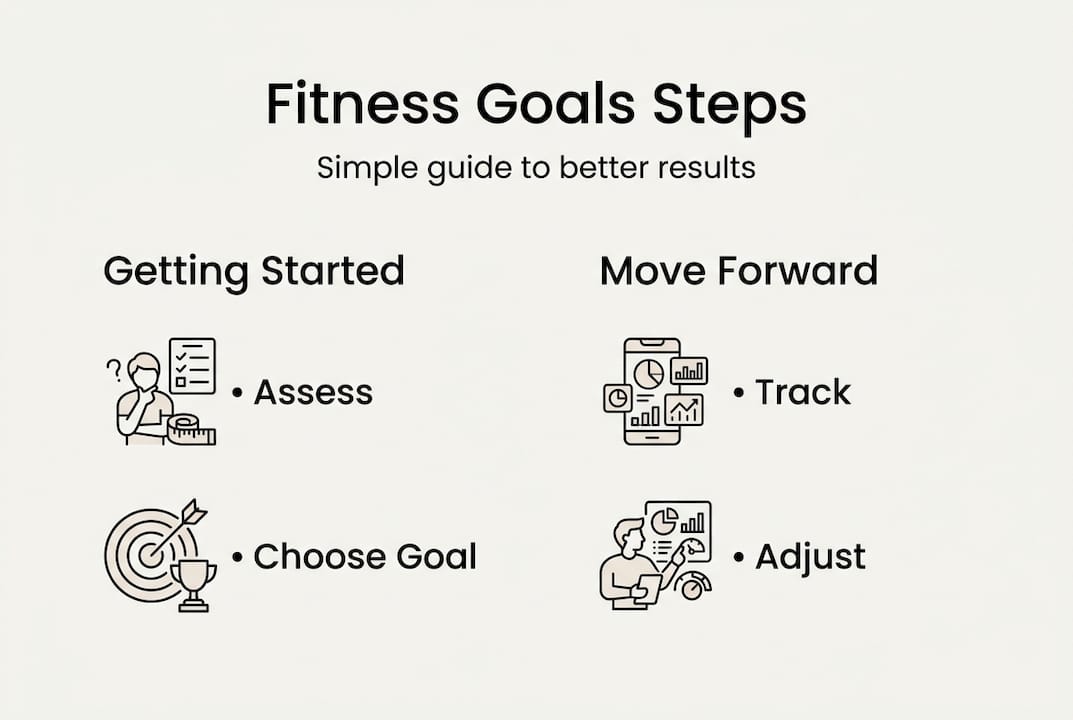
Once you’ve set a clear and flexible goal, you need a plan for consistent action and progress monitoring. A goal without a weekly action plan is just a wish. Breaking big goals into smaller, weekly or daily steps makes the whole process feel manageable and keeps momentum going.
Here’s a simple process to build your action plan:
- Write your main goal at the top of a page or app.
- Break it into monthly milestones.
- Break each milestone into weekly targets.
- Schedule specific days and times for each action.
- Review and adjust every Sunday before the week begins.
Tracking your progress is what turns effort into data. When you can see how far you’ve come, you stay motivated. When numbers plateau, tracking helps you spot the problem early. Track progress, share your goals for accountability, and adjust as needed to keep moving forward.
Useful tracking tools include:
- Fitness apps: MyFitnessPal, Strava, or Apple Health for logging workouts and nutrition
- Journaling: A simple notebook works well for mood, energy, and subjective progress
- Checklists: Weekly habit trackers keep daily actions visible and satisfying to complete
- Wearables: Smartwatches and fitness bands provide real-time biofeedback on heart rate and sleep
Accountability is a powerful multiplier. Sharing your goal with a friend, joining a group class, or working with a coach dramatically increases follow-through. The activity benchmarks from ACSM can also help you compare your current output against evidence-based recommendations.
For weight-related goals, 1 to 2 pounds per week is a sustainable loss rate, and losing 5 to 10 percent of body weight over three to six months produces measurable health improvements. These benchmarks keep your expectations grounded in reality. Explore how supplement trends are supporting recovery and performance goals in 2026 for additional context.

Pro Tip: Use biofeedback signals like energy levels, sleep quality, and mood as early warning signs. If all three drop for more than a week, scale back intensity before burnout forces you to stop entirely.
Support your fitness journey with nutrition and supplements
With your foundational actions underway, nutrition and supplements can further support your progress. No supplement replaces a solid diet, but the right nutritional strategy can meaningfully close the gap between effort and results.
The food-first approach is non-negotiable. Prioritize high protein, adequate carbohydrates, healthy fats, and consistent hydration before reaching for any product. Protein supports muscle repair, carbohydrates fuel your workouts, and fats regulate hormones and inflammation. Most active adults need 1.4 to 2.0 grams of protein per kilogram of body weight daily, depending on training intensity.
You might consider supplementation when:
- Your diet consistently falls short on protein or key micronutrients
- Recovery feels slow despite adequate sleep and rest days
- You train at high intensity or volume with limited recovery time
- You follow a restrictive diet (vegan, low-calorie) that creates nutrient gaps
- Travel or a busy schedule makes whole-food meals difficult to sustain
Here’s a quick look at common options:
| Supplement | Primary use | Precaution |
|---|---|---|
| Whey or plant protein | Muscle repair and growth | Check for added sugars |
| Creatine monohydrate | Strength and power output | Stay well hydrated |
| Caffeine | Pre-workout energy and focus | Avoid late-day use |
| Electrolytes | Hydration and muscle function | Watch sodium if blood pressure is a concern |
| Omega-3 fatty acids | Inflammation and joint health | Check for purity and sourcing |
Supplements like creatine, caffeine, and protein can enhance performance when your diet is already solid. They are not meal replacements. Explore recommended supplement trends and herbal supplement benefits to find options aligned with your specific goals. For workout-specific fueling strategies, the nutrition for workout performance guidance from Mayo Clinic is a strong starting point.
Pro Tip: Look for third-party certifications like NSF Certified for Sport or Informed Sport on any supplement label. These verify that what’s on the label is actually in the product, which matters more than marketing claims.
A realistic perspective on goal setting for lasting change
Most fitness guides hand you a framework and send you off. What they skip is the messy reality of what happens between week one and month six. Life throws curveballs. Work gets intense. Injuries flare up. Sleep suffers. And suddenly the perfectly structured SMART goal you set in January feels like it belongs to a different person.
Here’s what we’ve learned: consistency matters more than rigid perfection. The people who reach their fitness goals are not the ones who never miss a workout. They’re the ones who miss a workout and show up the next day anyway. Flexibility is not weakness. It’s the actual strategy.
Mental health is as important as any physical benchmark. When your goals feel like punishment, they stop working. Build in rest, celebrate small wins, and treat setbacks as data rather than failures. The mental skills for fitness that elite athletes use, like self-talk, visualization, and emotional regulation, are available to anyone willing to practice them.
Long-term results come from adjusting, prioritizing, and returning after setbacks, not from executing a perfect plan. Build your recovery supplement routines with the same flexibility you bring to your training. Progress is rarely linear, and that’s completely normal.
Get expert support and elevate your results
You’ve got the framework. Now it’s time to put the right tools behind it. At Nutribliss, we’ve built our product line around the same science-backed principles covered in this guide, because your goals deserve more than guesswork.

Whether you need protein to support muscle repair, electrolyte support for hydration during intense training, or want to explore the science behind superfoods that can complement your nutrition plan, we have options designed for real performance. Browse the full Nutribliss supplements collection to find products matched to your specific fitness stage, from beginner foundations to advanced recovery support.
Frequently asked questions
What is the best way to set achievable fitness goals?
Use the SMART framework to make your goals specific, measurable, achievable, relevant, and time-bound. This structure removes ambiguity and gives you a clear path to follow from day one.
How can supplements support my fitness goals?
Supplements like creatine and protein can fill dietary gaps and enhance performance when your overall diet is already solid. They work best as additions to a balanced nutrition plan, not replacements for whole foods.
What should I do if I miss a workout or fall off track?
Stay flexible and return to your plan as soon as possible without guilt. Flexibility and adaptation are key to long-term goal achievement, and one missed session rarely derails real progress.
How much exercise do I need for good health?
Aim for 150 to 300 minutes of moderate aerobic activity each week plus muscle strengthening on two days per week. The ACSM physical activity guidelines provide detailed recommendations based on age and fitness level.
Recommended
- How to set health goals: practical steps for success
- How to Set Supplement Goals for Better Results
- How to Set Wellness Goals for Better Health Results
- Functional Fitness: Why It Matters for Daily Life
- How to Increase Motivation: Achieve Your Goals Effectively – Optio Station: Best Project Management App for Prioritization