

It is easy to feel lost in a maze of workouts, wondering which routines actually prepare your body for real life outside the gym. Functional fitness stands out because it equips you for daily activities by training multiple muscle groups to work together just like they do when you lift groceries or sprint up stairs. Whether you want stronger movement, better mobility, or reduced injury risk, focusing on purposeful movement patterns delivers benefits that go far beyond simple strength.
Table of Contents
- Defining Functional Fitness And Core Concepts
- Types Of Functional Fitness And Key Exercises
- How Functional Fitness Benefits Health And Wellbeing
- Integrating Functional Fitness With Nutrition And Supplements
- Common Mistakes And How To Avoid Them
Key Takeaways
| Point | Details |
|---|---|
| Functional Fitness Focus | Emphasizes training for real-world movements, enhancing strength, flexibility, and mobility. |
| Core Muscle Importance | Strengthening core muscles is crucial for stabilizing movements and preventing injury. |
| Nutrition and Supplements | Strategic nutrition and timing of supplements can optimize performance and recovery in functional fitness. |
| Common Mistakes | Avoid skipping warm-ups and using improper technique to reduce injury risk and improve workout effectiveness. |
Defining Functional Fitness and Core Concepts
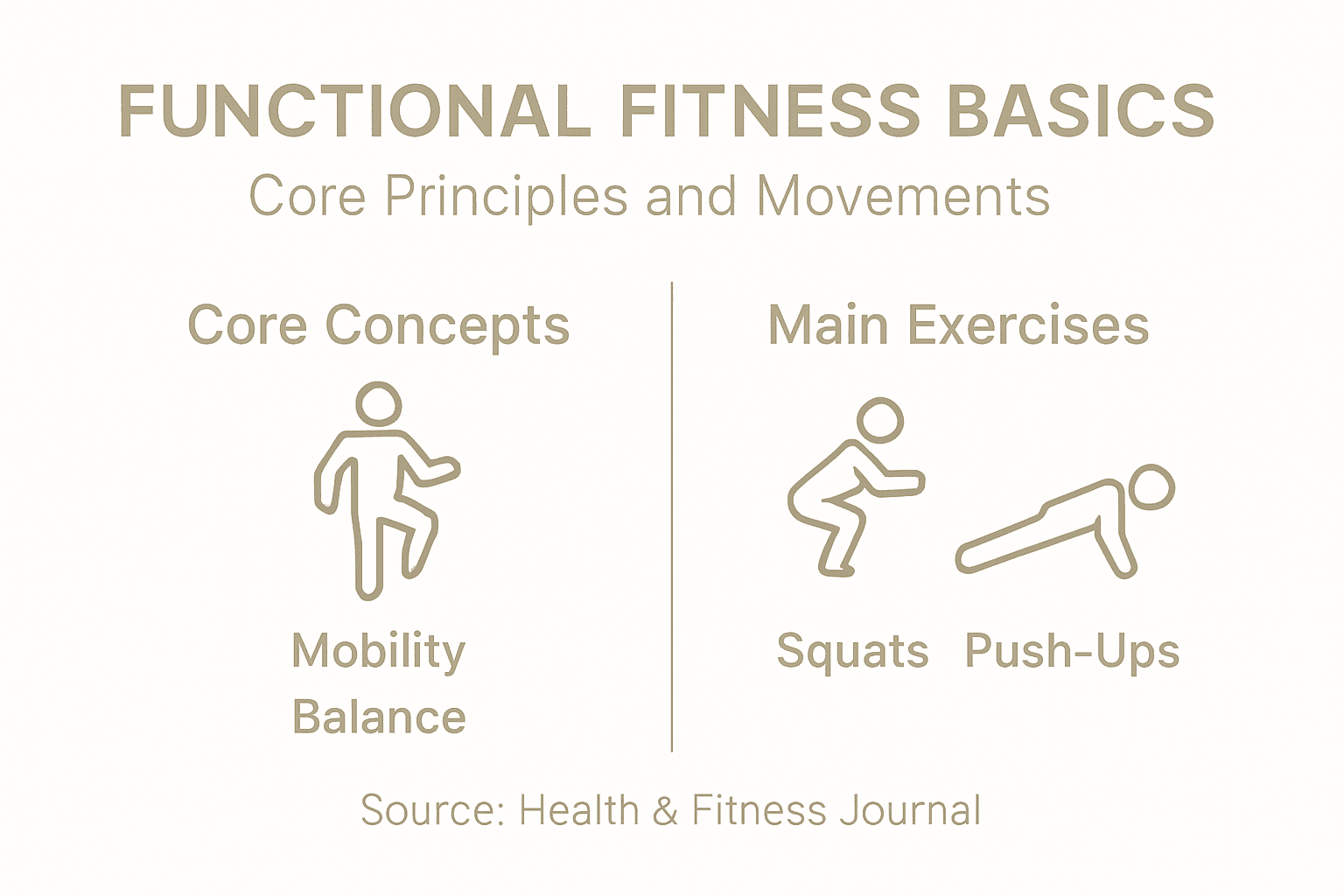
Functional fitness represents a holistic approach to physical training that goes beyond traditional muscle-building exercises. At its core, this fitness philosophy focuses on preparing your body to perform real-world movements safely and efficiently. Functional fitness training from Harvard Medical School emphasizes improving strength, flexibility, and overall mobility through purposeful movement patterns.
The primary goal of functional fitness is to enhance your body’s ability to handle daily activities with greater ease and reduced injury risk. Unlike traditional weightlifting that isolates specific muscle groups, functional fitness trains multiple muscle systems to work together seamlessly. This approach mimics natural movement patterns like:
- Lifting grocery bags
- Climbing stairs
- Carrying children
- Performing household chores
- Maintaining balance during complex movements
Kinetic Chain Integration is a critical concept in functional fitness. This principle recognizes that our body’s muscular and skeletal systems are interconnected, meaning dysfunction in one area can impact overall movement quality. By training muscles to work together synergistically, functional fitness helps prevent potential injuries and improves overall physical performance.
Core Muscle Groups play a fundamental role in functional fitness. These include stabilizing muscles in your abdomen, lower back, hips, and pelvis that enable smooth, coordinated movements. Strengthening these muscle groups provides a solid foundation for more complex physical activities and reduces the likelihood of strain or injury.
Pro tip: Start incorporating functional fitness movements into your routine by focusing on compound exercises that engage multiple muscle groups simultaneously, such as squats, lunges, and push-ups.
Types of Functional Fitness and Key Exercises
Functional fitness encompasses several distinct exercise categories designed to improve overall physical performance and daily movement capabilities. Functional fitness exercises from health experts target multiple muscle groups simultaneously, preparing the body for real-world physical challenges.

The primary types of functional fitness training include:
Here is a summary of how different types of functional fitness training impact the body:
| Training Type | Primary Focus | Real-World Application |
|---|---|---|
| Strength Training | Build multi-muscle power | Lifting and carrying tasks |
| Balance Exercises | Improve coordination | Stability on uneven ground |
| Flexibility Movements | Increase range of motion | Bending and stretching |
| Endurance Training | Boost sustained stamina | Prolonged activity |
| Core Workouts | Stabilize core muscles | Protect spine during lifts |
- Strength Training: Focuses on building muscle groups that work together
- Balance Exercises: Improve stability and coordination
- Flexibility Movements: Enhance range of motion and reduce injury risk
- Endurance Training: Build stamina for sustained physical activity
- Core Stability Workouts: Strengthen central muscle groups
Key Functional Exercises are specifically designed to mimic everyday movements. These include fundamental exercises like:
- Bodyweight squats
- Lunges with rotation
- Push-ups with varied modifications
- Planks and side planks
- Kettlebell movements
Resistance Training plays a crucial role in functional fitness by incorporating tools like resistance bands, free weights, and medicine balls. These tools challenge multiple muscle groups simultaneously, improving overall muscular coordination and functional strength.
Pro tip: Begin your functional fitness journey by mastering basic movement patterns and gradually increasing complexity, focusing on proper form and controlled movements.
How Functional Fitness Benefits Health and Wellbeing
Physical activity benefits from comprehensive health research demonstrate that functional fitness offers far-reaching advantages beyond traditional exercise approaches. This holistic training method improves both physical and mental health, providing a comprehensive approach to wellness that addresses multiple aspects of human performance.
The key health benefits of functional fitness include:
- Mental Health Improvement: Reduces anxiety and depression
- Cognitive Function Enhancement: Sharpens mental clarity and focus
- Chronic Disease Prevention: Lowers risk of cardiovascular issues
- Weight Management: Supports metabolic health and balanced body composition
- Stress Reduction: Promotes emotional resilience and psychological wellbeing
Physical Independence is perhaps the most significant benefit of functional fitness. As we age, maintaining mobility becomes crucial. By training muscles to work together efficiently, functional fitness helps individuals preserve their ability to perform daily tasks independently, from climbing stairs to carrying groceries.
Joint Health and Mobility receive particular attention in functional fitness training. The integrated movement patterns help strengthen stabilizing muscles, reduce injury risk, and maintain flexibility across different muscle groups. This approach goes beyond traditional strength training by focusing on how muscles coordinate and support each other during complex movements.
Functional fitness is not just about building muscle, but about creating a body that moves with purpose and efficiency.
Pro tip: Incorporate functional fitness exercises into your routine gradually, focusing on proper form and listening to your body’s signals to maximize benefits and minimize injury risk.
Integrating Functional Fitness With Nutrition and Supplements
Dietary supplement research from health experts reveals that strategic nutrition plays a crucial role in supporting functional fitness goals. The right combination of nutrients and supplements can enhance performance, accelerate recovery, and optimize overall physical capabilities.
Key supplements that complement functional fitness training include:
- Protein Powders: Support muscle repair and growth
- Creatine: Improves strength and muscle endurance
- Amino Acids: Enhance recovery and reduce muscle breakdown
- Electrolyte Supplements: Maintain hydration and mineral balance
- Omega-3 Fatty Acids: Reduce inflammation and support joint health
Nutritional Timing is critical in functional fitness. Consuming the right nutrients before, during, and after workouts can significantly impact performance and recovery. Pre-workout nutrition provides energy, while post-workout supplements help muscle repair and reduce soreness.
The following table explains the role and timing of key nutrients for functional fitness:
| Supplement Type | Role in Functional Fitness | Ideal Timing |
|---|---|---|
| Protein Powders | Support muscle repair | Within 30 min post-workout |
| Creatine | Enhance power/endurance | Pre- or post-workout |
| Amino Acids | Aid recovery | During or post-workout |
| Electrolytes | Prevent dehydration | During extended sessions |
| Omega-3 Fatty Acids | Reduce inflammation | With meals daily |
Whole Food Integration remains paramount. Supplements should complement, not replace, a balanced diet rich in whole foods. Functional foods with additional health benefits can provide essential nutrients that support overall fitness and wellness goals.
Supplements are tools, not magic solutions. They work best when combined with consistent training and proper nutrition.
Pro tip: Consult with a nutritionist or healthcare professional to develop a personalized supplement strategy that aligns with your specific functional fitness objectives and individual health needs.
Common Mistakes and How to Avoid Them
Common workout mistakes from health experts reveal critical pitfalls that can compromise functional fitness effectiveness and increase injury risk. Understanding these errors is the first step toward developing a safer, more productive training approach.
Key mistakes in functional fitness include:
- Skipping Warm-Ups: Increases muscle strain and injury potential
- Improper Technique: Reduces exercise effectiveness and increases injury risk
- Overloading Weights: Compromises form and muscle coordination
- Insufficient Recovery: Prevents muscle repair and growth
- Inconsistent Training: Limits progress and fitness development
Technique Mastery is crucial in functional fitness. Many individuals rush through exercises without understanding proper movement patterns, which can lead to ineffective workouts and potential injuries. Focus on quality of movement over quantity, and consider working with a qualified fitness professional to refine your form.
Progressive Overload requires a strategic approach. Physical Activity Guidelines recommend balanced exercise progression that gradually increases intensity while allowing adequate recovery time. This means incrementally challenging your body without overwhelming its adaptive capabilities.
Small, consistent improvements are more sustainable than dramatic, unsustainable changes.
Pro tip: Record your workouts and periodically review your form using video analysis to identify and correct potential technique issues before they become ingrained habits.
Boost Your Functional Fitness Journey with Targeted Nutrition and Supplements
Functional fitness focuses on building strength, balance, and endurance for daily activities while preventing injury and improving mobility. To truly support your goals in core strength and kinetic chain integration, it is essential to fuel your body with the right nutrients. Many people struggle with recovery, maintaining energy during workouts, or reducing inflammation after intense sessions. At Nutribliss.us, we understand these challenges and offer a wide range of science-backed supplements like protein powders, creatine, electrolytes, and omega-3 fatty acids designed to optimize your functional fitness training.

Take the next step to enhance your physical independence and maximize your performance. Explore our selection of functional fitness supplements today and experience the difference proper nutrition can make in your daily life. Visit Nutribliss.us now to discover products that can help you recover faster, strengthen your core muscles, and sustain energy through every movement.
Frequently Asked Questions
What is functional fitness?
Functional fitness is a training approach that focuses on improving the body’s ability to perform real-world movements safely and efficiently. It enhances strength, flexibility, and overall mobility through exercises that mimic everyday activities.
How does functional fitness differ from traditional weightlifting?
Unlike traditional weightlifting, which often isolates specific muscle groups, functional fitness emphasizes the coordination of multiple muscle systems working together. This holistic approach aims to improve overall physical performance and reduce the risk of injury in daily activities.
What are some key exercises in functional fitness?
Key exercises include bodyweight squats, lunges with rotation, push-ups, planks, and kettlebell movements. These exercises are designed to engage multiple muscle groups and mimic movements encountered in daily life.
How can nutrition support functional fitness goals?
Strategic nutrition, including the right balance of macronutrients and supplements, is essential for functional fitness. Consuming adequate protein, healthy fats, and carbohydrates can enhance workout performance, muscle recovery, and overall well-being.
Recommended
- Metabolic Health: Why It Matters for Fitness
- Functional Nutrition for Athletes – Optimizing Performance
- Balanced Nutrition Explained: Impact on Wellness and Fitness
- Omega-3 for Fitness: Complete Evidence-Based Guide – Nutribliss Inc.
- Zestaw FitMi + Tablet. Rehabilitacja i ćwiczenia: udar, porażenie mózgowe