

Finding your perfect supplement routine can feel confusing when every product promises better performance and wellness. Athletes across the United States know the journey starts with understanding current health status, personal goals, and how nutrition supports recovery and growth. This guide delivers clear steps to help you assess your needs, select supplements, and determine the right daily dosages for your unique body, putting you in control of your nutritional strategy.
Table of Contents
Quick Summary
| Key Point | Explanation |
| 1. Assess Your Health and Goals | Perform a self-assessment of your health using various dimensions to create a targeted wellness roadmap. |
| 2. Choose Tailored Supplements | Select supplements based on nutritional gaps and individual health needs, ensuring they complement a balanced diet. |
| 3. Determine Personalized Dosages | Identify optimal supplement dosages tailored to your unique health status and performance objectives, avoiding one-size-fits-all approaches. |
| 4. Schedule Intake Strategically | Optimize supplement timing based on type to enhance absorption and effectiveness, creating a personalized intake protocol. |
| 5. Track Effectiveness and Safety | Systematically monitor your supplements’ performance and side effects, using evidence-based methods for verification and safety. |
Step 1: Assess personal goals and health status
Understanding your current health status and personal wellness goals is the critical foundation for an effective supplement strategy. By conducting a comprehensive self-assessment, you’ll create a targeted roadmap for your nutritional and performance objectives.
Start by evaluating your current health through a holistic lens. Utilizing the Wheel of Health can help you systematically review key wellness dimensions. Consider these crucial assessment areas:
-
Physical fitness levels and exercise routines
-
Current nutritional intake and dietary patterns
-
Stress management and mental wellness
-
Sleep quality and recovery patterns
-
Existing health conditions or performance limitations
Next, document your specific health and performance goals with precision. Guidance from NIH dietary experts recommends creating measurable objectives that align with your overall wellness vision. Be specific about what you want to achieve - whether that’s increasing muscle mass, improving endurance, enhancing recovery, or addressing specific nutritional deficiencies.
Don’t just list generic goals. Quantify them. Instead of “get healthier,” aim for “increase lean muscle mass by 5 pounds” or “reduce recovery time between workouts by 25%”. This specificity transforms abstract desires into actionable targets for your #nutribliss supplement workflow.
Pro tip: Consider consulting a healthcare professional to validate your self-assessment and ensure your supplement strategy matches your unique physiological needs.
Step 2: Select appropriate supplements for your needs
Navigating the complex world of dietary supplements requires a strategic approach tailored to your unique health profile and performance goals. Your objective in this step is to identify precise nutritional interventions that complement your existing diet and address specific physiological requirements.
Research-backed supplement selection demands a systematic evaluation of your individual needs. Consider these critical factors when choosing supplements:
-
Current nutritional gaps in your diet
-
Specific health performance objectives
-
Age-related nutritional requirements
-
Potential interactions with existing medications
-
Underlying health conditions or genetic predispositions
Supplements should enhance your nutrition, not replace a balanced diet.
Dietary supplement guidance emphasizes obtaining nutrients primarily through whole foods. Supplements serve as targeted support, filling specific nutritional deficiencies that your regular diet cannot adequately address. For instance, athletes might require additional protein or amino acid supplements, while individuals with restricted diets could benefit from targeted vitamin or mineral interventions.

Prioritize evidence-based selections by reviewing clinical research, consulting healthcare professionals, and understanding the precise biochemical mechanisms of each supplement. Your #nutribliss supplement workflow demands precision - avoid generic, one-size-fits-all approaches.
Pro tip: Consider maintaining a detailed supplement journal to track your body’s response and document the effectiveness of each nutritional intervention.
Step 3: Determine optimal daily dosages
Precision is paramount when establishing your daily supplement intake. Your goal is to identify exact dosages that maximize nutritional benefits while avoiding potential health risks associated with overconsumption.
Dietary Reference Intakes provide a scientific framework for determining appropriate supplement dosages. Understanding these recommendations involves analyzing multiple key factors:
-
Age-specific nutritional requirements
-
Individual metabolic differences
-
Current health status
-
Specific performance objectives
-
Potential nutrient interactions
Individual supplement needs vary significantly - what works for one person might not work for another.
Supplement dosage guidelines emphasize the critical importance of personalized approach. Different factors like body weight, activity level, existing health conditions, and genetic predispositions dramatically influence optimal supplement dosages. For athletes and high-performance individuals, standard recommended values might not capture the full complexity of nutritional needs.
Carefully cross-reference multiple authoritative sources, consult healthcare professionals, and consider conducting comprehensive blood tests to establish your precise #nutribliss supplement requirements. Avoid generic recommendations and focus on targeted, scientifically validated dosage strategies.
Here’s a summary of factors that influence supplement selection and dosage:
| Factor | Impact on Selection | Impact on Dosage |
| Age | Alters nutrient requirements | Adjusts recommended intake |
| Health Conditions | May require specific supplements | Can affect safe dosage limits |
| Activity Level | Drives need for performance nutrients | May increase dosage for recovery |
| Dietary Patterns | Reveals nutritional gaps | Modifies how much is needed |
| Medication Use | Risks negative interactions | Requires dosage adjustment |
Pro tip: Start with the lowest effective dose and gradually adjust based on measurable physiological responses and professional medical guidance.
Step 4: Schedule supplement intake for best results
Optimizing your supplement schedule requires strategic timing and precise coordination to maximize absorption and minimize potential interactions. Your goal is to create a personalized intake protocol that enhances nutrient utilization and supports your overall performance objectives.
Vitamin absorption strategies reveal critical nuances in supplement scheduling. Different vitamin types demand unique approaches:
-
Water-soluble vitamins work best on an empty stomach
-
Fat-soluble vitamins require meals with healthy fats
-
Multivitamins should accompany food intake
-
Calcium supplements need careful meal coordination
-
Iron supplements require specific timing strategies
Precise timing can dramatically increase your supplement’s effectiveness and absorption rate.
Calcium supplement scheduling demonstrates the complexity of nutrient uptake. High-dose supplements should be split into smaller doses throughout the day to optimize absorption and minimize potential digestive disruptions. Your #nutribliss supplement workflow demands meticulous attention to these biochemical interactions.
Develop a structured daily schedule that considers your unique metabolic rhythm, meal patterns, and specific performance goals. Consistency and strategic timing are key to unlocking your supplements’ full potential.
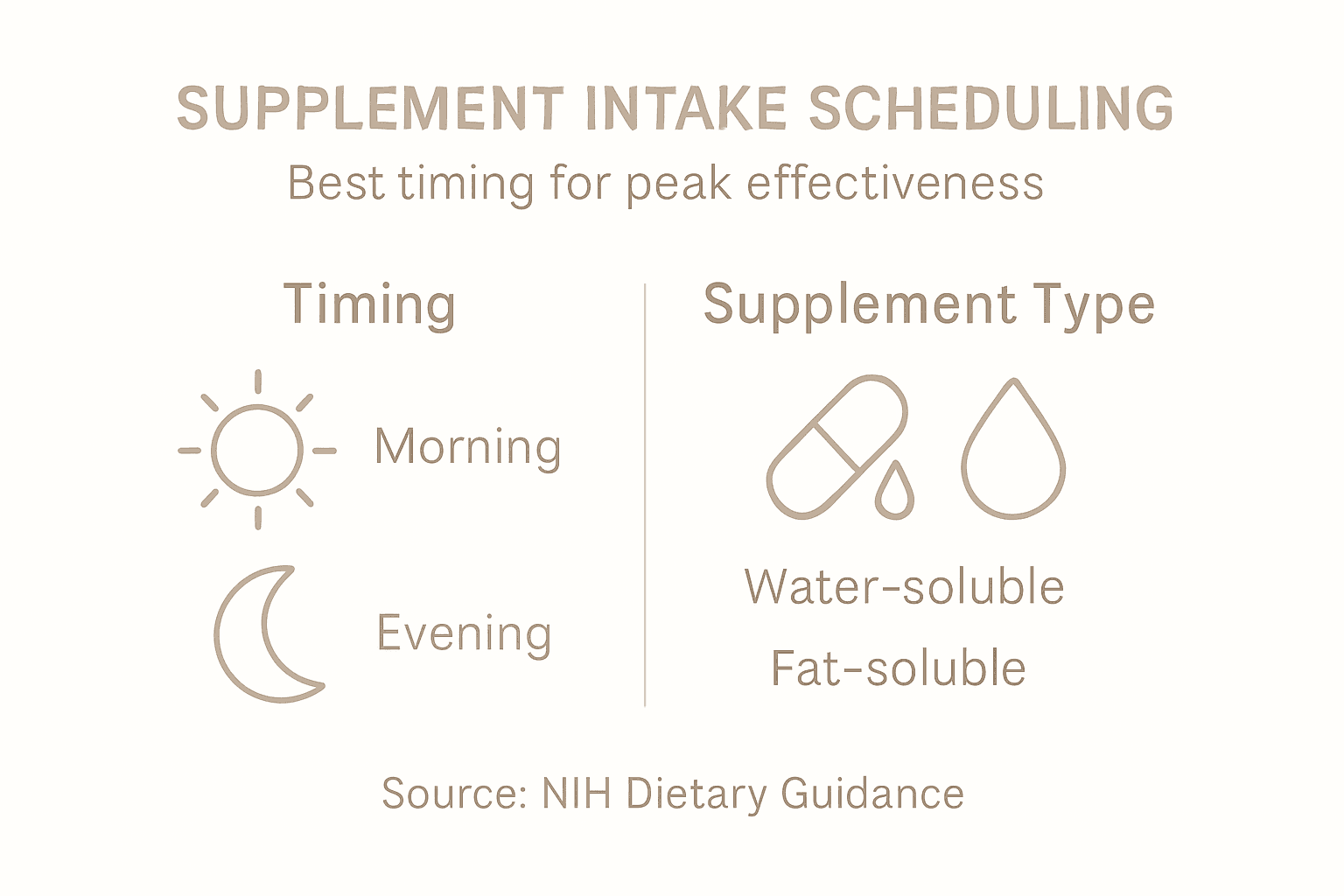
Use this reference to optimize timing for common supplements:
| Supplement Type | Best Time to Take | Key Benefit |
| Water-soluble vitamins | On empty stomach | Enhanced absorption |
| Fat-soluble vitamins | With meals containing fat | Improved bioavailability |
| Iron supplements | Morning, before meals | Better uptake, less interference |
| Calcium supplements | Split doses, with food | Maximizes absorption, reduces discomfort |
Pro tip: Create a visual supplement intake chart and set smartphone reminders to maintain precision and accountability in your daily supplementation routine.
Step 5: Track and verify effectiveness and safety
Monitoring your supplement strategy requires systematic observation and scientific rigor to ensure your nutritional interventions deliver the intended performance and health benefits. Your objective is to develop a comprehensive tracking system that validates supplement effectiveness while prioritizing your personal safety.
Dietary supplement verification resources offer critical tools for scientifically evaluating your supplementation workflow. Implement these strategic tracking methods:
-
Document baseline health metrics before starting supplements
-
Record weekly performance indicators
-
Track potential side effects or physiological changes
-
Compare objective measurements like strength, endurance, recovery
-
Maintain detailed supplement intake logs
Independent verification is the cornerstone of responsible supplement use.
Supplement verification protocols emphasize the importance of comprehensive monitoring. Look for third-party verified supplements and cross-reference your experience with scientific research. Your #nutribliss supplement strategy demands rigorous validation beyond subjective impressions.
Consider consulting healthcare professionals who can help interpret complex physiological data and provide expert insights into your supplementation outcomes. Regular blood work and professional assessments can offer deeper understanding of your body’s response.
Pro tip: Create a digital health dashboard or spreadsheet to systematically track supplement impact, enabling data-driven adjustments to your nutrition strategy.
Master Your Supplement Dosage with Nutribliss for Peak Results
Understanding the precise supplement dosage workflow is essential for avoiding guesswork and unlocking your body’s true potential. This article emphasized the importance of tailored daily intake that matches your unique health goals and physiological needs. If you have struggled with supplement timing, dose accuracy, or finding trustworthy products that support your targeted performance improvements, you are not alone. Many face challenges like inconsistent benefits or uncertainty about safe dosage levels.
At Nutribliss.us, we simplify this process by offering a wide range of science-backed supplements to meet your exact wellness and fitness needs. Whether you aim to enhance recovery, build lean muscle, or fill specific nutritional gaps, our carefully curated Fitness Supplements and Supplements for Health & Wellness provide clear product details and dosage guidance to empower your supplement workflow.
Take control of your supplement routine today. Visit Nutribliss.us to explore products designed with precise dosing in mind. Start your journey toward peak performance with confidence backed by quality and knowledge.
Frequently Asked Questions
How do I assess my personal health goals for supplement dosages?
Start by evaluating your overall health status and specific performance objectives, using a comprehensive self-assessment. Document measurable targets, such as increasing muscle mass or improving recovery time, to create a clear roadmap for your supplement strategy.
What factors should I consider when selecting supplements for peak performance?
Consider your current dietary gaps, health performance objectives, and any existing health conditions when choosing supplements. Prioritize evidence-based selections by reviewing clinical studies and ensuring they align with your nutritional needs and goals.
How can I determine the right dosage for my supplements?
Analyze key factors such as age, metabolic rate, and specific performance objectives to find the optimal dosage for your needs. Start with the lowest effective dose and adjust based on your body’s responses over a few weeks to maximize benefits while minimizing risks.
What is the best timing for taking supplements to enhance effectiveness?
Schedule your supplement intake based on their specific absorption requirements; for instance, take water-soluble vitamins on an empty stomach and fat-soluble vitamins with meals. Develop a consistent daily schedule to ensure your body’s optimum nutrient utilization.
How do I track the effectiveness of my supplement strategy?
Implement a systematic monitoring approach by documenting baseline health metrics, tracking ongoing performance indicators, and logging any side effects. Regularly evaluate objective measurements, such as strength and recovery, to validate your supplement workflow and make necessary adjustments.
Should I consult a healthcare professional about my supplement plan?
Yes, consulting a healthcare professional can provide personalized insights and ensure your supplement strategy aligns with your unique physiological needs. Schedule regular check-ins to review your health metrics and adjust your supplementation based on expert advice.