

Most American athletes pour countless hours into training, but one surprising study found that over 70 percent fail to match supplements to their unique performance goals. Without an individualized plan, you might be missing key elements that could sharpen your competitive edge or speed up your recovery. This guide presents a clear roadmap to help American fitness enthusiasts design a personalized supplement stack grounded in science and tailored to your body’s specific needs.
Table of Contents
- Step 1: Assess Your Fitness and Nutrition Goals
- Step 2: Research Science-Backed Supplement Options
- Step 3: Select Supplements for Your Specific Needs
- Step 4: Plan Dosage and Timing Strategies
- Step 5: Verify Product Quality and Safety
- Step 6: Track Progress and Adjust Your Stack
Quick Summary
| Key Point | Explanation |
|---|---|
| 1. Assess Your Fitness Goals | Evaluate your current fitness and nutrition to create a targeted supplement strategy tailored to your unique needs. |
| 2. Research Evidence-Based Supplements | Use scientific databases to find high-quality supplements that align with your fitness objectives and have proven effectiveness. |
| 3. Personalize Your Supplement Selection | Choose supplements based on individual goals and physiological demands, considering specific athletic performance requirements. |
| 4. Monitor Dosage and Timing | Understand optimal timing and dosage for each supplement to enhance performance and recovery based on research insights. |
| 5. Verify Quality and Safety | Check for certifications and independent testing to ensure the supplements you select meet high safety and quality standards. |
Step 1: Assess Your Fitness and Nutrition Goals
Building a successful supplement stack starts with understanding your unique fitness and performance objectives. By carefully evaluating your current physical condition, training regimen, and nutritional needs, you can create a targeted strategy that maximizes your athletic potential.
To begin, conduct a comprehensive assessment of your current fitness landscape. Determine your specific energy requirements and nutritional intake based on your exercise demands. This means breaking down your training type whether you are focused on strength training, endurance sports, muscle building, or general fitness maintenance. Consider factors like workout frequency, intensity, duration, and recovery needs. Track your current diet meticulously to identify potential nutritional gaps that supplements might address. Some athletes might require additional protein for muscle recovery, while others need electrolyte support or micronutrient supplementation.
The goal is precision your supplement stack should be a tailored solution, not a one-size-fits-all approach. Analyze how different types of physical activity influence your body’s nutritional requirements by consulting with sports nutritionists or conducting detailed personal research. This might involve blood tests to check for specific deficiencies, understanding your metabolism, and mapping out your fitness goals with scientific accuracy.
Pro tip: Keep a detailed fitness and nutrition journal for at least two weeks before designing your supplement stack to gather accurate personal performance data.
Step 2: Research Science-Backed Supplement Options
Navigating the complex world of nutritional supplements requires a strategic approach rooted in scientific evidence. Your goal is to identify high-quality, research-supported supplement options that align precisely with your fitness objectives and physiological needs.
Leverage comprehensive scientific databases and research platforms to evaluate supplement ingredients with rigorous scrutiny. Look for ingredients with multiple clinical studies demonstrating consistent performance outcomes, paying close attention to research quality, sample size, and reproducibility. Not all supplement claims are created equal some have robust scientific backing while others rely on marketing hype. Utilize evidence-based analysis platforms that systematically review human clinical research to compare the effectiveness of different supplement ingredients across various performance metrics.
Focus on understanding the specific mechanisms by which supplements interact with your body. Seek out research that explains not just the outcome but the physiological pathways involved. For instance, examine how protein supplements support muscle protein synthesis, how creatine enhances energy production, or how specific amino acids contribute to recovery. The Complete Guide to Supplement Stacks can provide additional insights into creating a comprehensive approach.
Pro tip: Cross-reference supplement research from at least three independent scientific sources before adding any new supplement to your stack.
Step 3: Select Supplements for Your Specific Needs
Choosing the right supplements requires a precision approach tailored to your individual fitness goals and physiological demands. Your supplement strategy should be as unique as your personal training regimen.
Evaluate supplement recommendations based on scientific evidence specific to your athletic performance objectives. Different sports and training intensities demand distinct nutritional support. Endurance athletes might prioritize supplements that enhance oxygen utilization and reduce inflammation, while strength trainers could focus on muscle protein synthesis and recovery enhancers. Consider factors like training volume, recovery needs, current nutritional gaps, and specific performance metrics when making selections.
Professional sports nutrition guidelines recommend a systematic risk benefit assessment for supplement selection, emphasizing the importance of understanding individual genetic variations and metabolic responses. This means moving beyond generic recommendations and creating a personalized approach. The 7 Essential Nutritional Supplements for Beginners guide can provide additional context for foundational supplementation strategies. Prioritize supplements with transparent ingredient profiles, third party testing, and clear research backing.
Pro tip: Consult a sports nutritionist to conduct comprehensive blood work and metabolic testing before finalizing your supplement selections.
Here’s a concise summary of how common supplement types align with different athletic goals:
| Supplement Type | Primary Goal Supported | Typical Use Timing |
|---|---|---|
| Protein Powder | Muscle recovery, growth | Post-workout |
| Creatine | Strength, power | Pre- or post-workout |
| Electrolytes | Hydration, endurance | During exercise |
| Omega-3s | Inflammation reduction | With meals |
| Caffeine | Energy, mental focus | 30-60 min pre-workout |
| BCAAs | Muscle preservation | Before or during workout |
Step 4: Plan Dosage and Timing Strategies
Precise supplement timing and dosage can dramatically amplify your performance and recovery outcomes. Understanding when and how much to take is just as critical as selecting the right supplements for your fitness goals.

Scientific research reveals intricate relationships between supplement intake timing and physiological performance markers. Different supplements require unique strategic approaches some work best before exercise, others during, and some post workout. Protein supplements typically demonstrate optimal absorption within 30 minutes after training, while creatine shows more flexible timing windows. Caffeine and beta alanine might provide maximum benefits when consumed 30 to 60 minutes prior to intense physical activity, potentially enhancing muscular endurance and reducing perceived exertion.
Advanced nutritional timing protocols emphasize personalized approaches based on individual metabolic responses. Your body’s unique biochemistry means standard recommendations might need customization. Track your performance metrics carefully and be willing to adjust dosages and timing based on how your body responds. The How to Combine Supplements Safely guide can provide additional insights into strategic supplement integration.
Pro tip: Start a detailed supplement journal documenting exact intake times, dosages, and corresponding performance metrics to refine your personalized supplementation strategy.
Step 5: Verify Product Quality and Safety
Ensuring the safety and reliability of your supplements is a critical step that protects your health and performance potential. Not all supplements are created equal, and understanding how to distinguish high-quality products can prevent potential risks.
Consumers can leverage independent certification programs that rigorously test supplement quality and manufacturing standards. Look for specific verification marks from reputable organizations like the U.S. Pharmacopeia (USP), which independently validates product purity, potency, and manufacturing practices. These certifications help you identify supplements that have been tested for contaminants, accurate labeling, and consistent ingredient quality.
Medical professionals recommend comprehensive evaluation strategies for assessing supplement reliability. This includes checking for Good Manufacturing Practice (GMP) compliance, reviewing third party testing results, and verifying the transparency of ingredient sourcing. The Ultimate Guide to Third Party Tested Supplements can provide additional insights into navigating product quality assessments.
Pro tip: Always photograph or screenshot verification marks and testing certificates for your personal supplement records.
The following table highlights key ways to ensure supplement quality and safety:
| Quality Check | Why It Matters | How to Confirm |
|---|---|---|
| Third-party testing | Ensures purity, accuracy | Look for lab certificates |
| GMP certification | Verifies safe manufacturing | Check product labeling |
| Ingredient transparency | Avoids hidden fillers | Review detailed ingredient list |
| Certification logos | Validates independent review | Find USP or NSF marks |
Step 6: Track Progress and Adjust Your Stack
Effective supplement stacking is an ongoing process of measurement, analysis, and strategic refinement. Your supplement strategy should be dynamic, adapting to your changing fitness goals and physiological responses.
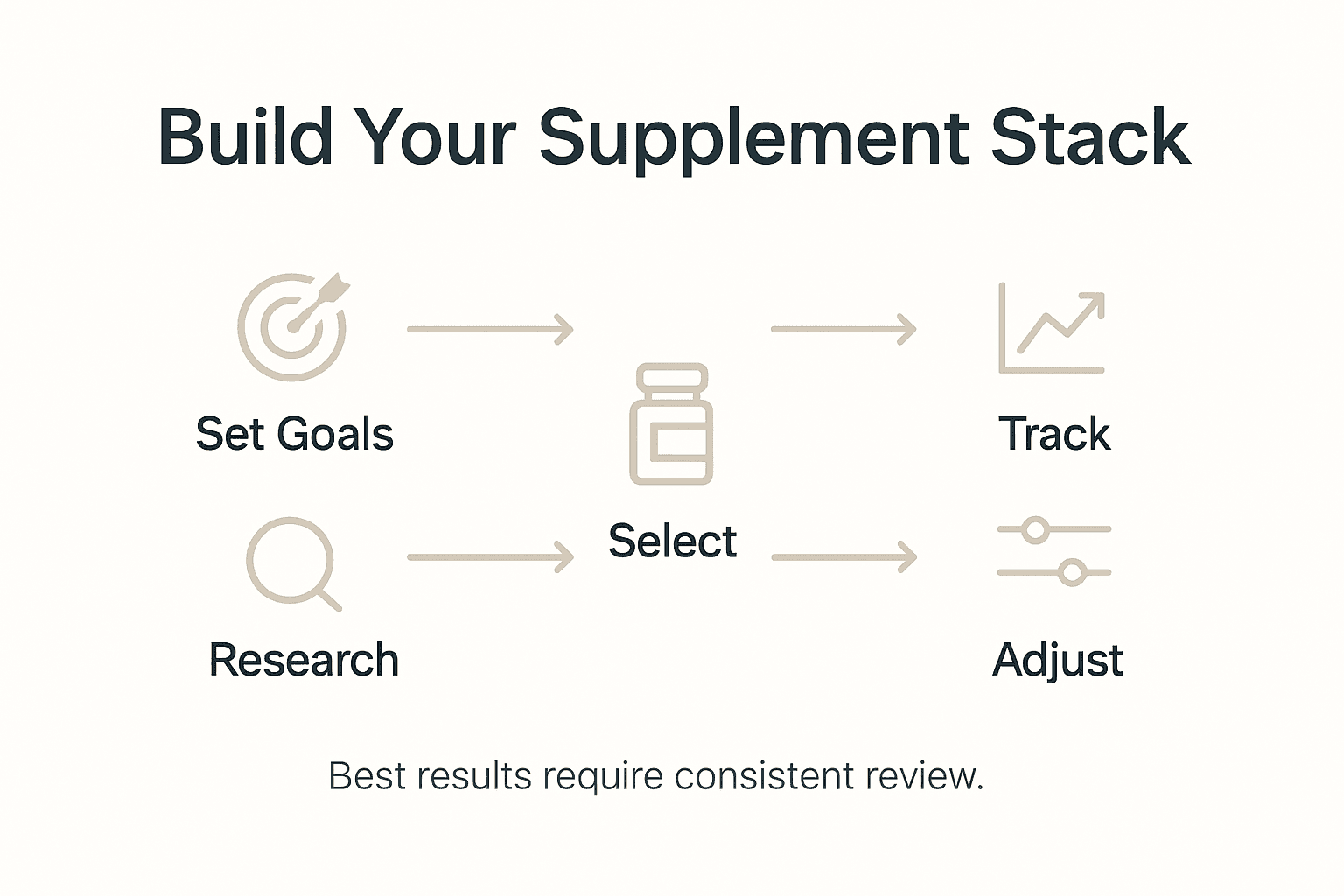
Implement a systematic approach to tracking your supplement stack’s performance using data-driven methods. This means creating a comprehensive tracking system that monitors key performance indicators such as workout intensity, recovery time, energy levels, muscle growth, and overall wellbeing. Record detailed metrics including supplement dosages, timing, and corresponding physical responses. Look for patterns of improvement or potential side effects that might suggest the need for stack modifications.
Digital tracking tools can significantly streamline your supplement optimization process. Advanced tracking platforms enable precise monitoring of supplement efficacy and potential interactions, allowing you to make informed adjustments quickly. Pay attention to subtle changes in your body such as energy fluctuations, recovery speed, muscle development, and mental clarity. Consider consulting with a sports nutritionist periodically to help interpret your tracking data and recommend evidence-based stack adjustments.
Pro tip: Use a dedicated smartphone app or spreadsheet to log daily supplement intake, workout performance, and bodily responses for comprehensive tracking.
Unlock Your Peak Performance with a Customized Supplement Stack
Struggling to build a supplement stack that truly fits your unique fitness goals can feel overwhelming. This article highlights the challenge of aligning your training type, nutritional gaps, and precise timing strategies to get the most out of your supplements. At Nutribliss, we understand your need for science-backed, high-quality products that support muscle recovery, endurance, and strength enhancement. Whether you want to optimize your protein intake, boost recovery, or maintain hydration, our Fitness Supplements and Recovery Supplements collections offer targeted solutions designed to elevate your performance.

Start your personalized supplement journey now by exploring our diverse range at Nutribliss.us. Act today to experience the benefits of carefully tailored nutrition backed by transparent ingredient profiles and lab-tested quality. Don’t wait to fuel your best self—discover supplements that match your hard work and dedication.
Frequently Asked Questions
How do I assess my fitness and nutrition goals when building a supplement stack?
To assess your fitness and nutrition goals, start by evaluating your current physical condition, training regimen, and nutritional intake. Track your diet and workout frequency for at least two weeks to identify gaps and tailor your supplement strategy accordingly.
What types of supplements should I consider for different athletic goals?
Select supplements based on your specific athletic goals, such as muscle recovery, strength enhancement, or endurance support. Different goals may require different supplements, like protein powder for recovery or creatine for strength, so tailor accordingly.
How do I determine the correct dosage and timing for my supplements?
Determine the correct dosage and timing by researching how different supplements interact with your body. For instance, consume protein powder within 30 minutes post-workout for optimal absorption, and document your intake in a journal to refine your strategy.
How can I ensure the quality and safety of my supplements?
Ensure the quality and safety of your supplements by looking for products that have been independently tested for purity and potency. Always verify certification marks and review ingredient transparency to avoid potentially harmful substances.
What methods can I use to track the effectiveness of my supplement stack?
Track the effectiveness of your supplement stack by monitoring key performance indicators like energy levels and recovery time. Keep a detailed log of your supplement intake and physical responses, and analyze the data regularly to make informed adjustments.
Do I need to consult a professional before creating my supplement stack?
Consulting a sports nutritionist can provide valuable insights tailored to your unique needs and goals. They can help assess your current fitness status, recommend appropriate supplements, and guide you through necessary testing to optimize your stack.