

For most people, whey protein concentrate is the right call. It costs less, tastes better, and delivers plenty of protein for general fitness, weight training, and everyday health goals. Choose isolate instead if you’re lactose sensitive or counting every gram of fat and carbs. Reserve hydrolysate for narrow cases: specific medical protocols or a training schedule where amino acid speed genuinely matters.
That’s the short version. Here’s the reasoning behind it:
- Concentrate wins on value and taste for most buyers, at a price commonly around one to two dollars per serving.
- Isolate strips out most lactose and fat, useful if concentrate upsets your stomach or you’re managing calories tightly.
- Hydrolysate costs more and rarely earns its premium unless a clinician or coach has a specific reason for you to use it.
Key Takeaways
Whey concentrate is the sensible default for most people, and the right upgrade to isolate or hydrolysate depends on lactose tolerance, calorie goals, or a specific medical need, not marketing claims.
| Point | Details |
|---|---|
| Default to concentrate | It offers enough protein for most goals at a lower cost per serving than isolate or hydrolysate. |
| Upgrade only for a reason | Choose isolate for lactose sensitivity or calorie control; reserve hydrolysate for narrow timing or clinical needs. |
| Calculate protein-by-weight | Divide protein grams by serving weight in grams to verify a product matches its label claim. |
| Prioritize third-party testing | Seals like NSF, Informed-Sport, or BSCG confirm purity claims an unregulated label can’t guarantee alone. |
| Nutribliss matches the checklist | Nutribliss formulas disclose protein source and protein-by-weight, meeting the same standards this guide recommends. |
Table of Contents
- How to Choose Whey Protein by Type: Concentrate, Isolate, and Hydrolysate
- Which Whey Protein Should You Buy for Your Specific Goal?
- What to Read on the Label Before You Buy
- Third-Party Testing: The Safety Signal Marketing Can’t Fake
- How Much Whey Protein Should You Take, and When?
- Who Should Talk to a Doctor Before Adding Whey Protein
- Your 5-Step Checklist for Buying Whey Protein
- Where Nutribliss Fits Into This Buying Decision
- What the Research Actually Supports, and What Gets Overhyped
- A Straightforward Way to Buy Whey Protein You Can Trust
- Sources
How to Choose Whey Protein by Type: Concentrate, Isolate, and Hydrolysate
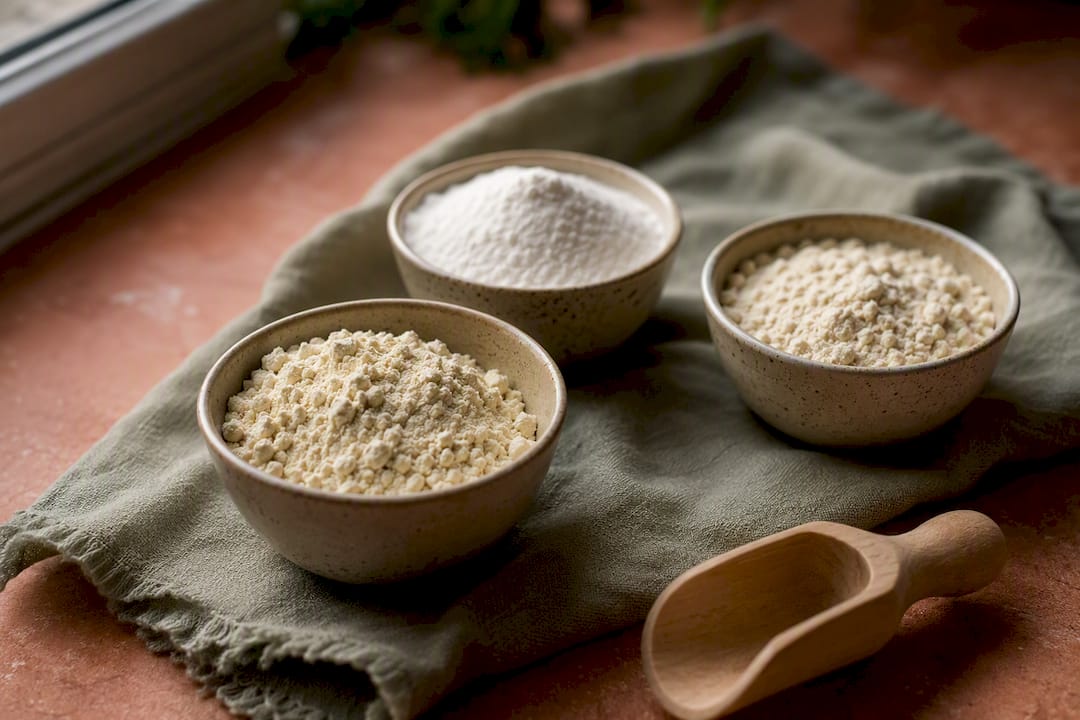
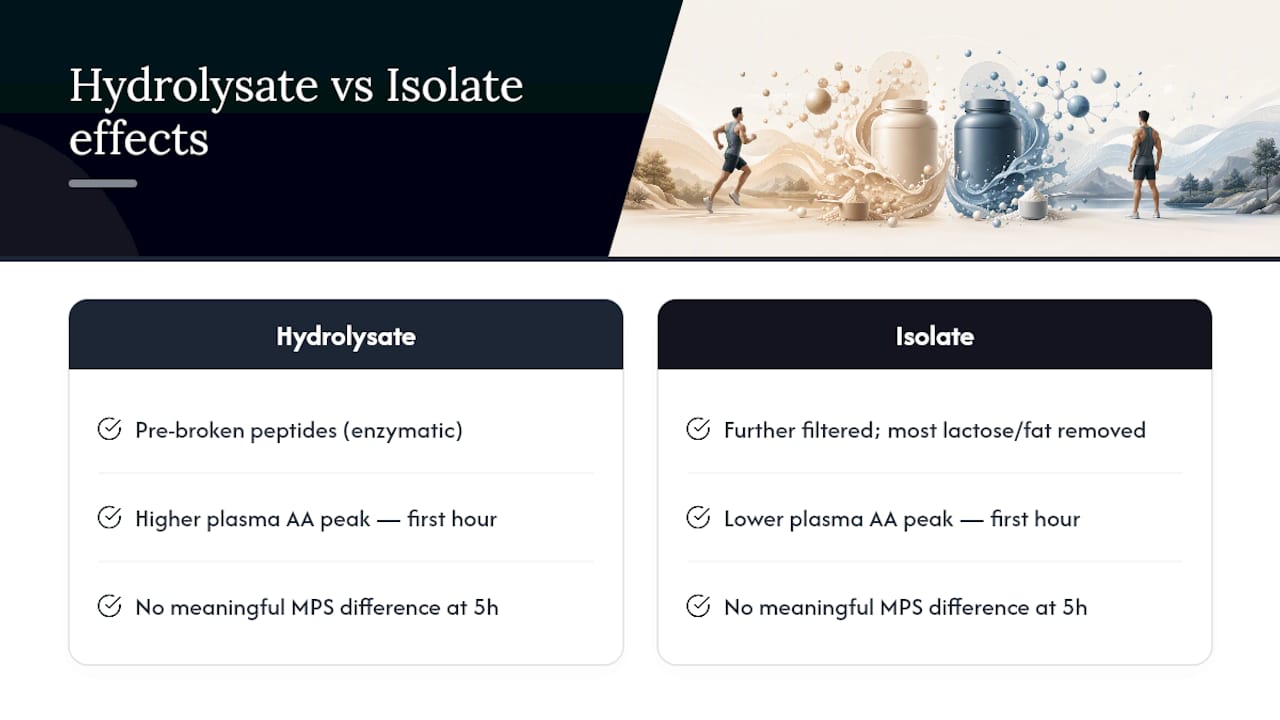
The three whey types start from the same source, cow’s milk, but differ in how much they’re processed after that. Concentrate is generally moderate in protein content with some lactose, fat, and minerals. Isolate is further filtered to increase protein concentration, removing most lactose and fat. Hydrolysate takes isolate one step further, pre-breaking the protein into smaller peptide chains through enzymatic treatment.
That extra processing on hydrolysate isn’t cosmetic. Research on absorption kinetics shows hydrolysate raises plasma amino acids to a noticeably higher peak in the first hour compared to isolate. Sounds like a clear win, until you look at what happens over a full recovery window. Infusion studies tracking five hours of muscle protein synthesis found no meaningful difference between hydrolysate and isolate once that window closes. The speed advantage is real. The practical advantage, for most training goals, isn’t.
Body composition research tells a similar story about restraint. A meta-analysis of randomized trials found whey supplementation produced a significant reduction in fat mass but didn’t consistently increase fat-free mass across every scenario studied. The effect depended heavily on which whey type was used and how active the participants were. Translation: the protein type you pick matters less than people assume. Total daily protein and training volume do more heavy lifting than the label on your tub.
One more thing to watch: label gaming. A product marketed as “isolate” can still be mostly concentrate if the manufacturer blends the two and lists concentrate first on the ingredient panel. Lab guidance on whey isolates confirms that ingredient order is a legitimate way to catch this. If “whey protein isolate” isn’t the first ingredient listed, you’re not getting what the front of the tub implies.
Pro Tip: Flip the tub around before you buy. The first ingredient listed is present in the highest amount by weight, full stop. That single check catches most marketing exaggeration before you spend a dollar.
Which Whey Protein Should You Buy for Your Specific Goal?
The right whey type depends less on brand hype and more on what you’re actually trying to accomplish. Here’s how the choice breaks down by goal:
- Building muscle. Most research points to roughly 20 to 30 grams of high-quality protein per meal to trigger a strong muscle-building response, often tied to hitting a leucine threshold. Isolate and concentrate both deliver this fine. Isolate wins if digestion or lactose gets in the way; otherwise concentrate does the job for less money.
- Losing fat. Prioritize protein density over volume. Isolate’s lower calorie and carb count per gram of protein makes portion control easier when you’re tracking a deficit. Concentrate works too, but check total calories per serving if fat mass reduction is the target.
- Meal replacement or weight gain. Neither concentrate nor isolate alone is built for this. Look for a formula that deliberately adds carbohydrates and fats, or a dedicated mass-gainer, rather than stacking extra scoops of a lean protein powder.
- Sensitive digestion. Start with concentrate. If bloating or gas shows up, step up to isolate. If isolate still causes issues, hydrolysate’s pre-digested peptides are the next logical step, though clinical guidance recommends ruling out a milk allergy first, since that’s a different problem than lactose intolerance.
What to Read on the Label Before You Buy
Ignore the front of the tub. The nutrition panel and ingredient list tell you what you’re actually buying.
Start with protein-by-weight: divide the grams of protein per serving by the total serving weight in grams.
- Check the first ingredient. It should say “whey protein isolate” or “whey protein concentrate,” not a sweetener or a filler.
- Scan for added sugars. Buyer guides commonly flag anything above 3 to 4 grams of added sugar per serving as a sign the formula is leaning on taste instead of protein quality.
- Watch for sugar alcohols and maltodextrin. These are cheap fillers that bulk up the scoop without adding protein.
- Avoid long proprietary blends. If you can’t identify a clear, singular protein source near the top of the list, treat that as a caution flag.
Mayo Clinic Press buyer guidance recommends aiming for roughly 20 to 25 grams of protein per serving with a short, legible ingredient list. That single number is the fastest sanity check you have at the shelf. If a serving delivers less protein than that while the tub is priced like a premium isolate, you’re paying for marketing, not macros.
Third-Party Testing: The Safety Signal Marketing Can’t Fake
Protein powder isn’t regulated the way prescription medication is, which means purity claims on the label are essentially self-reported. Third-party testing closes that gap by having an independent lab verify the contents match the claims and screen for contaminants like heavy metals.
Look for these certification seals specifically:
- NSF Certified for Sport screens for banned substances and is common among products marketed to competitive athletes.
- Informed-Sport runs a similar batch-testing program widely used in Europe and by international competitors.
- BSCG (Banned Substances Control Group) certifies against a broad panel of prohibited substances and contaminants.
Mayo Clinic Press guidance backs third-party testing as a meaningful purity and safety signal worth prioritizing when it’s available. Beyond the seal itself, check whether the brand publishes a Certificate of Analysis (CoA) for individual batches. A brand willing to show you the actual lab results for the batch you’re buying is signaling something a logo alone can’t.
Red flags worth walking away from: vague claims like “clinically proven” with no study cited, proprietary blends that hide exact amounts, and pricing that seems too low for the protein content claimed on the label.
How Much Whey Protein Should You Take, and When?
- Target 20 to 30 grams of protein per serving. This range shows up consistently in buyer and clinical guidance as enough to matter without excess.
- Scale your scoop size to protein density. A concentrate at 70% protein needs a slightly bigger serving than an isolate at 90% to hit the same gram target. Check the label, don’t eyeball it.
- Time it around convenience, not superstition. Post-workout use is popular and works fine, but what you eat across the whole day matters more than the 30 minute window after training. Between meals or before bed both work if total daily protein is on track.
- Adjust for your calorie goal. Cutting calories favors isolate’s lower fat and carb load; building mass favors sticking with concentrate or adding a carb source alongside your shake.
Who Should Talk to a Doctor Before Adding Whey Protein
Lactose intolerance and milk protein allergy are not the same problem, and they call for different responses.
- Lactose intolerant: switch to isolate, which strips out nearly all the lactose that triggers bloating and gas.
- Milk protein allergy: whey is a dairy protein, not a sugar, so isolate won’t solve this. Skip whey entirely and talk to a clinician about alternatives.
- Kidney disease, pregnancy, or another chronic condition: check with a doctor before adding any concentrated protein source to your diet.
- Mild stomach upset with no diagnosed condition: try isolate, cut your serving size, or take it with food before assuming whey isn’t for you.
Your 5-Step Checklist for Buying Whey Protein
- Confirm grams of protein per serving (target 20 to 30 grams).
- Calculate protein-by-weight percentage to verify the label’s claim.
- Check that the named protein source leads the ingredient list.
- Scan for added sugars, sugar alcohols, and filler ingredients.
- Look for a third-party testing seal or published Certificate of Analysis.
If you’re stuck choosing between the cheapest option and the most rigorously tested one, lean toward purity when the product will be a daily habit. A few extra dollars per tub matters less than what you’re putting in your body five times a week.
Where Nutribliss Fits Into This Buying Decision
Nutribliss builds its protein formulas around the exact checklist above: clear protein-by-weight numbers, transparent ingredient lists, and disclosed protein sources instead of vague blends.
- Deeper reading on concentrate versus isolate and hydrolyzed whey lives on the Nutribliss blog for readers who want the full technical picture. Follow #nutribliss for more label-literacy content like this.
What the Research Actually Supports, and What Gets Overhyped
Here’s where the conventional wisdom drifts from the evidence: most buying guides treat whey type as the decision that matters most, when the data says total daily protein and training consistency do more work than concentrate versus isolate versus hydrolysate. The meta-analysis on fat mass reduction backs this up. Whey helped, but the effect size was modest, and it varied by how active people already were. Protein powder is a tool that supports a plan. It isn’t the plan.
Where I’d push back hardest is on hydrolysate marketing. The 28% faster amino acid spike sounds compelling on a label, but the actual muscle protein synthesis research shows it converges with isolate within a few hours. Paying a premium for that speed only makes sense in specific clinical or timing contexts, not as a default upgrade for the average gym-goer.
What should you prioritize first? Read the ingredient list before you read the front-of-tub claims. Check protein-by-weight before you check the brand name. Everything else, flavor, mixability, packaging, is real but secondary. Get the fundamentals right and the rest is preference, not risk.
— GAURAV
A Straightforward Way to Buy Whey Protein You Can Trust
Nutribliss puts the same label transparency this guide walks through directly into its own formulas: disclosed protein sources, clear protein-by-weight numbers, and no hidden proprietary blends padding out the ingredient list.

If sleep and recovery are part of your broader fitness plan alongside your protein intake, the Nutribliss Sleep Formula Supplement rounds out a recovery stack built on the same ingredient-transparency standard. Browse the full Nutribliss lineup to see protein-by-weight numbers and sourcing details for yourself before you add anything to your cart.
Sources
- Whey protein supplementation meta-analysis (PMC6769754)
- Whey hydrolysate vs isolate vs concentrate — absorption kinetics and practical choice
- Ingredients to look for in a protein powder — Mayo Clinic Press
- How to choose the best protein powder — Cleveland Clinic