

You’ve probably heard adaptogens can cure stress, boost energy, and fix nearly everything. The truth is more nuanced and far more interesting. Not all adaptogens work the same way, and their effects are specific, measurable, and grounded in biology. This guide cuts through the hype to explain what adaptogens really are, how they help your body manage stress, and how to choose supplements that actually deliver results for your wellness and athletic goals.
Table of Contents
- What Are Adaptogens? Definitions And Core Criteria
- How Adaptogens Work: Biological Mechanisms
- Popular Adaptogens And Their Unique Effects
- Scientific Evidence And Research Limitations
- Common Misconceptions About Adaptogens
- Safety, Quality, And How To Choose Adaptogen Supplements
- Practical Applications: Enhancing Wellness And Athletic Performance
- Explore Quality Adaptogen Supplements For Your Wellness Journey
- What Are Adaptogens FAQ
Key takeaways
| Point | Details |
|---|---|
| Stress regulation | Adaptogens modulate the HPA axis and cortisol to balance your body’s response to physical and mental stress. |
| Unique benefits | Ashwagandha reduces anxiety, rhodiola fights fatigue, and American ginseng supports immune function, each with distinct mechanisms. |
| Scientific support | Evidence shows stress relief and endurance gains, but large human trials remain limited. |
| Quality matters | Look for USP or GMP certification and standardized dosing to ensure safety and effectiveness. |
| Lifestyle complement | Adaptogens enhance but never replace proper nutrition, exercise, and recovery habits. |
What are adaptogens? Definitions and core criteria
Adaptogens are natural substances that help your body adapt to stress and maintain balance. They’re not magic, and they’re not stimulants. Instead, they work by supporting your body’s existing stress response systems to function more efficiently.
To qualify as an adaptogen, a substance must meet three essential criteria. Adaptogens must be nontoxic at normal doses, support the body’s stress coping ability, and help the body return to homeostasis by normalizing either underactive or overactive stress responses. This regulatory function distinguishes them from general herbs or supplements that simply add nutrients or stimulate specific pathways.
Adaptogens have been used for centuries in Ayurvedic and Chinese medicine, but they only gained scientific framing in the 1950s through Soviet research aimed at increasing soldiers’ resistance to stress. Today, these compounds are studied for their potential to support athletes, busy professionals, and anyone managing chronic stress.
Key characteristics that define adaptogens:
- They produce minimal side effects at recommended doses, making them safe for long term use.
- They increase resistance to physical, chemical, and biological stressors without targeting one specific organ.
- They normalize physiological functions regardless of whether stress causes underactivity or overactivity.
- They work gradually over time rather than providing instant stimulation or sedation.
Understanding these criteria helps you distinguish genuine adaptogens from products marketed with misleading claims. Not every herb labeled as adaptogenic meets the scientific standard, which is why quality and transparency matter when selecting supplements.
How adaptogens work: biological mechanisms
Adaptogens support the body’s stress response by modulating the hypothalamic-pituitary-adrenal (HPA) axis, which orchestrates how your body releases stress hormones like cortisol. When the HPA axis functions smoothly, you experience balanced energy, stable mood, and resilient immune function. When it’s dysregulated, you feel fatigued, anxious, or struggle to recover from workouts.

Adaptogens don’t suppress or stimulate the HPA axis directly. Instead, they help normalize cortisol and neurotransmitter levels to restore equilibrium. For example, ashwagandha has been shown in animal models to reduce urinary markers of stress and mitigate corticosterone rise under chronic stress, indicating it can lower physiological stress indicators when they’re elevated.
Some adaptogens work by influencing neurotransmitter activity in the brain. Rhodiola can reduce levels of epinephrine and increase norepinephrine and serotonin, which improves mood, sharpens focus, and builds stress resilience. These changes happen at the cellular level, affecting how neurons communicate and how your brain interprets stressful situations.
Key mechanisms adaptogens use:
- Cortisol modulation to prevent excessive stress hormone spikes or prolonged elevation.
- Neurotransmitter regulation to balance mood, energy, and cognitive performance.
- Cellular protection through antioxidant activity that reduces oxidative stress damage.
- Immune system support by reducing inflammation and enhancing adaptive immunity.
Pro Tip: Adaptogens need consistent use over several weeks to show their full effects. They build resilience gradually rather than providing immediate relief, so patience and regular dosing are essential for results.
This gradual action complements other wellness strategies, like optimizing magnesium intake for athletic performance, which also supports stress management and muscle recovery.
Popular adaptogens and their unique effects
While all adaptogens share core stress regulating properties, each offers distinct benefits that make them suitable for different goals. Understanding these differences helps you choose the right adaptogen for your specific needs.
American ginseng is known to support the immune system, reduce inflammation, regulate dopamine, and improve mood under stress. It’s particularly valued for cognitive support and immune resilience during cold months or periods of high physical demand.
Ashwagandha stands out for anxiety reduction and metabolic balance. It helps lower cortisol levels in stressed individuals, supports thyroid function, and reduces markers of inflammation. Many athletes use it to improve recovery and manage training stress.
Rhodiola rosea is known to fight fatigue and improve mental performance, especially under cold and stressful conditions. It enhances focus, reduces mental fog, and supports endurance during prolonged physical or cognitive tasks.
| Adaptogen | Primary Benefits | Common Forms | Typical Dosage |
|---|---|---|---|
| American Ginseng | Immune support, dopamine regulation, mood | Capsules, teas | 200-400 mg daily |
| Ashwagandha | Anxiety reduction, cortisol control, inflammation | Capsules, powders | 300-600 mg daily |
| Rhodiola | Mental focus, fatigue reduction, endurance | Capsules, extracts | 200-600 mg daily |
| Holy Basil | Antioxidant support, blood sugar balance | Teas, capsules | 300-600 mg daily |
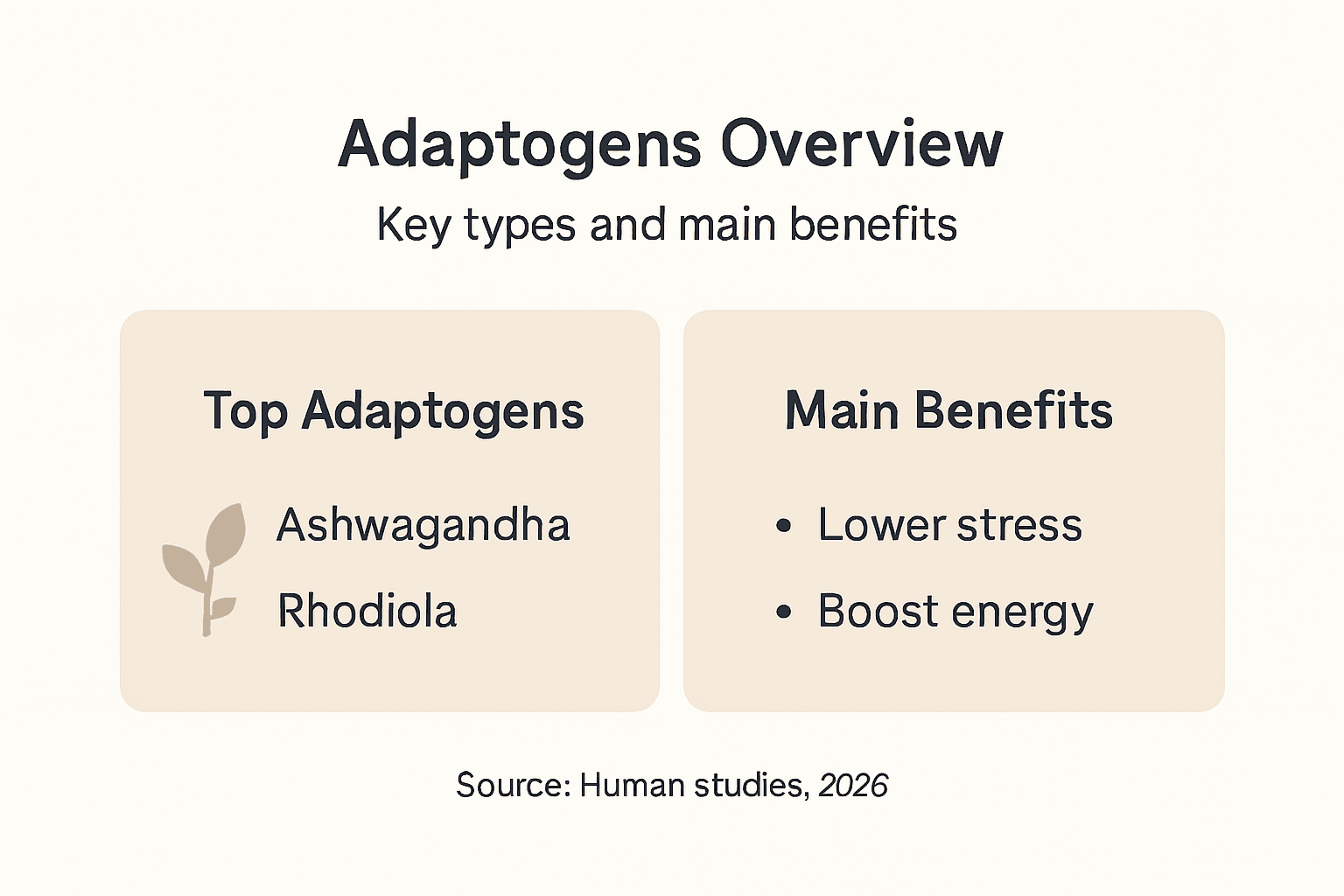
Adaptogens come in various forms including capsules, powders, teas, and liquid extracts. Capsules offer convenience and precise dosing, while powders can be mixed into smoothies or drinks. Teas provide a gentler, more traditional approach but may contain lower active compound concentrations.
Choosing the right adaptogen depends on your primary goal. If you’re an athlete looking to manage training stress and improve recovery, ashwagandha or rhodiola may be ideal. If you need cognitive support during busy work periods, rhodiola or American ginseng could be better fits. Exploring essential supplements for athletes can help you build a complete performance nutrition strategy.
Scientific evidence and research limitations
Large scale human clinical trials on adaptogens are scarce, and many existing studies use small cohorts or animal models, limiting definitive conclusions about efficacy in humans. This doesn’t mean adaptogens lack value, but it does mean we should interpret claims carefully and maintain realistic expectations.
The available evidence is promising. Adaptogens show potential in reducing cortisol levels and balancing the stress response, which may improve memory, reduce fatigue, and enhance endurance in stressed individuals. Studies on ashwagandha consistently show cortisol reduction and anxiety improvement in human subjects, while rhodiola research demonstrates fatigue reduction and mental performance gains.
However, several factors complicate research interpretation:
- Standardized dosing is uncommon across studies, making direct comparisons difficult.
- Many products combine multiple adaptogens, making it hard to isolate individual effects.
- Study durations vary widely, from a few weeks to several months.
- Placebo effects can be significant when measuring subjective outcomes like stress and fatigue.
Despite these limitations, the existing body of research supports several key conclusions. Adaptogens appear most effective for individuals experiencing moderate to high stress levels. They show promise for improving physical endurance and mental clarity under demanding conditions. They generally produce minimal side effects at recommended doses.
Adaptogens may also provide mild cognitive benefits similar to nootropics and cognitive enhancement compounds, though the mechanisms differ. While nootropics often target neurotransmitter pathways directly, adaptogens work through broader stress response modulation.
The bottom line is that current evidence suggests adaptogens offer real benefits for stress management and performance, but more rigorous, large scale human trials are needed to fully understand their optimal use, long term effects, and efficacy across different populations.
Common misconceptions about adaptogens
Common misconceptions include the beliefs that all adaptogens work the same, that they cure chronic diseases, or that all products on the market are equally effective and safe. Let’s address the most frequent myths to help you form realistic expectations.
-
All adaptogens have identical effects. Each adaptogen has unique mechanisms and benefits. Ashwagandha excels at anxiety reduction, rhodiola at fatigue fighting, and American ginseng at immune support. Treating them as interchangeable ignores their distinct properties.
-
Adaptogens cure chronic diseases. No scientific evidence supports this claim. Adaptogens support stress response and may improve symptoms related to stress, but they don’t treat or cure conditions like diabetes, heart disease, or autoimmune disorders.
-
All adaptogen supplements are standardized and safe. Quality varies enormously across brands. Many products contain doses too low to be effective, lack proper testing, or use poor quality raw materials. Third party certification and transparent labeling are essential.
-
Adaptogens provide immediate effects. Benefits develop gradually over weeks of consistent use. They build resilience rather than providing instant energy or calm. Expecting immediate results leads to disappointment and premature discontinuation.
-
Adaptogens can replace lifestyle changes. They complement but never replace proper nutrition, adequate sleep, regular exercise, and stress management techniques. Think of them as support tools, not magic solutions.
Understanding these realities helps you use adaptogens effectively and avoid disappointment. They’re valuable tools when integrated into a comprehensive wellness strategy, but they work best when your expectations align with scientific evidence.
Safety, quality, and how to choose adaptogen supplements
Adaptogens are generally safe with mild effects but supplements vary widely in quality, with many products containing low doses and lacking quality certifications like USP or GMP. This variability makes careful selection critical for both safety and effectiveness.
Consumers should prioritize adaptogen supplements with verified manufacturing practices, standardized active ingredient levels, and established dosages to ensure effectiveness and safety. Look for products that clearly state the amount of active compounds, not just the total herb weight.
Key quality indicators to look for:
- Third party testing by organizations like USP, NSF, or ConsumerLab.
- GMP certification indicating the manufacturer follows good manufacturing practices.
- Transparent labeling that lists standardized extract percentages and active compounds.
- Clear dosage instructions based on clinical research.
- Batch testing results available on request or via QR code.
Avoid products that make exaggerated claims, lack clear ingredient information, or come from manufacturers without established reputations. The supplement industry remains loosely regulated in the U.S., making due diligence essential.
Consult a healthcare provider before starting adaptogens, especially if you take medications, have chronic health conditions, or are pregnant or nursing. Some adaptogens can interact with blood thinners, thyroid medications, or immunosuppressants.
Pro Tip: Choose reputable brands with positive third party reviews and visible certifications. Paying slightly more for verified quality often means the difference between effective supplementation and wasted money.
Understanding supplement regulation and safety standards helps you navigate the market with confidence. For those ready to start, exploring trusted adaptogen supplements with transparent manufacturing and testing can provide peace of mind.
Practical applications: enhancing wellness and athletic performance
Adaptogens fit naturally into wellness and athletic performance routines when used strategically. They may reduce stress and fatigue during intense training cycles, helping your body adapt to increased physical demands without excessive cortisol elevation.
Athletes often experience significant stress from training volume, competition pressure, and recovery demands. Adaptogens like ashwagandha and rhodiola may improve cognitive focus and mental endurance, which translates to better training quality and competition performance. They support the body’s natural recovery processes rather than artificially stimulating energy.
For busy professionals managing work stress alongside fitness goals, adaptogens offer a way to maintain balance. They should be integrated as part of a holistic wellness routine that includes proper nutrition, adequate sleep, and regular exercise. No supplement can compensate for poor lifestyle habits.
Practical application examples:
- Morning rhodiola dose before demanding work or training days to enhance focus and reduce mental fatigue.
- Evening ashwagandha to support cortisol normalization and improve sleep quality after stressful days.
- American ginseng during cold months or high stress periods to bolster immune function.
- Consistent daily dosing rather than sporadic use to build cumulative resilience over time.
Timing matters less than consistency. Most adaptogens work through gradual system modulation rather than acute effects, so taking them at the same time daily helps maintain steady support.
Combining adaptogens with other essential supplements for athletes creates synergistic benefits. For example, pairing adaptogens with proper electrolyte balance and protein intake supports comprehensive performance optimization. Understanding functional nutrition for athletic performance helps you design an integrated approach.
The benefits of magnesium for athletes complement adaptogen use, as both support stress response, muscle recovery, and sleep quality. This layered approach addresses multiple aspects of health and performance simultaneously.
Explore quality adaptogen supplements for your wellness journey
Now that you understand how adaptogens work and what to look for in quality supplements, you’re ready to make informed choices. NutriBliss offers carefully curated adaptogen supplements with verified manufacturing standards and transparent dosing, taking the guesswork out of selection.
Our selection includes high quality ashwagandha formulations designed to support stress management and athletic recovery. Each product undergoes rigorous testing to ensure purity, potency, and safety. We prioritize supplements with standardized active compound levels, so you know exactly what you’re getting with every dose.
Explore our essential supplements for athletes to see how adaptogens fit into a comprehensive performance nutrition plan. Our educational resources, including supplement safety guidelines, help you make confident decisions about your wellness strategy.
Pro Tip: Combining adaptogens with other foundational supplements like magnesium, protein, and electrolytes creates synergistic benefits that support balanced athletic performance and recovery more effectively than any single supplement alone.
Ready to take the next step? Browse our supplement collections to find the right products for your goals, or sign up for expert guidance on building a personalized supplementation plan that enhances your wellness and fitness outcomes.
What are adaptogens FAQ
What makes a substance an adaptogen?
A substance qualifies as an adaptogen when it meets three criteria: it must be nontoxic at normal doses, support the body’s ability to cope with stress, and help restore homeostasis by normalizing either excessive or insufficient stress responses. This regulatory function distinguishes adaptogens from stimulants or sedatives that push the body in one direction.
Are adaptogens safe to take daily?
Most adaptogens are safe for daily use at recommended doses and produce minimal side effects. However, quality varies significantly across products, so choosing supplements with third party testing and proper certifications is essential. Always consult a healthcare provider before starting any new supplement, especially if you take medications or have health conditions.
Can adaptogens help improve athletic performance?
Adaptogens may support athletic performance indirectly by helping your body manage training stress, improve recovery, and maintain mental focus during demanding periods. They work best as part of a comprehensive approach that includes proper nutrition, adequate sleep, and smart training programming rather than as standalone performance enhancers.
How soon can I expect results from adaptogen supplements?
Adaptogens build resilience gradually rather than providing immediate effects. Most people notice benefits after two to four weeks of consistent daily use, though individual responses vary. They work by supporting long term system balance, so patience and regular dosing are essential for optimal results.
Do all adaptogens have the same effects?
No, each adaptogen has unique mechanisms and benefits. Ashwagandha excels at reducing anxiety and cortisol, rhodiola fights mental fatigue and improves focus, and American ginseng supports immune function and mood. Choosing the right adaptogen depends on your specific wellness and performance goals.