

Zincovit is used mainly to correct vitamin and mineral shortfalls and to give the immune system extra backing during recovery, growth spurts, or plain poor eating. It’s an over-the-counter multivitamin, multimineral tablet built around zinc, several B vitamins, vitamin C, and antioxidant compounds like grape seed extract. People generally reach for it for a handful of specific reasons:
- Correcting diagnosed or suspected nutrient gaps (zinc, B12, folic acid, and others)
- Supporting immune defenses during cold and flu season or after an infection
- Backing energy production and red blood cell formation
- Providing antioxidant support against everyday cellular stress
- Aiding recovery after illness, surgery, or a stretch of poor appetite
The catch is that Zincovit works best when it’s filling an actual gap. If your diet already covers your micronutrient needs, adding another multivitamin on top mostly produces expensive urine, not a noticeable boost. The real value shows up when it’s paired with a deficiency, a recovery period, or a nutrition plan that has a real hole in it.
Key Takeaways
Zincovit is used to correct vitamin and mineral deficiencies and support immune function, and it works best when an actual nutritional gap exists rather than as a blanket daily add-on.
| Point | Details |
|---|---|
| Primary use | Corrects documented vitamin/mineral gaps and supports immune function during recovery or poor intake. |
| Typical dosing | One tablet daily after food; avoid stacking with other multivitamins without medical advice. |
| Main safety warning | Long-term excess zinc intake can lead to copper deficiency; stop and seek care for allergic reactions. |
| Who should consult a clinician first | Pregnant or breastfeeding women, children, kidney disease patients, and anyone on chemotherapy or multiple prescriptions. |
| Realistic expectations | Benefits appear over weeks to months and are strongest when correcting an actual deficiency, not as a general fix. |
| Where to compare options | Nutribliss offers transparent, ingredient-forward multivitamin formulations for readers evaluating alternatives. |
Table of Contents
- Why Is Zincovit Tablet Used: The Core Reasons Explained
- What’s Inside a Zincovit Tablet?
- What Are the Real Benefits of Taking Zincovit?
- How Should You Take Zincovit Tablets?
- What Are the Side Effects and Risks of Zincovit?
- Drug Interactions and Who Needs Extra Caution
- Who Should Take Zincovit, and Who Should Ask a Doctor First?
- What Does the Research Actually Support?
- When I’d Actually Recommend a Multivitamin Like Zincovit
- A Transparent Multivitamin Option Worth Considering
- Sources
Why Is Zincovit Tablet Used: The Core Reasons Explained
The short answer to “why is Zincovit tablet used” comes down to two overlapping goals: filling nutritional gaps and giving the immune system the raw materials it needs to function. Zincovit is commonly prescribed for immune deficiency disorders, loss of appetite, fatigue, and confirmed zinc deficiency, which tells you a lot about who typically ends up taking it. It’s not marketed as a cure for anything. It’s a supplement meant to plug holes that diet alone isn’t filling.
Doctors and pharmacists tend to recommend it in a few recurring situations: after a bout of illness that wrecked someone’s appetite, during recovery from surgery, for older adults whose diets have narrowed over the years, or for anyone whose bloodwork shows low zinc or B-vitamin levels. It also shows up as a general-purpose multivitamin for people whose meals are inconsistent, whether that’s from a demanding work schedule, a restrictive diet, or just not eating enough variety.
What makes Zincovit slightly different from a basic multivitamin is the inclusion of grape seed extract alongside the standard vitamin and mineral lineup. That antioxidant addition is part of why the product gets marketed around both deficiency correction and general cellular protection, not just one or the other.
What’s Inside a Zincovit Tablet?
Ingredient amounts vary somewhat by market and packaging, but most Zincovit formulations build around a core set of vitamins, minerals, and one plant-based antioxidant. Here’s a typical breakdown based on commonly listed formulations:
Each nutrient group does a distinct job. Zinc is central to immune cell signaling, which is why Zincovit’s ingredient profile leans so heavily on it. Vitamin C doesn’t just act as an antioxidant. It also improves how well your gut absorbs non-heme iron from food, which matters if you’re also dealing with borderline iron levels. The B-complex vitamins are the workhorses behind converting food into usable energy, and low levels of B12 or folic acid specifically show up as fatigue and poor red blood cell production. Grape seed extract rounds things out with polyphenol compounds that some small studies link to antioxidant and anti-inflammatory effects, though that evidence is limited and shouldn’t be read as a replacement for standard medical care.

One practical note: formulations differ by country and even by package size within the same brand. Always check the label on the box in front of you rather than assuming every Zincovit tablet matches the list above exactly.
What Are the Real Benefits of Taking Zincovit?
The benefits people associate with Zincovit tablets track closely with its ingredient list, and most of them make sense once you understand what each nutrient does on its own. Here’s how the main claims break down:
- Immunity support: Zinc plays a direct role in how immune cells develop and communicate, and Zincovit is positioned to help reduce the frequency of infections when zinc status is low to begin with.
- Antioxidant protection: Vitamin C, vitamin E, and grape seed extract work together to neutralize oxidative stress, the kind of cellular wear and tear linked to aging and chronic illness.
- Energy and reduced fatigue: B-complex vitamins are essential cofactors in turning carbohydrates, fats, and protein into usable energy, so a deficiency here often shows up as tiredness that doesn’t improve with sleep.
- Red blood cell formation and iron absorption: Folic acid and B12 support the production of healthy red blood cells, while vitamin C improves how efficiently the body absorbs dietary iron.
- Skin, hair, and vision support: Vitamin A, vitamin E, and biotin contribute to skin repair, hair strength, and healthy vision, particularly when those nutrients were previously running low.
- Nervous system support: B-complex vitamins support nerve signaling and cognitive function, which is part of why B-vitamin deficiency is linked to brain fog and irritability.
- Wound healing and recovery: Zinc and grape seed extract both show up in recovery-focused benefit lists for people healing from surgery or illness.
Here’s the honest limit on all of this: these benefits are strongest, and most noticeable, when you’re correcting an actual deficiency. Multivitamins are not proven to cure infections, prevent chronic disease, or outperform a balanced diet. If your levels are already normal, taking more zinc or more vitamin C isn’t likely to make you feel sharper or get sick less often. Response also varies quite a bit person to person, depending on your baseline nutrition, gut absorption, and overall health.
How Should You Take Zincovit Tablets?
Most product labels recommend a simple regimen, and sticking to it matters more than people expect.
| Detail | Recommendation |
|---|---|
| Typical adult dose | One tablet daily |
| Route | Oral |
| Timing | After food, to reduce stomach upset |
| Duration | As advised by a clinician or product label; not indefinite without reassessment |
Taking Zincovit after a meal isn’t just a habit some pharmacist made up. Zinc in particular can irritate an empty stomach, and food helps buffer that. If you’re also taking high-dose calcium or iron supplements, space them out from your Zincovit dose by a couple of hours. Calcium and zinc compete for the same absorption pathways in the gut, so taking them together can blunt how much of each your body actually absorbs.
If you miss a dose, just take the next one at the regular time. Don’t double up to make up for it. And avoid stacking Zincovit on top of another multivitamin without checking with a doctor first. Overlapping products are one of the more common ways people accidentally push certain nutrients, especially zinc, past safe limits.
Pro Tip: If you’re taking Zincovit alongside a separate zinc or magnesium supplement, read both labels side by side before you start. Overlapping mineral doses are the most common way people unknowingly exceed the tolerable upper limit for zinc.
What Are the Side Effects and Risks of Zincovit?
Most people tolerate Zincovit without issue, but side effects do happen, and knowing the difference between “mild and expected” versus “stop and call a doctor” matters.
| Severity | Symptoms |
|---|---|
| Common, mild | Nausea, stomach upset, bitter or metallic taste, mild insomnia |
| Less common | Allergic skin rash, headache, mild dizziness |
| Rare but serious | Severe allergic reaction, signs of copper deficiency, neurological symptoms from long-term zinc excess |
Nausea and general stomach upset are the most frequently reported issues, and they usually improve if you take the tablet with a proper meal instead of on an empty stomach. Skin rash is less common but worth watching for, especially in the first week or two of use.
Stop taking Zincovit and seek medical care if you notice: swelling of the face or throat, difficulty breathing, persistent vomiting or diarrhea, unusual fatigue combined with numbness or tingling, or any signs that suggest a serious allergic reaction. These are uncommon, but they’re not the kind of thing to wait out.
There’s also a longer-term consideration worth knowing about: chronically high zinc intake, especially well above the recommended upper limit, is associated with copper deficiency. Copper and zinc compete for absorption, and years of excess zinc without matching copper intake can cause its own set of neurological and blood-related problems. This is one more reason daily dosing should stay at the recommended amount rather than being self-escalated.
Drug Interactions and Who Needs Extra Caution
Zincovit’s mineral content, especially zinc, can interfere with how certain medications work. A few interactions are worth flagging before you start:
- Antibiotics: Zinc can bind to certain antibiotics, including fluoroquinolones (like ciprofloxacin) and tetracyclines, reducing how well your body absorbs them. Spacing doses several hours apart usually solves this.
- Levothyroxine: Mineral supplements, including zinc and calcium, can interfere with thyroid medication absorption if taken too close together.
- Iron supplements: While vitamin C helps iron absorption, taking separate iron and zinc supplements at the same time can cause the two minerals to compete for uptake.
- Chelating agents and certain chronic medications: These can alter how minerals are processed and cleared from the body, which is a conversation worth having with a prescribing doctor.
If you have chronic kidney disease, talk to your nephrologist before starting Zincovit or any mineral-heavy multivitamin. Impaired kidneys have a harder time clearing excess minerals, which raises the risk of accumulation and toxicity over time. Regular monitoring may be appropriate if a kidney specialist does approve supplementation.
One question that comes up often: does Zincovit contain vitamin B12, and will it raise low B12 levels? Yes, Zincovit does include B12 as part of its B-complex content. However, here’s the nuance: it will only meaningfully raise B12 levels in someone who’s actually deficient. If your B12 is already in a normal range, adding more through a daily multivitamin isn’t going to push it higher in any way that matters clinically. This is a common misunderstanding, and it applies to most of the nutrients in the tablet, not just B12.
Who Should Take Zincovit, and Who Should Ask a Doctor First?
Zincovit tends to make the most sense for people with a clear, identifiable reason to need it. That includes anyone eating a limited or inconsistent diet, someone recovering from a recent illness or surgery, older adults whose appetite and nutrient absorption have declined with age, and people with lab-confirmed deficiencies in zinc, B12, or folic acid. Growing teenagers and people under physically demanding conditions sometimes fall into this category too, since their nutrient needs run higher than average.
On the other side, a few groups should check with a clinician before starting. Pregnant and breastfeeding women should only use Zincovit if a doctor specifically recommends it, since nutrient needs and safe upper limits shift significantly during pregnancy. Young children generally need pediatric-specific dosing rather than an adult multivitamin. Anyone managing chronic kidney disease, taking multiple prescription medications, or undergoing chemotherapy also needs medical guidance first; certain vitamins and minerals can interfere with cancer treatment protocols, and it’s worth reviewing which vitamins to avoid during chemotherapy with an oncology team before adding any supplement to the mix.
The quick self-check: if you have a diagnosed deficiency, a recent illness, or a diet that’s genuinely thin on variety, Zincovit likely fits. If you’re pregnant, on multiple medications, managing kidney disease, or under 12, get a professional opinion first rather than guessing.
What Does the Research Actually Support?
The evidence behind Zincovit’s core ingredients is solid on an individual basis. Zinc’s role in immune cell function is well established, vitamin C’s effect on iron absorption is well documented, and B-vitamin deficiency’s link to fatigue is uncontroversial. Where the evidence gets thinner is on the combination product itself: most of what backs Zincovit specifically comes from ingredient-level science and manufacturer or pharmacy product pages rather than large clinical trials on the finished tablet. The antioxidant and anti-inflammatory properties tied to grape seed extract are a good example: promising in smaller studies, but not a substitute for standard medical treatment.
Realistically, if you’re correcting a true deficiency, you might notice improved energy or fewer minor infections within a few weeks to a couple of months. If you’re taking it as general insurance without an actual gap to fill, don’t expect a dramatic before-and-after. Supplements work best as a complement to good nutrition, not a replacement for it, and pairing consistent use with a protein-adequate diet and steady sleep does more for recovery than the tablet alone ever will.
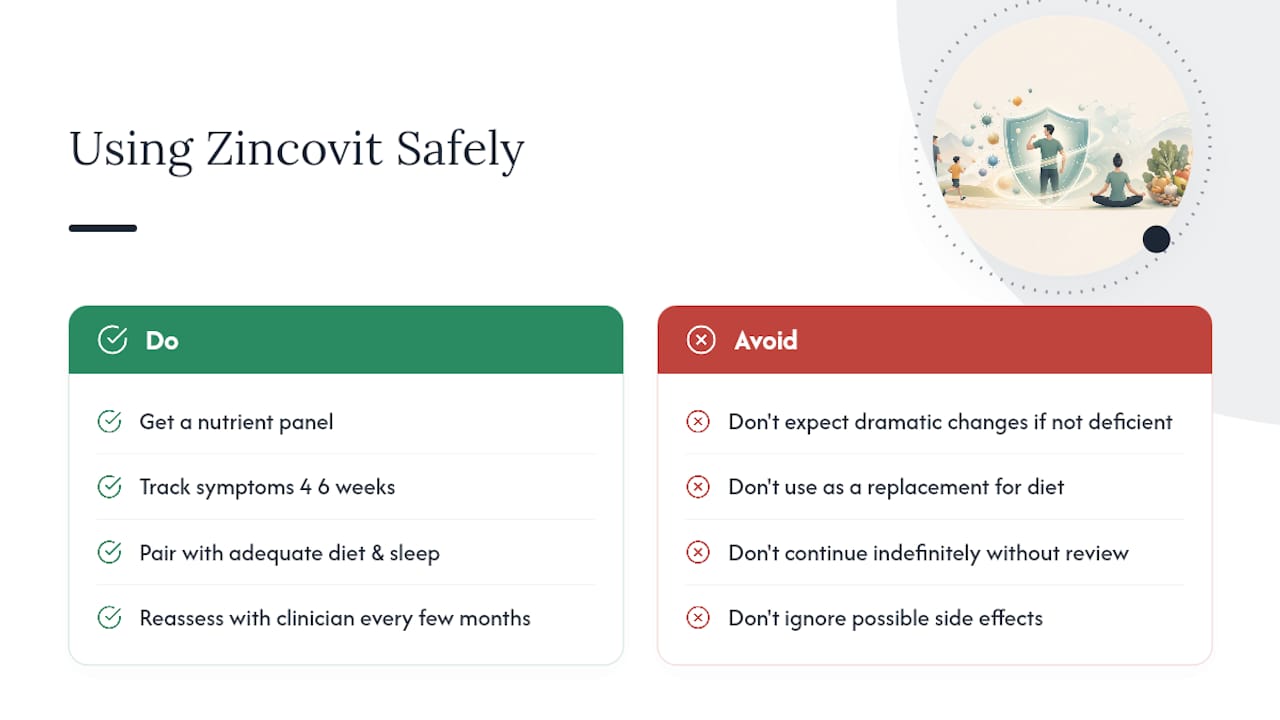
Pro Tip: Before committing to months of daily use, ask your doctor for a basic nutrient panel, zinc, B12, and vitamin D are common ones. It’s a cheap way to confirm you actually need what’s in the bottle. If you do start, track how you feel over 4 to 8 weeks and share those notes at your next checkup. Consistency matters more than the supplement itself, something the #nutribliss community hears from us often.
If Zincovit becomes part of a longer routine, treat it the same way you’d treat any daily habit worth keeping. Take it at the same time each day, watch for any of the side effects covered earlier, and reassess with a clinician every few months rather than continuing indefinitely on autopilot.
When I’d Actually Recommend a Multivitamin Like Zincovit
Based on how the evidence lines up, I’d point someone toward a product like Zincovit in a few specific scenarios: a documented deficiency on a recent lab panel, a stretch of recovery after surgery or illness where appetite and intake have dropped, or an older adult whose diet has narrowed over the years without them fully realizing it. I would not recommend it as a blanket “just in case” pill for someone already eating a varied, nutrient-dense diet. That’s where multivitamins earn their reputation as unnecessary.
My actual recommendation is simple: get a basic nutrient panel first if you can, take one tablet daily after food if you and your doctor decide it makes sense, and treat it as a support tool rather than a fix. Supplementation has real limits. It corrects gaps; it doesn’t outperform a genuinely good diet or substitute for medical treatment when something more serious is going on.
A Transparent Multivitamin Option Worth Considering
If you’ve read this far, you already know the honest version of the story: multivitamins work best when they’re solving a real problem, not papering over a diet that just needs more attention. Nutribliss builds its multivitamin formulas around that same principle, clear ingredient lists, no proprietary blends hiding actual amounts, and formulations designed to support real nutritional gaps rather than promise miracles.

If you want to see how a well-formulated multivitamin lines up ingredient-for-ingredient, check the science behind our formulations or browse the full supplement collection to compare options against what you’re currently taking. And if you’re still narrowing down whether zinc alone might cover your needs, our guide to choosing a zinc supplement walks through what to look for on a label. Whatever you land on, talk to your doctor before starting anything new, especially if you’re managing an existing condition or taking prescription medication.
Sources
- Zincovit
- Zincovit Tablet with Multivitamin, Multimineral & Grape …
- Zincovit Tablet 15: Uses, Side Effects, Price & Substitutes
- Zincovit Tablet: Uses, Benefits, Side-Effects And More | Credihealth
- What Are The Benefits Of Using Zincovit Tablets?