

TL;DR:
- Impact Whey Isolate is a highly purified dairy protein powder containing at least 90% protein, quickly absorbed after workouts. It is ideal for muscle recovery, calorie control, and lactose intolerance, though it lacks some bioactive compounds found in concentrate. Both whey isolate and concentrate produce similar muscle gains when daily protein intake remains the same.
Impact Whey Isolate is defined as a premium whey protein powder containing ≥90% protein by dry weight, processed through multi-step filtration to remove fat, lactose, and carbohydrates. The industry standard term is whey protein isolate, and products like MyProtein Impact Whey Isolate represent the most recognized versions on the market. This form of whey is rapidly absorbed within 30–90 minutes post-exercise, making it one of the most efficient proteins for muscle recovery. Third-party certifications from organizations like Informed Choice and NSF verify label accuracy and confirm the absence of banned substances.
What is impact whey isolate? nutrition and composition
Impact Whey Isolate earns its “premium” label from one defining characteristic: protein density. At 90–95% protein by weight, a single 30g serving typically delivers 25–27g of protein with less than 1g of fat and under 2g of carbohydrates. That ratio is difficult to match with any other dairy-derived protein source.
The amino acid profile is where whey isolate truly separates itself. It is rich in all nine essential amino acids, with a particularly high concentration of leucine. Leucine is the primary trigger for muscle protein synthesis, the biological process that repairs and builds muscle tissue after training. Without adequate leucine, the anabolic signal stays weak regardless of total protein consumed.
The filtration process behind this purity involves microfiltration, ultrafiltration, or ion exchange technology. Each method strips away fat and lactose while preserving the protein structure. The result is a powder that delivers maximum protein per calorie, which matters most for athletes tracking macros or individuals managing calorie intake tightly.
Typical Nutrition Comparison: Impact Whey Isolate vs. Whey Concentrate
| Nutrient | Whey Isolate (per 30g) | Whey Concentrate (per 30g) |
|---|---|---|
| Protein | 25–27g (≥90%) | 21–24g (~80%) |
| Fat | <1g | 1.5–3g |
| Carbohydrates | <2g | 3–5g |
| Lactose | Trace to none | 3–5g |
| Calories | 110–120 kcal | 120–140 kcal |
Pro Tip: Mix your isolate with cold water first, then add ice. Cold liquid reduces clumping and improves texture since isolate powders lack the fat and carbohydrate content that helps concentrate dissolve more easily.
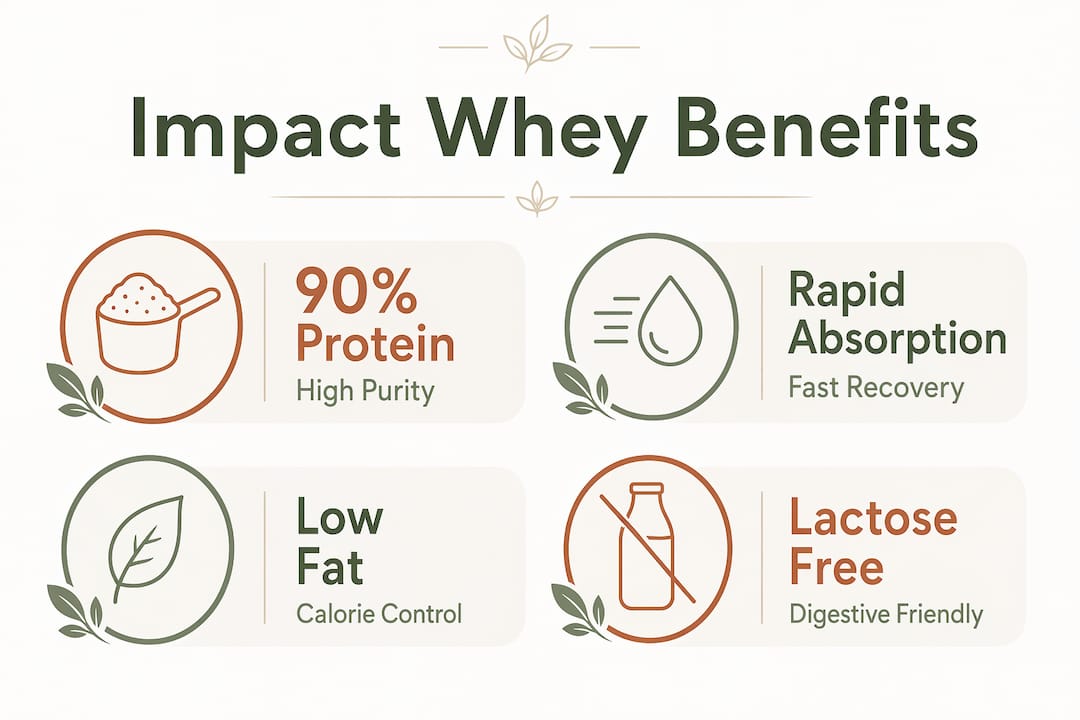
How does whey isolate compare to whey concentrate?
The whey isolate vs concentrate debate comes down to three variables: protein purity, cost, and bioactive compound content. Isolate wins on purity. Concentrate wins on cost and retained bioactives.
Whey concentrate typically delivers around 80% protein by weight, compared to the 90–95% found in isolate. That 10–15% gap sounds small, but it adds up meaningfully when you are consuming two servings per day over months. The extra calories from fat and carbohydrates in concentrate can push someone over their daily target without them realizing it.
The trade-off that rarely gets discussed is immunoglobulin content. Highly refined isolates may lose immunoglobulins and growth factors present in concentrate. These compounds support immune function and gut health. For a competitive athlete focused purely on muscle output, this loss is minor. For someone using protein supplementation during illness recovery or gut repair, it matters more.
Here is a direct breakdown of the key differences:
- Protein content: Isolate delivers 90–95% vs. concentrate at approximately 80%
- Lactose: Isolate contains virtually none; concentrate retains 3–5g per serving
- Fat: Isolate has less than 1g per serving; concentrate has 1.5–3g
- Bioactive compounds: Concentrate retains more immunoglobulins and growth factors
- Cost: Isolate typically costs 20–40% more per kilogram than concentrate
- Best for: Isolate suits lactose intolerance and calorie control; concentrate suits budget-conscious users with no dairy sensitivity
The muscle-building bottom line is clear. Both forms produce equivalent muscle gains when total daily protein intake is consistent. The form you choose should reflect your dietary restrictions, budget, and specific fitness goals, not marketing claims about superiority.
What are the benefits of impact whey isolate?
The benefits of whey protein isolate are most pronounced in four specific scenarios: post-workout recovery, calorie-controlled diets, lactose intolerance management, and lean muscle building phases.

Muscle Recovery and Growth
Plasma amino acid levels rise within 60–90 minutes of consuming isolate. That speed matters most in the post-exercise window, when muscle fibers are primed to absorb protein for repair. A dose of 20–40g post-exercise is the evidence-backed recommendation for triggering meaningful muscle protein synthesis in adults.
Weight and Calorie Management
The near-zero fat and carbohydrate content makes isolate the preferred protein for anyone tracking macros. A 120-calorie serving delivering 26g of protein is a ratio that whole food sources rarely match. Chicken breast comes close, but it requires cooking time and refrigeration that a protein shake does not.
Lactose Intolerance Suitability
Impact Whey Isolate is ideal for lactose-intolerant individuals because the filtration process removes virtually all lactose. People who experience bloating, cramping, or digestive discomfort from standard whey concentrate often tolerate isolate without any symptoms. This makes it one of the few high-quality dairy proteins accessible to a large portion of the population.
Additional Benefits Worth Noting
- Supports glycemic control due to minimal carbohydrate content
- Provides antioxidant precursors, particularly cysteine, which supports glutathione production
- Convenient for travel and busy schedules since it requires no refrigeration
- Mixes cleanly into smoothies, oatmeal, and baked goods without altering texture significantly
Pro Tip: Take your isolate within 30 minutes after training for the fastest amino acid delivery. If you train fasted, split your dose: 10g before and 25g immediately after to maintain muscle protein balance throughout the session.
What should you know before buying impact whey isolate?
Product quality in the supplement industry varies more than most buyers expect. A label claiming “90% protein” means nothing without independent verification. Third-party certifications from Informed Choice and ConsumerLab confirm that what is on the label is actually in the product, and that no banned substances are present. Always request or look up the Certificate of Analysis (COA) before purchasing any whey isolate product.
Processing trade-offs to understand
The same filtration that creates high purity also removes some beneficial compounds. Isolate lacks immunoglobulins and growth factors found in less processed whey. For most gym-goers, this is a minor concern. For individuals with compromised immune systems or active gut issues, a blend of isolate and concentrate may serve better than pure isolate alone.
Practical usage tips
- Vigorous shaking is required to achieve smooth consistency since isolate lacks the fat and carbohydrate content that helps concentrate dissolve easily. A shaker bottle with a wire whisk ball works best.
- Use 8–10 oz of liquid per 30g scoop. Less liquid produces a thick, gritty texture.
- Store in a cool, dry place away from direct sunlight to preserve amino acid integrity.
- Budget for a higher price point. Quality isolate costs more than concentrate, and that cost reflects the additional processing required.
How long before you see results?
Consistent use over at least 6–8 weeks is the minimum period recommended before evaluating whether isolate is working for your fitness goals. Protein supplements do not produce overnight changes. Muscle adaptation requires repeated training stimulus combined with adequate protein over weeks, not days.
Pro Tip: Track your total daily protein intake for the first two weeks of supplementation. Most people discover they were under-consuming protein from food alone, which explains why adding isolate produces noticeable results quickly.
Key takeaways
Impact Whey Isolate delivers over 90% protein by weight with near-zero fat and lactose, making it the most efficient dairy-derived protein for muscle recovery, calorie control, and lactose-intolerant users.
| Point | Details |
|---|---|
| Protein purity | Isolate contains ≥90% protein by weight, significantly higher than concentrate at ~80%. |
| Absorption speed | Plasma amino acids peak within 60–90 minutes, supporting fast post-workout recovery. |
| Lactose intolerance | Filtration removes virtually all lactose, making isolate suitable for most dairy-sensitive users. |
| Equal muscle gains | Isolate and concentrate produce equivalent muscle growth when total daily protein is consistent. |
| Certification matters | Always verify Informed Choice or ConsumerLab certification before purchasing any isolate product. |
Why i think most people overthink the isolate decision
After years of working with supplement research and fitness nutrition, the single biggest mistake I see is analysis paralysis over protein form. People spend weeks comparing isolate vs. concentrate labels while their actual daily protein intake sits at 80g when it should be 160g.
The form matters far less than the total. That said, I do recommend isolate specifically for two groups: anyone with lactose sensitivity and anyone in a calorie deficit. In both cases, the lower fat, lower carbohydrate, and near-zero lactose profile gives you a real practical advantage, not just a marketing one.
What I find underappreciated is the quality verification step. The supplement industry is not as tightly regulated as pharmaceuticals. I have seen products claim 25g of protein per serving that independent testing found to contain closer to 18g. Buying a certified product from a verified source is not optional if you want your nutrition to actually match your plan.
My honest recommendation: start with a certified isolate, commit to 6–8 weeks of consistent use, and pair it with whole food protein sources like eggs, Greek yogurt, and lean meat. No powder replaces a solid diet. The best isolate is the one you take consistently, at the right dose, from a brand you can verify.
— GAURAV
Find quality whey isolate at Nutribliss
Nutribliss carries a curated range of science-backed protein supplements, including whey isolate options formulated for purity and performance. Every product in the Nutribliss supplement collection is selected with quality and third-party testing standards in mind, so you know exactly what you are getting per serving.

Whether you are new to protein supplementation or switching from concentrate to isolate, the Nutribliss Whey Isolate Protein Supplement is a strong starting point. Browse the full range at #nutribliss and find the protein that fits your training, your diet, and your goals.
FAQ
What is impact whey isolate exactly?
Impact Whey Isolate is a whey protein powder processed to contain ≥90% protein by dry weight, with fat, carbohydrates, and lactose removed through microfiltration or ion exchange. It is one of the purest forms of dairy-derived protein available.
Is whey isolate better than whey concentrate for muscle gain?
Both forms produce equivalent muscle gains when total daily protein intake is consistent. Isolate is the better choice for lactose-intolerant users or those managing calorie intake tightly.
How do you use impact whey isolate?
Mix 25–30g (one scoop) with 8–10 oz of cold water or milk within 30 minutes after exercise. A shaker bottle with a wire whisk ball produces the smoothest result due to isolate’s high purity.
How long does it take for impact whey isolate to work?
Amino acids from isolate reach peak plasma levels within 60–90 minutes of consumption. For visible changes in muscle recovery and composition, consistent use over at least 6–8 weeks is recommended.
Does impact whey isolate contain lactose?
Virtually none. The filtration process removes almost all lactose, making whey isolate suitable for most people with lactose intolerance who experience discomfort from standard whey concentrate.