

TL;DR:
- Clear whey isolate is a highly processed, lactose-free, and hydrolyzed protein that offers a lighter, juice-like drink with comparable muscle-building benefits to standard whey isolate. It enhances digestibility, especially for lactose-sensitive individuals, and is ideal for post-workout hydration in warm weather due to its refreshing flavor and easy mixability. The higher price reflects processing complexity and user experience preferences, not superior nutritional quality.
Clear whey isolate is a highly filtered and hydrolyzed form of whey protein isolate that produces a light, transparent, juice-like drink instead of the thick, opaque shake most protein users know. Unlike standard whey concentrate or isolate, clear whey undergoes additional processing to strip out virtually all fat and lactose, leaving behind a protein-rich liquid that looks and tastes more like a flavored sports drink than a protein supplement. It delivers 20 to 25 grams of protein per serving at just 80 to 120 calories, making it one of the leanest protein options available in 2026. Brands like Applied Nutrition, Myprotein, and PhD Nutrition helped popularize the format, and the category has grown steadily as athletes and casual gym-goers look for lighter, more palatable alternatives.
What is clear whey isolate and what does it do for your body?
Clear whey isolate is defined as whey protein isolate that has been further processed through microfiltration and enzymatic hydrolysis to achieve a water-clear solution when mixed. The result is a protein source that delivers the same core amino acid profile as standard whey isolate but in a form that is far easier on the stomach and more pleasant to drink in warm conditions.

The nutritional profile is where clear whey protein earns its reputation. A typical serving provides 20 to 25 grams of protein, 1 to 3 grams of carbohydrates, less than 1 gram of fat, and 80 to 120 calories. That macro breakdown rivals the leanest protein powders on the market and makes it a strong fit for calorie-conscious athletes, people in a cutting phase, or anyone who wants high protein without extra macros attached.
The processing that creates clear whey also removes nearly all lactose. This matters because filtration effectively makes clear whey lactose-free, which improves digestibility for people with mild lactose sensitivity who normally experience bloating or discomfort with standard whey concentrate. The result is a protein that sits lighter in the stomach, which is particularly useful when consuming it immediately after training.
From a muscle-building standpoint, clear whey isolate performs on par with regular whey isolate. Research confirms that muscle protein synthesis benefits are comparable between the two forms. The difference is entirely about experience, not performance. You are getting the same leucine-rich amino acid profile that triggers muscle repair and growth, just in a format that feels like drinking a glass of fruit juice rather than a milkshake.
Pro Tip: Mix clear whey with cold water and ice rather than room-temperature water. The cold temperature enhances the fruit flavor and keeps the drink refreshingly light, which is especially useful on training days in summer.
Nutritional comparison: clear whey vs. whey isolate vs. whey concentrate
| Type | Protein per serving | Fat | Carbs | Lactose | Texture |
|---|---|---|---|---|---|
| Clear whey isolate | 20 to 25g | Less than 1g | 1 to 3g | Trace to none | Clear, juice-like |
| Whey protein isolate | 22 to 27g | 1 to 2g | 1 to 3g | Trace | Slightly opaque |
| Whey protein concentrate | 18 to 22g | 2 to 5g | 3 to 8g | Present | Thick, creamy |
The table makes one thing clear: clear whey isolate and standard whey isolate are nutritionally very close. The real separation is in texture, digestibility, and the user experience that follows.
How does clear whey differ from traditional whey protein powders?
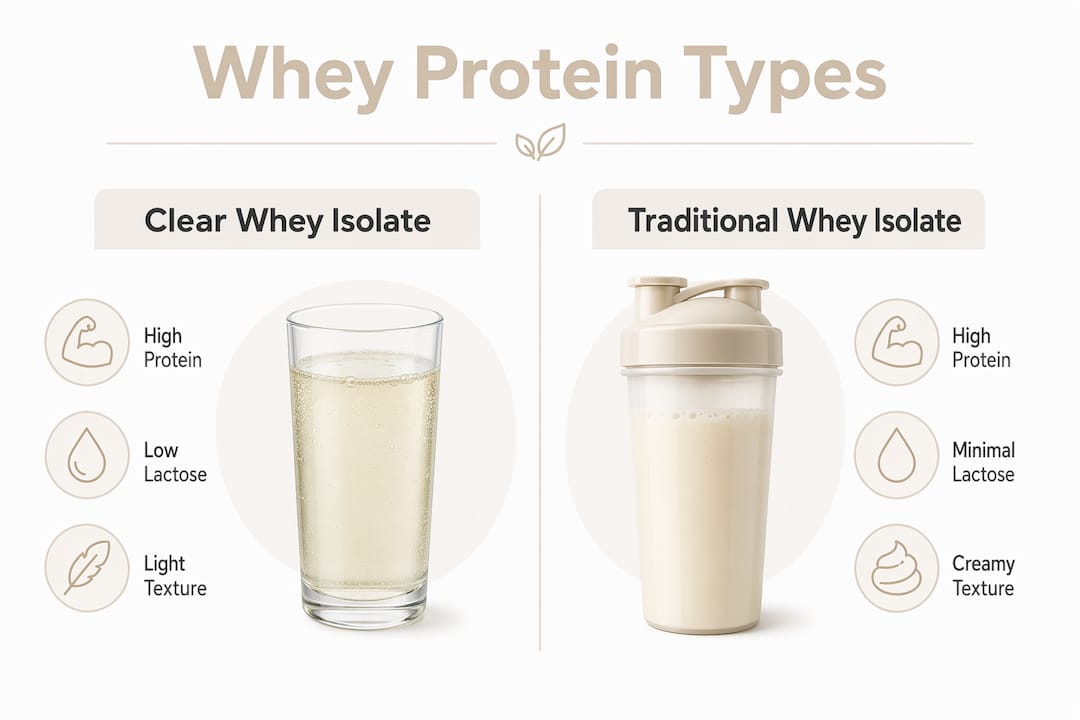
The most visible difference between clear whey and traditional whey protein is what happens when you add water. Standard whey concentrate or isolate turns opaque and creamy because of residual fats and proteins that scatter light. Clear whey, stripped of those fats through intensive filtration, dissolves into a transparent liquid. This is not a cosmetic trick. It reflects a genuinely different processing pathway and a different product experience.
Here is how the two formats compare across the factors that matter most to supplement buyers:
- Processing depth. Standard whey isolate uses cross-flow microfiltration or ion exchange. Clear whey goes further, adding enzymatic hydrolysis that breaks down larger protein chains into smaller peptides, which contributes to faster absorption and the clear appearance.
- Taste and texture. Traditional whey powders are designed around creamy, dessert-style flavors like chocolate, vanilla, and strawberry cream. Clear whey relies on sharp, acidic fruit flavors such as peach tea, watermelon, and citrus, which mask the naturally tart profile of the hydrolyzed protein.
- Digestibility. Because clear whey is effectively lactose-free, it is a better fit for people with mild lactose intolerance. It is not, however, dairy-free. Anyone with a diagnosed milk protein allergy should avoid it entirely.
- Price. The extra processing steps come at a cost. Clear whey isolate commands a higher price than traditional whey concentrate and often costs more than standard isolate too. That premium is justified by the processing complexity, not by superior muscle-building results.
- Mixability. Clear whey dissolves easily in water without vigorous shaking, unlike traditional powders that often clump without a blender or shaker bottle. A simple stir or light shake is all it takes.
The whey protein isolate benefits for muscle and recovery apply equally to the clear version. The format you choose comes down to personal preference, digestive tolerance, and how much you enjoy the drinking experience.
How to use clear whey isolate effectively
Clear whey isolate is favored for post-workout hydration and warm-weather consumption because its light, fruit-forward profile feels refreshing rather than heavy after intense exercise. Knowing when and how to use it correctly maximizes both the experience and the nutritional return.
- Post-workout window. Consume clear whey within 30 to 60 minutes after training. The hydrolyzed peptides absorb quickly, supporting muscle repair during the critical recovery window.
- Warm weather and outdoor activity. The juice-like texture makes it far more palatable than a thick shake when temperatures rise. Athletes training outdoors, cyclists, and runners consistently report higher compliance with clear whey during summer months.
- Mixing correctly. Use cold water, not milk or juice. Mixing with acidic ingredients like citrus juice can cause the protein to denature and cloud up, defeating the purpose of the clear format. Stick to plain water for the cleanest result.
- Flavor pairing. Choose flavors that complement the naturally tart base. Peach, raspberry, and tropical blends work best. Avoid mixing clear whey with dairy-based liquids, which will alter both texture and taste.
- Stacking with electrolytes. Combining clear whey with an electrolyte supplement after training replaces both protein and minerals lost through sweat. This pairing is particularly effective for endurance athletes or anyone training in heat.
Pro Tip: Pair your post-workout clear whey serving with a Nutribliss electrolyte supplement to cover both protein synthesis and hydration in a single recovery routine. The combination addresses muscle repair and fluid balance simultaneously.
What should you consider before buying clear whey isolate?
Clear whey protein is not the right choice for every supplement user. Before adding it to your routine, there are several factors worth understanding clearly.
- Milk protein allergy. Clear whey is still milk-derived and contains milk proteins. Being lactose-free does not make it safe for people with a true milk protein allergy. Symptoms can range from hives to anaphylaxis. If you have a diagnosed milk protein allergy, avoid clear whey entirely and look at plant-based protein isolates instead.
- Taste adjustment. The hydrolysis process creates a naturally acidic, slightly bitter base. Manufacturers mask this with strong fruit flavoring, but users switching from sweet, creamy whey shakes often find the taste profile jarring at first. Give it two to three weeks before deciding it is not for you.
- Price versus value. The higher price tag is real. If your primary goal is maximizing protein per dollar, standard whey isolate delivers nearly identical results at a lower cost. Clear whey earns its premium through experience and digestibility, not through superior protein quality.
- The “clear” label is not a quality claim. The clear label describes texture and processing, not nutritional superiority. A clear drink does not mean more protein, faster results, or better ingredients. User preference drives this choice, not performance data.
“Clear whey isolate is a premium option, but no muscle-building advantage exists over regular whey isolate. The choice is personal and based on digestibility and taste.” — ReviVo Hub
Understanding these points before purchasing prevents buyer’s remorse and helps you match the product to your actual needs rather than marketing expectations.
Key takeaways
Clear whey isolate delivers the same muscle-building protein as standard whey isolate in a lighter, juice-like format that improves digestibility and compliance, especially for lactose-sensitive users and warm-weather athletes.
| Point | Details |
|---|---|
| Protein content is solid | Each serving provides 20 to 25g of protein at 80 to 120 calories, matching lean whey isolate profiles. |
| Lactose-free but not dairy-free | Filtration removes lactose, but milk proteins remain, making it unsafe for milk protein allergy sufferers. |
| No muscle-building edge over standard isolate | Muscle protein synthesis is equivalent; the choice comes down to taste, texture, and digestibility. |
| Mix only with cold water | Acidic ingredients cause protein denaturation and cloudiness, ruining the clear texture. |
| Premium price reflects processing, not performance | Higher cost is justified by intensive filtration and hydrolysis, not by superior nutritional outcomes. |
Why clear whey changed how I think about protein compliance
I spent years recommending standard whey isolate to everyone who walked through the door, convinced that the thicker the shake, the more serious the supplement. Clear whey forced me to reconsider that assumption. The single biggest predictor of whether a supplement works is whether someone actually uses it consistently. A product that tastes like a refreshing fruit drink on a hot day after a hard session gets consumed. A thick, sweet shake that feels like dessert at the wrong moment often does not.
What surprised me most was how well clear whey fits into the routines of people who are not hardcore gym-goers. Casual athletes, hikers, and people managing their weight found it far easier to incorporate than traditional protein powders. The lighter texture removed the psychological barrier of “I just drank a meal.” That compliance effect is real and underappreciated in most whey protein discussions.
My honest caution is this: do not pay the clear whey premium if your goal is purely muscle gain on a budget. Standard whey isolate gets you to the same destination for less money. But if digestibility, summer training, or simply enjoying your post-workout drink matters to you, clear whey is worth every cent of the price difference. The market is moving toward experience-driven supplements, and clear whey is one of the few formats that genuinely delivers on that promise without sacrificing the nutritional fundamentals.
— GAURAV
Upgrade your recovery with Nutribliss

Clear whey isolate handles the protein side of recovery. Nutribliss handles the rest. The Nutribliss Electrolytes Supplement pairs directly with your post-workout clear whey serving, replacing sodium, potassium, and magnesium lost during training while the protein gets to work on muscle repair. For anyone serious about recovery, protein alone is never the full picture. Visit the science behind Nutribliss superfoods to understand how each product in the lineup is formulated to support real athletic performance. Follow us at #nutribliss for daily supplement guidance, recovery tips, and product updates.
FAQ
What is clear whey isolate made from?
Clear whey isolate is made from whey protein isolate that has been further processed through microfiltration and enzymatic hydrolysis to remove fats and lactose, producing a clear, juice-like liquid when mixed with water.
Is clear whey isolate effective for building muscle?
Clear whey isolate provides the same muscle protein synthesis benefits as regular whey isolate, delivering 20 to 25 grams of protein per serving with a full essential amino acid profile.
Can lactose-intolerant people drink clear whey isolate?
Clear whey isolate is effectively lactose-free due to intensive filtration, making it suitable for people with mild lactose sensitivity. It is not safe for those with a milk protein allergy since it remains a dairy-derived product.
How do you mix clear whey isolate without it going cloudy?
Mix clear whey with cold plain water only. Adding acidic ingredients like citrus juice or mixing with milk causes the protein to denature and lose its clear appearance.
Is clear whey protein worth the higher price?
Clear whey protein costs more than standard whey concentrate due to its intensive processing, but it offers no additional muscle-building benefit. The premium is justified for users who prioritize digestibility, light texture, and refreshing flavor over cost per gram of protein.