

Yes, whey protein can help you lose weight, but only when you use it correctly. A moderate serving of whey protein works best as a meal replacement for a low-protein breakfast or as a pre-meal primer taken 30 to 60 minutes before you eat. Pair that with resistance training and a modest calorie deficit, and whey may help you hold onto muscle while the scale moves down. #nutribliss
TL;DR:
- Using whey as a meal replacement at breakfast can significantly improve appetite control by reducing snacking later in the day.
- Consuming 25-30 grams of whey 30 to 60 minutes before a meal can lower calorie intake at that meal by roughly 150 to 250 calories.
- Most adults need one to two servings of whey daily to meet their protein needs, with larger individuals or those training regularly benefiting from the higher end.
- Pairing whey supplementation with resistance training enhances fat loss and muscle preservation more effectively than whey alone.
- Choose whey products with high protein content, minimal added sugars, and third-party testing seals to ensure quality and avoid unnecessary fillers.
Table of Contents
- How to Use Whey Protein for Weight Loss in Daily Meals
- How Much Whey Protein Should You Take Daily for Weight Loss?
- Why Pairing Whey With Resistance Training Matters
- How to Choose the Right Whey Protein for Weight Loss
- Is Whey Protein Safe? Side Effects and When to See a Doctor
- Sample Meal Plans: Real Ways to Add Whey to Your Day
- Why Trust This Guide on Whey Protein and Weight Loss
- Who Actually Benefits Most From Whey Protein
- Make Whey Protein Part of Your Weight Loss Routine
- Sources
- FAQ
How to Use Whey Protein for Weight Loss in Daily Meals
Whey works in three practical roles: a meal replacement, a snack swap, and a pre-meal primer. Each one solves a different problem, so pick based on where your diet is actually weak.
Meal replacement makes the most sense at breakfast. If you’re the type who grabs a pastry, skips eating entirely, or drinks juice and calls it done, that first meal is usually the lowest-protein meal of your day. Swapping it for a shake with 25 to 30 grams of whey, plus fruit or a handful of oats, tends to produce the single biggest appetite-control win you’ll get from any protein change. Breakfast swaps show up in the research as more effective than swapping dinner, mostly because a high-protein start reduces the grazing and snacking that piles up calories later in the afternoon and evening.
Pre-meal primers work differently. Drinking a whey shake 30 to 60 minutes before lunch or dinner can reduce how much you eat at that meal by roughly 150 to 250 calories, according to controlled feeding studies. That’s not a rounding error over a week. It’s especially useful if you know you tend to overeat at a specific meal, like a heavy dinner after a long workday.
Snack swaps target the mid-afternoon crash, the 3 p.m. stretch when chips or a candy bar start looking reasonable. A small whey shake there beats a carb-heavy snack on satiety and keeps the thermic effect of digestion working in your favor.
- Replace your weakest meal first, not your favorite one.
- Use pre-meal primers on days you know you’ll overeat (dinners out, holidays, stressful workdays).
- Reserve snack swaps for genuine hunger, not boredom.
- Never stack a shake on top of a diet that already hits your protein target. That just adds calories without a corresponding benefit.
Pro Tip: If you’re not sure whether your diet is protein-light, track one normal day before adding whey. Most people find one meal, usually breakfast, is doing almost none of the protein work.
How Much Whey Protein Should You Take Daily for Weight Loss?
Per serving, aim for a moderate amount of whey protein. That range consistently clears the leucine threshold needed to trigger a meaningful satiety and muscle-protein-synthesis response, which is why it’s the number you’ll see across nearly every product label and clinical protocol.
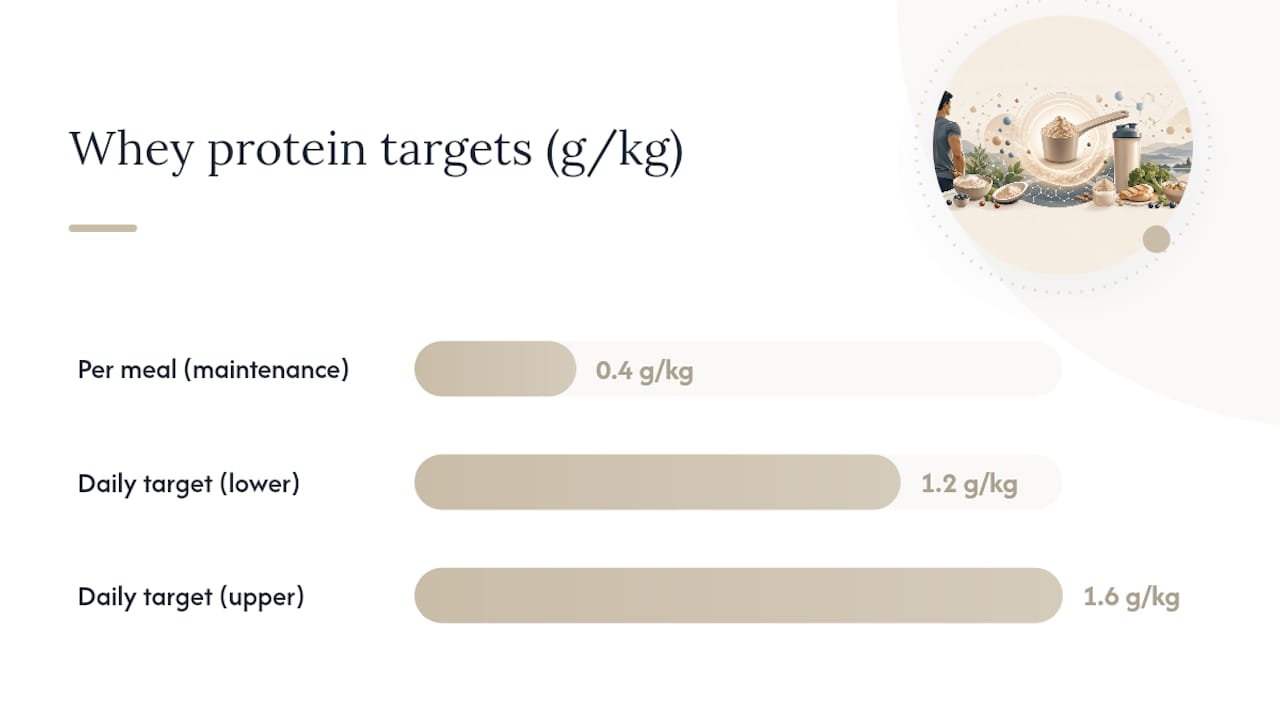
Daily totals matter more than any single serving, though. General guidance for weight loss lands around 1.2 to 1.6 grams of protein per kilogram of body weight, with the higher end reserved for people lifting weights regularly or over age 60, since milk-protein supplementation shows the strongest lean-mass preservation when dosing is individualized to body size and training status.
Here’s what that looks like in practice:
- A person of average body weight needs a moderate daily protein intake, with one to two whey servings able to cover a meaningful part of that.
- A person of average body weight needs a moderate daily protein intake, with two whey servings contributing to but not fully meeting that target.
- A person of larger body weight needs a moderate daily protein intake, with two whey servings plus protein-forward meals likely to be sufficient.
Most people do not require more than two whey servings a day. Beyond that, you’re usually better off eating more chicken, eggs, fish, or legumes. Protein also works better spread out. Research on protein distribution shows roughly 0.4 grams per kilogram per meal supports muscle maintenance better than dumping most of your protein into one giant serving and coasting on low-protein meals the rest of the day.
Why Pairing Whey With Resistance Training Matters
Whey alone shifts the odds in your favor. Whey plus resistance training changes the outcome entirely. In a randomized trial, participants supplementing with about 20 grams of whey daily lost more fat while sparing lean muscle compared to a control group, but that muscle-sparing effect depends heavily on giving your body a reason to keep the muscle it has.
A realistic plan doesn’t need to be complicated:
- Regular resistance sessions per week, hitting major muscle groups, support muscle preservation.
- A post-workout shake within a few hours of training is fine. The old “30 minute anabolic window” myth has been overstated for years. Consistency matters far more than precision timing.
- On non-training days, keep your protein steady but drop the urgency around timing. A morning or pre-meal shake works just as well.
- On travel days, a whey packet in your bag solves the “airport food has no protein” problem better than anything else you’ll pack.
Progression is simple: add reps or weight gradually, and don’t skip more than two sessions in a row without a specific reason. Adherence beats optimization here.
How to Choose the Right Whey Protein for Weight Loss
Isolate vs. concentrate comes down to lactose. Concentrate retains more lactose and a touch more fat and carbs. Isolate strips most of that out during processing, which is why isolate is the practical first choice for anyone with mild lactose sensitivity who still wants the same amino acid profile without the bloating.
Beyond that split, a few label checks separate a good product from a mediocre one:
- Confirm protein per scoop matches what the front of the package implies. Some “protein” products bury the actual number in fine print.
- Watch added sugars and artificial sweeteners, especially in flavored blends marketed as meal replacements.
- Favor short ingredient lists. If you can’t pronounce half the ingredients, that’s a signal, not a red flag by itself, but worth a second look.
- Look for third-party testing seals (NSF Certified for Sport or Informed Choice are common examples) if you compete in any tested sport.
- Multi-ingredient “meal replacement” powders often hide calories in added fats, maltodextrin, or fiber blends that push a shake well past what you’d expect from protein alone.
Pro Tip: Read the serving size, not just the protein number. A “30 gram serving” that only contains 20 grams of actual protein is padded with fillers, and you’re paying for volume, not results.
Is Whey Protein Safe? Side Effects and When to See a Doctor
Most side effects from whey are digestive and minor: bloating, gas, or loose stools, usually from lactose in concentrate blends or simply drinking a shake too fast on an empty stomach. Switching to isolate or cutting your serving size to 15 to 20 grams for a week usually resolves it.
A few situations call for a conversation with a clinician before you add whey to your routine:
- Known kidney disease, since high protein intake changes renal workload.
- Pregnancy or breastfeeding, where protein needs and safe supplement choices shift.
- Complex medication regimens, particularly ones involving blood sugar or blood pressure drugs.
One group deserves specific mention: people on GLP-1 medications for weight loss. Appetite suppression from these drugs often means people eat too little protein overall, which risks losing muscle along with fat. Clinical guidance increasingly points to whey as a convenient way for GLP-1 users and older adults to hit protein targets when appetite makes whole-food protein harder to eat in sufficient volume.
Check in with yourself every few weeks: is your weight trending down, is your strength holding steady or improving, and is digestion normal? If any of those go sideways, adjust dose or timing before assuming whey is the problem.
Sample Meal Plans: Real Ways to Add Whey to Your Day
-
The breakfast-skipping commuter. Blend 30 grams whey isolate, a frozen banana, and a cup of unsweetened almond milk. Roughly 250 to 300 calories, ready in three minutes, and it replaces the pastry-and-coffee routine that was providing almost zero protein. Drink it at your desk if you have to; the point is consistency, not ceremony.
-
The overeater at dinner. Mix 25 grams whey with water 45 minutes before you sit down for dinner. Studies on pre-meal timing show this window reliably cuts intake at the following meal by 150 to 250 calories, without you having to white-knuckle portion control at the table.
-
The lifter’s post-workout plate. After a resistance session, take 25 grams whey mixed into Greek yogurt for extra protein density, then eat a balanced dinner: palm-sized protein, a fist of vegetables, and a moderate carb portion like rice or potatoes. That combination covers roughly 45 to 55 grams of protein between the shake and the meal, which for most adults is a solid chunk of a daily target.
Add fiber (a tablespoon of chia or a side salad) or healthy fats (a quarter avocado) to any of these to stretch satiety further without much extra effort. Keep portions honest. A shake doesn’t offset a second helping of pasta.
Why Trust This Guide on Whey Protein and Weight Loss
This guide draws on randomized controlled trials and systematic reviews on whey supplementation, appetite regulation, and body composition, not marketing copy. Nutribliss publishes deeper breakdowns on related questions, including what actually works for weight loss with whey and how much whey protein you should take daily, both of which expand on the dosing math covered here.
This article was written by GAURAV, who covers nutrition and supplement formulation for Nutribliss, focusing on translating clinical protein research into serving-level guidance readers can actually follow. The recommendations here lean on peer-reviewed clinical studies and meta-analyses rather than anecdotal claims, and the sources section below links directly to that evidence.
Who Actually Benefits Most From Whey Protein
The biggest wins go to people starting from a low-protein baseline: breakfast-skippers, older adults losing muscle with age, and anyone on a GLP-1 medication whose appetite has dropped along with their food intake. Resistance trainers see faster, more visible results because they’re giving the protein a job to do.
Expect 8 to 12 weeks before you notice real changes in strength or body composition, and don’t expect whey alone to move the needle much without a deficit and some form of training behind it. It’s a genuinely useful tool. It’s not a shortcut around the two things that actually drive weight loss: eating less than you burn, and giving your muscles a reason to stick around.
— GAURAV
Make Whey Protein Part of Your Weight Loss Routine
Some whey formulas emphasize ingredient transparency, meaning you can read the label and know what you’re drinking, without hidden fillers padding out the scoop. That matters more than most shoppers realize once you’ve seen how many “protein” powders bury sugar and maltodextrin behind a big number on the front of the tub.

If you’re ready to put the serving and timing strategy in this guide into action, start with a whey protein powder built for weight loss or browse the full Nutribliss lineup to find the formula that matches your daily protein gap. Pairing your shake with proper hydration also supports recovery on training days, so it’s worth checking your electrolyte intake too. Visit supplement stores, compare labels for yourself, and pick the option that fits your actual daily protein target. #nutribliss
This article is general information, not a substitute for advice from a qualified doctor. Consult a qualified healthcare professional about your own circumstances before acting on anything here.
FAQ
How Do You Use Whey Protein for Weight Loss?
Use a 25 to 30 gram serving as a meal replacement for a low-protein breakfast or as a pre-meal primer 30 to 60 minutes before lunch or dinner, and combine it with resistance training and a modest calorie deficit.
Does Whey Protein Reduce Belly Fat?
Whey doesn’t target belly fat specifically, but studies show whey supplementation helps people lose more overall fat while sparing lean muscle, which shows up as reduced waist circumference in several trials.
Can You Lose Weight Drinking Whey Protein Shakes?
Yes, if the shake replaces a lower-protein meal or snack rather than adding extra calories on top of your normal eating, and if it’s paired with a calorie deficit overall.
How Many Times a Day Should I Take Whey Protein for Weight Loss?
Most people do best with one to two servings daily, split between a meal replacement and a pre-meal primer; more than two servings usually isn’t necessary and whole food should fill the rest of your protein target.