

Diet cannot cure an autoimmune condition, but it can meaningfully change how you feel. The strongest evidence points to anti-inflammatory, nutrient-dense eating patterns, tested and adjusted through careful reintroduction rather than blanket restriction. Some people notice shifts in energy, digestion, or joint pain within two to three weeks. Sustained improvement, though, tends to show up closer to the three-month mark, and it works best when personalized with a clinician.
TL;DR:
- Personalization is key; autoimmune-supportive diets should be tailored through careful observation and professional guidance to avoid nutrient gaps.
- Regularly test vitamin D levels and prioritize fatty fish intake to support anti-inflammatory pathways, supplementing only when advised by a clinician.
- Transition gradually by replacing processed foods with vegetables, whole grains, and healthy fats to reduce inflammation without risking gut health.
- Monitoring symptoms and inflammation markers with your care team enhances the effectiveness of dietary adjustments and prevents unnecessary dietary restrictions.
- Maintaining hydration, especially with electrolytes during flares or heat, supports joint health and reduces fatigue more than many people realize.
Table of Contents
- How to Support Autoimmune Condition Nutrition With Daily Food Choices
- What Does an AIP Elimination Diet Involve?
- Which Nutrients Matter Most for Autoimmune Support?
- A One-Week Framework for Anti-Inflammatory Eating
- How Should You Monitor Progress With Your Care Team?
- Why Hydration Affects Autoimmune Symptoms More Than You’d Think
- Beyond Elimination: Managing Everyday Food Sensitivities
- Getting Your Macronutrients Right for Immune Regulation
- How Nutribliss Thinks About Nutrition and Autoimmune Support
- Where Supplements Fit Into Your Nutrition Plan
- Sources
- FAQ
How to Support Autoimmune Condition Nutrition With Daily Food Choices
The pattern with the most consistent research behind it isn’t exotic. Mediterranean and DASH-style eating, built around vegetables, fruit, whole grains, legumes, olive oil, fatty fish, nuts, and seeds, is linked to lower inflammatory markers and better gut and immune function. That’s the backbone of any nutrition tips for autoimmune disease worth following.
The foods to scale back matter just as much as the ones you add. Cleveland Clinic’s anti-inflammatory diet guidance recommends cutting ultra-processed foods, added sugars, refined carbohydrates, excess saturated fat, and high-sodium processed meats. These are the categories most tied to raising dietary inflammatory load.
Here’s what a practical shift looks like on a plate:
- Fill half your plate with vegetables and fruit at most meals, rotating colors for a wider range of polyphenols.
- Swap refined grains (white bread, white rice) for oats, quinoa, or barley.
- Choose olive oil over butter or vegetable oils high in omega-6 fats.
- Eat fatty fish like salmon or sardines two to three times a week.
- Add a handful of nuts or seeds daily instead of processed snack foods.
The mechanism behind this isn’t mysterious. Diets heavy in processed foods and saturated fat are associated with dysbiosis and increased intestinal permeability, sometimes called leaky gut, which can trigger immune activation. Fiber and polyphenol-rich foods do the opposite: they feed beneficial bacteria that produce short-chain fatty acids, compounds that help maintain the gut lining and calm systemic inflammation.
Pro Tip: Don’t overhaul everything at once. Replace one processed staple a week, one starting with your most frequent snack, and the change tends to stick far longer than a full pantry purge.
What Does an AIP Elimination Diet Involve?
The Autoimmune Protocol (AIP) diet is the most structured elimination approach in this space, and it’s worth understanding even if you never do a full round of it. AIP removes grains, legumes, dairy, eggs, nightshades, nuts, seeds, alcohol, and food additives for a defined period, then reintroduces each one individually to identify personal triggers. Cleveland Clinic notes that some people notice symptom improvements within two to three weeks of starting the elimination phase.
A safe version of this process generally follows four steps:
- Elimination phase: Remove the target food groups for roughly three to six weeks, tracking symptoms daily rather than relying on memory.
- Stabilization: Confirm symptoms have leveled off before introducing anything new; reintroducing too early muddies the results.
- Reintroduction: Add back one food at a time, waiting five to seven days between each, watching for joint pain, fatigue, digestive changes, or skin flares.
- Personal food map: Build a running list of tolerated and reactive foods based on what you actually observe, not what you expect to happen.
Elimination diets carry real risk if they run too long or too strict without oversight. Cutting entire food groups for months can create gaps in calcium, fiber, or B vitamins. This is exactly where registered dietitian supervision earns its keep, since personalization is essential for safe, effective nutrition care in autoimmune conditions rather than a one-size-fits-all elimination plan.
Which Nutrients Matter Most for Autoimmune Support?
Food-first is the right instinct here, but a few nutrients come up often enough in autoimmune care to deserve individual attention.
Vitamin D deficiency shows up frequently in people with autoimmune conditions, and a simple blood test can confirm whether supplementation is worth discussing with your clinician. Omega-3 fatty acids (EPA/DHA) from fatty fish, walnuts, and flaxseed support the same anti-inflammatory pathways as the broader dietary pattern, though evidence for omega-3 supplements preventing disease progression is far less solid than the evidence for eating the food itself. Fiber from vegetables, legumes, and whole grains feeds the gut bacteria that produce short-chain fatty acids tied to a stronger intestinal barrier. Polyphenols in berries, green tea, and turmeric show promising lab-level anti-inflammatory activity, but human trial data is still limited, so treat these as helpful additions, not a substitute for the core pattern.
A key caveat worth keeping front and center: small trials on single-nutrient supplements tend to show modest effect sizes compared to whole dietary patterns. That’s the case for food-first strategies over chasing one “miracle” nutrient in pill form.
- Vitamin D: test first, supplement under guidance if levels are low.
- Omega-3: prioritize fatty fish two to three times weekly; consider a supplement if fish intake is minimal.
- Fiber: aim for a variety of plant sources daily rather than one high-fiber food.
- Polyphenols: berries, tea, and turmeric as flavorful additions, not standalone treatments.
If you’re considering personalizing your supplement plan, check with your prescribing clinician first. Fish oil can interact with blood thinners, and high-dose vitamin D can interact with certain heart or kidney medications.
A One-Week Framework for Anti-Inflammatory Eating
You don’t need a rigid meal plan to start. A repeatable weekly framework works better than a strict daily script, because it’s easier to sustain past the first motivated week.
- Breakfast: Oats with berries and walnuts, or eggs with sautéed greens (skip if reintroducing eggs post-elimination).
- Lunch: A grain bowl with quinoa, roasted vegetables, olive oil, and a protein source like salmon or lentils.
- Dinner: Grilled fish or chicken, a large mixed salad, and a sweet potato or barley side.
- Snacks: Nuts, fruit, hummus with vegetables, or plain yogurt with cinnamon.
Three swaps do most of the heavy lifting: trade soda or sweetened coffee drinks for water or herbal tea, trade packaged snack bars for whole fruit and nuts, and trade fried or breaded proteins for grilled or roasted versions. Batch-cook grains and roasted vegetables on one day so weeknight meals take ten minutes, not forty.
Pro Tip: Keep a running grocery list on your phone divided by “always buy” and “trying this week.” It cuts decision fatigue at the store, which is usually where healthy meal plans for autoimmune support quietly fall apart.
Expect early signals, like less bloating or steadier energy, within two to three weeks. Meaningful, stable symptom shifts usually take longer, closer to three months of consistent practice.
How Should You Monitor Progress With Your Care Team?
Bring data, not just impressions, to your next appointment.
- Request baseline labs: Vitamin D, a basic nutrient panel, and inflammatory markers your clinician tracks for your specific condition.
- Track symptoms weekly: Note energy, pain, digestion, and sleep on a simple 1 to 10 scale rather than vague memory.
- Flag interactions: Tell your clinician about any supplement before starting it, especially fish oil, vitamin D above standard doses, or herbal additions.
- Escalate when needed: Seek a registered dietitian experienced in autoimmune care if symptoms worsen, weight changes unexpectedly, or an elimination phase runs past six weeks without a reintroduction plan.
Sharing a simple log, even a notes app entry, gives your care team something concrete to act on instead of a general “I think I feel better.”
Why Hydration Affects Autoimmune Symptoms More Than You’d Think
Hydration doesn’t get the attention vitamin D or omega-3s do, but it’s tied directly to two things autoimmune patients care about most: joint comfort and fatigue. Cartilage and the fluid that cushions joints depend on adequate water intake, and mild dehydration can make joint pain feel sharper, particularly in conditions like rheumatoid arthritis or lupus where joint inflammation is already a factor.
Fatigue is the other connection. Even mild fluid loss reduces blood volume slightly, which means your heart works harder to circulate oxygen, and that shows up as tiredness that’s easy to misattribute to disease flare alone. Public health guidance on autoimmune care groups hydration alongside sleep and stress reduction as foundational, not optional, pieces of symptom management.
Digestive symptoms common in autoimmune conditions, including constipation from lower activity or medication side effects, also respond to adequate fluid intake, especially when fiber intake increases as part of an anti-inflammatory shift. Adding fiber without adding water is a common mistake that makes digestive discomfort worse, not better.
A practical target is half your body weight in ounces daily as a baseline, adjusted upward with exercise, heat, or fever. Electrolyte balance matters too, particularly if you’re increasing fiber and produce intake, since that shift changes how your body handles sodium and potassium. Plain water works for most days; added electrolytes make more sense during illness flares, hot weather, or intense activity when sweat losses climb.

Beyond Elimination: Managing Everyday Food Sensitivities
Not every reaction to food is a full autoimmune trigger requiring an AIP-level response. Lactose intolerance, histamine sensitivity, and reactions to FODMAPs (fermentable carbohydrates found in foods like garlic, onion, and certain fruits) are common and often layer on top of an existing autoimmune diagnosis, muddying the picture if you assume every symptom is disease-related.
The distinction matters for how you respond. A true allergy involves an immune reaction and can be serious; a sensitivity usually causes discomfort like bloating, headaches, or fatigue without the same medical urgency. Confusing the two leads to either unnecessary panic or, worse, ignoring a reaction that needs medical attention.
A structured approach works better than guessing:
- Keep a simple symptom log noting food, timing, and reaction severity for at least two weeks before drawing conclusions.
- Test one suspected trigger at a time, since eating three new foods in one meal makes it impossible to isolate the cause.
- Ask your clinician about formal allergy or intolerance testing if reactions are severe or unpredictable, rather than self-diagnosing indefinitely.
- Revisit your list every few months, since tolerance can shift as inflammation improves or medications change.
Cross-reactivity is worth knowing about too. Some research on gluten sensitivity in autoimmune populations points to shared protein structures between gluten and other foods, like dairy casein, which can explain why cutting one trigger sometimes doesn’t fully resolve symptoms until a related food is addressed as well.
Getting Your Macronutrients Right for Immune Regulation
Protein, carbohydrate, and fat aren’t just calorie categories. Each one feeds a different part of immune function, and skewing too far in any direction tends to backfire.
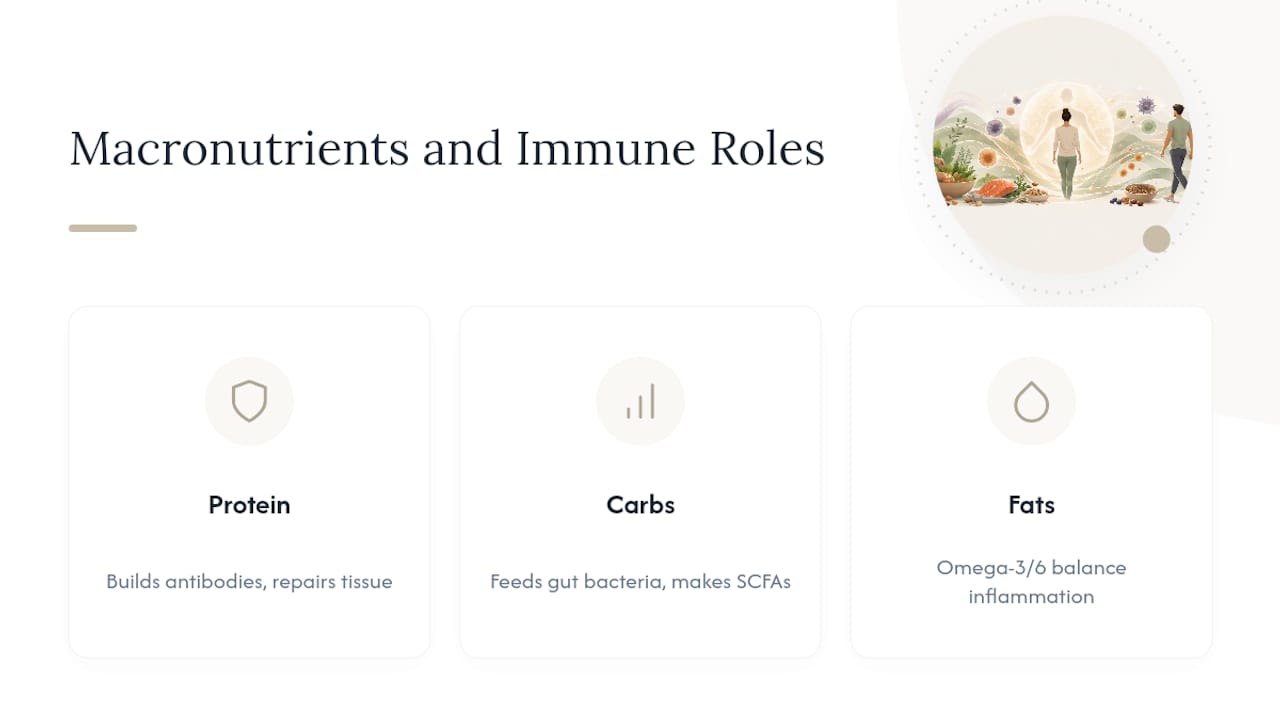
Protein supplies the amino acids needed to build antibodies and repair tissue, which matters more, not less, when your immune system is already working overtime. Chronic under-eating protein, common when people restrict multiple food groups at once during elimination phases, can slow healing and worsen fatigue. Aim for a palm-sized portion of protein at each meal, from fish, poultry, legumes, or eggs if tolerated.
Carbohydrates get an unfair reputation in inflammation conversations, but the type matters far more than the total amount. Fiber-rich, whole-food carbohydrates fuel the gut bacteria responsible for producing anti-inflammatory short-chain fatty acids. Cutting carbohydrates too aggressively, a common mistake when people conflate “anti-inflammatory” with “low-carb,” can actually starve those beneficial bacteria and undermine gut barrier health.
Fat quality outweighs fat quantity. The ratio between omega-3 and omega-6 fats shapes which inflammatory pathways get activated, which is why shifting from vegetable-oil-heavy cooking toward olive oil and fatty fish does more for symptom management than simply eating “low-fat.” A balanced approach to reducing inflammation naturally usually beats extreme restriction on any single macronutrient.
How Nutribliss Thinks About Nutrition and Autoimmune Support
Nutrition research on autoimmune conditions keeps confirming one thing: there’s no universal diet, only a personalized one built through observation and, ideally, a clinician’s input. At Nutribliss, that shapes how we talk about supplements, too. They’re adjuncts to a food-first strategy, never a replacement for the eating pattern or the medical care doing the real work.
If you’re testing changes, share your experience with the community using #nutribliss, and talk to your doctor before making major dietary shifts.
— GAURAV
Where Supplements Fit Into Your Nutrition Plan
Diet and reintroduction protocols do the heavy lifting here, but two specific goals, hydration and sleep, come up constantly in autoimmune symptom management, and they’re worth addressing directly rather than leaving to chance.

If you’re increasing fiber and produce intake as part of an anti-inflammatory shift, your body’s sodium and potassium needs shift too, especially during flares, heat, or activity. Nutribliss’s electrolyte supplement is built to support that fluid and mineral balance alongside your food choices, not instead of them. Sleep is the other piece autoimmune patients underestimate. Poor sleep is tied to higher symptom burden, and the sleep formula supplement is designed to support sleep quality as one piece of a broader routine that already includes food, hydration, and stress management.
Neither product treats an autoimmune condition, and neither replaces your care team’s guidance. Talk to your clinician before adding any new supplement, particularly if you’re on immunosuppressants or blood thinners, then check the product pages above to see if either fits a specific gap in your current routine.
FAQ
Can diet alone control an autoimmune condition?
No. Diet supports symptom management and can reduce inflammatory burden, but it works alongside medical treatment, not as a replacement for it.
How long does the AIP diet take to show results?
Some people notice changes within two to three weeks of the elimination phase, though full reintroduction and stable results typically take longer.
Should I take vitamin D or omega-3 supplements automatically?
Only after testing, ideally vitamin D levels through bloodwork, and only under clinician guidance, since food sources should come first and supplement needs vary by person.
How much water should I drink to help with autoimmune symptoms?
A common baseline is half your body weight in ounces daily, adjusted upward for heat, exercise, or flares, with electrolyte support considered during those higher-need periods.
When should I see a registered dietitian for autoimmune nutrition?
Reach out if symptoms worsen during an elimination diet, if an elimination phase extends past six weeks without reintroduction, or if you’re managing multiple food sensitivities at once.