

TL;DR:
- Chronic inflammation damages tissues and increases disease risk but can be reduced through diet, exercise, sleep, and stress management. Consistently choosing anti-inflammatory foods like fatty fish, leafy greens, and nuts, combined with regular aerobic activity, supports immune health; neglecting sugar, processed foods, and inactivity prevents inflammation. Prioritizing sleep, stress reduction, and oral hygiene enhances these efforts, making gradual lifestyle changes more sustainable and effective over time.
Chronic inflammation is defined as a persistent, low-grade immune response that damages healthy tissue and raises the risk of heart disease, diabetes, and cancer. The good news: you can reduce inflammation through specific, evidence-based changes to your diet, exercise habits, sleep, and stress management. This article covers the most effective natural methods, from the Mediterranean diet to cold-water immersion, so you can build a strategy that actually sticks. Every recommendation here is grounded in research from Harvard Health, MD Anderson, and National Geographic.
How to reduce inflammation through diet: what actually works
The single most powerful tool for lowering inflammation is your daily food choices. Whole, minimally processed foods like fruits, vegetables, legumes, and healthy oils directly reduce chronic inflammatory markers. Ultra-processed foods and added sugars do the opposite, triggering immune responses that compound over time.
The best anti-inflammatory foods to eat regularly
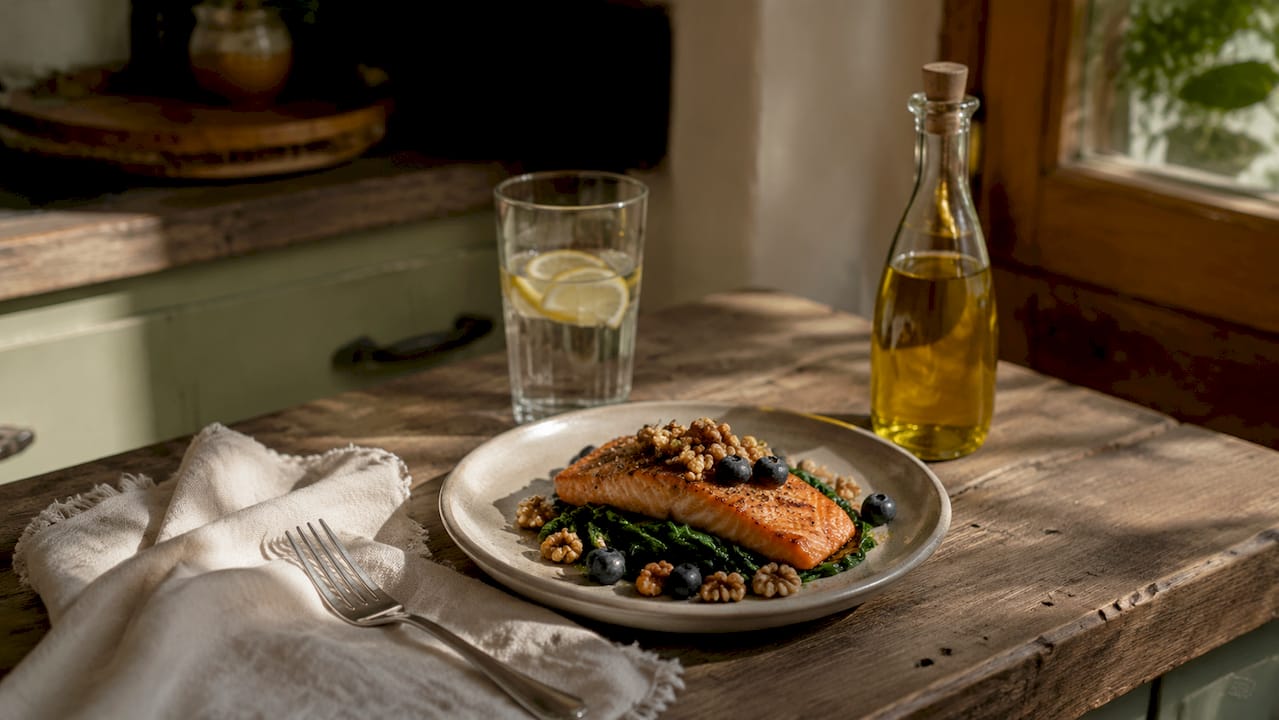
Foods that fight inflammation include tomatoes, extra-virgin olive oil, green leafy vegetables like spinach and kale, nuts such as almonds and walnuts, fatty fish like salmon and sardines, and fruits including blueberries and cherries. Spices like turmeric and ginger contain compounds that block inflammatory signaling pathways at the cellular level. Omega-3 fatty acids in fatty fish are particularly well-studied. You can read more about omega-3 and recovery to understand why they belong in your weekly rotation.
The Mediterranean and DASH diets are the two eating patterns with the strongest evidence for reducing systemic inflammation. Both emphasize plant-based foods, fiber, and antioxidants while limiting red meat and refined carbohydrates. MD Anderson specifically recommends these patterns for cancer prevention, which underscores how seriously inflammation reduction is taken in clinical settings. Dietary fiber also plays a direct role here. Research on fiber’s disease risk reduction shows a 30% lower risk of several chronic diseases with consistent intake.
Foods that drive inflammation up
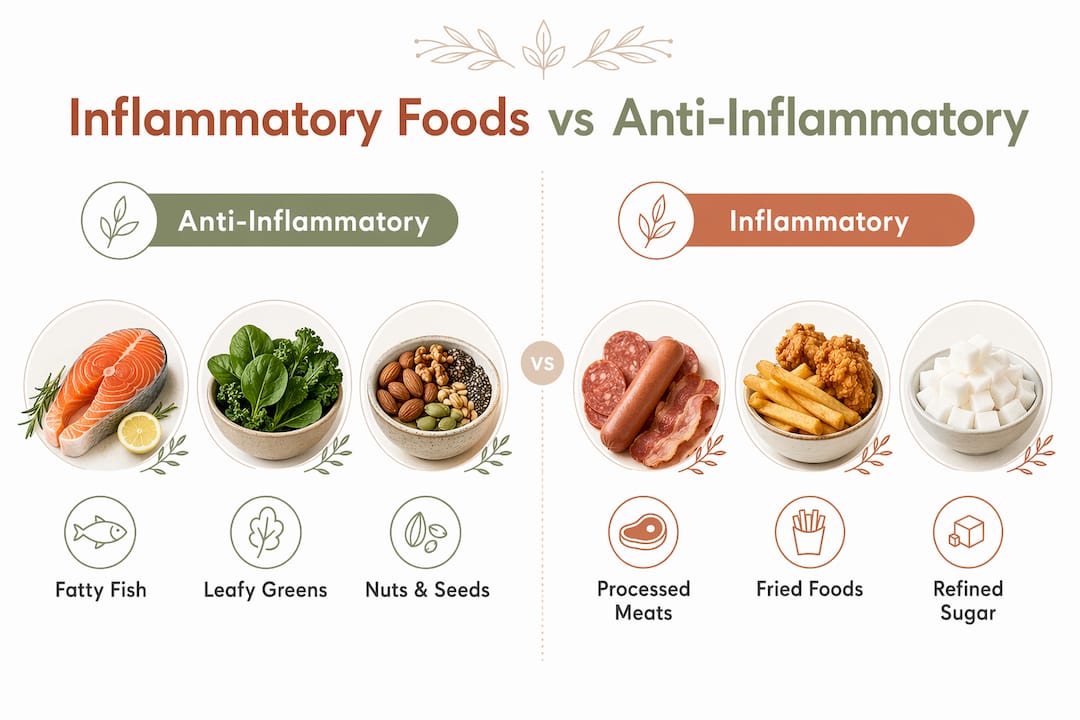
Refined carbohydrates, fried foods, processed meats, excess sugar, and alcohol are the primary dietary drivers of chronic inflammation. These foods elevate C-reactive protein and interleukin-6, two key inflammatory markers your doctor can measure with a standard blood panel. Limiting these is not about perfection. It is about shifting the ratio in your favor over time.
| Anti-Inflammatory Foods | Inflammatory Foods |
|---|---|
| Salmon, sardines, mackerel | Processed meats (hot dogs, sausage) |
| Spinach, kale, broccoli | White bread, pastries, white rice |
| Blueberries, cherries, oranges | Sugary sodas and fruit juices |
| Almonds, walnuts, flaxseeds | Fried foods (french fries, fried chicken) |
| Extra-virgin olive oil | Margarine and vegetable shortening |
| Turmeric, ginger, garlic | Excess alcohol |
Pro Tip: Start with just one meal per day. Harvard Health advises building 1 to 2 repeatable anti-inflammatory meals before overhauling your entire diet. A breakfast of Greek yogurt, walnuts, and blueberries takes three minutes and covers multiple anti-inflammatory food groups at once.
Consistent food selection over time matters far more than occasional “superfood” additions. Eating salmon once a month does not offset a daily diet of processed food. The pattern is the intervention.
How does exercise reduce inflammation, and what types work best?
Regular physical activity is one of the most reliable natural ways to reduce inflammation, but the type, intensity, and recovery approach all matter. Aerobic exercise 2 to 3 times per week for 30 to 60 minutes reduces inflammatory markers in older adults, according to a 2025 BMC study cited by National Geographic. This means brisk walking, cycling, swimming, or any activity that elevates your heart rate qualifies. You do not need a gym membership or a structured program to get the benefit.
Best exercise practices for reducing inflammatory markers
- Start with moderate aerobic activity. Aim for 30 minutes of brisk walking, five days per week. This is the minimum effective dose for measurable inflammation reduction.
- Add resistance training twice weekly. Strength training reduces visceral fat, which is itself a source of inflammatory cytokines.
- Avoid prolonged inactivity between sessions. Sitting for more than 8 hours daily can offset the benefits of a single workout. Short movement breaks every 60 to 90 minutes help.
- Use cold therapy strategically after intense sessions. Cold-water immersion within 1 hour post-exercise reduces acute inflammation and pain. Whole-body cryotherapy, applied later in the recovery window, offers longer-term benefits according to a 2026 Frontiers meta-analysis.
- Respect contraindications for cryotherapy. Cardiovascular disease, Raynaud’s syndrome, and cold urticaria are conditions that make cold-water immersion risky. Consult a physician before adding cryotherapy to your routine.
For athletes managing post-workout soreness, the Nutribliss guide on muscle recovery strategies covers the timing and method choices in more detail.
Pro Tip: Do not treat rest days as wasted days. Light movement like a 20-minute walk on recovery days keeps circulation active and prevents the inflammatory rebound that can follow complete inactivity after intense training.
What lifestyle habits beyond diet and exercise relieve inflammation?
Diet and exercise get most of the attention, but sleep, stress, and oral hygiene are equally critical levers. Neglecting any one of them limits how far the other two can take you.
Sleep as a systemic inflammation regulator
Consistent sleep hygiene, including a fixed bedtime and wake time, reduces the pro-inflammatory stress load on the body. Poor sleep elevates cortisol, which in turn raises inflammatory cytokines like TNF-alpha and IL-6. Seven to nine hours per night is the evidence-based target for adults. If you are working on sleep quality, the Nutribliss resource on improving sleep naturally offers practical steps grounded in sleep science.
Stress reduction and its direct effect on inflammation
Meditation and yoga lower pro-inflammatory cytokines by calming nervous system signaling, according to neuroscientist Richard Davidson’s work cited by National Geographic. This is not a soft benefit. Chronic psychological stress is one of the most underappreciated drivers of systemic inflammation. Even 10 minutes of daily mindfulness practice produces measurable changes in cortisol and inflammatory markers within weeks. Stress management is a significant but often overlooked method to reduce systemic inflammation, and it belongs in the same category as diet and exercise, not as an afterthought.
Oral hygiene as an inflammation source you can fix today
Flossing and brushing, particularly with an electric toothbrush, reduce cytokine entry into the bloodstream by controlling gum inflammation. Periodontal disease is a direct, local source of systemic inflammation. Treating it alongside diet and exercise often accelerates overall results. This is one of the most overlooked tips for reducing inflammation, and it costs nothing beyond a few minutes per day.
Here is a practical daily habit checklist for inflammation reduction:
- Sleep 7 to 9 hours at consistent times each night
- Practice 10 minutes of meditation, deep breathing, or yoga daily
- Floss and brush twice daily, using an electric toothbrush when possible
- Limit screen time and artificial light exposure after 9 PM
- Avoid tobacco and limit alcohol to no more than one drink per day
- Minimize exposure to air pollutants and chemical-heavy cleaning products
- Stay hydrated with water rather than sugary beverages
Pro Tip: Stack your habits. Pair your morning meditation with your anti-inflammatory breakfast. Pair your evening flossing with a consistent bedtime. Habit stacking reduces the mental effort of building new routines and makes consistency far more likely.
How to implement inflammation reduction without burning out
The most common reason people fail to reduce inflammation long-term is attempting to change everything at once. Starting with 1 to 2 repeatable meals rather than a complete diet overhaul is the approach Harvard Health recommends, and it works because it builds momentum without overwhelming your decision-making capacity.
Follow this sequence to build a sustainable anti-inflammatory lifestyle:
- Week 1 to 2: Swap breakfast and lunch to anti-inflammatory options. Keep dinner flexible.
- Week 3 to 4: Add two aerobic exercise sessions per week. Brisk walking counts.
- Week 5 to 6: Introduce a consistent sleep schedule and a 10-minute daily stress practice.
- Week 7 to 8: Address oral hygiene and begin limiting the most inflammatory foods in your diet.
- Ongoing: Track how you feel, adjust intensity, and add one new habit per month.
| Step | Benefit | Common Challenge |
|---|---|---|
| Anti-inflammatory meals | Reduces dietary inflammation triggers | Meal prep time and habit formation |
| Aerobic exercise 2 to 3x weekly | Lowers inflammatory markers measurably | Consistency and scheduling |
| Consistent sleep schedule | Reduces cortisol and cytokine levels | Screen time and irregular work hours |
| Daily stress practice | Calms nervous system signaling | Finding time and staying motivated |
| Oral hygiene routine | Removes a direct source of systemic inflammation | Underestimating its systemic impact |
The biggest mistake is treating inflammation reduction as a short-term fix. It is a lifestyle recalibration. Gradual, sustained changes produce better long-term outcomes than any 30-day cleanse or elimination diet.
Key takeaways
Reducing chronic inflammation requires a consistent combination of anti-inflammatory eating, regular aerobic exercise, quality sleep, stress management, and oral hygiene, applied gradually over time rather than all at once.
| Point | Details |
|---|---|
| Diet is the foundation | Mediterranean and DASH eating patterns reduce inflammation more reliably than any single food. |
| Exercise frequency matters | Aerobic activity 2 to 3 times per week for 30 to 60 minutes measurably lowers inflammatory markers. |
| Sleep and stress are not optional | Poor sleep and chronic stress raise cytokines as effectively as a bad diet. |
| Oral hygiene has systemic impact | Treating gum disease reduces inflammatory markers throughout the body, not just in the mouth. |
| Gradual change outperforms overhauls | Starting with 1 to 2 repeatable habits builds sustainable momentum without burnout. |
What I have learned after years of watching people fight inflammation
Most people come to inflammation reduction looking for the one thing they are missing. A specific supplement, a particular food, a new workout protocol. What I have consistently observed is that the people who make the most progress are not the ones who find the magic ingredient. They are the ones who get boring about the basics.
The Mediterranean diet is not exciting. Walking 30 minutes a day is not exciting. Flossing every night is not exciting. But these are the interventions with the deepest evidence base, and they compound. Someone who eats anti-inflammatory meals consistently, sleeps well, manages stress, and exercises moderately will outperform someone chasing the latest superfood trend every single time.
What I also find underappreciated is the oral hygiene piece. I have spoken with people who have optimized their diet and exercise for years but still show elevated CRP on blood panels. When they finally addressed periodontal disease, their markers dropped. The mouth is not separate from the rest of the body, and treating it as an afterthought is a real gap in most inflammation reduction plans.
My honest advice: pick the #nutribliss approach of building one solid habit at a time. Do not try to become a different person in a month. Focus on what you can repeat without willpower, because that is what will still be working in five years.
— GAURAV
Support your anti-inflammatory lifestyle with Nutribliss
Natural lifestyle changes are the foundation of inflammation reduction, and the right supplements can reinforce what you are already building. Nutribliss formulates its products around the same science that backs the Mediterranean diet and recovery research. The science behind superfoods collection details how key ingredients like omega-3s, antioxidants, and adaptogens work at the cellular level to support your body’s inflammatory response. If you are ready to complement your diet and exercise efforts with evidence-backed supplementation, explore the full Nutribliss supplements range to find products matched to your specific wellness goals.
FAQ
What is the fastest natural way to relieve inflammation?
Switching to an anti-inflammatory diet and adding 30 minutes of aerobic exercise per day produces measurable reductions in inflammatory markers within weeks. Cold-water immersion within one hour of intense exercise also reduces acute inflammation rapidly.
Which foods fight inflammation most effectively?
Fatty fish, leafy greens, blueberries, extra-virgin olive oil, walnuts, and spices like turmeric and ginger are the most evidence-backed anti-inflammatory foods, according to Harvard Health.
How does exercise reduce inflammation?
Aerobic exercise 2 to 3 times per week for 30 to 60 minutes lowers inflammatory markers by reducing visceral fat and improving immune regulation, based on a 2025 BMC study cited by National Geographic.
Can stress cause chronic inflammation?
Chronic psychological stress raises pro-inflammatory cytokines through sustained cortisol signaling. Practices like meditation and yoga lower these cytokines by calming the nervous system, according to research highlighted by National Geographic.
Does sleep affect inflammation levels?
Poor sleep elevates cortisol and inflammatory markers like IL-6 and TNF-alpha. Consistent sleep of 7 to 9 hours per night is one of the most effective lifestyle strategies for keeping systemic inflammation in check.