

Most American adults consume only about 15 grams of fiber daily, far short of the recommended 25 to 30 grams. This gap isn’t trivial. Missing out on adequate fiber means forfeiting powerful digestive support, gut microbiome nourishment, and proven chronic disease protection. This guide clarifies exactly how dietary fiber works in your body and why optimizing your intake transforms both digestive wellness and long-term health outcomes.
Table of Contents
- Introduction To Dietary Fiber
- How Dietary Fiber Affects Digestive Health
- Fiber And The Gut Microbiome: A Symbiotic Relationship
- Dietary Fiber And Chronic Disease Prevention
- Common Misconceptions About Dietary Fiber
- Choosing Between Fiber Supplements And Natural Sources
- Practical Tips For Increasing Dietary Fiber Intake
- Conclusion: Integrating Dietary Fiber For Optimal Health
- Explore NutriBliss Dietary Supplements For Fiber And Wellness
Key Takeaways
| Point | Details |
|---|---|
| Fiber Types Matter | Soluble fiber forms gel and feeds gut bacteria; insoluble fiber adds bulk for regularity. |
| Digestive Function | Fiber accelerates transit, enhances satiety, and prevents constipation through physical mechanisms. |
| Microbiome Support | Fermentation produces SCFAs that reduce inflammation and strengthen immune responses. |
| Disease Prevention | High fiber intake lowers type 2 diabetes risk by 20 to 30% and improves cardiovascular markers. |
| Practical Integration | Gradual increases over 2 to 4 weeks combined with hydration prevent digestive discomfort. |
Introduction to Dietary Fiber
Dietary fiber is plant-based carbohydrate that resists digestion in your small intestine. Unlike starches and sugars, fiber travels intact through most of your digestive tract, performing mechanical and biochemical roles that directly benefit your health.
Fiber comes in two primary forms. Soluble fiber dissolves in water, creating a gel-like substance that slows digestion and feeds beneficial gut bacteria. Insoluble fiber does not dissolve, instead adding bulk to stool and speeding intestinal transit.
You’ll find soluble fiber in oats, barley, legumes, apples, and citrus fruits. Insoluble fiber is abundant in whole grains, wheat bran, nuts, seeds, and many vegetables like cauliflower and green beans.
Both types contribute uniquely to digestive function and overall wellness. Soluble fiber supports metabolic health by moderating blood sugar and cholesterol levels. Insoluble fiber promotes regularity and prevents constipation.
Understanding this distinction helps you tailor your fiber intake to match specific wellness goals. Whether you’re focused on gut health, weight management, or chronic disease prevention, knowing which fiber types to emphasize makes your dietary choices more strategic and effective.
Key fiber categories include:
- Soluble fiber: Oats, beans, lentils, apples, citrus, psyllium
- Insoluble fiber: Whole wheat, bran, nuts, seeds, vegetables
- Resistant starch: Cooled potatoes, green bananas, cooked and cooled rice
- Prebiotic fiber: Chicory root, garlic, onions, asparagus, Jerusalem artichoke
How Dietary Fiber Affects Digestive Health
Insoluble fiber adds physical bulk to stool, which stimulates intestinal muscles and accelerates movement through your colon. This mechanical action improves regularity and prevents constipation by maintaining consistent bowel habits.
Soluble fiber slows the digestive process by forming a viscous gel. This delayed transit enhances nutrient absorption and creates prolonged feelings of fullness, which helps regulate appetite and supports weight management goals.
Fiber also stimulates beneficial gut motility patterns. The physical presence of fiber encourages rhythmic contractions that keep contents moving smoothly. Adequate hydration works synergistically with fiber to soften stool and ease passage.
Satiety benefits from fiber are particularly relevant for fitness enthusiasts managing body composition. Fiber-rich meals take longer to eat and digest, reducing overall calorie intake without triggering hunger. This natural appetite regulation makes adherence to nutrition plans significantly easier.
Gradual fiber increases are essential. Jumping from 15 grams to 30 grams overnight overwhelms your digestive system, causing bloating, gas, and cramping. Your gut bacteria need time to adapt to increased fermentation substrate.
Pro Tip: Increase your fiber intake by 5 grams per week over four weeks. This gradual approach allows your gut microbiome and digestive motility to adjust, minimizing discomfort while maximizing benefits.
The relationship between fiber and digestive comfort involves several factors:
- Transit time: Insoluble fiber reduces time food spends in your colon
- Stool consistency: Adequate fiber with water creates soft, easily passed stool
- Satiety signaling: Fiber activates stretch receptors and gut hormones that signal fullness
- Blood sugar stability: Slowed digestion prevents energy crashes and hunger spikes
Exploring the science of gut health reveals how fiber’s mechanical effects complement its biochemical actions to create comprehensive digestive support.
Fiber and the Gut Microbiome: A Symbiotic Relationship
Your gut bacteria ferment soluble fiber, breaking it down into short-chain fatty acids like butyrate, propionate, and acetate. These SCFAs nourish colon cells and reduce inflammation, creating an environment that supports both digestive and systemic health.
Butyrate specifically serves as the primary fuel source for colonocytes, the cells lining your colon. This energy supply maintains the integrity of your intestinal barrier, preventing unwanted substances from entering your bloodstream.
SCFAs also regulate immune responses. They modulate inflammatory pathways, reducing chronic low-grade inflammation linked to metabolic disorders. This anti-inflammatory effect extends beyond your gut, influencing your entire body.
A fiber-rich diet promotes microbial diversity. Different fiber types feed different bacterial species, creating a balanced ecosystem. This diversity correlates strongly with better health outcomes across multiple systems.
The transformation from fiber to health benefits follows this sequence:
- You consume soluble fiber from sources like oats, beans, or prebiotic supplements
- Fiber reaches your colon intact, where resident bacteria begin fermentation
- Fermentation produces SCFAs, particularly butyrate, propionate, and acetate
- SCFAs enter colonocytes, providing energy and signaling anti-inflammatory pathways
- Improved barrier function prevents harmful compounds from crossing into circulation
- Systemic inflammation decreases, supporting metabolic health and immune regulation
Research on gut microbiota and SCFAs demonstrates these compounds’ far-reaching effects.
“Short-chain fatty acids produced through fiber fermentation represent one of the most important links between diet and human health. These metabolites directly influence immune function, metabolic regulation, and even neurological processes through the gut-brain axis.”
Understanding gut health science helps you appreciate why fiber intake matters far beyond simple digestive regularity.
Dietary Fiber and Chronic Disease Prevention
High fiber intake correlates with 20 to 30% lower risk of developing type 2 diabetes. This protective effect stems largely from soluble fiber’s ability to slow glucose absorption, preventing sharp blood sugar spikes after meals.

Soluble fiber’s gel-forming properties create a physical barrier that moderates the rate at which sugars enter your bloodstream. This blunted glycemic response reduces insulin demand and improves overall metabolic function over time.
Fiber intake also improves cholesterol profiles. Soluble fiber binds bile acids in your intestine, forcing your liver to pull cholesterol from blood to produce new bile. This mechanism effectively lowers LDL cholesterol levels.
Cardiovascular benefits extend to blood pressure regulation and reduced arterial inflammation. The combination of improved lipid profiles, better blood sugar control, and decreased systemic inflammation creates powerful heart protection.
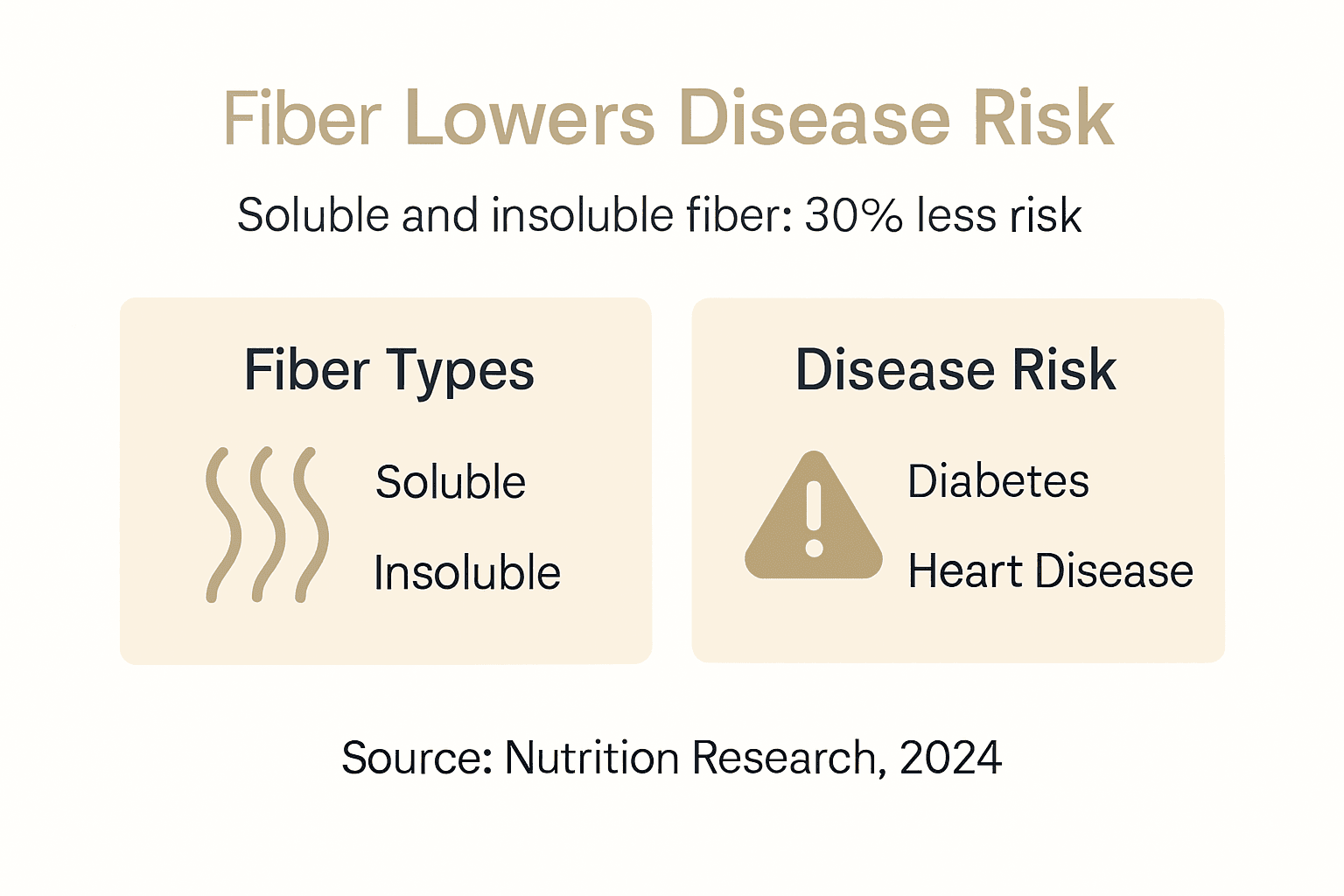
Consistent fiber consumption matters more than sporadic high intake. The preventive benefits accumulate through sustained dietary patterns rather than occasional fiber boosts.
| Daily Fiber Intake | Type 2 Diabetes Risk Reduction | Cardiovascular Disease Risk Reduction |
|---|---|---|
| Under 15g | Baseline risk | Baseline risk |
| 15 to 20g | 10% reduction | 8% reduction |
| 20 to 25g | 18% reduction | 15% reduction |
| 25 to 30g | 25% reduction | 22% reduction |
| Over 30g | 30% reduction | 28% reduction |
These reductions represent population-level statistics. Individual results vary based on overall diet quality, physical activity, genetics, and other lifestyle factors.
Exploring a comprehensive nutritional supplements guide reveals how fiber works alongside other nutrients to optimize metabolic health and disease prevention.
Common Misconceptions About Dietary Fiber
Many people believe fiber universally causes digestive discomfort. This myth stems from experiences with rapid fiber increases. Gradual adaptation over 2 to 4 weeks reduces bloating and allows your gut bacteria to adjust to increased fermentation.
Another misconception treats all fiber as functionally identical. Soluble and insoluble fibers perform distinct roles. Soluble fiber feeds beneficial bacteria and moderates blood sugar. Insoluble fiber adds bulk and speeds transit. You need both types for comprehensive benefits.
Some assume fiber supplements perfectly replace whole food sources. While supplements help fill intake gaps, they often lack the diverse bioactive compounds found in whole foods. Fruits, vegetables, and whole grains provide fiber alongside vitamins, minerals, and phytonutrients that work synergistically.
The belief that more fiber always equals better health ignores individual tolerance. Excessive fiber without adequate hydration can worsen constipation. Finding your optimal intake requires attention to your body’s responses.
Common myths versus reality:
- Myth: Fiber causes gas and bloating for everyone. Reality: Gradual increases allow gut adaptation without discomfort.
- Myth: All fiber types work the same way. Reality: Soluble and insoluble fibers have distinct mechanisms and benefits.
- Myth: Supplements equal whole food fiber. Reality: Whole foods provide additional nutrients and diverse fiber types.
- Myth: Maximum fiber intake always improves health. Reality: Individual tolerance varies; hydration and gradual progression matter.
Pro Tip: Pair fiber increases with adequate water intake, aiming for at least 8 glasses daily. This combination ensures fiber moves smoothly through your digestive system while preventing the constipation that can occur from fiber without sufficient hydration.
Reviewing fiber myths and facts helps you avoid common pitfalls and optimize your approach.
Choosing Between Fiber Supplements and Natural Sources
Whole foods deliver fiber packaged with vitamins, minerals, antioxidants, and other bioactive compounds. An apple provides both soluble fiber and polyphenols. Lentils offer fiber plus protein and folate. This nutritional complexity makes whole foods superior when accessible and affordable.
Supplements excel at convenience and targeted intake. A psyllium husk supplement delivers concentrated soluble fiber without meal planning. For people struggling to meet fiber goals through food alone, supplements fill critical gaps.
Fermentability varies between sources. Diverse whole food fibers feed different bacterial species, promoting microbiome diversity. Some supplements provide single fiber types, limiting this ecological benefit.
Cost and accessibility influence practical choices. Dried beans and oats offer economical fiber. Specialty prebiotic supplements cost more but provide specific targeted benefits.
| Aspect | Whole Food Fiber | Fiber Supplements |
|---|---|---|
| Nutrient Density | High; includes vitamins, minerals, phytonutrients | Low; isolated fiber compounds |
| Microbial Diversity | Supports diverse species through varied fiber types | May support limited species |
| Convenience | Requires meal planning and preparation | Quick and portable |
| Cost | Generally economical, especially legumes and grains | Varies widely by product type |
| Digestive Tolerance | Usually well-tolerated when increased gradually | May cause initial gas if dose too high |
The optimal approach combines both strategies. Build a foundation of fiber-rich whole foods, then use supplements to bridge remaining gaps. This hybrid method maximizes both nutritional benefits and practical adherence.
A prebiotic fiber supplements guide explores specific supplement options and their targeted benefits, while a broader supplements guide places fiber within your complete nutrition strategy.
Practical Tips for Increasing Dietary Fiber Intake
Adults should target 25 to 30 grams of fiber daily. Most Americans consume only 15 grams, creating a significant gap that requires intentional dietary changes.
Follow this systematic approach:
- Assess current intake: Track your food for three days to establish your baseline fiber consumption.
- Increase gradually: Add 5 grams per week over four weeks to reach your target without digestive distress.
- Diversify sources: Include both soluble fibers (oats, beans, fruits) and insoluble fibers (whole grains, vegetables, nuts).
- Hydrate consistently: Drink at least 8 glasses of water daily to help fiber move through your digestive system.
- Monitor responses: Note any bloating, gas, or changes in bowel habits, adjusting pace if needed.
- Combine strategies: Use whole foods as your primary source, supplementing when convenient or necessary.
Integrate fiber at every meal. Start your day with oatmeal topped with berries and ground flaxseed. Add beans to lunch salads or grain bowls. Include a generous portion of vegetables at dinner. Snack on nuts, fresh fruit, or raw vegetables.
Timing matters less than consistency. Spreading fiber throughout the day feels more comfortable than consuming large amounts at once. This distribution also maintains steadier blood sugar levels.
Pro Tip: Prepare a weekly fiber checklist including specific servings of fruits, vegetables, legumes, and whole grains. Visual tracking increases adherence and helps you identify patterns in what works best for your digestion and lifestyle.
Experiment with preparation methods. Raw vegetables provide maximum insoluble fiber. Cooked legumes offer easily digestible soluble fiber. Variety in both food choices and preparation keeps meals interesting while covering all fiber types.
Conclusion: Integrating Dietary Fiber for Optimal Health
Dietary fiber stands as a cornerstone of digestive wellness, microbiome health, and chronic disease prevention. The evidence clearly demonstrates that adequate intake reduces diabetes and cardiovascular risks by 20 to 30% while supporting daily digestive function.
Balancing whole food sources with strategic supplementation maximizes these benefits. Gradual increases over several weeks, paired with consistent hydration, prevent the discomfort that deters many people from optimizing their fiber intake.
Your path forward involves small, sustainable changes. Start where you are, increase methodically, and pay attention to your body’s feedback. The investment in fiber-rich nutrition pays dividends across multiple dimensions of health and performance.
Explore NutriBliss Dietary Supplements for Fiber and Wellness
Optimizing your fiber intake doesn’t have to feel complicated. When whole food sources fall short of your daily targets, quality supplementation bridges the gap effectively.

NutriBliss offers carefully formulated supplements designed to complement your dietary efforts. Our product line includes prebiotic fibers that specifically nourish beneficial gut bacteria, supporting the fermentation processes that produce health-promoting SCFAs. Whether you’re focused on digestive regularity, metabolic health, or overall wellness, our nutritional supplements guide helps you identify products aligned with your goals. Explore our prebiotic fiber supplements guide to understand how targeted supplementation enhances your fiber strategy.
FAQ
What Are the Best Sources of Dietary Fiber?
Top sources include fruits like apples, berries, and pears, vegetables such as broccoli and Brussels sprouts, whole grains like oats and quinoa, legumes including lentils and black beans, plus nuts and seeds. Eating a variety ensures you get both soluble and insoluble fiber types for comprehensive digestive and metabolic benefits.
How Can I Increase Fiber Intake Without Digestive Discomfort?
Increase your intake by just 5 grams per week over four weeks, allowing your gut bacteria time to adapt. Drink at least 8 glasses of water daily to help fiber move smoothly through your system. Gradual increases prevent the bloating and gas that occur when fiber jumps too quickly.
Are Fiber Supplements as Effective as Natural Fiber?
Supplements help you meet daily targets but lack the vitamins, minerals, and diverse bioactive compounds found in whole foods. The most effective approach combines a foundation of fiber-rich foods with supplements to fill remaining gaps. This strategy maximizes both nutritional benefits and practical convenience. Learn more through our fiber supplements guide.
How Much Fiber Should Adults Consume Daily?
Most health authorities recommend 25 to 30 grams daily for adults. This amount supports optimal digestive function, feeds beneficial gut bacteria, and provides the chronic disease protection demonstrated in research. Individual needs vary slightly based on body size, activity level, and specific health goals.