

Top up carbohydrate stores 24 to 36 hours before the meet, refuel hard and fast after any weigh-in, and keep hydration and sodium steady all day with foods and drinks you’ve already tested in training. Caffeine, if you use it, belongs in the 3 to 6 mg/kg range about 30 to 60 minutes before your opener. That’s the whole game plan, backed by #nutribliss and the athletes who trust it on meet day.
TL;DR:
- Consuming 6 to 10 grams of carbohydrate per kilogram of body weight in the 24 to 36 hours before a meet maximizes glycogen stores and performance readiness.
- Rehydrating with electrolytes and sodium, especially after weigh-in, improves fluid retention and prevents dehydration during competition.
- Taking 3 to 6 mg/kg of caffeine 30 to 60 minutes before lifting enhances performance without exceeding individual tolerance.
- Eating low-fiber, easy-to-digest carbs and moderate protein the night before helps prevent sluggishness and GI distress on meet day.
- Having a practiced, detailed nutrition and hydration routine, tested beforehand, reduces error and nerves during the competition.
Table of Contents
- How to Fuel Weightlifting Competition Day: A 24-Hour Timeline
- What Should You Eat 24 to 36 Hours Before a Meet?
- What to Eat Right After Weigh-In
- What to Eat the Morning of a Weightlifting Meet
- How Much Caffeine Should You Take Before Lifting?
- Managing Bloat and GI Distress During a Long Meet
- What to Eat After the Meet Ends
- What I Tell Every Lifter Before Their First Meet
- Electrolytes and Recovery Support Worth Testing Before Meet Day
- Where This Guidance Comes From
- Sources
How to Fuel Weightlifting Competition Day: A 24-Hour Timeline
A meet doesn’t start when the bar loads. It starts the afternoon before, when your glycogen stores are still catching up from the last training session.
Here’s the sequence that actually holds up under meet-day pressure:
- 24 to 36 hours out: Eat 6 to 10 g/kg of carbohydrate through the day to top off glycogen.
- Night before: Familiar dinner, moderate protein, low fiber, lights out at a normal hour.
- Wake up (3 to 4 hours pre-session): High-carb breakfast with lean protein.
- 1 to 2 hours pre-lift: Lighter carb snack, sip fluids steadily.
- 30 to 60 minutes pre-opener: Small carb hit, caffeine if you use it.
- Between attempts: Small sips of electrolyte drink, a bite of something simple every 20 to 40 minutes.
- Immediately after your last attempt: Start recovery feeding before you even leave the platform area.
Quick numbers to remember: 6 to 10 g/kg carbohydrate for the prefuel window, roughly 5 to 10 ml/kg of fluid spread through the morning, and 100 to 150 g of fast carbs immediately after weigh-in if your federation requires one.
Pack a cooler with ice packs, a thermos of rice or oats, simple carb sources (bananas, rice cakes, dates), a digital scale if you’re cutting weight, utensils, napkins, and a bottle of Nutribliss electrolytes. Assign a handler, a training partner, coach, or spouse, whose only job is making sure you actually eat and drink on schedule. Lifters miss feeding windows constantly because they’re locked into warmup logistics.
What Should You Eat 24 to 36 Hours Before a Meet?
The biggest lever you can pull isn’t some exotic pre-workout trick. It’s carbohydrate volume in the day and a half before you step on the platform.
The 4Ps framework, a research-backed model built around Personalize, Periodize, Prefuel, and Prepare, recommends 6 to 10 g of carbohydrate per kilogram of body weight per day during that 24 to 36 hour prefuel window. For a 90 kg lifter, that’s a substantial amount of carbohydrates spread across two days, well beyond what most competitive lifters eat on a normal training day.
Night-before strategy matters just as much as the math:
- Stick to low-fiber carbs like white rice, potatoes, pasta, or bread rather than beans and heavy salads.
- Keep protein moderate. A palm-sized portion of chicken, fish, or lean beef is plenty.
- Go light on fat. Fried food and cream sauces slow digestion and can leave you sluggish in the morning.
- Never try a new restaurant, a new dish, or a new supplement the night before. Save experimentation for a random Tuesday training session.
Hydration follows a similar logic to carb loading. Hopkins Medicine recommends athletes drink consistently in the days before competition rather than chugging water the morning of. A useful benchmark is to drink a moderate amount of fluid 2 to 3 hours before you’re due on the platform, aiming to become fully hydrated.
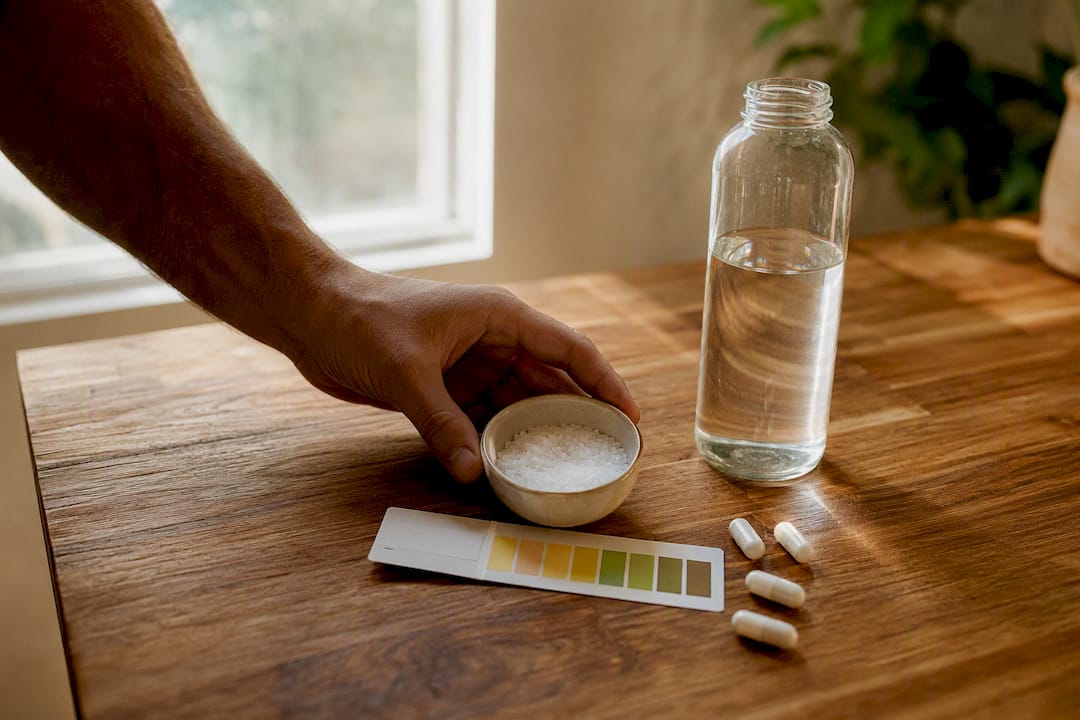
Sodium plays a bigger role here than most lifters realize. Plain water without electrolytes can actually blunt thirst and increase urine output before you’ve fully rehydrated. A pinch of salt in your water, a salty snack, or an electrolyte mix helps your body hold onto the fluid instead of flushing it straight through.

What to Eat Right After Weigh-In
If your federation weighs you in a few hours before you lift, that window is where meets get won or lost on the nutrition side. Cutting weight, even a modest 2 to 3 percent of body mass, depletes glycogen and fluid, and you’ve got a narrow runway to get it back before your opener.
Practitioner guidance from Ironside Training recommends getting 100 to 150 grams of fast-digesting carbohydrate in as soon as the scale clears you, then following up with another 50 to 100 grams every hour or two depending on how much time remains before your first lift. That first hit often works best as a liquid, since a stressed, dehydrated stomach handles fluid better than solid food.
Sodium deserves equal attention in this window. Pedialyte, a sports drink with real electrolytes, or a handful of pretzels alongside your carbs all help pull fluid back into your bloodstream faster than water alone. Lifters who cut significant weight sometimes aim for higher carbohydrate intake by the end of the full refeeding period, particularly if several hours separate weigh-in from the first attempt.
- Start with a sports drink or diluted juice, not a solid meal, if you’re dehydrated.
- Move to easily digested solids (white bread, bananas, a small bagel) once your stomach settles.
- Add a salty component (crackers, an electrolyte tab, broth) within the first 30 minutes.
- Track how you feel: bloating or nausea means slow down and switch back to liquids.
Pro Tip: Test this exact refeeding sequence, timing and all, during a mock weigh-in in training. Your gut’s tolerance for a fast carb load is something you learn, not something you assume.
What to Eat the Morning of a Weightlifting Meet
The morning-of plan is really three smaller decisions stacked on top of each other: breakfast, a pre-lift snack, and what you sip between attempts.
- 3 to 4 hours before you’re due to lift, eat a real meal built around carbohydrate with a moderate serving of protein. A bagel with turkey, a bowl of rice with eggs, or oatmeal with a scoop of protein powder all work. Hopkins Medicine’s guidance lands squarely on this combination, carbs plus lean protein, low fat and low fiber, in the hours before competition.
- 1 to 2 hours out, scale back to something lighter: a banana, a small smoothie, or a slice of toast with honey. Your stomach shouldn’t be working hard when you’re warming up.
- 30 to 60 minutes before your opener, a fast carb source does the job: a rice cake, half a sports gel, or a few dates. This is also when caffeine, if you’re using it, gets timed to peak right as you approach the bar.
Between attempts, sip rather than gulp. Small amounts of an electrolyte drink every 15 to 20 minutes keep you topped up without sloshing around under a heavy squat. A quarter of a banana or a bite of a rice cake between flights can hold your energy steady through a long session without leaving you full.
Two simple checks tell you whether your fluid plan is working: urine color (pale yellow is the target, dark means drink more) and a same-scale bodyweight check before you start warming up compared to your morning weigh-in. If you’re down more than a percent or two of body mass with no clear reason, add fluid and a pinch of sodium before you touch a bar.
How Much Caffeine Should You Take Before Lifting?
Caffeine is the most reliable ergogenic aid available to strength athletes, and it’s also the one most commonly mistimed or overdosed on meet day.
Research on caffeine and exercise performance supports a dose around 3 to 6 mg/kg of body weight, taken 30 to 60 minutes before you need the effect. For a 100 kg lifter, that’s roughly 300 to 600 mg, a wide range, which is exactly why testing your own response in training matters more than chasing the top end.
- Never exceed the dose you’ve already tolerated well in training, especially on adrenaline-heavy meet day.
- Split it if needed: part with breakfast, part 45 minutes before your opener, to avoid a jittery spike.
- Watch for GI upset, a racing heart, or trouble focusing. Those are signs to dial the dose back, not push through.
- If you’ve been drinking coffee daily for months, your baseline tolerance is already higher, so calibrate accordingly.
Beyond caffeine, most other supplements marketed for competition day don’t earn a place there. Creatine works, but as a chronic, loading-and-maintenance supplement, not something you take differently on meet morning. Nitrates and bicarbonate can help in some athletes but require careful trial runs, since bicarbonate in particular can cause serious GI distress if dosing and timing aren’t already dialed in. General caffeine safety guidance also flags sleep disruption and anxiety as reasons to keep your dose modest if you’re already wired from competition nerves.
Pro Tip: If you’ve never used caffeine in training, meet day is the wrong day to start. Novel stimulants and competition adrenaline are a rough combination.
Managing Bloat and GI Distress During a Long Meet
Fullness is a tool, not just a discomfort to manage. A bit of stomach fullness can genuinely help bench and squat by giving you something to brace against, while deadlifts, especially in a low bar or sumo stance, tend to go better with a flatter, less distended midsection.
That means your feeding strategy can flex by lift. Eat a touch more solid food before squat and bench sessions in a meet, then lighten up to fluids and small sips before your deadlift flight if bloat has been an issue in training.
GI distress ruins more meets than bad programming does, and it’s almost always self-inflicted:
- Never introduce a new food, drink, or supplement on meet day. BarBend’s competition-day guidance and most experienced coaches repeat this warning for good reason.
- Favor low-fiber, low-fat foods in the hours before lifting. A greasy burger sounds appealing at 10 a.m.; it’s a bad decision at 1 p.m. when you’re due to squat.
- Take smaller portions more often rather than one large meal between flights.
- If you’re already too full to eat, switch to liquid calories: juice, a gel, or a diluted sports drink still gets carbs in without adding bulk.
On logistics, pack smart: a cooler with ice packs for anything perishable, a thermos for warm rice or oats, utensils and napkins, a stash of gels or rice cakes for quick carbs, and your electrolyte mix. Confirm your handler knows the feeding schedule as well as you do, because you will forget things mid-meet.
What to Eat After the Meet Ends
The meet isn’t over nutritionally the moment you rack your last attempt. What you eat in the next hour sets up how you feel that night and how fast you bounce back for training the following week.
Aim for a balanced intake of protein paired with carbohydrate within the first one to two hours. For a 90 kg lifter, that’s about 45 to 90 grams of carbohydrate alongside a solid protein source, a shake, a sandwich, or a full meal if you can stomach it that soon after competing.
- Weigh yourself before and after the session if you can, and aim to close most of that gap with fluid over the following hours.
- Watch urine color again; it’s still the simplest gauge of whether you’re rehydrated.
- If you lost significant sodium through sweat or a weight cut, an electrolyte drink does more for you than plain water.
- Keep eating regular meals every 2 to 3 hours through the evening instead of one huge dinner.
A recovery-focused nutrition plan that includes electrolytes and a protein source in the first hour tends to leave lifters feeling human again faster than skipping straight to a celebratory meal three hours later.
Pro Tip: If your meet ran long and you’re drained by lift number nine, a small electrolyte drink and a handful of pretzels right after your last attempt beats waiting until you’re home to eat anything at all.
What I Tell Every Lifter Before Their First Meet
Every fueling plan on paper looks clean. Meet day rarely is. That gap between the plan and the chaos of a real competition is where most lifters lose ground, not from bad programming, but from skipped snacks, forgotten water bottles, and nerves that kill appetite right when carbohydrate matters most.
Three things are non-negotiable in my book. First, you need a practiced list of meet-day foods, tested in training, not improvised in a hotel lobby. Second, you need an actual hydration and sodium plan, not a vague intention to “drink more water.” Third, you need specific carbohydrate targets for the windows that matter: prefuel, post-weigh-in, and between attempts, with a number attached, not a feeling.
Caffeine and other supplements get calibrated the same way. Test them on a hard training day that mimics meet stress, not for the first time under the bright lights. The lifters who fall apart nutritionally on meet day are almost never missing information. They’re missing a rehearsed routine they trust enough to follow when adrenaline is trying to talk them out of eating.
— GAURAV
Electrolytes and Recovery Support Worth Testing Before Meet Day
Carbohydrate and fluid do the heavy lifting on competition day, but sodium balance is the piece that quietly determines whether all that carb loading actually sticks. That’s where a dedicated electrolyte product earns its spot in your cooler.

Nutribliss’s electrolyte supplement is built to replace the sodium and potassium lost through sweat and, for lifters who cut weight, through the water manipulation that comes with it. It’s not a substitute for the carbohydrate and food strategy outlined above; it’s the piece that helps that food and fluid actually stay where you need it, in your bloodstream, not flushed out in the bathroom before your opener. Once the meet wraps and adrenaline fades, a sleep formula can help you actually rest that night, which matters more than most lifters admit after a long, draining competition day. As with caffeine and every food on this list, trial any new supplement in training first, never for the first time on meet morning. Check out the electrolyte formula on the Nutribliss product page and see how it fits into your own prefuel and rehydration plan. #nutribliss
Where This Guidance Comes From
The recommendations above lean on a handful of sources chosen because they combine research rigor with real competition-day practicality.
- The 4Ps framework supplies the grams-per-kilogram carbohydrate targets and the overall Personalize, Periodize, Prefuel, Prepare structure this article is built around.
- Hopkins Medicine’s athlete nutrition guidance grounds the pre-event meal timing and composition advice in clinical sports nutrition practice.
- Ironside Training’s meet-day protocol provides the practitioner-level detail on post-weigh-in refeeding and sodium strategy that research alone doesn’t always spell out.
- Research on caffeine dosing supports the ergogenic dosing range and the emphasis on testing tolerance before relying on it in competition.
Sources
- The 4Ps framework of nutritional strategies for optimal performance | Performance Nutrition | Springer Nature Link
- Nutrition for Athletes: What to Eat Before a Competition
- Powerlifting Meet Day Nutrition 101
- Ncbi