

TL;DR:
- Arginine boosts bodybuilding by improving nitric oxide production, which enhances blood flow and nutrient delivery.
- Its main effect is creating vascular conditions that support training, recovery, and endurance rather than direct muscle growth.
Arginine is a semi-essential amino acid that drives bodybuilding performance primarily by triggering nitric oxide production, which widens blood vessels and improves nutrient delivery to working muscles. The benefits of arginine in bodybuilding are real, but they operate indirectly. Arginine does not build muscle on its own. It creates the vascular conditions that let your training, nutrition, and recovery do that job more effectively. Understanding this distinction separates athletes who use arginine well from those who feel let down by it.
How arginine benefits bodybuilding through nitric oxide
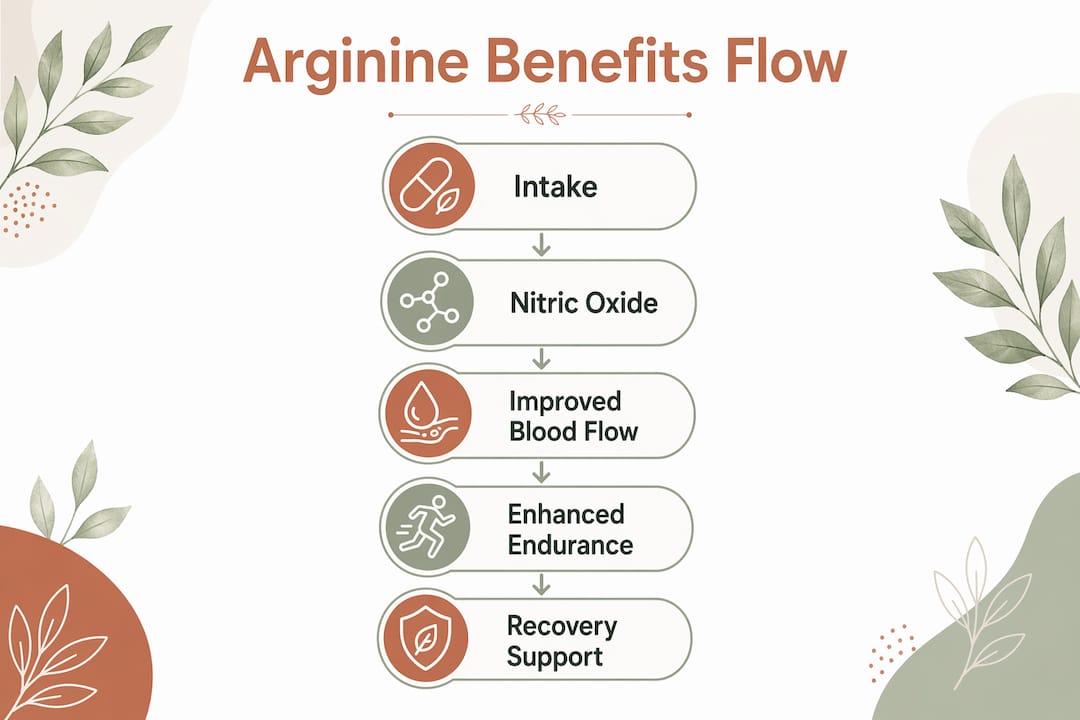
Arginine’s core function is serving as the main substrate for nitric oxide synthesis in the body. Nitric oxide causes smooth muscle in blood vessel walls to relax, a process called vasodilation. Wider vessels carry more oxygen, glucose, and amino acids to muscle tissue during training. That increased delivery is the foundation of every performance benefit arginine offers.
The nitric oxide mechanism also accelerates the removal of metabolic waste. During intense lifting, muscles produce lactate and ammonia as byproducts. High concentrations of both compounds cause fatigue and reduce force output. Arginine-driven blood flow clears lactate and ammonia faster, which extends the time before fatigue forces you to stop or reduce intensity.
Arginine also supports muscle protein synthesis indirectly. Amino acids cannot reach muscle fibers to trigger repair if blood flow is restricted. By improving vascular delivery, arginine creates the environment where nutrient transport to muscle becomes more efficient after a hard session. The muscle does the growing. Arginine keeps the supply lines open.
- Vasodilation: Nitric oxide relaxes blood vessel walls, increasing diameter and blood flow volume.
- Oxygen delivery: More blood means more oxygen reaching active muscle fibers during sets.
- Nutrient transport: Amino acids, glucose, and micronutrients arrive faster and in greater quantity.
- Waste clearance: Lactate and ammonia exit muscle tissue more quickly, delaying fatigue onset.
- Recovery support: Post-workout nutrient delivery accelerates tissue repair and reduces soreness duration.
Pro Tip: Stack arginine with a carbohydrate source pre-workout. Insulin released after carbohydrate intake amplifies vasodilation, making arginine’s blood flow effects noticeably stronger during your session.
What does the science actually say about arginine for athletes?
The research on arginine is more nuanced than most supplement marketing suggests. A 2026 systematic review with resistance-trained individuals found no significant acute strength gain from single doses of 6–8g, with a pooled standardized mean difference of 0.168 (95% CI: -0.145 to 0.481; p=0.292). That result tells you arginine taken once before a workout will not make you noticeably stronger that day.
Endurance is a different story. Arginine supplementation modestly improves endurance and oxygen capacity across populations, with meta-analyses covering over 400 participants showing likely strong benefit for prolonged exercise tolerance. For bodybuilders running high-volume programs or athletes doing conditioning work alongside lifting, this endurance benefit is meaningful.
“Arginine supports the cardiovascular environment critical for nutrient transport and waste removal, indirectly fostering an anabolic state when combined with adequate nutrition.”
One major limitation is bioavailability. Oral L-arginine undergoes extensive first-pass metabolism in the gut and liver before reaching systemic circulation. A significant portion breaks down before it can raise plasma arginine levels enough to produce strong nitric oxide effects. This explains why many athletes report inconsistent results from standard L-arginine capsules.
| Outcome | Evidence strength | Notes |
|---|---|---|
| Acute strength increase | Weak | No significant effect in resistance-trained adults |
| Endurance and fatigue resistance | Moderate | Supported across multiple studies, n=444 |
| Muscle recovery | Moderate | Improved via nutrient delivery and waste clearance |
| Nitric oxide and vasodilation | Strong | Well-established physiological mechanism |
| Bioavailability (oral L-arginine) | Poor | First-pass metabolism limits plasma elevation |
Highly trained athletes face an additional challenge. Elite bodybuilders often reach a ceiling where their endogenous nitric oxide production is already well-optimized. Adding exogenous arginine produces diminishing returns compared to less-trained individuals who have more room for vascular improvement. If you are an intermediate or advanced lifter, expect modest rather than dramatic results.
How to use arginine supplements effectively for bodybuilding
Dosing strategy matters more than most athletes realize. Consistent daily intake of 6–12g split across multiple doses outperforms a single large pre-workout dose for managing fatigue and supporting recovery. Treating arginine as a training-block supplement rather than a one-off pump enhancer is the approach the evidence supports.
- Start with 3–4g per dose. Begin at the lower end of the 6–12g daily range to assess gastrointestinal tolerance before increasing.
- Split doses across the day. Take one dose 30–45 minutes before training and a second dose with your post-workout meal to maintain elevated plasma levels.
- Prioritize L-citrulline if bioavailability is a concern. L-citrulline converts to arginine after absorption with higher and more sustained plasma levels than oral L-arginine. Many athletes use both together.
- Use AAKG (arginine alpha-ketoglutarate) for pre-workout focus. AAKG combines arginine with a Krebs cycle intermediate, which some athletes find improves the pre-workout pump response compared to standard L-arginine.
- Maintain consistent intake across your training block. Arginine’s effects on fatigue markers like ammonia and lactate accumulate over weeks of regular dosing, not from a single session.
- Cycle off every 8–12 weeks. Taking a two-week break prevents tolerance buildup and keeps your body responsive to the supplement.
Pro Tip: If you experience gastrointestinal discomfort with L-arginine, switch to L-citrulline malate at 6–8g pre-workout. You get the same downstream nitric oxide effect with far less digestive irritation.
Nutribliss offers an L-arginine supplement formulated for athletes who want a clean, straightforward dose without unnecessary fillers. Consistent daily use aligns with the dosing strategy the research supports.
What are the side effects and safety considerations?
Arginine is safe for healthy adults at recommended doses, but specific conditions and medications require caution. Knowing the risks before you start protects your health and your training consistency.
- Gastrointestinal discomfort is the most common complaint. Nausea, cramping, and loose stools occur more often at doses above 10g taken at once. Splitting doses reduces this risk significantly.
- Cold sore activation is a real concern. Arginine competes with lysine in the body. High arginine intake can trigger herpes simplex outbreaks in people who carry the virus. Supplementing with lysine alongside arginine can offset this effect.
- Asthma and allergies may worsen with arginine supplementation. Nitric oxide can act as a bronchodilator in some contexts but may aggravate airway inflammation in others.
- Kidney disease requires medical supervision. Arginine metabolism produces byproducts the kidneys must process. Impaired kidney function changes how the body handles supplemental doses.
- Blood pressure medications and ED treatments interact with arginine. Both drug classes affect vascular tone, and combining them with arginine can cause excessive blood pressure drops.
- Consult a healthcare provider before supplementing if you have any cardiovascular condition, take prescription medications, or have a history of kidney or liver issues.
Healthy athletes training without underlying conditions generally tolerate arginine well when they respect the dosing guidelines and build up gradually.
Key Takeaways
Arginine improves bodybuilding performance by enhancing nitric oxide-driven blood flow, which supports endurance and recovery rather than directly increasing muscle strength.
| Point | Details |
|---|---|
| Indirect muscle support | Arginine improves nutrient delivery and waste clearance, not direct muscle protein synthesis. |
| Limited acute strength effect | Research shows no significant strength increase from single pre-workout doses in trained athletes. |
| Endurance benefit is real | Meta-analyses covering over 400 participants show improved exercise tolerance with consistent use. |
| Bioavailability matters | L-citrulline converts to arginine more efficiently and raises plasma levels higher than oral L-arginine. |
| Consistent dosing wins | Daily intake of 6–12g split across doses outperforms one-off pre-workout supplementation. |
Arginine’s real role: what I’ve learned after years of watching athletes use it
The biggest mistake I see bodybuilders make with arginine is treating it like a stimulant. They take a large dose 20 minutes before a workout, feel a mild pump, and then declare it either works or it doesn’t. That is not how this compound operates.
Arginine is infrastructure, not fuel. Think of it like widening a highway before rush hour. The road does not make the cars go faster. It prevents the traffic jam that would have slowed everything down. When your blood vessels are more responsive, your training nutrition actually reaches the muscles that need it. Your recovery happens in a better-supplied environment. That is the real value.
I have also seen athletes dismiss arginine entirely because they switched to L-citrulline and got better pumps. That is a reasonable choice. L-citrulline does deliver higher plasma arginine levels with less digestive trouble. But the two compounds are not mutually exclusive. Using both together, with citrulline pre-workout and arginine spread through the day, covers both the acute vascular response and the sustained recovery support.
The athletes who get the most from arginine are intermediate lifters running high-volume programs, not elite competitors who are already at their vascular ceiling. If you are in that intermediate range and your recovery feels sluggish, consistent arginine dosing is worth a serious 8-week trial. Pair it with solid sleep, adequate protein, and proper hydration. Arginine cannot compensate for gaps in those fundamentals, but it can sharpen the results you are already building. Follow #nutribliss for more evidence-based supplement guidance.
— GAURAV
Nutribliss supplements that support your training and recovery
Recovery does not stop when arginine’s job ends. The vascular environment arginine creates needs to be supported by proper hydration and quality sleep to fully convert into muscle repair and performance gains.
Nutribliss offers two products that work directly alongside arginine supplementation. The Nutribliss Electrolytes Supplement replenishes sodium, potassium, and magnesium lost during intense training, keeping muscle contractions sharp and fluid balance stable. The Nutribliss Sleep Formula supports deep, restorative sleep, which is when the majority of muscle protein synthesis and tissue repair actually occurs. Both products are available at nutribliss.us and are designed for athletes who take their recovery as seriously as their training.
FAQ
What are the main benefits of arginine in bodybuilding?
Arginine primarily improves blood flow through nitric oxide production, which enhances oxygen and nutrient delivery to muscles and accelerates metabolic waste removal. These effects support endurance and recovery rather than directly increasing muscle strength.
Does arginine directly increase muscle size or strength?
Research shows arginine does not produce significant acute strength gains in resistance-trained athletes. Its benefits are indirect, creating better vascular conditions for nutrient delivery and recovery that support long-term muscle development.
What is the recommended arginine dosage for muscle strength and recovery?
A daily dose of 6–12g split into multiple servings is more effective than a single large pre-workout dose. Consistent intake over a training block produces better fatigue management and recovery outcomes than one-off supplementation.
Is L-citrulline better than L-arginine for bodybuilding?
L-citrulline converts to arginine after absorption with higher and more sustained plasma levels than oral L-arginine, making it a more bioavailable nitric oxide precursor. Many athletes use both compounds together to cover acute and sustained vascular benefits.
Who should avoid arginine supplements?
People with kidney disease, asthma, herpes simplex virus history, or those taking blood pressure medications or ED treatments should consult a healthcare provider before using arginine. Healthy adults generally tolerate it well at recommended doses.