

What really separates top-performing athletes from the rest often comes down to one overlooked factor: hydration. Fluid balance controls everything from cognitive sharpness to muscle endurance, making water and electrolytes vital for peak results. Many American athletes still believe myths like all drinks hydrating equally, risking cramps or fatigue. This guide sheds light on strategic hydration and helps you select the right methods to maintain energy, increase recovery, and push athletic limits safely.
Table of Contents
- Hydration Defined: Body Functions And Misconceptions
- Types Of Hydration: Water Versus Electrolytes
- How Hydration Affects Athletic Performance
- Dehydration Risks And Physical Consequences
- Hydration Strategies For Optimal Recovery
Key Takeaways
| Point | Details |
|---|---|
| Hydration is Multifaceted | Proper hydration extends beyond simply drinking water; it involves a strategic approach based on individual physiological needs. |
| Electrolytes Are Essential | Electrolytes play a vital role in performance, especially during intense physical activities, and must be replenished alongside fluid intake. |
| Monitor Hydration Status | Utilizing urine color as an indicator and weighing before and after workouts can provide insights into hydration levels and needs. |
| Personalized Strategies Matter | A tailored hydration strategy, considering sweat rate and exercise intensity, enhances both recovery and performance. |
Hydration Defined: Body Functions and Misconceptions
Hydration represents far more than simply drinking water. It’s a complex physiological process critical for athletic performance and overall wellness. Body water plays a fundamental role in maintaining essential biological functions that extend well beyond basic survival.
The human body relies on proper hydration to accomplish several critical functions:
- Temperature regulation through sweating and heat dissipation
- Nutrient transportation to cells and tissues
- Joint lubrication for smooth movement
- Waste removal through metabolic processes
- Cognitive function maintenance
Contrary to popular belief, hydration isn’t just about quantity - it’s about strategic fluid intake. Hydration needs vary significantly based on individual factors like body composition, activity level, and environmental conditions.
Athletes frequently misunderstand hydration, believing myths that can potentially compromise their performance. Common misconceptions include thinking thirst is the only dehydration indicator and assuming all fluids contribute equally to hydration. Sugar-laden drinks, for instance, can actually impede proper fluid balance.
Proper hydration is not just about drinking water, but understanding your body’s unique physiological requirements.
Not all hydration sources are created equal. Sports drinks, while marketed aggressively, aren’t always the optimal rehydration method. Electrolyte balance, urine color, and individual sweat rates provide more nuanced insights into true hydration status.

Pro tip: Monitor your urine color as a reliable hydration indicator - pale yellow suggests optimal hydration, while dark amber signals potential dehydration.
Types of Hydration: Water Versus Electrolytes
When it comes to athletic hydration, understanding the difference between water and electrolytes is crucial for optimal performance. Hydration is not a one-size-fits-all concept, but a nuanced approach to replenishing bodily fluids and essential minerals.
Water provides basic fluid replacement, but electrolytes play a critical role in maintaining complex physiological functions. The key electrolytes essential for athletes include:
- Sodium: Regulates fluid balance and nerve transmission
- Potassium: Supports muscle contractions and heart function
- Magnesium: Aids muscle recovery and energy production
- Calcium: Crucial for muscle and nerve signaling
During intense physical activity, athletes lose more than just water through sweat. Electrolyte depletion can lead to significant performance challenges, including muscle cramps, fatigue, and reduced cognitive function.
Not all hydration is created equal - electrolytes are the unsung heroes of athletic performance.
Athletes must strategically choose between water and electrolyte-rich drinks based on their specific activity. Short, low-intensity workouts might require only water, while endurance events demand comprehensive electrolyte replacement to maintain peak performance.
The composition of hydration sources varies dramatically. While water provides basic fluid replacement, sports drinks and electrolyte supplements offer a more targeted approach to maintaining mineral balance and supporting physiological functions.
Here’s how common athletic hydration sources compare:
| Source Type | Fluid Replacement Quality | Electrolyte Content | Typical Use Case |
|---|---|---|---|
| Water | Excellent for hydration | Minimal | Short, low-intensity workouts |
| Sports Drinks | Good if properly formulated | Moderate to high | Endurance or intense exercise |
| Electrolyte Supplements | Targeted hydration | High | High sweat loss, individualized needs |
| Sugary Soft Drinks | Poor, may worsen dehydration | Low | Not recommended for athletes |
Pro tip: Weigh yourself before and after intense workouts to understand your exact fluid and electrolyte loss, helping you create a personalized hydration strategy.
How Hydration Affects Athletic Performance
Athletic performance is intrinsically linked to hydration status, with even minor fluid imbalances capable of dramatically impacting physical and mental capabilities. Muscle function and athletic output depend critically on maintaining optimal hydration levels.
The physiological impacts of dehydration are profound and multifaceted:
- Reduced muscle flexibility
- Decreased cardiovascular efficiency
- Impaired oxygen delivery
- Compromised cognitive function
- Increased core body temperature
Athletes experiencing even a 2% body weight loss through sweat can see significant performance degradation. This seemingly small percentage translates into measurable declines in speed, endurance, concentration, and overall athletic capacity.
Hydration is not just about drinking water - it’s about maintaining your body’s complex physiological balance.
Different athletic disciplines require unique hydration strategies. Endurance athletes, for instance, must focus more intensively on electrolyte replacement compared to short-duration sport participants. The body’s thermoregulatory system relies heavily on adequate fluid levels to manage heat stress and maintain consistent performance.
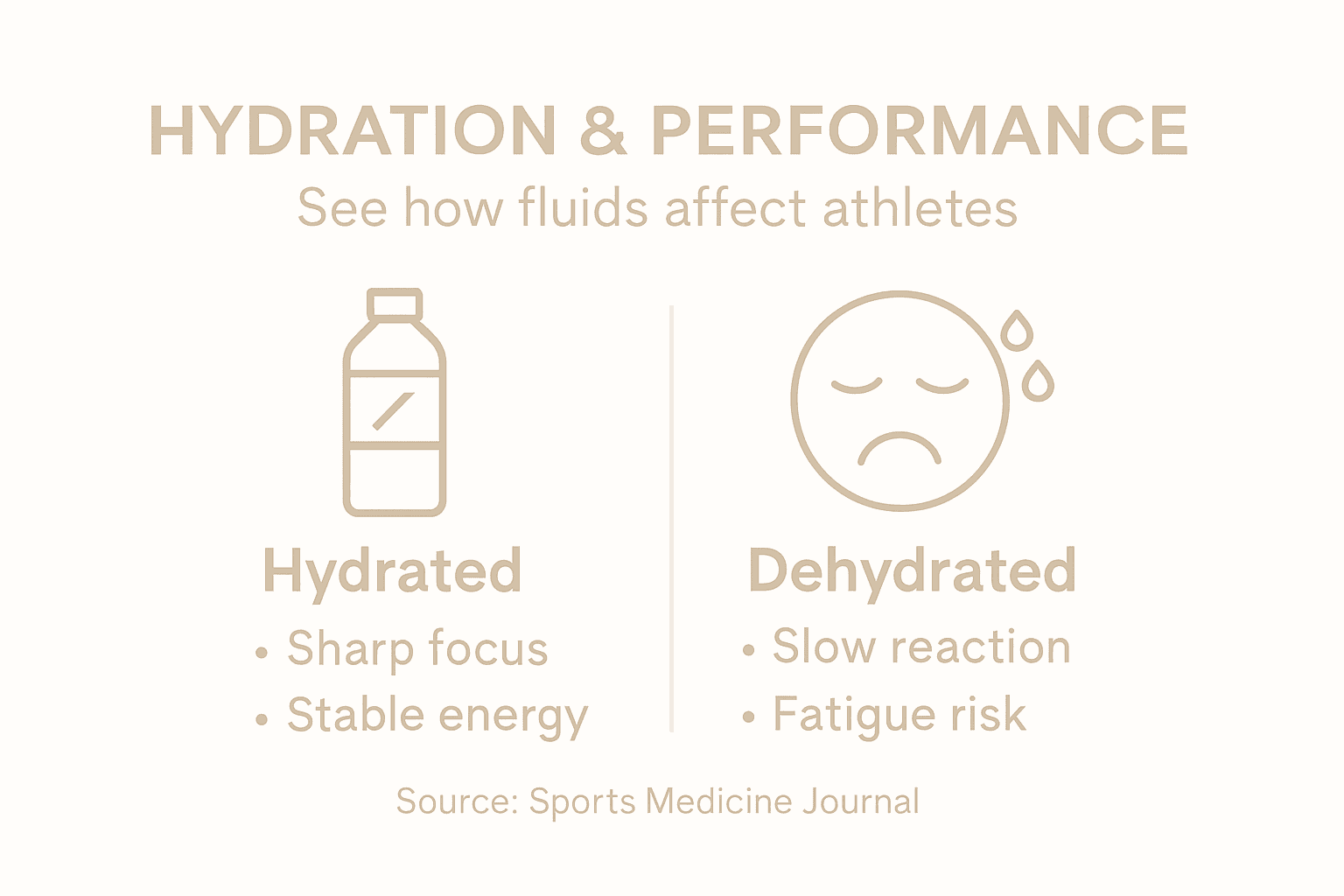
Cognitive performance suffers equally with physical capabilities when dehydration sets in. Reduced mental clarity, slower reaction times, and decreased decision-making skills can emerge even before an athlete feels physically fatigued.
Pro tip: Monitor your urine color throughout training - pale yellow indicates good hydration, while dark amber signals an immediate need for fluid replenishment.
Dehydration Risks and Physical Consequences
Dehydration represents a significant threat to athletic performance, with consequences that extend far beyond simple thirst. Athletic health risks escalate rapidly when fluid balance becomes compromised during intense physical activity.
The physiological impacts of dehydration are comprehensive and alarming:
- Cardiovascular strain
- Reduced blood volume
- Impaired muscle function
- Cognitive performance degradation
- Increased internal body temperature
- Potential organ system disruption
Athletes experience multiple layers of physiological stress when dehydration occurs. Blood becomes thicker, reducing oxygen transportation efficiency and placing additional burden on the heart. This creates a cascading effect where cardiovascular performance declines, muscular output diminishes, and mental clarity suffers simultaneously.
Dehydration transforms your body from a high-performance machine into a struggling system.
Severe dehydration can trigger dangerous heat-related illnesses, including heat exhaustion and potentially life-threatening heat stroke. The body’s temperature regulation mechanisms become compromised, making athletes vulnerable to rapid internal temperature escalation.
Cognitive function deteriorates alongside physical capabilities. Decision-making speed, spatial awareness, and reaction times can dramatically decrease, creating significant risks in competitive and training environments.
Pro tip: Develop a personalized hydration strategy that accounts for your specific sweat rate, activity intensity, and environmental conditions to prevent dehydration risks.
Hydration Strategies for Optimal Recovery
Successful athletic recovery hinges on implementing strategic hydration protocols for fluid restoration. Athletes must approach rehydration as a deliberate, scientifically-informed process rather than a casual afterthought.
Key components of an effective post-exercise hydration strategy include:
- Timely fluid replacement
- Electrolyte replenishment
- Balanced nutrient intake
- Consistent monitoring
- Individual adaptation
The window for optimal recovery is surprisingly narrow. Consuming electrolyte and carbohydrate solutions within 30 minutes after exercise maximizes fluid absorption and muscle glycogen restoration. Sodium plays a critical role in this process, enhancing extracellular fluid retention and supporting rapid rehydration.
Recovery begins the moment your workout ends - your hydration strategy determines how quickly you bounce back.
Understanding individual sweat rates and exercise conditions becomes paramount. Endurance athletes, for instance, require more sophisticated hydration approaches compared to strength training participants. Factors like environmental temperature, exercise intensity, and personal metabolic rate all influence optimal fluid replacement strategies.
Cognitive recovery parallels physical recovery. Proper hydration supports neurological functions, helping athletes maintain mental clarity and decision-making capabilities in high-stress competitive environments.
Below is a summary of hydration strategies for optimal post-exercise recovery:
| Strategy Component | Recovery Impact | Best Practice Example |
|---|---|---|
| Timely Fluid Intake | Rapid rehydration | Drink within 30 minutes post activity |
| Electrolyte Replenishment | Boosts muscle recovery | Choose sodium-rich recovery drinks |
| Nutrient Balance | Restores energy levels | Add carbs or protein to fluids |
| Monitoring & Adaptation | Prevents future issues | Track sweat rate for adjustments |
Pro tip: Weigh yourself before and after exercise to calculate precise fluid loss, and develop a personalized rehydration plan based on your individual metrics.
Achieve Peak Performance with Science-Backed Hydration Solutions
Proper hydration is essential for maintaining muscle flexibility, cognitive clarity, and overall athletic output. The article highlights common challenges such as electrolyte imbalance and dehydration risks that can drastically reduce your performance. If you want to avoid fatigue, muscle cramps, and impaired recovery, addressing these issues with the right supplements is key.
Explore how targeted hydration support, including electrolyte supplements and nutrient-rich hydration aids, can help you regain balance and maximize endurance. Take control of your hydration strategy with products designed to match your unique sweat rate and exercise intensity.

Ready to boost your athletic performance and recovery with scientifically formulated supplements? Visit Nutribliss to browse a diverse range of protein powders, vitamins, minerals, and electrolytes built for serious athletes. Start building your personalized hydration plan today and experience the difference strategic fluid and nutrient intake can make to your training and results. Don’t wait until dehydration slows you down—act now and enhance your wellness journey at Nutribliss.
Frequently Asked Questions
What are the key functions of hydration for athletes?
Hydration is essential for regulating body temperature, transporting nutrients to cells, lubricating joints, removing waste, and maintaining cognitive function during physical activity.
How do electrolytes impact athletic performance?
Electrolytes, such as sodium, potassium, magnesium, and calcium, are crucial for maintaining fluid balance, supporting muscle contractions, and aiding in recovery. Their depletion can lead to cramps, fatigue, and decreased performance.
How can I monitor my hydration status effectively?
Monitoring urine color is a reliable method—pale yellow indicates optimal hydration, while dark amber suggests dehydration. Additionally, weighing yourself before and after exercise can help you understand fluid loss and inform your rehydration strategy.
What should I consider when choosing between water and sports drinks?
For short, low-intensity workouts, water is often sufficient. However, for endurance events or intense sessions, electrolyte-rich sports drinks can help replenish lost minerals and support performance more effectively.