

Most American athletes do not realize that even a minor electrolyte imbalance can disrupt muscle function and slow recovery. For those committed to performance, these tiny minerals make a major difference. Maintaining the ideal balance means more than just drinking water or grabbing sports drinks. This guide reveals exactly how understanding electrolyte dynamics can sharpen your edge, support stamina, and speed up recovery, all grounded in the latest research and practical strategies.
Table of Contents
- Electrolyte Balance Defined for Athletes
- Major Types of Electrolytes and Functions
- How Electrolyte Balance Supports Performance
- Signs and Risks of Imbalance for Athletes
- Optimizing Electrolyte Intake and Recovery
Key Takeaways
| Point | Details |
|---|---|
| Electrolyte Importance | Electrolytes are essential for optimal athletic performance, influencing muscle function, hydration, and energy production during physical activities. |
| Monitoring Intake | Athletes should track electrolyte intake and hydration status during training to prevent imbalances that can hinder performance. |
| Risks of Imbalance | Signs of electrolyte imbalances include muscle cramps and cognitive issues, requiring prompt attention to avoid severe health risks. |
| Personalized Strategies | Individualized electrolyte replenishment strategies based on training intensity and personal needs enhance recovery and performance outcomes. |
Electrolyte Balance Defined for Athletes
Electrolyte balance represents the precise maintenance of minerals essential for athletic performance and physiological function. These electrically charged particles play a critical role in muscle contraction, nerve signaling, and overall metabolic processes. Understanding their dynamics is crucial for athletes seeking optimal performance and recovery.
Athletes experience complex electrolyte shifts during intense physical activity. Systematic research highlights the central importance of maintaining appropriate electrolyte levels particularly for endurance and ultra-endurance athletes. Key electrolytes like sodium, potassium, calcium, and magnesium directly influence muscle function, hydration status, and energy production. Imbalances can lead to significant performance disruptions such as muscle cramps, reduced endurance, and potential exercise-associated hyponatremia.
The human body manages electrolyte concentrations through intricate regulatory mechanisms. During exercise, athletes lose electrolytes through sweat, which can trigger immediate physiological adaptations. Sodium helps maintain fluid balance, potassium supports muscle and nerve function, calcium enables muscle contractions, and magnesium supports energy metabolism. Professional athletes often utilize strategic hydration and supplementation techniques to maintain this delicate mineral equilibrium.
Pro Training Tip: Monitor your electrolyte intake during extended training sessions by consuming balanced electrolyte-rich fluids and tracking your hydration status to prevent performance-limiting imbalances.
Major Types of Electrolytes and Functions
Electrolytes are essential minerals that carry electrical charges throughout the human body, playing critical roles in multiple physiological processes. Each type of electrolyte performs unique functions that are fundamental to athletic performance and overall health. Understanding these minerals helps athletes optimize their training and recovery strategies.
Comprehensive medical research reveals the intricate functions of major electrolytes that impact athletic performance. Sodium regulates fluid balance and blood pressure, enabling proper hydration and cellular communication. Potassium supports critical heart rhythm and muscle contraction, ensuring smooth muscular performance during intense physical activities. Calcium facilitates muscle contractions and nerve signaling, while Magnesium supports energy metabolism and helps prevent muscle cramping.

Athletes must recognize that each electrolyte operates within a complex interconnected system. Sodium and potassium work together to maintain proper nerve impulse transmission and muscle function. Calcium plays a crucial role in muscle contraction and bone health, making it essential for high-performance athletes. Magnesium supports protein synthesis, muscle and nerve function, and helps regulate other electrolyte interactions. Understanding these relationships allows athletes to develop more targeted nutritional and hydration strategies.
The table below summarizes each major electrolyte and its main roles for athletes:
| Electrolyte | Primary Function | Additional Benefit |
|---|---|---|
| Sodium | Maintains fluid balance | Supports nerve signaling |
| Potassium | Regulates muscle contractions | Stabilizes heart rhythm |
| Calcium | Enables muscle contractions | Supports bone health |
| Magnesium | Aids energy metabolism | Reduces muscle cramps |
Pro Performance Tip: Create a personalized electrolyte tracking system by monitoring your sweat rate, activity intensity, and individual mineral loss to develop a precise replenishment strategy tailored to your specific physiological needs.
How Electrolyte Balance Supports Performance
Athletic performance hinges on complex physiological interactions, with electrolyte balance serving as a critical foundation for optimal physical function. These charged minerals facilitate numerous metabolic processes that directly impact an athlete’s ability to train, compete, and recover effectively. Understanding the intricate role of electrolytes provides insights into maximizing human physical potential.
Scientific research reveals the profound connection between electrolyte balance and athletic performance, demonstrating how these minerals support fundamental physiological functions. Sodium helps maintain fluid balance and nerve signaling, enabling efficient muscle communication and preventing dehydration. Potassium regulates muscle contractions and heart rhythm, ensuring smooth cardiovascular performance during intense physical exertion. Magnesium supports energy production, reduces muscle fatigue, and enhances overall metabolic efficiency.
The body’s electrolyte system operates as an intricate network of interdependent processes. During exercise, athletes experience rapid mineral depletion through sweat, which can compromise performance if not strategically managed. Proper electrolyte balance supports muscle endurance, prevents cramping, and helps regulate body temperature. Beyond physical performance, balanced electrolytes also contribute to cognitive function, maintaining mental clarity and decision-making capabilities during high-stress athletic scenarios.
Pro Performance Tip: Develop a personalized electrolyte replacement strategy by tracking your individual sweat rate, understanding your specific mineral loss during different types of exercise, and creating a targeted supplementation approach that matches your unique physiological needs.
Signs and Risks of Imbalance for Athletes
Electrolyte imbalances represent serious potential threats to athletes’ health and performance, manifesting through a complex range of physiological disruptions. These mineral irregularities can emerge rapidly during intense physical activity, compromising both immediate athletic capabilities and long-term wellness. Understanding the nuanced signs and potential risks is crucial for proactive health management.
Comprehensive medical research highlights the critical risks associated with electrolyte disorders in athletic populations, revealing multiple dimensions of potential complications. Athletes may experience early warning signs including muscle cramps, persistent fatigue, sudden weakness, and cognitive confusion. More severe imbalances can trigger dangerous conditions like exercise-associated hyponatremia, characterized by dangerously low sodium levels that may lead to seizures, cardiac arrhythmias, and potentially life-threatening heat-related illnesses.
The body’s electrolyte system operates as an intricate warning mechanism, with specific symptoms signaling different types of mineral disruptions. Potassium imbalances might manifest as irregular heartbeats or muscle spasms, while magnesium deficiencies can cause increased muscle tension and reduced recovery capacity. Sodium irregularities pose particularly significant risks, potentially causing neurological symptoms ranging from mild disorientation to severe cerebral edema. Professional athletes must develop keen self-awareness and monitoring strategies to detect these subtle physiological shifts before they escalate into serious medical emergencies.
Here is a quick reference on recognizing and responding to common electrolyte imbalances in athletes:
| Imbalance Type | Typical Sign | Suggested Action |
|---|---|---|
| Low Sodium | Confusion, headache | Increase sodium intake, monitor fluids |
| Low Potassium | Muscle spasms | Eat potassium-rich foods, hydrate |
| Low Calcium | Muscle twitching | Include dairy or fortified foods |
| Low Magnesium | Fatigue, cramping | Supplement with leafy greens, nuts |
Pro Performance Tip: Implement a comprehensive electrolyte tracking protocol by recording your hydration levels, tracking sweat composition, and conducting regular electrolyte panel blood tests to identify potential imbalances before they compromise your athletic performance.
Optimizing Electrolyte Intake and Recovery
Electrolyte optimization represents a critical strategy for athletes seeking peak performance and efficient recovery. The human body requires precise mineral balance to sustain intense physical activities, with individualized approaches becoming increasingly important in modern sports nutrition. Understanding the nuanced mechanisms of electrolyte intake can transform an athlete’s training and recovery outcomes.
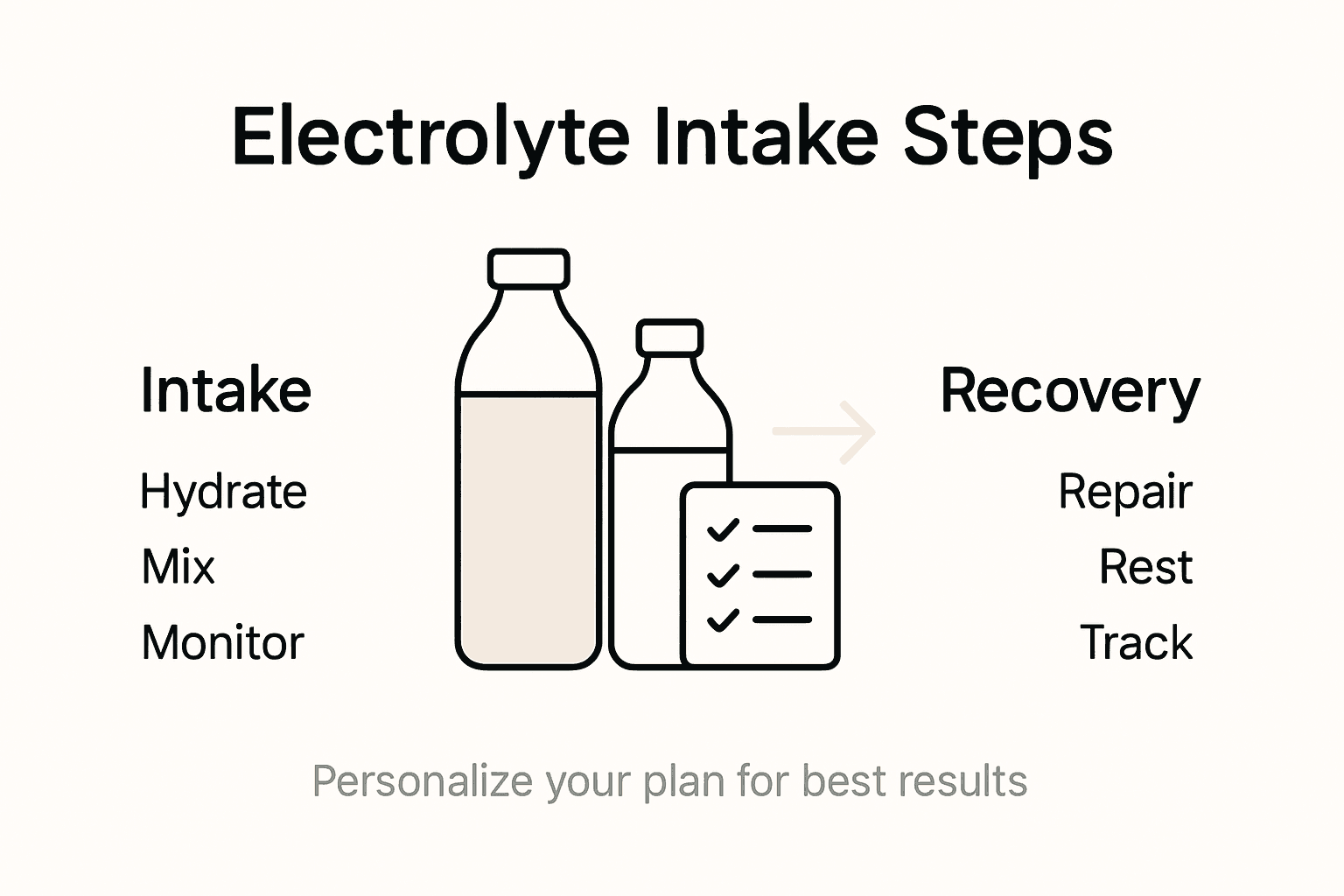
Practical strategies for athletes reveal comprehensive hydration and electrolyte management protocols, emphasizing personalized approaches to mineral replenishment. Different athletes require unique electrolyte replacement strategies based on factors like sweat rate, exercise intensity, environmental conditions, and individual physiological characteristics. Pre-exercise preparation involves gradual electrolyte loading, during-exercise maintenance through targeted fluid and mineral intake, and post-exercise recovery focusing on comprehensive mineral restoration.
The recovery phase demands strategic electrolyte reintroduction to support muscle repair and metabolic restoration. Sodium helps reestablish fluid balance, potassium supports cellular recovery, and magnesium aids muscle relaxation and protein synthesis. Professional athletes must develop sophisticated intake protocols that consider not just quantity, but precise timing and composition of electrolyte sources. Combining electrolyte-rich foods, specialized supplements, and hydration strategies can significantly accelerate recovery and reduce potential performance limitations.
Pro Performance Tip: Create a personalized electrolyte log tracking your mineral intake, sweat composition, and recovery metrics to develop a precise, individualized mineral replacement strategy that adapts to your unique physiological needs.
Elevate Your Athletic Performance with Balanced Electrolytes
Maintaining precise electrolyte balance is essential to avoid muscle cramps, fatigue, and impaired recovery as highlighted in the article “Electrolyte Balance Impact on Athletic Performance.” If you struggle with keeping your sodium, potassium, calcium, and magnesium levels in check during intense workouts or steady endurance training you need targeted nutritional support. These critical minerals regulate muscle contractions, nerve signaling, and hydration, directly influencing your performance and mental clarity.

Unlock your full potential by choosing science-backed dietary supplements designed to restore and maintain electrolyte balance at Nutribliss.us. Explore our diverse range of products including electrolyte blends, vitamins, minerals, and recovery aids. Act now to develop a personalized replenishment strategy that matches your sweat rate and training demands. Start optimizing your performance by visiting our main landing page and take the next step toward superior athletic health and recovery.
Frequently Asked Questions
What are the key electrolytes important for athletes?
The key electrolytes important for athletes include sodium, potassium, calcium, and magnesium. These minerals play vital roles in muscle function, hydration, and energy production.
How does electrolyte balance affect athletic performance?
Electrolyte balance is crucial for athletic performance as it supports muscle contraction, regulates fluid balance, and ensures efficient nerve signaling. Imbalances can lead to muscle cramps, fatigue, and decreased endurance.
What are the signs of electrolyte imbalance in athletes?
Signs of electrolyte imbalance include muscle cramps, persistent fatigue, sudden weakness, confusion, and irregular heartbeats. It’s essential to monitor these symptoms to prevent serious health issues.
How can athletes optimize their electrolyte intake for recovery?
Athletes can optimize their electrolyte intake by gradually loading electrolytes before exercise, maintaining proper fluid and mineral intake during activity, and focusing on comprehensive mineral restoration post-exercise through specialized foods and supplements.