

Most American adults fall short of daily Vitamin C recommendations, yet this single nutrient influences everything from immune defense to youthful skin. With the pressure of modern routines, millennials across the United States are searching for proven ways to support their health and appearance. This guide lays out evidence-based insights on Vitamin C, helping you make informed choices about supplements and strategies to elevate both wellness and skin vibrance.
Table of Contents
- Vitamin C Defined And Core Functions
- Types Of Vitamin C Supplements Compared
- Immune System Support And Defense
- Skin Health, Antioxidants, And Healing
- Dosage Guidelines And Safety Concerns
Key Takeaways
| Point | Details |
|---|---|
| Vitamin C Importance | Vitamin C is essential for various bodily functions, acting as an antioxidant and aiding in collagen production, immune response, and neurological health. |
| Dietary Sources & Intake | Adults should aim for 75-90 mg of Vitamin C daily, sourcing it primarily from fruits and vegetables, or through supplementation if needed. |
| Immune Support Role | Regular intake of Vitamin C can strengthen immune responses and reduce the severity of common illnesses. |
| Safe Supplementation | Consult healthcare professionals for personalized Vitamin C needs, especially for special populations or those on medications. |
Vitamin C Defined And Core Functions
Vitamin C, scientifically known as ascorbic acid, is a critical water-soluble nutrient that plays an essential role in numerous bodily functions. Unlike many animals, humans cannot synthesize this vitamin internally, which means we must obtain it through diet or specific dietary supplementation.
At its core, Vitamin C serves multiple fundamental physiological purposes. It functions as a potent antioxidant, neutralizing harmful free radicals that can damage cellular structures. The vitamin is also crucial for producing collagen, a protein fundamental to connective tissue health, which supports skin, bones, and blood vessels. Additionally, Vitamin C assists in enzymatic reactions that help produce brain chemical messengers and hormones, making it integral to neurological and endocrine system functioning.
The body’s mechanism for processing Vitamin C is quite precise. Because it is water-soluble, excess amounts are not stored long-term but instead rapidly excreted through urine. This means consistent daily intake is necessary to maintain optimal levels. For most adults, the Recommended Dietary Allowance ranges between 75-90 milligrams per day, with slightly higher requirements for smokers, pregnant women, and lactating individuals.
The human body relies on external sources to meet Vitamin C needs, making dietary choices and potential supplementation critical. While fruits and vegetables like oranges, strawberries, bell peppers, and broccoli are excellent natural sources, some individuals might benefit from targeted supplementation to ensure consistent intake.
The following table summarizes common sources, recommended intakes, and absorption considerations for Vitamin C:
| Source Type | Example Foods or Supplements | Recommended Intake (Adults) | Notable Absorption Tips |
|---|---|---|---|
| Whole Foods | Oranges, broccoli, strawberries | 75-90 mg daily | Pair with iron for better uptake |
| Synthetic Supplements | Tablets, capsules, powder | Varies by product | Consistent daily use recommended |
| Topical Formulations | Serums for skin, creams | Not for dietary needs | Apply to clean skin for best effect |
| Specialized Populations | Smokers, pregnant, athletes | May require 100+ mg daily | Seek professional dosage guidance |
Pro tip: Consider consuming Vitamin C-rich foods with iron sources to enhance absorption and maximize nutritional benefits.
Types Of Vitamin C Supplements Compared
Vitamin C supplements offer multiple formulations designed to meet diverse health needs and individual preferences. The most common types include synthetic and natural L-ascorbic acid, which are chemically identical with consistent bioavailability. These supplements come in various formats such as powders, chewable tablets, non-chewable tablets, and liquid solutions, each providing unique advantages for different consumption styles.
Traditional supplement forms like standard tablets and capsules remain popular for their convenience and consistent dosage. Chewable versions appeal to individuals who struggle swallowing pills, while powdered formats allow for flexible dosing and potential integration into beverages or foods. Emerging technologies have also introduced innovative delivery methods like liposomal encapsulation, which may offer enhanced absorption potential, though more research is needed to conclusively demonstrate superiority over conventional supplements.
For those focused on skincare and topical benefits, vitamin C derivatives present intriguing options. While L-ascorbic acid represents the purest and most potent form, other derivatives like magnesium ascorbyl phosphate provide gentler alternatives for sensitive skin. Advanced formulations often combine vitamin C with complementary ingredients such as ferulic acid and vitamin E to improve stability and enhance overall effectiveness.
When selecting a vitamin C supplement, consumers should consider factors like absorption rate, potential side effects, personal health goals, and individual tolerances. Some individuals might prefer slow-release preparations to minimize potential gastrointestinal discomfort, while others might prioritize maximum immediate absorption.
This table compares popular forms of vitamin C supplements and their distinct advantages:
| Supplement Form | Best For | Key Advantage | Consideration |
|---|---|---|---|
| Tablet/Capsule | Convenience seekers | Reliable fixed dosing | Hard to swallow for some |
| Chewable | Children, pill-averse | Easy to ingest, pleasant flavor | May contain added sweeteners |
| Powder | Flexible dosing | Mixes into foods and drinks | Requires measuring |
| Liquid | Fast absorption needed | Rapid uptake and easy administration | Potential for flavor issues |
| Liposomal | Enhanced absorption | May improve bioavailability | Higher cost, needs more research |
Pro tip: Consult with a healthcare professional to determine the most appropriate vitamin C supplement type based on your specific health requirements and absorption needs.
Immune System Support And Defense
Vitamin C plays a critical role in bolstering the body’s immune system through multiple sophisticated mechanisms. White blood cell production and function represent one of the most significant ways this essential nutrient supports our natural defense systems. By enhancing the ability of immune cells to identify and neutralize potential threats, vitamin C helps the body mount a more effective response against infections, bacteria, and viruses.

The antioxidant properties of vitamin C provide an additional layer of immune protection by combating harmful free radicals generated through environmental exposure and internal metabolic processes. These free radicals can damage cellular structures and compromise immune function, making vitamin C’s protective role extremely important. Regular intake of 100 to 200 mg daily can help strengthen immune responses, potentially reducing cold symptom duration and supporting overall cellular health.
Beyond direct immune support, vitamin C contributes to immune system resilience by promoting tissue growth, wound healing, and maintenance of critical bodily structures like skin, gums, and cartilage. This comprehensive approach helps create a more robust defensive framework, enabling the body to respond more effectively to potential health challenges. While vitamin C cannot prevent infections entirely, consistent supplementation can help modulate immune responses and potentially reduce the severity and duration of common illnesses.
Different populations may have varying vitamin C requirements, with factors like age, lifestyle, stress levels, and overall health influencing individual needs. Athletes, smokers, and individuals experiencing high stress might require higher intake to maintain optimal immune function. Understanding these nuanced requirements can help individuals develop more targeted nutritional strategies for immune support.
Pro tip: Combine vitamin C intake with other immune-supporting nutrients like zinc and vitamin D to create a more comprehensive nutritional defense strategy.
Skin Health, Antioxidants, And Healing
Vitamin C emerges as a powerhouse nutrient for skin health, playing a critical role in maintaining and protecting our body’s largest organ. Collagen synthesis and antioxidant protection represent two fundamental mechanisms through which vitamin C supports skin wellness. Found in high concentrations in both the dermis and epidermis, this essential nutrient helps maintain skin structural integrity and defend against environmental damage.
As we age, our skin’s natural vitamin C levels decline, making supplementation increasingly important. The antioxidant properties of vitamin C provide robust protection against free radical damage caused by UV exposure, pollution, and internal metabolic processes. By neutralizing these harmful molecules, vitamin C helps prevent premature aging, reduces inflammatory responses, and supports the skin’s natural repair mechanisms. Topical applications and oral supplementation can both contribute to enhanced skin resilience and appearance.
Wound healing represents another critical area where vitamin C demonstrates remarkable capabilities. By providing essential nutrients that support tissue repair and immune function, vitamin C accelerates the body’s natural healing processes. Adequate intake ensures faster wound closure, reduces infection risks, and promotes more efficient collagen formation. This makes vitamin C particularly valuable for individuals recovering from injuries, surgical procedures, or managing chronic skin conditions.
For individuals seeking comprehensive skin health strategies, combining vitamin C with other supportive nutrients can amplify its benefits. Factors like diet, hydration, sun protection, and overall lifestyle play significant roles in maintaining skin vitality. Different delivery methods - including oral supplements, topical serums, and dietary sources - offer versatile options for incorporating this essential nutrient into one’s wellness routine.
Pro tip: Pair your vitamin C intake with vitamin E for enhanced antioxidant protection and consider consuming vitamin C-rich foods alongside iron sources to maximize absorption.
Dosage Guidelines And Safety Concerns
Understanding the appropriate vitamin C intake is crucial for maximizing health benefits while avoiding potential side effects. Daily recommended intake varies significantly based on individual factors such as age, sex, lifestyle, and overall health status. For most adult men, the recommended daily allowance is 90 mg, while adult women typically require 75 mg per day.
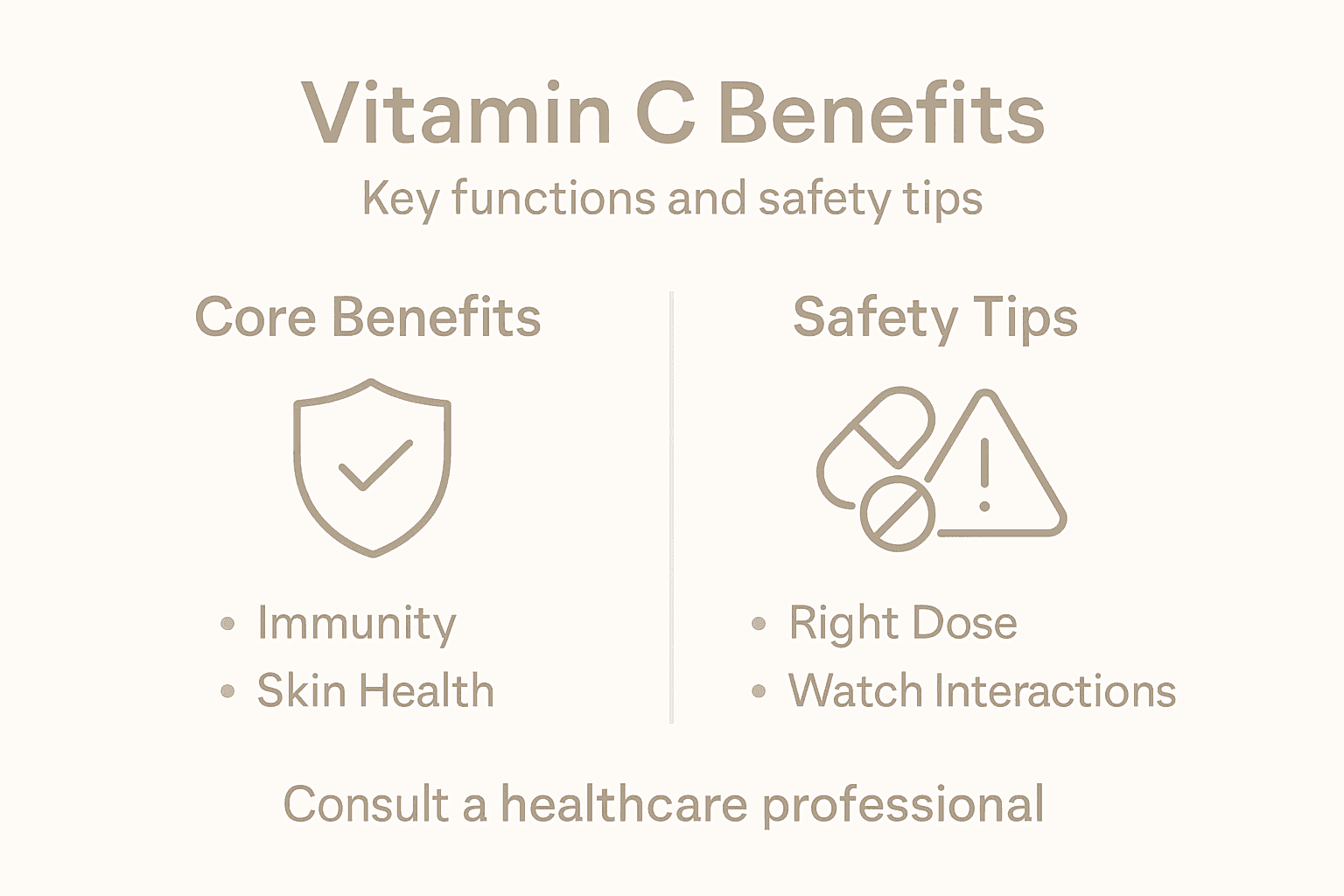
Special populations have unique vitamin C requirements that demand careful consideration. Smokers, for instance, need an additional 35 mg daily due to increased oxidative stress. Pregnant and lactating women also have elevated needs, while individuals with certain medical conditions or high-stress lifestyles might benefit from targeted supplementation. The tolerable upper intake level is set at 2,000 mg daily to prevent potential adverse effects such as gastrointestinal distress, kidney stones, and other metabolic complications.
Absorption efficiency plays a critical role in vitamin C supplementation strategy. As intake levels increase, the body’s ability to absorb the vitamin decreases, with excess amounts quickly excreted through urine. This means that mega-dosing is not only unnecessary but potentially counterproductive. Most health professionals recommend obtaining vitamin C through a balanced diet supplemented with moderate, consistent intake rather than sporadic high-dose interventions.
Potential interactions with medications and underlying health conditions warrant careful evaluation before starting any vitamin C supplementation regimen. Individuals taking blood thinners, statins, or undergoing specific medical treatments should consult healthcare providers to ensure safe and effective vitamin C consumption. Certain medical conditions, including hemochromatosis and kidney disorders, may require special considerations when determining appropriate vitamin C intake.
Pro tip: Consult with a healthcare professional to determine your personalized vitamin C needs, taking into account your unique health profile and lifestyle factors.
Boost Your Health with Effective Vitamin C Solutions
The article highlights how crucial Vitamin C is for supporting your immune system, enhancing skin health, and promoting overall wellness. If you struggle with consistent intake or want to maximize absorption and benefits, finding the right supplement is key. Many face challenges such as choosing the best formula or maintaining daily Vitamin C levels to combat stress, aging, or recovery needs. With so many options available, making the right choice can feel overwhelming.
Discover a wide range of scientifically backed Vitamin C supplements at Nutribliss designed to meet your unique health goals. Whether you prefer chewable tablets, powders, or liquid forms, our products help you confidently support your immune defense and skin vitality at your convenience.

Elevate your wellness routine now by exploring our top Vitamin C picks and expert-backed products at Nutribliss. Don’t wait to experience the difference consistent, quality supplementation can make. Visit Nutribliss.us today and take your first step toward a healthier, more vibrant you.
Frequently Asked Questions
What are the core functions of Vitamin C?
Vitamin C, or ascorbic acid, serves as an antioxidant, helps produce collagen, supports neurological functions, and assists in enzymatic reactions crucial for various bodily processes.
How does Vitamin C support the immune system?
Vitamin C strengthens the immune system by enhancing white blood cell production and function, neutralizing free radicals, and promoting wound healing, which collectively improve the body’s defense against infections.
What are the best sources of Vitamin C?
Excellent sources of Vitamin C include fruits like oranges and strawberries, and vegetables like broccoli and bell peppers. Dietary supplementation can also be an option if needed for consistent intake.
What dosage of Vitamin C is recommended for adults?
Most adults should aim for 75-90 mg of Vitamin C daily. Smokers, pregnant, and lactating individuals may require higher intake to meet their unique health needs.