

Nearly half of American adults supplement with vitamin C, aiming to strengthen immunity and support athletic recovery. With wellness routines on the rise, understanding exactly how vitamin C works is crucial for those prioritizing performance and daily vitality. This guide clears up common myths, reveals practical food sources, and explains how smart supplementation can help American health-conscious adults achieve stronger immunity and more effective workout results.
Table of Contents
- Defining Vitamin C and Common Myths
- Vitamin C Sources in Everyday Foods
- Types of Vitamin C Supplements Available
- Key Roles in Immunity and Athletic Health
- Risks, Overuse, and Safety Tips
Key Takeaways
| Point | Details |
|---|---|
| Vitamin C is essential for health. | It supports immune function, collagen formation, and metabolic processes, and must be obtained through diet or supplementation. |
| Myths about vitamin C persist. | High doses do not prevent colds; the body absorbs only a limited amount, and excess can cause digestive issues. |
| Food sources are abundant. | Vitamin C is found in fruits and vegetables like bell peppers, oranges, and broccoli, making dietary intake manageable for active adults. |
| Supplement types vary. | Options include tablets, powders, and liquids, each with unique absorption properties and user convenience; consult healthcare professionals for personalized recommendations. |
Defining Vitamin C and Common Myths
Vitamin C, also known as ascorbic acid, is a critical water-soluble micronutrient that plays an essential role in human wellness. Unlike many animals, humans cannot produce this vitamin internally, which means we must obtain it through diet or supplementation. Vitamin C’s complex biochemical functions extend far beyond what most people understand.
This powerful nutrient supports multiple physiological processes, including collagen formation, immune system function, and antioxidant protection. Active adults particularly benefit from vitamin C because it helps repair tissue damage, supports metabolic functions, and enhances iron absorption. The body uses vitamin C to synthesize neurotransmitters and maintain healthy connective tissues, making it a crucial component of overall health optimization.
Despite its popularity, several persistent myths surround vitamin C. Contrary to popular belief, massive doses will not prevent colds entirely. Research indicates that while vitamin C might slightly reduce cold duration, it does not eliminate viral infections. Another common misconception is that more is always better. In reality, the body can only absorb a limited amount, and excessive intake may lead to digestive discomfort.
Pro tip: Aim for consistent, moderate vitamin C intake through a balanced diet rich in fruits and vegetables, rather than relying solely on high-dose supplements.
Vitamin C Sources in Everyday Foods
Vitamin C is surprisingly abundant in a wide range of everyday foods, making it relatively easy for active adults to meet their nutritional needs through diet. Common vitamin C-rich foods include a vibrant array of fruits and vegetables that can easily be incorporated into daily meals.
Citrus fruits like oranges, grapefruits, and lemons are well-known vitamin C powerhouses, but they’re not the only sources. Surprisingly nutrient-dense options include bell peppers, which actually contain more vitamin C per serving than oranges. Other excellent sources include broccoli, strawberries, kiwi, papaya, and guava. Dark leafy greens like kale and spinach also contribute meaningful amounts of this essential nutrient.
For #nutribliss followers focused on athletic performance, understanding food preparation is crucial. Cooking methods can significantly impact vitamin C content. Raw or lightly steamed vegetables typically retain more nutrients compared to heavily boiled or overcooked options. Quick stir-frying or consuming raw produce helps preserve the vitamin C content, ensuring maximum nutritional benefit for active individuals seeking optimal health support.
Here’s a quick overview of vitamin C-rich foods and their typical vitamin C content per serving:
| Food Source | Typical Vitamin C (mg/serving) | Benefits for Active Adults |
|---|---|---|
| Bell Pepper | 95 mg (1/2 cup raw) | Supports recovery, boosts immunity |
| Orange | 70 mg (1 medium) | Hydration, energy, immune support |
| Broccoli | 51 mg (1/2 cup cooked) | Antioxidant protection, tissue repair |
| Kiwi | 64 mg (1 medium) | Enhances iron absorption, easy to digest |
| Strawberries | 49 mg (1/2 cup) | Anti-inflammatory, supports skin health |
Pro tip: Pair vitamin C-rich foods with iron sources like spinach or lean meats to enhance iron absorption and maximize nutrient uptake.
Types of Vitamin C Supplements Available
Active adults have multiple options when considering vitamin C supplementation, with each form offering unique characteristics to suit different lifestyle needs. Vitamin C supplement varieties range from traditional tablets to more innovative delivery methods, providing flexibility for individual preferences and absorption requirements.
The most common supplement types include standard tablets, capsules, chewable forms, powders, and liquid extracts. Synthetic and natural L-ascorbic acid demonstrate comparable bioavailability, meaning the body can effectively utilize the nutrient regardless of its source. Tablets typically offer convenient, precise dosing, while powders allow for customizable intake and easier absorption. Capsules provide a quick alternative for those who struggle with swallowing pills, and liquid forms can be especially beneficial for individuals with digestive sensitivities.
For #nutribliss followers seeking optimal supplementation, understanding the nuanced differences between supplement types is crucial. Timed-release and sustained-release formulations may provide more consistent nutrient delivery throughout the day, potentially reducing digestive discomfort associated with higher vitamin C doses. However, standard immediate-release supplements remain effective for most active adults seeking to support their immune function and overall wellness.
Compare the main types of vitamin C supplements before choosing what fits your routine:
| Supplement Type | Absorption Rate | User Convenience | Notes on Use |
|---|---|---|---|
| Tablet | Standard | Easy, precise dose | Most widely available |
| Capsule | Moderate | Swallow quickly | Good for pill-sensitive users |
| Powder | High | Customizable dose | Easy to mix with drinks |
| Liquid Extract | Rapid | Fast absorption | Good for digestive sensitivities |
| Chewable | Standard | Portable, tasty | May contain added sugars |
Pro tip: Consult with a healthcare professional to determine the most appropriate vitamin C supplement form based on your specific health goals and individual metabolic needs.
Key Roles in Immunity and Athletic Health
Vitamin C plays a pivotal role in supporting both immune function and athletic performance, making it an essential nutrient for active adults. Vitamin C’s immune system functions extend far beyond simple cold prevention, involving complex mechanisms that enhance overall physiological resilience.

At the cellular level, vitamin C acts as a powerful antioxidant that neutralizes harmful free radicals generated during intense physical activity. This protective mechanism is crucial for athletes, as it helps reduce oxidative stress and supports faster muscle recovery. The nutrient also plays a critical role in collagen synthesis, which is fundamental for maintaining healthy connective tissues, supporting joint health, and promoting faster healing of minor athletic injuries.
For #nutribliss followers focused on peak performance, understanding vitamin C’s immunological benefits is key. The nutrient supports white blood cell production and enhances their functionality, effectively strengthening the body’s natural defense mechanisms. While it does not prevent colds entirely, research suggests that consistent vitamin C intake can potentially reduce the duration and severity of respiratory infections, particularly in individuals experiencing high physical or environmental stress.
Pro tip: Combine vitamin C intake with a balanced diet and regular exercise to maximize its immune-supporting and performance-enhancing potential.
Risks, Overuse, and Safety Tips
Active adults must understand the potential risks associated with vitamin C supplementation to ensure safe and effective usage. Vitamin C intake limits reveal that while the nutrient has a low toxicity profile, excessive consumption can lead to unintended health complications.
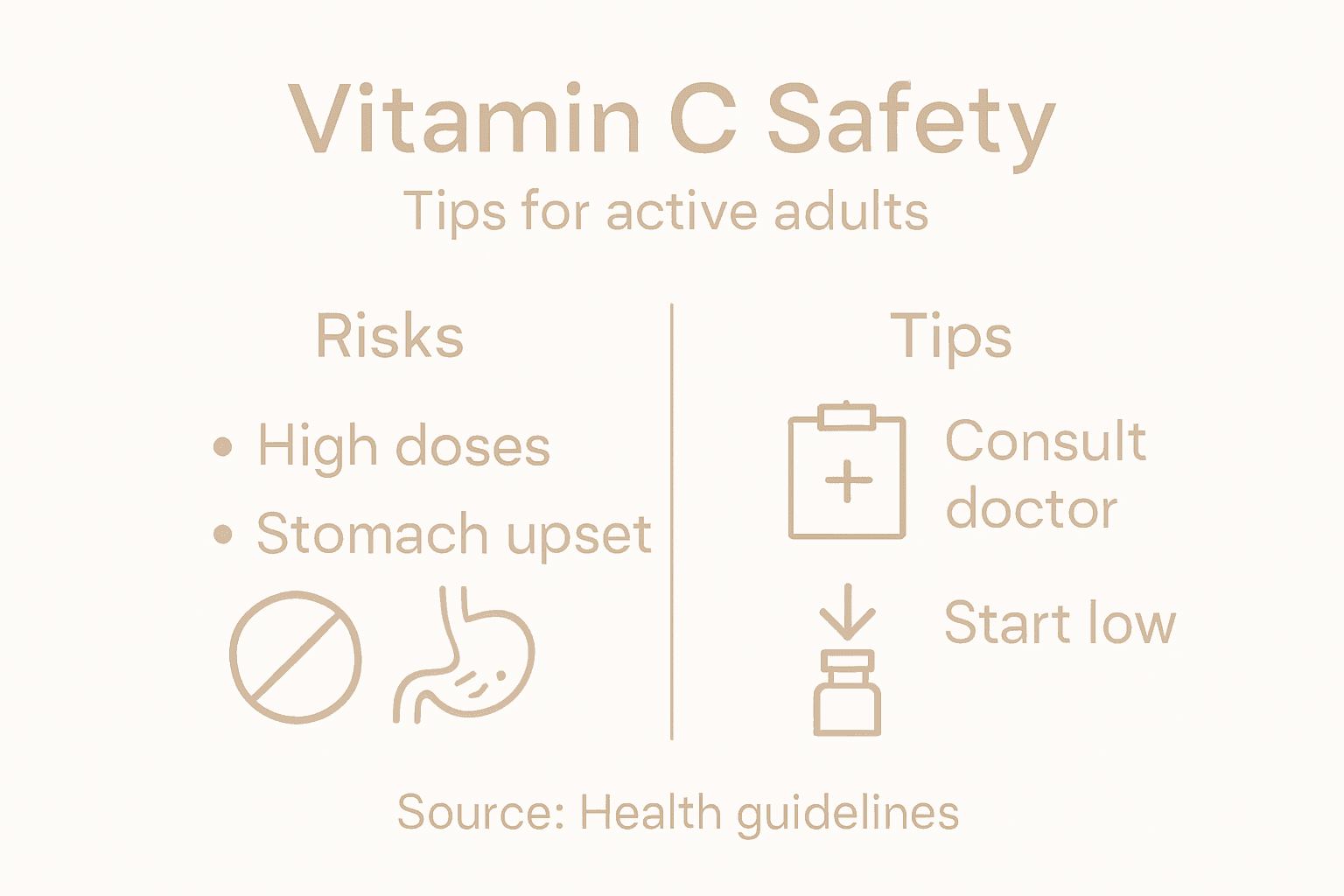
Consumers should be aware that vitamin C doses exceeding 2000 mg per day can trigger significant gastrointestinal side effects, including diarrhea, nausea, and stomach cramps. Individuals with a history of kidney stones should exercise particular caution, as high-dose vitamin C supplementation may increase their risk of stone formation. People with specific metabolic conditions or predispositions should consult healthcare professionals before initiating any aggressive supplementation regimen.
For #nutribliss followers seeking optimal health, understanding supplement safety is paramount. While vitamin C is generally considered safe, individual tolerance varies. Slow-release supplement forms might offer more controlled absorption, potentially minimizing digestive discomfort. Monitoring your body’s response and maintaining recommended daily intake levels are crucial strategies for responsible supplementation. Sudden, dramatic increases in vitamin C intake can overwhelm the body’s metabolic processes and trigger unnecessary stress.
Pro tip: Start with lower supplement doses and gradually increase while monitoring your body’s response, and always prioritize obtaining nutrients through a balanced, whole-food diet.
Maximize Your Health With Targeted Vitamin C Support
Active adults often face the challenge of maintaining strong immunity and recovering efficiently from intense workouts. This article highlights how consistent, balanced vitamin C intake supports these goals by boosting antioxidant defense and collagen synthesis. If you want to avoid digestive discomfort from excessive doses and experience the benefits of personalized supplement forms, Nutribliss.us offers a curated selection tailored to your lifestyle.

Discover high-quality vitamin C supplements along with other essential nutrients designed to enhance your athletic performance and immune resilience. Act now to support your wellness journey with safe, science-backed options available at Nutribliss.us. Start optimizing your health today and feel the difference with every step.
Frequently Asked Questions
What are the key benefits of vitamin C for active adults?
Vitamin C supports tissue repair, enhances immune system function, acts as an antioxidant, and improves iron absorption, all of which are essential for active individuals.
Can I get enough vitamin C just from food, or do I need supplements?
Most active adults can meet their vitamin C needs through a balanced diet rich in fruits and vegetables. However, some may choose supplements for additional support, particularly during intense training periods.
How does cooking affect the vitamin C content in foods?
Cooking methods can impact vitamin C levels; raw or lightly steamed vegetables typically retain more vitamin C than heavily boiled or overcooked options. Eating fresh produce helps maximize nutrient intake.
What are the potential risks of taking too much vitamin C?
Excessive vitamin C intake, particularly above 2000 mg per day, can lead to gastrointestinal issues like diarrhea and stomach cramps. Those with a history of kidney stones should also be cautious with high doses.