

Many people mistakenly believe all bacteria are harmful invaders that cause illness and disease. This outdated view overlooks a crucial reality: your body hosts trillions of beneficial bacteria essential for optimal health. Probiotics are live microorganisms that support digestive wellness, boost immune function, and contribute to overall vitality. This comprehensive guide explains what probiotics are, how they work in your gut, their wide-ranging health benefits, and practical ways to incorporate them into your daily routine for lasting wellness improvements.
Table of Contents
- Understanding Probiotics: What They Are And How They Work
- Health Benefits Of Probiotics: Beyond Digestion
- Sources Of Probiotics: Foods, Supplements, And Choosing The Right Option
- How To Incorporate Probiotics Into Your Daily Wellness Routine
- Explore Nutribliss Probiotic Supplements And More
- Frequently Asked Questions
Key takeaways
| Point | Details |
|---|---|
| Definition | Probiotics are live beneficial microorganisms that support health when consumed in adequate amounts. |
| Health benefits | They enhance digestion, strengthen immunity, support mental wellness, and may improve skin health. |
| Common sources | Found naturally in fermented foods like yogurt and kimchi, plus available as targeted supplements. |
| Effective use | Consistency matters most, with results typically appearing within 2 to 4 weeks of daily intake. |
| Selection criteria | Choose products with multiple strains, at least 10 billion CFUs, and research-backed formulations. |
Understanding probiotics: what they are and how they work
Probiotics are live microorganisms that deliver health benefits when you consume them in sufficient quantities. These helpful bacteria and yeasts colonize your digestive tract, where they perform essential functions that keep your gut ecosystem balanced and thriving. Unlike harmful pathogens that trigger disease, probiotics actively protect and strengthen your body’s natural defenses.
The two most common probiotic families are Lactobacillus and Bifidobacterium, each containing dozens of specific strains with unique characteristics. Lactobacillus strains typically reside in your small intestine and vaginal tract, producing lactic acid that creates an inhospitable environment for harmful bacteria. Bifidobacterium species dominate your large intestine, where they break down dietary fiber and produce valuable short-chain fatty acids that nourish your intestinal lining.
Your gut microbiome contains over 100 trillion microorganisms representing thousands of species. This complex ecosystem influences digestion, nutrient absorption, immune regulation, and even brain function through the gut-brain axis. When beneficial bacteria outnumber harmful ones, your microbiome maintains healthy balance. Stress, poor diet, antibiotics, and illness can disrupt this equilibrium, allowing opportunistic pathogens to multiply and cause digestive distress.
Probiotics restore balance by competing with harmful bacteria for nutrients and attachment sites on your intestinal walls. They produce antimicrobial compounds that directly inhibit pathogen growth while strengthening the protective mucus layer lining your gut. Some strains enhance the tight junctions between intestinal cells, reducing permeability and preventing toxins from entering your bloodstream.
These beneficial microbes also support digestion by producing enzymes that break down complex carbohydrates, proteins, and fats your body cannot digest alone. They synthesize essential vitamins including B12, folate, and vitamin K2. Through constant communication with your immune cells, probiotics train your immune system to distinguish between harmless substances and genuine threats, reducing inappropriate inflammatory responses.
Key mechanisms probiotics use to support health:
- Competitive exclusion of harmful bacteria through resource competition
- Production of antimicrobial substances like bacteriocins and organic acids
- Enhancement of intestinal barrier function and mucus production
- Modulation of immune cell activity and inflammatory responses
- Synthesis of beneficial metabolites including short-chain fatty acids
Pro Tip: Take your probiotic supplements for digestive health at the same time daily to establish consistent gut colonization patterns that maximize their effectiveness.
Health benefits of probiotics: beyond digestion
While probiotics are famous for supporting digestive comfort, their influence extends far beyond your gut. Research reveals these beneficial microbes play crucial roles in immune function, mental wellness, skin health, and metabolic regulation. Understanding these broader benefits helps you appreciate why maintaining a healthy microbiome matters for whole-body vitality.
Your gut houses approximately 70% of your immune system, making it the primary training ground for immune cells. Probiotics enhance immune response by interacting with specialized immune cells in your intestinal lining. They stimulate production of protective antibodies, enhance natural killer cell activity, and help regulate inflammatory cytokines that control immune responses throughout your body.

Chronic low-grade inflammation underlies many modern health conditions, from autoimmune disorders to metabolic syndrome. Certain probiotic strains produce anti-inflammatory compounds that calm excessive immune activation while maintaining appropriate responses to genuine threats. This balanced immune regulation may reduce allergy symptoms, decrease seasonal illness frequency, and support faster recovery from infections.
The gut-brain axis represents a bidirectional communication highway linking your digestive system with your central nervous system. Probiotics influence this connection by producing neurotransmitters like serotonin, GABA, and dopamine directly in your gut. Since roughly 90% of your body’s serotonin originates in intestinal cells, gut health profoundly impacts mood regulation, stress resilience, and cognitive function.
Emerging research suggests specific probiotic strains may help manage occasional anxious feelings and support positive mood. While more studies are needed, the mechanism appears related to reduced inflammation, improved nutrient absorption, and direct neurotransmitter production. Many people report feeling mentally clearer and more emotionally balanced after establishing consistent probiotic intake.
Your skin reflects your internal health status, and gut microbiome imbalances often manifest as skin concerns. Probiotics help maintain healthy skin appearance by reducing systemic inflammation, supporting proper nutrient absorption, and preventing toxin leakage from compromised intestinal barriers. Some studies indicate probiotic supplementation may complement skincare routines by addressing root causes rather than just surface symptoms.
Additional probiotic benefits gaining research attention:
- Support for healthy weight management through metabolic regulation
- Improved calcium absorption and bone density maintenance
- Enhanced athletic recovery and reduced exercise-induced inflammation
- Better blood sugar regulation and insulin sensitivity
- Support for cardiovascular health through cholesterol metabolism
“Probiotics represent one of the most promising areas in preventive health, offering a safe, natural approach to supporting multiple body systems simultaneously through microbiome optimization.”
The interconnected nature of your body systems means improving gut health creates positive ripple effects throughout your entire physiology. This holistic impact explains why so many people experience unexpected health improvements after prioritizing digestive health and wellness through probiotic supplementation and dietary changes.
Sources of probiotics: foods, supplements, and choosing the right option
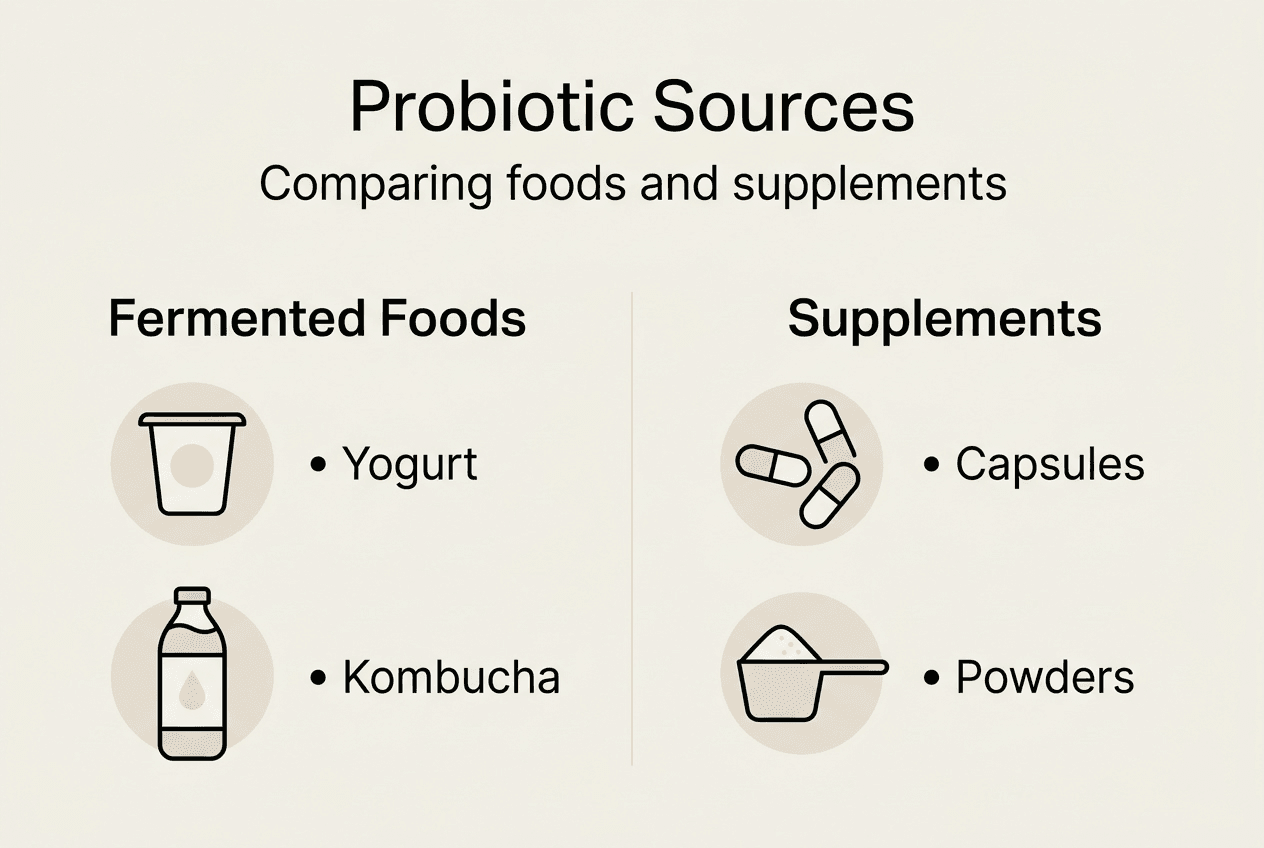
You can obtain probiotics through fermented foods or targeted supplements, each offering distinct advantages. Understanding the differences helps you select the approach that best fits your lifestyle, health goals, and budget while ensuring you receive effective doses of beneficial strains.
Fermented foods have provided probiotics to human diets for thousands of years. Yogurt with live active cultures contains Lactobacillus and Streptococcus thermophilus strains that survive stomach acid to reach your intestines. Kefir, a fermented milk drink, typically contains 30 to 40 different probiotic strains, making it one of the most diverse natural sources. Sauerkraut and kimchi deliver Lactobacillus plantarum along with beneficial enzymes and vitamins created during fermentation.
Other probiotic-rich foods include miso, tempeh, traditional buttermilk, certain aged cheeses, and kombucha. Each offers unique strain profiles and additional nutrients like protein, calcium, or antioxidants. However, probiotic content varies widely based on preparation methods, storage conditions, and processing techniques. Pasteurization kills beneficial bacteria, so only unpasteurized or “raw” fermented foods contain live cultures.
Probiotic supplements provide concentrated doses of specific strains in convenient capsule, powder, or liquid forms. Supplement quality and strain diversity determine effectiveness, with reputable brands using clinically studied strains at therapeutic doses. Capsules offer portability and precise dosing, while powders mix easily into beverages and often cost less per serving. Liquid probiotics may provide faster absorption but typically require refrigeration.
Comparison of probiotic sources:
| Source Type | Strain Diversity | Potency Control | Convenience | Cost |
|---|---|---|---|---|
| Fermented foods | Moderate to high | Variable | Requires preparation | Low to moderate |
| Capsule supplements | Targeted strains | Precise CFU count | Highly portable | Moderate to high |
| Powder supplements | Multiple strains | Measurable doses | Easy mixing | Moderate |
| Liquid probiotics | Varies by product | Less stable | Refrigeration needed | Moderate to high |
When selecting probiotic supplements, colony-forming units (CFUs) indicate the number of viable bacteria per dose. Most research supports doses between 10 billion and 100 billion CFUs daily, though specific needs vary. Higher CFU counts do not automatically mean better results since strain specificity and survivability matter more than raw numbers.
Strain identification tells you exactly which bacteria the product contains. Look for supplements listing genus, species, and strain designations like “Lactobacillus rhamnosus GG” rather than vague “probiotic blend” labels. Different strains offer different benefits, so matching strains to your health goals improves outcomes. Multi-strain formulas often provide broader support than single-strain products.
Delivery technology protects probiotics from stomach acid destruction. Delayed-release capsules, microencapsulation, and acid-resistant coatings help bacteria survive the harsh gastric environment to reach your intestines alive. Shelf-stable formulations use specialized freeze-drying processes, while refrigerated products may contain more fragile strains requiring cold storage.
Key selection criteria for effective probiotics:
- Minimum 10 billion CFUs per serving for general wellness
- Multiple researched strains with documented health benefits
- Clear strain identification with genus, species, and strain codes
- Third-party testing verification for purity and potency
- Appropriate storage requirements and expiration dating
Pro Tip: Store probiotic supplements in cool, dry locations away from direct sunlight and heat sources to maintain potency, and check expiration dates since CFU counts decline over time.
The Nutribliss probiotics supplement combines multiple clinically studied strains at therapeutic doses, offering a convenient option for those seeking targeted gut health support beyond dietary sources alone.
How to incorporate probiotics into your daily wellness routine
Successfully integrating probiotics into your lifestyle requires strategic planning and consistency. Following these evidence-based steps helps you maximize benefits while minimizing potential adjustment periods as your microbiome adapts to increased beneficial bacteria populations.
1. Start with probiotic-rich foods before adding supplements. Begin by incorporating fermented foods into your regular diet to assess your tolerance and establish a foundation of dietary probiotics. Add a serving of yogurt to breakfast, include kimchi with lunch, or enjoy kefir as an afternoon snack. This gradual approach allows your digestive system to adjust naturally while providing diverse strains and additional nutrients.
2. Introduce probiotics gradually to prevent temporary digestive discomfort. Some people experience mild bloating, gas, or changes in bowel patterns when first increasing probiotic intake. These symptoms typically resolve within a few days as your microbiome rebalances. Start with half the recommended supplement dose or smaller food portions, then increase gradually over one to two weeks as your body adapts.
3. Establish consistent timing and dosage for optimal colonization. Take probiotics at the same time daily to create predictable colonization patterns in your gut. Many experts recommend taking supplements with meals to buffer stomach acid, though some acid-resistant formulations work well on an empty stomach. Regular probiotic intake maintains stable beneficial bacteria populations better than sporadic use.
4. Combine probiotics with prebiotic fiber to enhance effectiveness. Prebiotics are non-digestible fibers that feed beneficial bacteria, helping them thrive and multiply. Foods rich in prebiotics include garlic, onions, leeks, asparagus, bananas, oats, and Jerusalem artichokes. This synergistic combination, called synbiotics, produces better results than probiotics alone by providing both the bacteria and their preferred fuel source.
5. Monitor your body’s response and adjust accordingly. Pay attention to digestive comfort, energy levels, immune resilience, and overall wellness markers. Keep a simple journal noting any changes in bowel regularity, bloating, mood, or skin appearance. Most people notice improvements within two to four weeks, though some benefits emerge sooner. If you experience persistent discomfort, try different strains or adjust your dosage.
6. Maintain probiotic intake during and after antibiotic use. Antibiotics kill harmful bacteria but also destroy beneficial gut flora. Taking probiotics during antibiotic treatment (separated by at least two hours) and continuing for several weeks afterward helps restore microbiome balance faster. Choose multi-strain formulas with higher CFU counts during recovery periods.
7. Support your microbiome with complementary lifestyle habits. Adequate sleep, stress management, regular physical activity, and minimizing processed foods all contribute to a healthy gut environment where probiotics can flourish. Staying hydrated helps beneficial bacteria colonize effectively, while excessive alcohol and sugar consumption can undermine probiotic benefits.
Consistency matters more than perfection. Even if you miss occasional doses or skip fermented foods some days, maintaining an overall pattern of regular probiotic intake delivers cumulative benefits. Your microbiome responds to sustained positive inputs, gradually shifting toward a healthier composition that supports long-term wellness.
For comprehensive guidance on optimizing digestive health through supplementation, explore the digestion support supplements guide for evidence-based recommendations tailored to various wellness goals.
Explore Nutribliss probiotic supplements and more
Ready to experience the gut health benefits probiotics offer? Nutribliss provides scientifically formulated supplements designed to support your digestive wellness journey with convenience and quality you can trust. Each product undergoes rigorous testing to ensure potency, purity, and effectiveness.
Our probiotic formulations feature multiple clinically studied strains at therapeutic doses, delivering the diversity your microbiome needs to thrive. Whether you are addressing specific digestive concerns or maintaining general wellness, Nutribliss offers targeted solutions backed by nutritional science. Browse the complete Nutribliss supplements collection to discover complementary products supporting your health goals.

The Nutribliss probiotic supplement combines convenience with research-backed strain selection, making it simple to maintain consistent probiotic intake. Learn more about the nutritional principles guiding our formulations by exploring the science behind superfoods and how targeted supplementation supports optimal wellness.
Frequently asked questions
What is the best probiotic for general wellness?
Look for multi-strain products containing at least 10 billion CFUs with diverse Lactobacillus and Bifidobacterium species. Choose quality brands that provide clear strain identification and third-party testing verification. Research-backed formulations from reputable manufacturers typically deliver more consistent results than generic options.
Can probiotics help with immune system support?
Yes, probiotics help regulate immune responses and reduce inappropriate inflammation throughout your body. They promote a balanced gut microbiome that trains immune cells to distinguish between harmless substances and genuine threats. Regular intake may decrease seasonal illness frequency and support faster recovery.
How long does it take for probiotics to work?
Some people notice digestive improvements within a few days, but most benefits become apparent within two to four weeks of consistent daily use. Immune and mood-related effects may take longer to manifest as your microbiome gradually rebalances. Consistency matters more than immediate results for lasting wellness improvements.
Are there any side effects of taking probiotics?
Some people experience mild temporary digestive symptoms like bloating or gas when first starting probiotics. These effects usually subside within a few days as your gut adjusts to increased beneficial bacteria. Starting with lower doses and gradually increasing helps minimize discomfort during the adaptation period.
Do I need to refrigerate probiotic supplements?
Refrigeration requirements depend on the specific product formulation and manufacturing process. Shelf-stable probiotics use specialized techniques to maintain viability at room temperature, while others require cold storage. Always follow storage instructions on your supplement label to preserve potency and effectiveness through the expiration date.