

Oysters top every list of zinc-rich foods by a wide margin, followed by red meat, poultry, dairy, and fortified cereals, with legumes, nuts, and seeds contributing smaller but still useful amounts. Most people in well-nourished populations meet their zinc needs through food alone, since median intakes hover near 9 mg/day for women and 14 mg/day for men. Pregnant people, vegans, older adults, and anyone with digestive malabsorption issues are the exceptions worth watching closely.
TL;DR:
- Oysters deliver the highest zinc content per serving, but red meat, poultry, and fortified cereals remain practical sources for most people.
- Phytates in plant foods reduce zinc absorption, so pairing them with animal protein improves zinc uptake, especially for vegetarians and vegans.
- The actual zinc absorbed from food often differs significantly from label content, with animal sources providing better bioavailability than plant-based options.
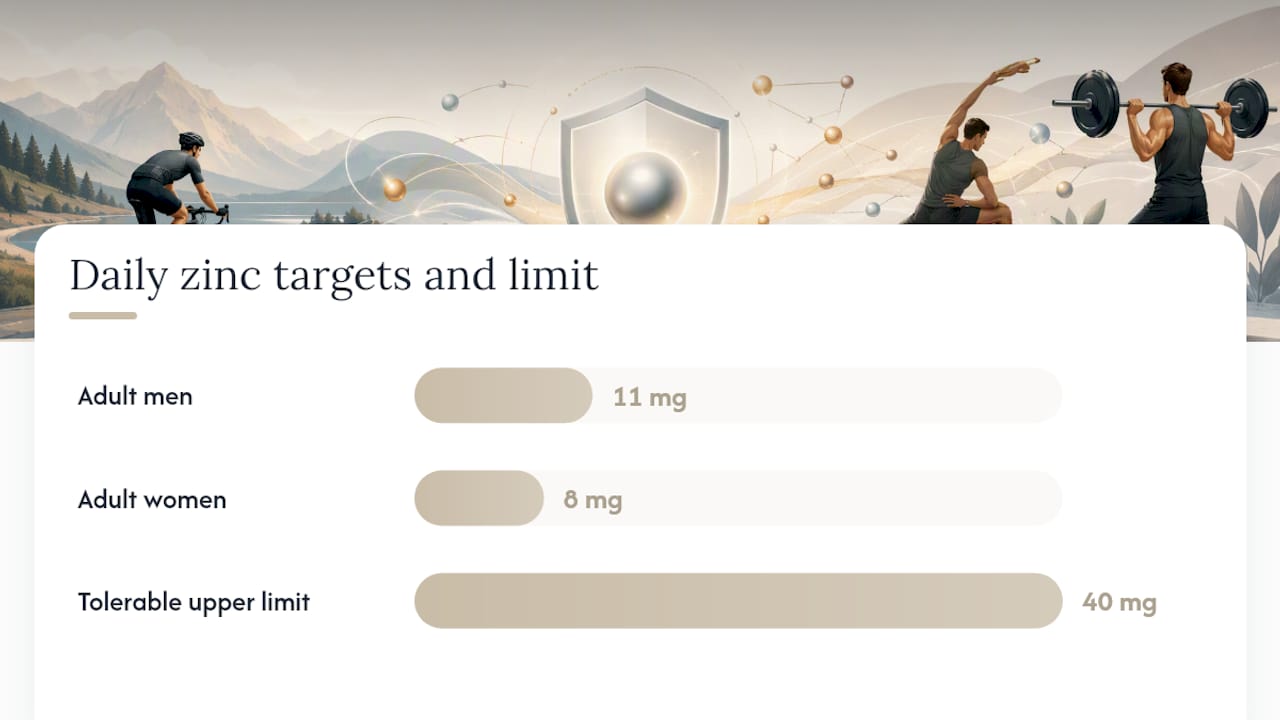
- The recommended daily intake is 8 mg for women and 11 mg for men, with a upper limit of 40 mg to avoid toxicity and mineral imbalances.
- Supplements should contain well-absorbed forms like glycinate or gluconate and are best used to fill dietary gaps rather than as primary sources.
Table of Contents
- Top Food Sources of Zinc and How to Use Them
- Why the Same Amount of Zinc Doesn’t Always Absorb the Same
- How Much Zinc Do You Actually Need Each Day?
- Fortified Foods and Supplements: When They Actually Help
- Who’s Most at Risk, and a Checklist to Hit 100% of Your Zinc Needs
- Author Notes From GAURAV
- The Conventional Advice Undersells Bioavailability
- A Supplement Pathway for Readers Who Want One
- Sources
Top Food Sources of Zinc and How to Use Them
Seafood wins this contest outright. A single 3-ounce serving of cooked oysters can deliver very high amounts of zinc, dwarfing every other common food. If oysters aren’t on your weekly menu, red meat and poultry pick up the slack in a more approachable way.
Here’s how the rest of the field stacks up in practical serving terms:
- Fortified cereals: fortified breakfast cereals cover a meaningful slice of daily zinc intake for kids and teens in the U.S., contributing a noticeable share of the day’s total, which makes a fortified bowl at breakfast a quiet but reliable habit.
Oysters aside, no single food source carries the whole load. The real strategy is layering: a protein at lunch, a handful of seeds as a snack, a fortified cereal at breakfast.
Why the Same Amount of Zinc Doesn’t Always Absorb the Same
Zinc content on a label doesn’t tell the whole story. Plant foods like beans, whole grains, and nuts contain phytates, compounds that bind to zinc in the gut and block a chunk of it from ever reaching your bloodstream. That’s why a cup of lentils and a serving of beef can list similar zinc numbers on paper but deliver very different amounts to your body.
Animal protein works in the opposite direction. It supplies zinc directly, and it also improves how much zinc your body absorbs from the rest of the meal, which is part of why diets built heavily around meat, poultry, and fish tend to produce higher effective zinc status than diets built around grains and legumes alone.
You can close much of that gap with a few kitchen habits:
- Soak, sprout, or ferment legumes and grains before cooking. All three processes break down phytates and free up more zinc for absorption.
- Pair plant-based zinc sources with a protein food at the same meal, like lentils with grilled chicken or tofu with eggs.
- Avoid taking a zinc supplement at the same time as a high-dose iron supplement. The two minerals compete for the same absorption pathway.
- Cook grains and legumes thoroughly rather than eating them raw or undercooked, since heat further reduces phytate content.
Pro Tip: If you’re vegetarian or vegan, don’t just match the RDA on paper. Research on controlled diets found that vegetarian eating patterns tend to produce lower total zinc absorption than meat-based diets with equivalent phytic acid content, so aiming higher than the standard target is advisable, so aim noticeably higher than the standard target rather than the bare minimum.
How Much Zinc Do You Actually Need Each Day?
The RDA for adult men is 11 mg per day, and for adult women it’s 8 mg per day, with pregnancy and lactation increasing zinc needs moderately. The Tolerable Upper Intake Level for adults sits at 40 mg per day from food and supplements combined, and regularly exceeding this level can cause nausea, cramping, and over time, may lead to copper deficiency risks.
If you’re considering a dose anywhere near the upper limit, or you’re already seeing symptoms like recurring nausea or a metallic taste, talk to a healthcare provider before continuing.
Fortified Foods and Supplements: When They Actually Help
Not every supplement form absorbs the same way. Research comparing chemical forms found that zinc glycinate and zinc gluconate have generally shown better absorption than zinc oxide in studies, which matters if you’ve been taking an oxide-based tablet may not improve zinc levels as effectively.
A few practical notes before you reach for a bottle:
- Fortified cereals are a legitimate daily source, not a gimmick. They genuinely move the needle for people who skip meat or seafood.
- Check the Supplement Facts panel for “elemental zinc,” not just the total weight of the zinc compound. A 50 mg zinc gluconate tablet does not contain 50 mg of actual zinc.
- Chronic overuse of zinc-containing denture creams or nasal products has caused real cases of toxicity and copper deficiency, so treat non-dietary zinc exposure from topical or nasal products with the same caution as pills.
- High-dose supplemental zinc taken for months at a time can quietly deplete copper, so anyone supplementing long-term should watch total intake against the 40 mg upper limit.
Who’s Most at Risk, and a Checklist to Hit 100% of Your Zinc Needs
Pregnant and breastfeeding people, vegans and vegetarians, older adults, and anyone with a digestive condition affecting nutrient absorption face the highest odds of falling short. Here’s a straightforward way to close the gap:
- Audit a typical day. Write down what you actually ate yesterday and estimate your zinc total against the RDA for your group.
- Add one or two high-zinc servings. A serving of red meat, poultry, or shellfish a few times a week covers most of the shortfall for most people.
- Build in a daily plant source. A handful of pumpkin seeds, cashews, or a fortified cereal at breakfast fills in the rest.
- Apply absorption tactics. Soak legumes, pair plant proteins with animal protein, and separate zinc from high-dose iron.
- Consider a low-dose supplement only if diet changes still leave you short, and choose a well-absorbed form like glycinate or gluconate.
Author Notes From GAURAV
The practical takeaway is simple: eat a serving of meat, poultry, or seafood most days, add seeds or fortified cereal daily, and treat supplements as a backup plan, not a first move. Athletes chasing recovery should read the deeper breakdown on zinc’s role in performance and how it pairs with magnesium in combined recovery formulas. #nutribliss
The Conventional Advice Undersells Bioavailability
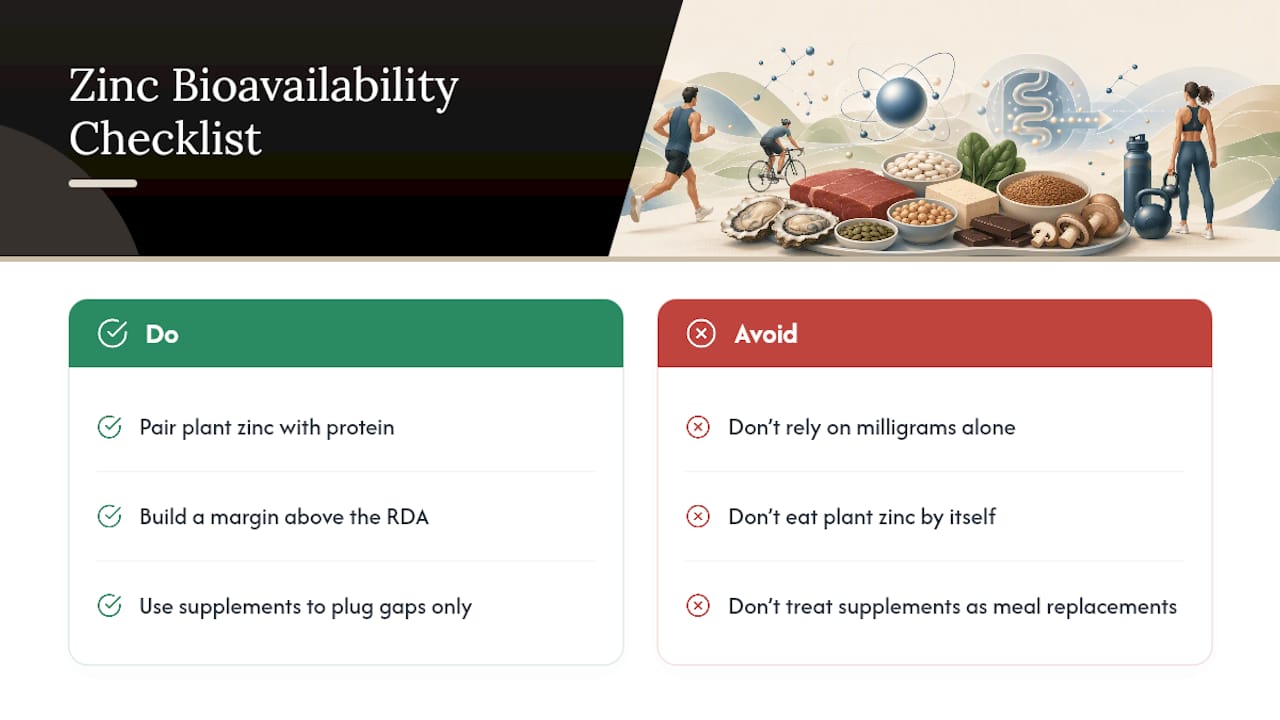
Most zinc guidance stops at “eat these foods,” which is only half the answer. The bigger miss is that people fixate on milligrams listed on a label without accounting for what their gut actually absorbs, and that gap is exactly where phytates and protein pairing quietly decide the outcome. A cup of lentils and a chicken thigh can carry similar zinc totals on paper and deliver very different results in your bloodstream.
If I had to name the one habit most readers skip, it’s pairing. Plant-based zinc sources eaten alone underperform; eaten alongside protein, they close much of the absorption gap. Vegetarians and vegans should stop treating the RDA as their finish line and instead build in a margin, since the research on absorbed zinc consistently runs lower for plant-heavy diets. Supplements have a place, but they’re a patch for a specific gap, not a replacement for the meal-level habits that actually move the needle.
— GAURAV
A Supplement Pathway for Readers Who Want One
If your diet still leaves a gap after adjusting meals, a well-formulated supplement can round things out. Some brands build their mineral and recovery formulas with label transparency in mind, listing elemental zinc content and the specific zinc salt used, rather than burying it in vague blend terminology.
For active individuals losing minerals through sweat, pairing zinc support with an electrolyte formula covers more of the recovery picture than zinc alone. Athletes juggling both mineral repletion and sleep quality might also look at a sleep-support formula to round out a recovery stack. Talk to a healthcare provider before starting any new supplement, especially if you’re already taking iron or other minerals, and check the Nutribliss product pages for full ingredient breakdowns before you order.
Sources
- Zinc - Health Professional Fact Sheet (NIH ODS)
- Comparative Absorption and Bioavailability of Various Chemical Forms of Zinc in Humans (PMC)
- Dietary Reference Intakes: Zinc (NCBI Bookshelf)
- Total zinc absorption differs between vegetarian and meat-based diets (Cambridge study)
This article is general information, not a substitute for advice from a qualified doctor. Consult a qualified healthcare professional about your own circumstances before acting on anything here.