

Most American athletes know that getting quality sleep is just as vital as hitting the gym, yet one in three adults struggles with restful nights. For health-conscious individuals pushing their limits, optimizing recovery goes beyond basic protein shakes or stretching routines. ZMA supplementation stands out with its science-backed blend, offering athletes strategic support for muscle repair and better sleep. Discover how ZMA’s targeted approach can transform your recovery and help you wake up stronger.
Table of Contents
- ZMA Defined: Essential Ingredients And Popularity
- How ZMA Works To Support Sleep And Recovery
- Key Benefits And Potential Limitations For Athletes
- Common Misconceptions About ZMA Supplements
- Risks, Safety, And Who Should Avoid ZMA
- Comparing ZMA To Other Recovery Supplements
Key Takeaways
| Point | Details |
|---|---|
| ZMA Composition | ZMA combines Zinc, Magnesium, and Vitamin B6 to enhance athletic performance and recovery. |
| Optimal Timing | Taking ZMA before bedtime can maximize absorption and support muscle recovery during sleep. |
| Potential Benefits | ZMA may improve sleep quality, support testosterone levels, and help mitigate nutrient deficiencies in athletes. |
| Consultation Recommended | Athletes should consult with a healthcare professional to tailor ZMA supplementation to their individual needs and avoid potential risks. |
ZMA Defined: Essential Ingredients and Popularity
ZMA is a specialized dietary supplement designed to support athletic performance and recovery through a strategic combination of three key nutrients: zinc, magnesium, and vitamin B6. Developed by Victor Conte), this supplement has gained significant popularity among athletes, bodybuilders, and fitness enthusiasts seeking enhanced muscle recovery and overall performance optimization.
The core composition of ZMA typically includes zinc monomethionine aspartate (30 mg), magnesium aspartate (450 mg), and vitamin B6 (10.5 mg as pyridoxine hydrochloride). These minerals play critical roles in numerous physiological processes. Zinc and magnesium are essential for protein synthesis, muscle function, and nerve signaling, making them particularly valuable for individuals engaged in intense physical training.

Below is a summary of how ZMA’s ingredients contribute to athletic performance:
| Ingredient | Primary Role | Impact on Athletes |
|---|---|---|
| Zinc monomethionine | Protein synthesis, immunity | Supports muscle adaptation |
| Magnesium aspartate | Nerve & muscle function | Aids muscle relaxation, repair |
| Vitamin B6 | Hormone regulation | Enhances energy metabolism |
Athletes often choose ZMA as a nighttime supplement, strategically consuming it before bedtime to maximize absorption and support recovery. The supplement is marketed to potentially improve several performance-related outcomes:
- Enhanced muscle recovery
- Improved sleep quality
- Support for testosterone levels
- Addressing potential nutrient deficiencies from rigorous training
Pro tip: Consult with a healthcare professional to determine if ZMA supplementation aligns with your specific fitness and nutritional goals.
How ZMA Works to Support Sleep and Recovery
ZMA is engineered to optimize athletic recovery through a complex mechanism of supporting physiological processes, particularly during sleep. Researchers have found that ZMA plays a crucial role in regulating stress hormones and enhancing anabolic recovery, making it a powerful supplement for athletes and fitness enthusiasts seeking enhanced performance and muscle restoration.
The supplement’s effectiveness stems from its unique mineral combination. Zinc and magnesium work synergistically to support muscle function, cellular relaxation, and protein synthesis. By improving deep sleep phases, ZMA helps trigger critical physiological processes that are essential for muscle repair and growth. These minerals facilitate several key recovery mechanisms:
- Reducing cortisol levels, which can impede muscle recovery
- Promoting growth hormone release during sleep
- Supporting protein synthesis
- Enhancing nervous system recovery
- Improving overall muscle tissue repair
Athletes and active individuals can benefit from ZMA’s unique ability to optimize the body’s natural recovery processes. The role of zinc in performance recovery becomes particularly important during intense training periods, where proper mineral balance can significantly impact overall athletic performance and muscle adaptation.
Pro tip: Consume ZMA on an empty stomach before bedtime to maximize mineral absorption and enhance its recovery-supporting potential.
Key Benefits and Potential Limitations for Athletes
ZMA supplementation presents a nuanced approach to athletic performance enhancement, with compelling potential benefits alongside important considerations for athletes. Scientific studies reveal mixed results regarding ZMA’s effectiveness in trained athletes, highlighting the complexity of nutritional supplementation in performance optimization.
The potential benefits for athletes include several key physiological improvements:
- Potential increases in insulin-like growth factor (IGF-1)
- Possible testosterone level enhancements
- Support for muscle strength development
- Improved muscle recovery processes
- Potential mitigation of mineral deficiencies
Exploring performance-enhancing supplements requires a strategic approach, recognizing that individual responses can vary significantly. While some athletes experience notable improvements, others may see minimal changes. Critical factors influencing ZMA’s effectiveness include an individual’s existing nutritional status, training intensity, and overall dietary composition.
Research suggests that ZMA’s impact is most pronounced in athletes with pre-existing mineral deficiencies. Individuals with adequate zinc and magnesium levels might experience less dramatic results, underscoring the importance of personalized nutritional assessment before implementing any supplement regimen.
Pro tip: Consult with a sports nutritionist to determine your specific mineral needs and potential ZMA supplementation strategy.
Common Misconceptions About ZMA Supplements
Understanding the complexities of ZMA supplements requires separating fact from fiction), as numerous misconceptions cloud athletes’ perceptions about its potential benefits and limitations. One prevalent myth suggests that ZMA is a magic solution for dramatically increasing testosterone or muscle mass, when in reality, its effects are nuanced and depend on multiple physiological factors.
Several key misconceptions emerge about ZMA supplementation:
- Believing ZMA can single-handedly boost testosterone levels
- Assuming all ZMA products have identical formulations
- Thinking ZMA is exclusively a sleep enhancement supplement
- Overlooking potential interactions with other minerals
- Expecting immediate and universal performance improvements
Magnesium supplementation requires a strategic understanding of individual nutritional needs. The effectiveness of ZMA varies significantly based on an individual’s existing mineral status, diet, and overall health. Critically, users often fail to recognize that calcium can interfere with zinc absorption, potentially reducing the supplement’s efficacy if not carefully managed.
Additionally, many athletes misunderstand ZMA as a standalone performance enhancer. In reality, it functions best as part of a comprehensive nutrition and training strategy, supporting mineral balance and potentially aiding recovery processes. The supplement’s impact is subtle and should not be viewed as a quick fix for performance challenges.
Pro tip: Consult a sports nutritionist to develop a personalized supplement strategy that accounts for your specific physiological needs and training demands.
Risks, Safety, and Who Should Avoid ZMA
Understanding the potential risks associated with ZMA supplementation is crucial for maintaining personal health and preventing unintended physiological consequences. While ZMA can offer benefits for many athletes, certain individuals must exercise caution or avoid the supplement altogether.
The primary safety considerations for ZMA supplementation include:
- Potential gastrointestinal distress from excessive zinc intake
- Risk of lowered immunity with prolonged overconsumption
- Possible kidney complications from magnesium overdose
- Interactions with specific medications
- Individual variations in mineral absorption
Exploring fitness supplements requires careful personal assessment, particularly for individuals with pre-existing health conditions. People who should be especially cautious or avoid ZMA include:
- Individuals with kidney disorders
- Those on specific prescription medications
- People with compromised immune systems
- Individuals experiencing chronic digestive issues
- Patients with known mineral metabolism disorders
Consultation with a healthcare professional becomes essential before starting any new supplement regimen. Proper dosage, understanding individual nutritional needs, and monitoring potential side effects are critical steps in safely incorporating ZMA into a fitness routine.
Pro tip: Always separate ZMA intake from calcium supplements and consult a healthcare provider to ensure safe and effective supplementation.
Comparing ZMA to Other Recovery Supplements
Understanding ZMA’s unique approach to athletic recovery reveals significant differences from traditional performance supplements. Unlike stimulant-based or direct anabolic products, ZMA operates through a nuanced mechanism of optimizing natural physiological processes during rest and recovery.
Key distinctions between ZMA and other recovery supplements include:
- Hormonal Support: ZMA focuses on natural hormone regulation
- Mechanism: Works through endocrine system optimization
- Recovery Timing: Primarily active during sleep
- Approach: Supports biological processes rather than direct stimulation
Exploring comprehensive supplement strategies helps athletes understand that recovery is multifaceted. While protein powders provide direct muscle building blocks and amino acid supplements support protein synthesis, ZMA offers a unique approach by enhancing the body’s internal recovery mechanisms through mineral supplementation and sleep quality improvement.
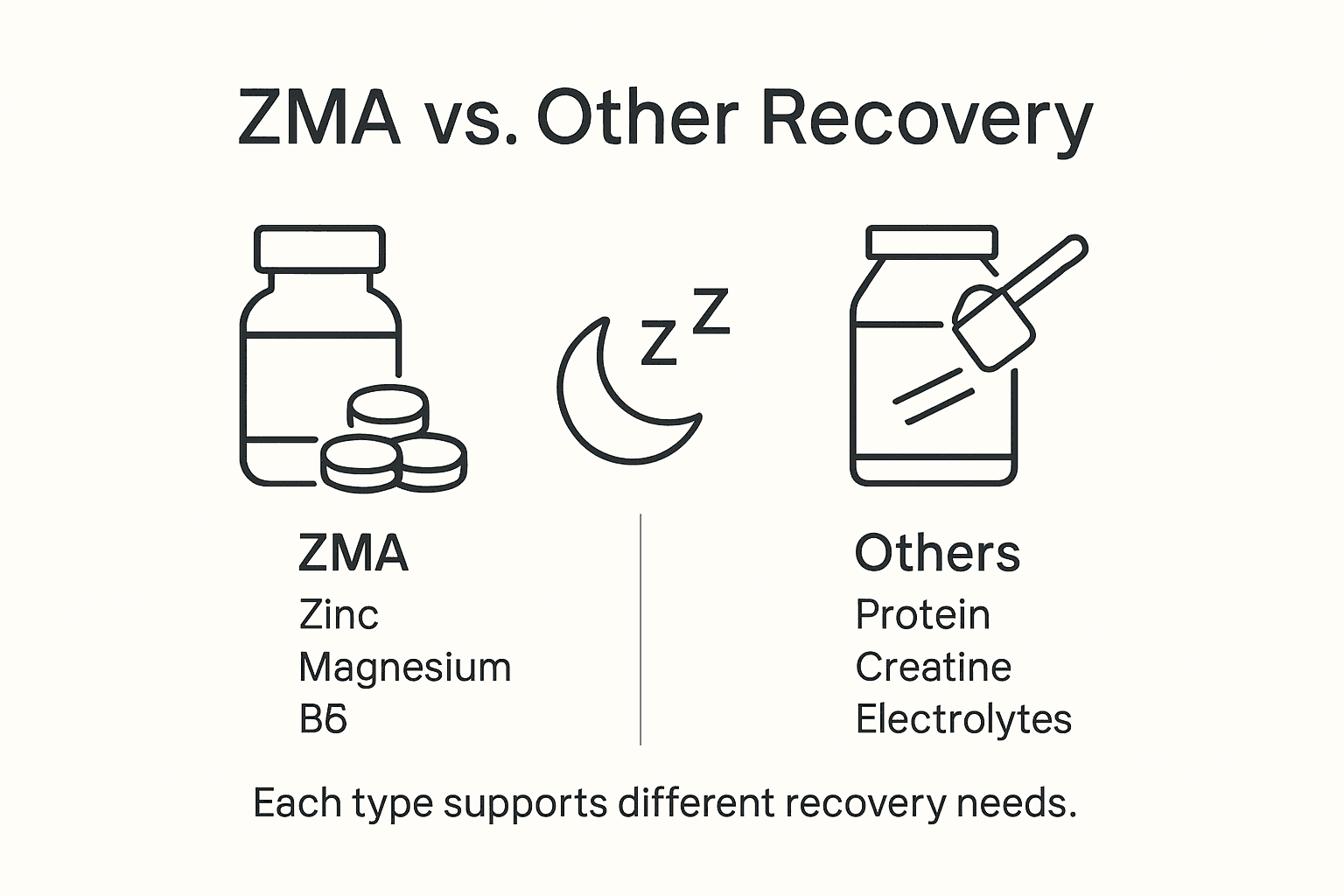
Traditional recovery supplements often rely on immediate, observable effects like muscle protein synthesis or energy replenishment. In contrast, ZMA works more subtly by supporting the body’s natural growth hormone release, testosterone production, and cellular recovery processes during deep sleep stages. This makes ZMA an ideal complementary supplement for athletes seeking holistic recovery support.
Here is a comparison of ZMA and traditional recovery supplements:
| Supplement Type | Primary Action | Recovery Phase Supported | Typical User Benefit |
|---|---|---|---|
| ZMA | Mineral supplementation | Sleep/deep recovery | Improved rest, hormone balance |
| Protein powder | Muscle building blocks | Post-workout | Direct muscle growth |
| Amino acids | Protein synthesis support | Training & recovery | Faster muscle repair |
Pro tip: Consider ZMA as part of a comprehensive recovery strategy, not as a standalone solution, and always consult with a sports nutritionist to optimize your supplement approach.
Elevate Your Recovery with Targeted ZMA Support
Struggling to maximize your muscle recovery and improve sleep quality after intense training sessions ZMA supplements can be a game changer. This powerful blend of zinc, magnesium, and vitamin B6 works naturally to support hormone balance and enhance deep sleep cycles for optimal repair. If you want to address mineral deficiencies and boost your body’s natural recovery mechanisms explore our carefully selected range of Fitness Supplements designed to support your athletic goals.

Take control of your training progress today by integrating quality ZMA products into your nightly routine. Visit Nutribliss.us now to browse expertly crafted supplements that fuel your recovery safely and effectively. Don’t wait to unlock your full potential — start replenishing essential nutrients to recover smarter and perform stronger immediately.
Frequently Asked Questions
What is ZMA and what are its key ingredients?
ZMA is a dietary supplement designed to support athletic performance and recovery, consisting of zinc, magnesium, and vitamin B6. Typically, it includes zinc monomethionine aspartate (30 mg), magnesium aspartate (450 mg), and vitamin B6 (10.5 mg).
How does ZMA support muscle recovery during sleep?
ZMA optimizes muscle recovery by improving deep sleep phases, which helps in reducing cortisol levels, promoting hormone release, and enhancing protein synthesis, all of which are crucial for muscle repair and growth.
Who should consider taking ZMA supplements?
Athletes and fitness enthusiasts engaged in intense training may benefit from ZMA, especially those who have potential mineral deficiencies. However, individuals with kidney disorders or specific health conditions should consult a healthcare professional before use.
What are some common misconceptions about ZMA?
One common misconception is that ZMA will dramatically increase testosterone levels or muscle mass on its own. The effectiveness of ZMA depends on individual nutritional status and overall health, rather than being a standalone performance enhancer.