

Fatty fish (salmon, mackerel, sardines), walnuts, ground flaxseed, chia seeds, and algal oil are the richest dietary sources of omega-3 fatty acids. The American Heart Association recommends eating about two 3-ounce servings of fatty fish per week for heart health. If you eat little or no seafood, a combination of plant-based ALA sources plus an algal oil supplement covers your EPA and DHA needs, according to the NIH Office of Dietary Supplements.
Top omega-3 sources at a glance:
- Fatty fish: salmon, mackerel, sardines, anchovies, herring (highest EPA/DHA per serving)
- Plant ALA sources: ground flaxseed, chia seeds, walnuts, canola oil, soybean oil
- Supplements: fish oil, cod liver oil, krill oil, algal oil (vegetarian DHA/EPA)
- Fortified foods: omega-3 eggs, some dairy products (smaller amounts)
Whether you are building a heart-healthy meal plan or just want to know what to add to your grocery list, #nutribliss has you covered with evidence-based guidance and tested supplements.
Key Takeaways
The most reliable way to meet omega-3 needs is two weekly servings of fatty fish for EPA/DHA, combined with daily plant ALA sources like ground flaxseed or walnuts, and algal oil if you avoid seafood.
| Point | Details |
|---|---|
| Best EPA/DHA food sources | Mackerel, salmon, sardines, herring, and anchovies deliver the highest EPA/DHA per 3-oz serving. |
| AHA weekly target | Eat about two 3-oz servings of fatty fish per week for cardiovascular benefit. |
| Plant ALA conversion limit | ALA from flaxseed, chia, and walnuts converts to EPA/DHA at under 15%; algal oil closes the gap for non-fish eaters. |
| Supplement safety checks | Check cod liver oil for vitamin A content; look for third-party testing seals; avoid exceeding 3 g/day EPA+DHA without medical guidance. |
| Nutribliss omega-3 option | Nutribliss fish oil softgels list actual EPA/DHA mg per serving, making it straightforward to match your intake target. |
Table of Contents
- What are omega-3 fatty acids, and why does the type matter?
- Which foods have the most omega-3s per serving?
- How much omega-3 do you actually need?
- What does the evidence say about omega-3 health benefits?
- Fish oil, cod liver oil, krill oil, or algal oil: which supplement fits your needs?
- Mercury, contaminants, and sustainable fish choices
- Simple ways to add omega-3s to your daily meals
- The case for food first, supplements second
- Nutribliss omega-3 supplements: tested options for when food falls short
- Sources
What are omega-3 fatty acids, and why does the type matter?
Omega-3s are polyunsaturated fats your body cannot make in meaningful amounts on its own, so you have to get them from food or supplements. There are three forms that matter for human health: ALA, EPA, and DHA.
- ALA (alpha-linolenic acid): Found in plant foods like flaxseed, chia seeds, walnuts, canola oil, and soybean oil. ALA is the most common dietary omega-3 in the American diet.
- EPA (eicosapentaenoic acid): A long-chain marine omega-3 found primarily in fatty fish and seafood. Linked to cardiovascular and anti-inflammatory effects.
- DHA (docosahexaenoic acid): Also a long-chain marine omega-3, concentrated in fatty fish, seafood, and algal oil. Critical for brain and eye development, especially in infants.
The distinction matters because ALA and EPA/DHA do not behave the same way in the body. Fish get their EPA and DHA from the microalgae at the base of the marine food chain, which is why fatty fish are so concentrated in these forms. Plants supply only ALA.
Your body can convert ALA into EPA and DHA, but the process is inefficient, with conversion rates typically under 15%. That means eating walnuts and flaxseed is genuinely useful, but it does not reliably replace the EPA and DHA you get from fish or algal oil. For people who avoid seafood entirely, this conversion gap is the main reason algal oil supplements exist.
Why this matters for diet planning: If your omega-3 strategy is plant-only, you are likely meeting ALA needs but may fall short on EPA and DHA unless you add algal oil or a marine supplement.
Which foods have the most omega-3s per serving?
The amounts below are drawn from USDA FoodData Central and represent typical cooked or prepared servings. EPA and DHA figures apply to fish and seafood; ALA figures apply to plant sources.
| Food | Serving | Omega-3 Type | Approx. Amount |
|---|---|---|---|
| Mackerel (Atlantic, cooked) | 3 oz | EPA + DHA | ~2,600 mg |
| Salmon (Atlantic, farmed, cooked) | 3 oz | EPA + DHA | ~1,800 mg |
| Sardines (canned in oil, drained) | 3 oz | EPA + DHA | ~1,400 mg |
| Herring (Atlantic, cooked) | 3 oz | EPA + DHA | ~1,700 mg |
| Anchovies (canned in oil, drained) | 1 oz | EPA + DHA | ~500 mg |
| Ground flaxseed | 1 tbsp | ALA | ~1,600 mg |
| Chia seeds | 1 oz | ALA | ~5,000 mg |
| Walnuts | 1 oz | ALA | ~2,500 mg |
| Canola oil | 1 tbsp | ALA | ~1,300 mg |
| Soybean oil | 1 tbsp | ALA | ~900 mg |
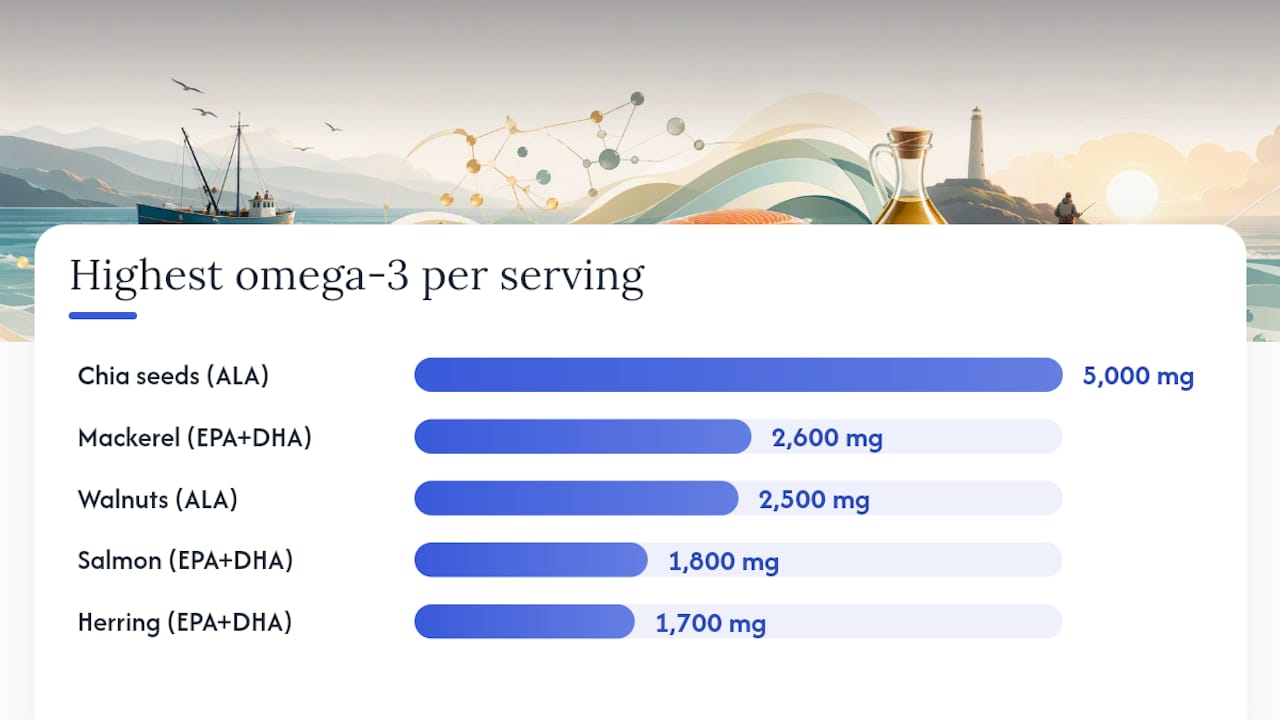
A few things worth noting here. Mackerel and herring consistently rank at the top for EPA/DHA density, yet they are far less popular in American kitchens than salmon. Sardines and anchovies are small, short-lived fish that accumulate less mercury than larger predatory species, making them a practical choice for frequent consumption.

On the plant side, chia seeds look impressive on paper, but remember: that ALA converts to EPA/DHA at a low rate. The number is high; the downstream EPA/DHA yield is not.
On fortified foods and label claims: Omega-3 eggs and some fortified dairy products do contain omega-3s, but amounts vary widely by brand. The FDA’s guidance on omega-3 nutrient content claims restricts certain marketing language on food labels, so a product calling itself “rich in omega-3s” may not deliver as much EPA/DHA as the phrasing implies. Look for the actual milligrams of EPA and DHA listed on the label, not just the total omega-3 figure.
How much omega-3 do you actually need?
The American Heart Association advises eating about two servings of fatty fish per week, with each serving roughly 3 ounces cooked. Two servings of salmon or mackerel per week delivers a substantial amount of combined EPA and DHA, which aligns with general public health targets.
For combined EPA and DHA, a general target is often recommended for healthy adults. However, clinicians may advise different amounts based on specific conditions, particularly elevated triglycerides.
Key intake reference points:
- General heart health: Two 3-oz servings of fatty fish per week (AHA)
- Pregnancy and breastfeeding: DHA intake is especially important for fetal brain and eye development; consult your OB or midwife for a specific target
- Elevated triglycerides: Higher prescription-level doses (available as FDA-approved medications) are used under medical supervision, not over-the-counter supplements
On supplement upper limits: The FDA has noted that intakes of EPA and DHA from supplements above 3 grams per day total may cause adverse effects, including increased bleeding risk. This is particularly relevant for anyone taking anticoagulants like warfarin or aspirin therapy. If you are on blood thinners, talk to your doctor before adding an omega-3 supplement. The NIH Health Professional Fact Sheet covers these interactions in detail.
What does the evidence say about omega-3 health benefits?
The strongest evidence for omega-3s centers on cardiovascular health, specifically triglyceride reduction and reduced arrhythmia risk in people with established heart disease. Beyond that, the picture gets more nuanced.
Where the evidence is solid:
- Triglyceride lowering: High-dose EPA/DHA consistently lowers triglycerides in clinical trials. This is the most well-established pharmacological effect.
- Reduced arrhythmia risk: Regular fatty fish consumption is associated with lower risk of fatal cardiac arrhythmias in people with existing cardiovascular disease.
- Fetal brain and eye development: DHA is a structural component of the brain and retina. Adequate intake during pregnancy and early infancy is widely supported by clinical guidance.
- Inflammation and rheumatoid arthritis: Some evidence supports modest reductions in joint tenderness and morning stiffness with fish oil supplementation, though effects are variable.
Where the evidence is mixed:
A systematic review indexed in PubMed Central found that outcomes from omega-3 supplementation studies are mixed beyond triglyceride lowering and cardiovascular risk contexts. Claims about Alzheimer’s prevention, broad cognitive enhancement, and general disease prevention remain unsettled in the research literature. The food-first approach, eating fatty fish regularly, has more consistent population-level support than supplementing on top of an already adequate diet.
Harvard Health notes that fish provides the most EPA/DHA and that incorporating nuts, seeds, and healthy oils alongside fatty fish gives a balanced intake strategy. The combination of marine and plant sources appears to be the most practical approach for most people.
Fish oil, cod liver oil, krill oil, or algal oil: which supplement fits your needs?
Supplements make sense in specific situations: you eat little or no seafood, you are pregnant and your clinician recommends DHA supplementation, or bloodwork shows low plasma omega-3 levels. For most people eating two servings of fatty fish per week, a supplement adds little on top of what food already provides.
Comparing the main types:
- Fish oil: The most widely used supplement. Provides both EPA and DHA. Concentration varies significantly by brand, so check the label for actual mg of EPA and DHA per softgel, not just “fish oil” total weight.
- Cod liver oil: Delivers EPA and DHA but also contains vitamins A and D. Excess vitamin A is a genuine safety concern, especially during pregnancy. Check the label for vitamin A content before taking it alongside a multivitamin.
- Krill oil: Contains EPA and DHA in phospholipid form, which some research suggests may improve absorption slightly. Typically lower total EPA/DHA per capsule than fish oil at the same price point.
- Algal oil: The direct vegetarian source of DHA and sometimes EPA, since fish get their omega-3s from algae in the first place. Algal oil is a valid non-fish option for vegans and vegetarians, and some studies show DHA bioavailability comparable to cooked salmon for raising plasma DHA levels.
On supplement forms: Fish oil supplements come in natural triglyceride, ethyl ester, and re-esterified triglyceride forms. Research suggests bioavailability differs slightly among these forms, with re-esterified triglycerides and natural triglycerides generally absorbing better than ethyl esters, particularly when taken with a fat-containing meal.
Pro Tip: Because there is no established Daily Value for omega-3s on U.S. nutrition labels, the only reliable way to compare supplements is by the actual milligrams of EPA and DHA listed per serving. A 1,000 mg fish oil softgel might contain only 300 mg of combined EPA and DHA. Always read past the “fish oil” weight to the EPA/DHA breakdown.
Omega-3 supplements are processed to remove methylmercury, so properly manufactured fish and algal oils generally do not carry meaningful mercury risk. Still, look for products with third-party testing seals (NSF International, USP, or IFOS) to confirm purity and potency. For a deeper look at fish oil safety and clinical uses, the Nutribliss fish oil guide covers these questions in detail.
Mercury, contaminants, and sustainable fish choices
Not all fish carry the same mercury load. Large, long-lived predatory fish accumulate the most methylmercury because they eat smaller fish that have already concentrated it. Smaller, shorter-lived species sit lower on the food chain and are consistently safer for regular consumption.
Lower-mercury choices for frequent eating:
- Salmon (wild and farmed)
- Sardines
- Mackerel (Atlantic and Pacific, not King)
- Herring
- Anchovies
Higher-mercury fish to limit or avoid (especially during pregnancy):
- King mackerel
- Swordfish
- Shark
- Tilefish (Gulf of Mexico)
- Bigeye tuna
For pregnant people and young children, the FDA and EPA jointly recommend sticking to lower-mercury options and limiting total fish intake to 8–12 ounces per week from the safer list.
On sustainability: look for the Marine Stewardship Council (MSC) blue label on wild-caught fish, or the Aquaculture Stewardship Council (ASC) label on farmed options. These certifications indicate the fishery meets independently audited environmental standards. Canned sardines and anchovies from MSC-certified fisheries are among the most affordable, mercury-safe, and sustainably sourced omega-3 foods available.
Simple ways to add omega-3s to your daily meals
Getting two servings of fatty fish per week is more achievable than it sounds. Here are practical starting points:
- Grilled salmon bowl: Season a 4-oz salmon fillet with lemon and herbs, serve over brown rice with roasted vegetables. One serving covers your weekly EPA/DHA target in a single meal.
- Sardine toast: Mash canned sardines with Dijon mustard and lemon juice onto whole-grain toast. Takes five minutes, costs under $2, and delivers roughly 1,400 mg of EPA/DHA.
- Chia pudding: Mix 3 tablespoons of chia seeds into a cup of unsweetened almond milk overnight. Top with berries. Provides about 5,000 mg of ALA per serving.
- Walnut and flaxseed salad: Add a small handful of walnuts and a tablespoon of ground flaxseed to any green salad. The ground form matters for flaxseed because whole seeds pass through largely undigested.
- Flaxseed in baking: Replace 2 tablespoons of flour with ground flaxseed in muffins or pancakes. The flavor is mild and the ALA boost is real.
Simple swaps that work:
- Use canola oil instead of vegetable oil in salad dressings and sautéing
- Swap regular crackers for whole-grain crackers topped with canned mackerel or herring
- Add soybean-based edamame to grain bowls for a plant-based ALA source
A sample week hitting AHA guidance:
- Monday dinner: baked salmon with canola-oil roasted vegetables
- Thursday lunch: sardine toast with a side salad topped with walnuts
- Daily: 1 tablespoon of ground flaxseed stirred into yogurt or oatmeal
That pattern covers two fatty fish servings and adds daily plant ALA without requiring any supplements. If you eat no fish, swap both fish meals for algal oil capsules (providing at least 200–300 mg DHA each) and keep the daily flaxseed and walnut routine.
The case for food first, supplements second
There is a tendency in wellness culture to treat supplements as the efficient shortcut and food as the slow, inconvenient route. With omega-3s, the evidence does not support that framing.
The cardiovascular benefits most consistently documented in population studies come from regular fish consumption, not from supplementing on top of a poor diet. A sardine habit is not glamorous, but it delivers EPA/DHA alongside protein, selenium, and vitamin D in a matrix that a softgel does not replicate. Supplements fill genuine gaps, particularly for people who cannot or do not eat fish, for pregnant people advised by their clinician to supplement DHA, and for anyone with clinically elevated triglycerides under medical supervision. Outside those contexts, two servings of fatty fish per week is the most evidence-backed move you can make.
The plant-source picture is worth being honest about too. Chia seeds and walnuts are genuinely good foods, but framing them as equivalent to salmon for EPA/DHA is misleading. The conversion gap is real. If you are plant-based and want reliable DHA, algal oil is the direct answer, not more flaxseed.

Nutribliss omega-3 supplements: tested options for when food falls short
Food-first is the right default, but there are real situations where a supplement fills the gap cleanly. If you travel frequently, dislike fish, or are in a life stage where clinician-recommended DHA matters, having a tested product on hand removes the guesswork.

Nutribliss offers an omega-3 fish oil supplement formulated with clearly labeled EPA and DHA amounts per softgel, so you can compare it against your intake target without doing math on a vague “fish oil total” figure. Browse the full Nutribliss supplements collection to see available omega-3 options alongside other science-backed formulations. Every product page lists the actual EPA/DHA content, and the brand’s commitment to third-party testing means you are not relying on marketing language to judge purity. For clinical dosing decisions, especially if you are pregnant or on anticoagulants, consult your healthcare provider before starting any supplement.
Sources
The claims in this article draw on primary and peer-reviewed sources. For deeper reading or to verify specific figures, these are the most authoritative references:
- Omega-3 Fatty Acids - Consumer
- Fish and omega-3 fatty acids | American Heart Association
- Omega-3 Supplements: What You Need To Know | NCCIH
- FDA Releases Small Entity Compliance Guide on Omega-3 Fatty Acids Final Rule | FDA
- Omega-3 foods: Incorporating healthy fats into your diet | Harvard Health
- PMC review article (systematic review/meta-analysis) | PubMed Central
- FoodData Central | USDA
For individualized dosing, particularly during pregnancy, for cardiovascular conditions, or if you take anticoagulants, consult a registered dietitian or your physician rather than relying on general guidance.
This article is general information, not a substitute for advice from a qualified doctor. Consult a qualified healthcare professional about your own circumstances before acting on anything here.