

TL;DR:
- Eating fatty fish twice a week provides most adults with sufficient omega-3 intake, supporting heart and brain health. Supplements like algal oil or high-quality fish oil can help fill dietary gaps, especially for vegans or those with elevated triglycerides. A balanced diet with whole foods remains the most reliable way to obtain these essential fats.
Omega-3 fatty acids are essential polyunsaturated fats your body cannot make on its own, and they support heart, brain, eye, and cell-membrane health at a fundamental level. The three main types are EPA (eicosapentaenoic acid) and DHA (docosahexaenoic acid), both found in marine sources, and ALA (alpha-linolenic acid), which comes from plants. The practical bottom line: aim for two 4-oz servings of fatty fish per week, or take an algal or fish oil supplement if fish isn’t part of your regular diet.
Table of Contents
- What are omega-3 fatty acids, and why does your body need them?
- The three types: EPA, DHA, and ALA explained
- What omega-3s actually do in your body
- Food sources: the best ways to get omega-3s from your diet
- How much omega-3 do you need each day?
- What the evidence actually shows: strong, mixed, and inconclusive
- Supplements and prescription omega-3s: what to know before you buy
- Safety, side effects, and drug interactions
- Who actually needs an omega-3 supplement?
- How to add the right omega-3s to your routine
- Evidence summary and practical interpretation: the Nutribliss perspective
- Key Takeaways
- Why a food-first approach makes the most sense
- Nutribliss omega-3 supplements: quality you can verify
- Authoritative sources and further reading
What are omega-3 fatty acids, and why does your body need them?
Omega-3s are long-chain polyunsaturated fatty acids defined by a double bond located three carbons from the methyl end of the chain. That structural detail matters because it determines how the molecule behaves inside your cells, particularly how fluid and flexible your cell membranes stay.
The word “essential” here has a specific meaning. Your body either cannot synthesize these fats at all or produces them in amounts too small to meet physiological needs, so diet or supplementation is the only reliable supply. That’s not a minor gap. Omega-3s serve as:
- Structural components of cell membranes throughout the body, especially in the brain and retina
- Precursors to eicosanoids, signaling molecules that regulate inflammation, blood clotting, and arterial tone
- Support for cardiovascular function, including effects on triglycerides, blood pressure, and heart rhythm
- Critical building blocks for neural tissue during fetal development and throughout life
Pro Tip: At the grocery store, choose baked or broiled fatty fish over fried. Frying can introduce trans fats and oxidized oils that may offset the cardiovascular benefits you’re eating fish to get in the first place.
The importance of omega-3 fatty acids goes well beyond a single organ system. Because they influence membrane composition and inflammatory signaling simultaneously, a chronic shortfall can quietly affect multiple systems at once.
The three types: EPA, DHA, and ALA explained
Not all omega-3s work the same way. EPA and DHA are the long-chain marine forms that drive most of the documented clinical benefits. ALA is the plant-based version, and while it’s valuable, it has a significant limitation.
| Type | Full Name | Primary Sources | Main Roles | Typical Supplement Dose |
|---|---|---|---|---|
| EPA | Eicosapentaenoic acid | Salmon, mackerel, sardines, fish oil | Anti-inflammatory signaling, triglyceride lowering, cardiovascular support | — |
| DHA | Docosahexaenoic acid | Fatty fish, algal oil | Brain structure, retinal membranes, neural development | — |
| ALA | Alpha-linolenic acid | Flaxseed, chia seeds, walnuts, hemp seeds | Partial conversion to EPA/DHA, general cellular function | 1.1–1.6 g/day (AI) |
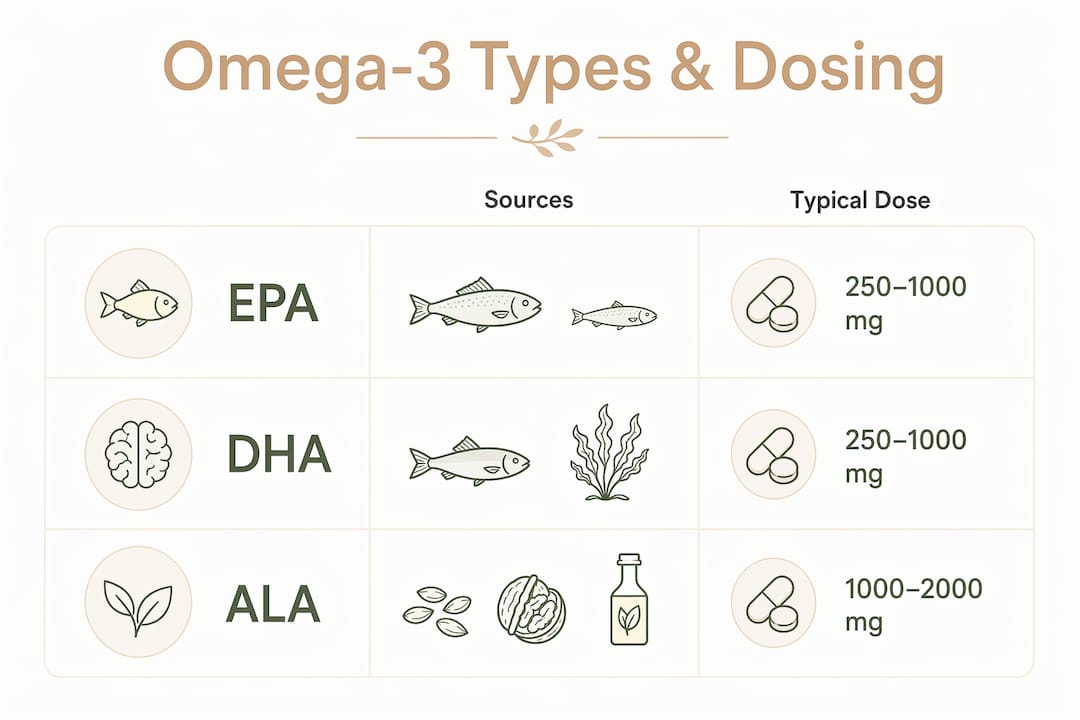
The conversion problem for plant-based eaters is real and often underestimated. ALA converts to EPA and DHA at very low rates, making it hard to achieve equivalent levels from plant sources alone. That means eating a tablespoon of flaxseed oil delivers a fraction of the EPA and almost none of the DHA you’d get from a serving of salmon.
Key distinctions worth keeping in mind:
- EPA drives most of the anti-inflammatory and cardiovascular effects studied in clinical trials
- DHA is the dominant structural fat in brain gray matter and the retina
- ALA is not a reliable substitute for EPA and DHA when it comes to clinical outcomes
- Algal oil is the one plant-derived source that delivers DHA directly, bypassing the conversion bottleneck entirely, making it the go-to option for vegans and vegetarians
What omega-3s actually do in your body
The mechanisms are worth understanding because they explain why omega-3s show up in so many different health contexts.
Membrane fluidity is the foundation. EPA and DHA incorporate into phospholipid bilayers and keep them supple. Stiffer membranes impair how receptors function and how signals pass between cells. In the brain, where DHA is concentrated, this matters for everything from mood regulation to how fast neurons fire.
Eicosanoid signaling is where the anti-inflammatory action happens. EPA is converted into series-3 prostaglandins and series-5 leukotrienes, which are less inflammatory than the series-2 and series-4 versions derived from arachidonic acid (an omega-6 fat). Shifting that balance is how omega-3s modulate chronic low-grade inflammation.
Antithrombotic and vasodilatory effects come from EPA’s influence on platelet aggregation and nitric oxide production. This is part of why EPA and DHA lower blood triglycerides significantly, a finding that holds up across dozens of clinical trials.
Here’s how the evidence stacks up by outcome:
- Triglyceride lowering: Strong. Consistent across clinical trials; the basis for FDA-approved prescription omega-3 therapy.
- Rheumatoid arthritis symptom relief: Modest. Meaningful reductions in joint tenderness and morning stiffness reported in multiple trials, though not a replacement for disease-modifying drugs.
- Prevention of major cardiac events: Mixed. Some large trials show benefit; others don’t, likely due to differences in baseline omega-3 status and trial design.
- Cognitive decline and dementia prevention: Inconclusive. DHA is structurally critical for brain tissue, but supplement trials for dementia prevention have not produced consistent results.
Food sources: the best ways to get omega-3s from your diet
Fatty fish are the most efficient dietary source of EPA and DHA by a wide margin. Consuming fatty fish multiple times per week is the standard guidance from the VA and aligns with what most major health organizations recommend.

| Food | Serving Size | Approximate EPA+DHA | Notes |
|---|---|---|---|
| Atlantic salmon (farmed) | 3 oz cooked | ~1.8 g EPA+DHA | One of the highest sources available |
| Mackerel | 3 oz cooked | ~1.0 g EPA+DHA | Also high in vitamin D |
| Sardines (canned in oil) | 3 oz | ~1.0 g EPA+DHA | Affordable, low mercury |
| Herring | 3 oz cooked | ~1.1 g EPA+DHA | Common in smoked/pickled form |
| Rainbow trout | 3 oz cooked | ~0.7 g EPA+DHA | Freshwater option, low mercury |
| Anchovies | 1 oz | ~0.4 g EPA+DHA | Great as a flavor base |
| Flaxseed (ground) | 1 tbsp | ~1.6 g ALA | Conversion to EPA/DHA is minimal |
| Chia seeds | 1 oz | ~5 g ALA | High ALA, but same conversion limits apply |
| Walnuts | 1 oz | ~0.3 g ALA | Good snack source of ALA |
Mercury and safety guidance:
- Favor low-mercury fish: salmon, sardines, trout, herring, anchovies, and tilapia
- Limit or avoid high-mercury fish: shark, swordfish, king mackerel, and tilefish, especially during pregnancy
- The FDA advises pregnant people and young children to eat 2–3 servings per week of low-mercury fish and avoid the high-mercury species listed above
- Baking or broiling fish preserves omega-3 content and avoids the added fats from frying that may work against cardiovascular health
If you don’t eat fish:
- Algal oil supplements deliver DHA directly and are the most reliable plant-based option
- Fortified foods (certain eggs, milk, and plant milks) contain small amounts of DHA
- Ground flaxseed and chia seeds contribute ALA, but don’t count on them to cover your EPA and DHA needs
How much omega-3 do you need each day?
The answer depends on your goal: general health maintenance or therapeutic intervention for a specific condition.
-
General adult intake (AI — Adequate Intake): The VA recommends 1.6 g/day of ALA for adult men and 1.1 g/day for adult women. Two 4-oz servings of fatty fish per week typically meet EPA+DHA needs for most healthy adults.
-
Cardiovascular disease management: Clinical trials and prescription use typically involve higher doses of EPA+DHA combined, above what food alone usually delivers, requiring clinician oversight.
-
Pregnancy and lactation: DHA is critical for fetal brain and eye development. The NIH Office of Dietary Supplements notes that pregnant and lactating people have higher DHA needs; many prenatal supplements include 200–300 mg DHA per day, and clinicians often recommend more depending on dietary intake.
-
Elevated triglycerides: Prescription icosapent ethyl (Vascepa) is dosed under clinician supervision at therapeutic levels. OTC fish oil at 2–4 g/day of EPA+DHA is sometimes used for triglyceride management, but the evidence base for prescription-grade products is stronger.
-
Children: Adequate intakes vary by age. The NIH/ODS publishes age-specific AIs; for most children, two servings of low-mercury fish per week covers the need.
Statistic callout: VA guidance sets daily ALA targets at 1.6 g for adult men and 1.1 g for adult women — amounts most people can reach with two servings of fatty fish per week, without any supplement.
The NIH Office of Dietary Supplements and the American Heart Association are the two most authoritative U.S. sources for intake guidance. Both emphasize food-first, with supplements reserved for people who can’t meet needs through diet or who have specific clinical indications.
What the evidence actually shows: strong, mixed, and inconclusive
The clinical picture for omega-3s is more nuanced than most supplement marketing suggests. Here’s an honest breakdown.
Well-supported outcomes:
- Triglyceride lowering: The most consistent finding in omega-3 research. High-dose EPA+DHA reliably reduces triglycerides by a clinically meaningful amount. This is the basis for FDA-approved prescription therapy.
- Rheumatoid arthritis: Clinical reviews report modest but real reductions in joint tenderness and morning stiffness with regular EPA+DHA supplementation.
Mixed or context-dependent outcomes:
- Major cardiovascular events (heart attack, stroke): Some large trials show reduced risk; others don’t. Differences in baseline omega-3 status, dose, formulation, and trial populations likely explain the inconsistency. People who enter trials with already-adequate omega-3 levels may see less benefit.
- Blood pressure: Modest reductions reported in some meta-analyses, particularly at higher doses, but the effect size is small.
Inconclusive outcomes:
- Dementia and cognitive decline: DHA is structurally important for the brain, but supplement trials have not consistently shown that taking DHA supplements prevents or slows cognitive decline.
- Depression: Some observational data links low omega-3 status to higher depression rates, but randomized trial results are inconsistent.
The food-matrix advantage: Observational studies consistently show that people who eat fatty fish regularly have lower rates of heart disease than those who don’t. Supplement trials don’t always replicate this. The likely explanation: fish delivers omega-3s alongside other nutrients (selenium, vitamin D, protein) and within a dietary pattern that itself reduces risk. An isolated capsule doesn’t reproduce that context. This is why the food-first recommendation isn’t just a conservative default — it’s what the data actually supports.
Supplements and prescription omega-3s: what to know before you buy
Not all omega-3 supplements are equivalent. The form, concentration, and purity vary significantly across products.
Common supplement forms:
- Ethyl esters (EE): The most common OTC form; less bioavailable than natural triglyceride forms, especially when taken without a fat-containing meal
- Re-esterified triglycerides (rTG): Better absorbed than ethyl esters; typically more expensive
- Krill oil: Contains EPA and DHA in phospholipid form plus astaxanthin; some evidence for good absorption, though EPA+DHA per capsule is often lower
- Algal oil: Plant-derived DHA (and sometimes EPA); the right choice for vegans and vegetarians
- Prescription icosapent ethyl (Vascepa): Pure EPA ethyl ester at 4 g/day; FDA-approved for adults with triglycerides ≥150 mg/dL who are already on a statin; not interchangeable with standard OTC fish oil
When prescription omega-3 is warranted: Vascepa is used under clinician supervision for specific lipid-management cases. The REDUCE-IT trial showed cardiovascular event reduction in high-risk patients on statins, but that finding applies to the prescription product at therapeutic doses, not to standard OTC supplements. For more on omega-3 and cholesterol management, the distinction between OTC and prescription-grade products matters a great deal.
OTC supplement checklist:
- Check the label for combined EPA+DHA per serving, not just “fish oil” in milligrams (a 1,000 mg fish oil capsule may contain only 300 mg of actual EPA+DHA)
- Look for third-party testing seals: USP, NSF International, or IFOS (International Fish Oil Standards)
- Avoid products with a strong rancid smell, which signals oxidized oil
- Store capsules in a cool, dark place or refrigerate after opening
- Check for sustainability certifications (MSC or Friend of the Sea) if sourcing matters to you
Clinician oversight is recommended for anyone considering high-dose regimens, particularly those already taking medications.
Safety, side effects, and drug interactions
For most people, standard doses of omega-3s are well tolerated. The side effect profile is mild at typical intakes.
Common mild side effects:
- Fishy aftertaste or “fish burps” (taking capsules with meals or choosing enteric-coated products reduces this)
- Mild nausea, especially on an empty stomach
- Loose stools or mild GI discomfort at higher doses
Serious concerns at high doses:
- Bleeding risk increases at doses above roughly 1–2 g/day of EPA+DHA in some people, particularly those on anticoagulants
- A small signal for new-onset atrial fibrillation has been observed in some cardiovascular patients taking high therapeutic doses
- LDL cholesterol may rise modestly in some people taking high-dose fish oil, particularly ethyl ester forms
Drug interactions to flag with your clinician:
- Anticoagulants and antiplatelet drugs (warfarin, aspirin, clopidogrel): omega-3s have mild antiplatelet effects that can compound bleeding risk
- Blood pressure medications: additive effects are possible at high doses
- Before surgery: most clinicians recommend pausing high-dose omega-3 supplementation 1–2 weeks prior
Mercury in fish: Stick to low-mercury species (salmon, sardines, trout, herring) for regular consumption. Pregnant people and young children should follow FDA guidance on fish selection and frequency. Supplements made from fish oil are generally low in mercury because the distillation process used in manufacturing removes most contaminants, but third-party testing verification is still worth checking.
This article is general health information, not medical advice. Confirm dosing and safety for your specific situation with a qualified clinician.
Who actually needs an omega-3 supplement?
Most people can get adequate omega-3s from food. Supplements make sense in specific situations.
You probably don’t need a supplement if:
- You eat fatty fish (salmon, sardines, mackerel, herring) at least twice a week
- You have no diagnosed lipid disorder or inflammatory condition requiring therapeutic doses
- Your diet includes a variety of whole foods with reasonable ALA sources
Consider a supplement if:
- You’re vegan or vegetarian and don’t eat fish (algal oil is the right choice here)
- You eat fish fewer than once a week and don’t plan to change that
- You have elevated triglycerides and your clinician has recommended omega-3 supplementation
- You’re pregnant or breastfeeding and your prenatal supplement doesn’t include DHA
Clinical scenarios where prescription omega-3 is considered:
- Triglycerides ≥150 mg/dL in a patient already on statin therapy (Vascepa)
- Specific cardiovascular risk management under lipid specialist oversight
Pro Tip: Before starting any supplement, ask your clinician to check your fasting triglycerides and, if available, an omega-3 index (a blood test measuring EPA+DHA in red blood cell membranes). That gives you a baseline to measure against after 8–12 weeks of consistent intake.
For active people, the role of omega-3 in fitness and recovery adds another layer of practical context worth reviewing.

How to add the right omega-3s to your routine
Getting more EPA and DHA into your week doesn’t require a complete diet overhaul.
- Swap one weekly protein for salmon. A 4-oz fillet of baked Atlantic salmon delivers roughly 2.4 g of EPA+DHA, covering most of your weekly needs in a single meal.
- Keep canned sardines on hand. They’re inexpensive, shelf-stable, and deliver around 1 g of EPA+DHA per 3-oz serving. Sardine toast with avocado and lemon is a fast, high-omega-3 lunch.
- Add ground flaxseed to oatmeal or yogurt. One tablespoon adds about 1.6 g of ALA. It won’t replace EPA and DHA, but it contributes to your overall polyunsaturated fat intake.
- Try a chia pudding with walnuts. Chia seeds and walnuts are both ALA-rich. Pair them with an algal oil supplement if you’re plant-based and want direct DHA.
- Use anchovies as a flavor base. Melt a few into olive oil before adding garlic and tomatoes for pasta. You get omega-3s without any “fishy” flavor in the finished dish.
- Make mackerel or herring part of your rotation. Both are underused in American kitchens, both are high in EPA+DHA, and both are among the most sustainable and affordable fatty fish available.
Supplement quick-check before you buy:
- Confirm the label shows combined EPA+DHA (not just total fish oil)
- Look for a USP, NSF, or IFOS third-party seal
- Check the dose per capsule — you may need 2–3 capsules to reach a meaningful daily amount
- Store in a cool, dark location; refrigerate after opening if the label recommends it
Timeline for results: For triglyceride management, recheck fasting lipids after 8–12 weeks of consistent daily intake. For inflammatory symptoms like joint stiffness, some people notice changes in 6–8 weeks, though individual response varies. An omega-3 index test at baseline and after 3 months is the most direct way to confirm your intake is actually shifting your tissue levels.
Evidence summary and practical interpretation: the Nutribliss perspective
The research on omega-3s tells a consistent story when you read it carefully. Food-first is not just a conservative recommendation — it’s what the observational data actually supports. Whole-food fish consumption shows stronger and more consistent associations with lower heart disease risk than isolated supplement trials, and that gap likely reflects the food matrix: the combination of omega-3s, protein, selenium, vitamin D, and the broader dietary pattern that comes with eating fish regularly.
Supplements have a real and legitimate role, but a defined one. Algal oil fills the gap for people who don’t eat fish. High-dose fish oil or prescription icosapent ethyl addresses specific lipid disorders under clinician supervision. Standard OTC fish oil at 1–2 g of EPA+DHA per day is a reasonable insurance policy for people with low fish intake, but it isn’t a substitute for a diet built around whole foods.
The #nutribliss position: Prioritize fatty fish twice a week. If that’s not realistic, choose a third-party-tested algal or fish oil supplement with a clear EPA+DHA label. For triglyceride management or cardiovascular risk reduction at therapeutic doses, work with a clinician. The NIH Office of Dietary Supplements, the American Heart Association, and the Cleveland Clinic are the three most reliable sources for keeping up with the evidence as it evolves.
Key Takeaways
Omega-3 fatty acids are essential fats your body cannot make, and getting them consistently from fatty fish or a quality supplement is one of the most evidence-backed steps you can take for heart, brain, and eye health.
| Point | Details |
|---|---|
| Essential fats, not optional | Your body cannot produce adequate EPA and DHA, so diet or supplementation is the only reliable supply. |
| Food-first is best supported | Observational studies show regular fatty fish consumption lowers heart disease risk more consistently than supplement trials. |
| ALA conversion is limited | Plant-based ALA converts to EPA at only 2–5% and to DHA at less than 1%, making algal oil the preferred plant-based DHA source. |
| Dosing depends on your goal | For general adults, VA guidance recommends 1.6 g/day ALA for men and 1.1 g/day for women; therapeutic triglyceride management requires 2–4 g/day of EPA+DHA under clinician care. |
| Nutribliss supplement option | Nutribliss offers third-party-tested omega-3 fish oil softgels with transparent EPA+DHA labeling for those who can’t meet needs through food alone. |
Why a food-first approach makes the most sense
The evidence gap between eating fish and taking a capsule is one of the more underappreciated findings in nutrition science. Randomized trials of isolated omega-3 supplements have produced mixed results for cardiac event prevention, while decades of observational data on fish-eating populations show consistent protection. That discrepancy doesn’t mean supplements are useless. It means the benefit of eating fish probably isn’t reducible to a single nutrient.
Supplements are genuinely useful in specific circumstances: for vegans who need direct DHA, for people with clinically elevated triglycerides, and as a practical backup for anyone whose diet consistently falls short on fatty fish. But treating a capsule as equivalent to a dietary pattern built around whole foods misreads what the science actually shows. The #nutribliss approach reflects that: start with food, use supplements where they fill a real gap, and get clinician input before moving into therapeutic dose territory.
Nutribliss omega-3 supplements: quality you can verify
If your diet doesn’t reliably include two servings of fatty fish per week, a quality supplement is a practical and well-supported option. Nutribliss omega-3 fish oil softgels are formulated with a clear EPA+DHA breakdown per serving, so you know exactly what you’re getting rather than guessing from a total fish oil milligram count.

What to expect from a Nutribliss omega-3 supplement:
- Transparent EPA+DHA labeling per serving, not just total fish oil weight
- Third-party purity testing to verify absence of heavy metals and oxidized oils
- Convenient softgel format with enteric coating options to minimize fishy aftertaste
- Algae-origin DHA options available for plant-based users who want to skip fish-derived products
Browse the full Nutribliss omega-3 fish oil supplement or explore the science behind the Superfoods Collection to see how each product is formulated and what the evidence supports.
Always consult your clinician before starting high-dose or prescription-strength omega-3 therapy, especially if you take anticoagulants or have a cardiovascular condition.
Authoritative sources and further reading
These are the primary sources used to build this article. Each one is worth bookmarking if you want to go deeper or verify specific claims.
- NIH Office of Dietary Supplements — Health Professional Fact Sheet: The most comprehensive U.S. government summary of omega-3 research, including intake recommendations, evidence tables, and safety data. Updated regularly.
- NIH ODS — Consumer Version: A plain-language version of the same fact sheet, useful for sharing with patients or family members.
- NCCIH — Omega-3 Supplements: What You Need to Know: Covers supplement-specific evidence, including the inconclusive findings on brain health and the distinction between food and supplement research.
- Cleveland Clinic — Omega-3 Fatty Acids: Clinically oriented overview including safety signals, atrial fibrillation risk at high doses, and practical patient guidance.
- VA Patient Education — Heart Health and Omega-3 Fatty Acids: Practical intake guidance with specific gram targets for adults and food-source recommendations.
- MedlinePlus — Omega-3 Fats and Your Heart: A concise, reliable summary from the National Library of Medicine, good for quick reference.
For daily dosing guidance from an international perspective, this overview of daily omega-3 needs offers additional context on how intake recommendations are framed across different populations, though U.S. guidance from the sources above should be your primary reference.